
American Mythos & National Character
What Does It Mean To Be An American? Reflections On The Defining Creed Of A Nation
My friends, let’s sit for a spell, perhaps with a cup of coffee, and ponder a question as old as this nation itself. It’s a question millions have crossed oceans and borders for, a singular, elusive query that hums beneath the surface of our bustling cities and quiet farmlands: what does it truly mean to be an American? It’s not a matter of shared bloodlines or ancient soil, not something you’re simply born into like a title or a family name. No, being American, at its heart, is an active commitment to a set of revolutionary ideals, an embrace of what we call the American creed.
From the busy harbors of New York to the sun-drenched fields of the Midwest, this identity is a continuous act of self-definition, of sturdy resolve, and what I like to call ‘rugged optimism.’ It’s a living, breathing thing, changing and growing with each generation, yet always anchored to those first, bold words etched into our founding documents. The history of American identity isn’t a straight line, but a winding river, always flowing toward a horizon of shared promise.
It’s fascinating, isn’t it, to think that our `american national identity` isn’t based on an ethnic heritage, but on principles? It’s why a son of a farmer from Iowa and a daughter of immigrants from a bustling city can both feel that profound pull, that shared sense of belonging. They both stand on the common ground of liberty, equality, and the pursuit of happiness. That, my friends, is the foundational `definition of american`.
Now, some folks might wonder if that’s just a lofty ideal, something we say but don’t live up to. And sure, we’ve stumbled along the way, made mistakes, and sometimes lost sight of the path. But the commitment to those ideals, that constant striving, is precisely what is an american. It’s the journey, not just the destination, that defines us.
Consider this: research from organizations like the Pew Research Center often shows Americans, more than many other nations, maintain a deep-seated optimism about the future, even in tough times. We’re a resilient bunch! And studies, like one by the American Enterprise Institute, have found that a significant majority of Americans believe ‘if you work hard, you can get ahead,’ a sentiment far higher than in many other developed countries. That’s not just hope, that’s a belief in the power of individual effort and the promise of a fair shot, core elements of our `american values`. That kind of sturdy faith, that willingness to keep trying, is a cornerstone of `being american meaning`.
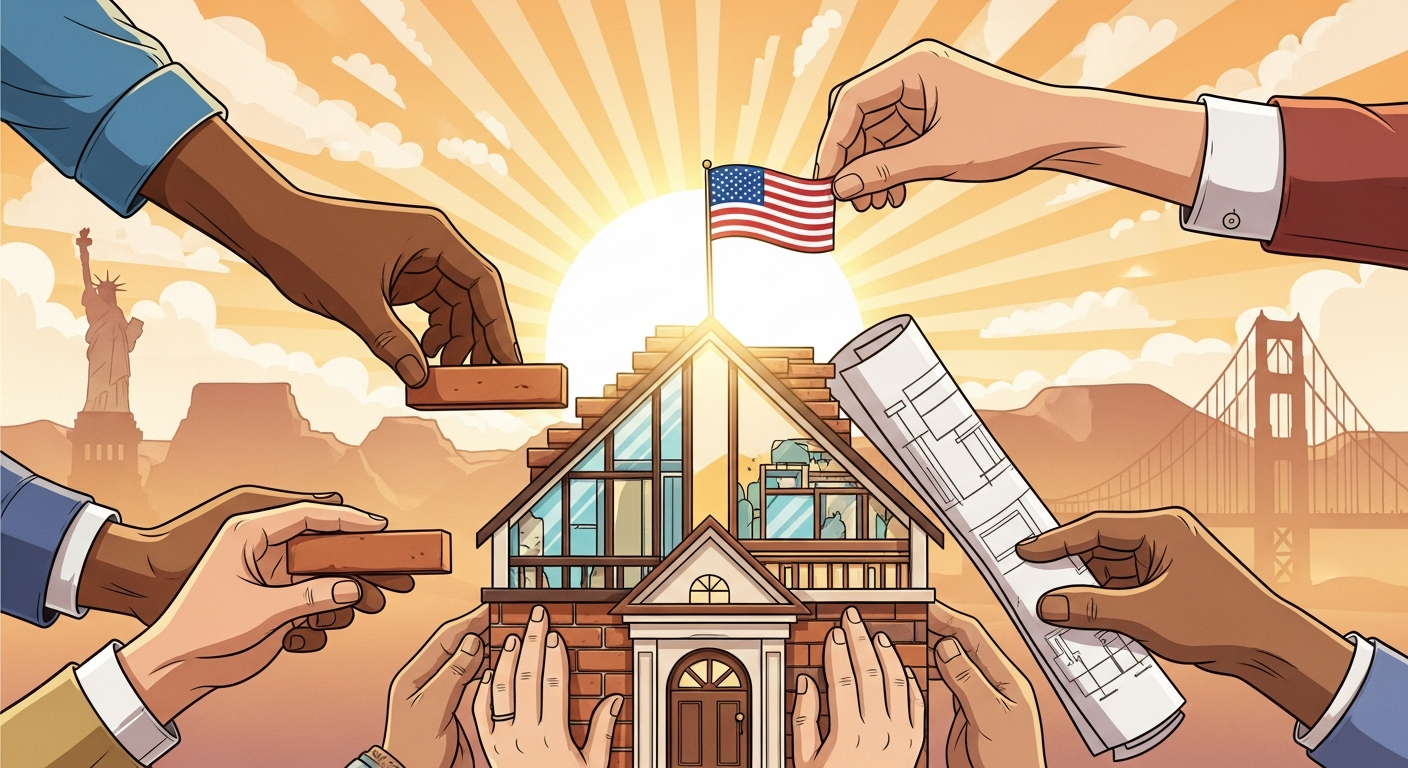
So, let’s explore this idea a little deeper, shall we? What truly makes this experiment, this great undertaking we call America, so distinct?
The Dual Pillars: Rugged Individualism and the Common Good
The spirit of this nation, I believe, rests on two mighty pillars that, at first glance, might seem to lean in opposite directions: rugged individualism and a deep sense of community, of the common good. We celebrate the pioneer spirit, the one who pulls themselves up by their bootstraps, the inventor tinkering in their garage, the entrepreneur chasing a dream. This is a powerful current in our American culture, a belief in personal liberty and self-reliance that has built incredible things.
The Spirit of Self-Reliance
Think of Daniel Boone, blazing trails through unknown wilderness, or the homesteaders who crossed the vast prairies to stake their claim. My own grandfather, a man who came here with little more than the clothes on his back, often told me that ‘America gives you a chance, but you’ve got to earn it.’ He saw it as a place where effort, not birthright, defined your path. This focus on personal responsibility, on forging your own way, is ingrained in us. It’s what encourages innovation, pushes boundaries, and celebrates unique achievement. It’s a core aspect of `what does it mean to be american essay` questions often explore.
The Call of Community
Yet, for all our talk of independence, America has always also been a nation built on mutual aid and collective purpose. Those very pioneers who tamed the frontier? They formed wagon trains, helped each other build barns, and gathered for harvest festivals. When disaster strikes, be it a hurricane in Florida or a wildfire in California, you see neighbors helping neighbors, communities rebuilding together. That same individualist who might argue fiercely for their rights is often the first to volunteer at the local food bank or show up with a casserole when a family is in need. This isn’t a contradiction; it’s a testament to the idea that true freedom often blossoms when people work together, creating a society that supports individual flourishing. It’s in our DNA, from the barn-raising traditions of colonial America to the vibrant civic associations of today. We call it `patriotism`, but it’s also just good neighborliness on a grand scale.
A Nation of Immigrants: How Diversity Continuously Redefines the American Character
Perhaps the most remarkable aspect of the `definition of american` is its open-endedness. Unlike many nations tied to ancient ethnic lineages, America has always been a grand experiment in integration. We are, and always have been, a nation of immigrants. From the earliest settlers arriving on these shores, seeking religious freedom or economic opportunity, to the newest arrivals today, hoping for a safer, brighter future, each wave has brought new flavors, new ideas, new strengths. This constant refreshment of our cultural wellspring is what keeps us vibrant and dynamic.
Layers of Identity
Think about the rich tapestry of our cities. Take San Francisco’s Chinatown, for example, or the historically Italian neighborhoods of Boston. These aren’t just quaint tourist spots; they are living examples of how different cultures have woven themselves into the larger American fabric, adding their unique patterns while adopting the shared threads of our creed. My grandmother, who came from Ireland in the early 20th century, used to say, ‘America took my accent, but it gave me a voice.’ Her story, like millions of others, is a micro-history of our nation. She learned English, worked hard, raised a family, and instilled in her children a deep love for this country, all while still cherishing her Irish heritage. This blending, this becoming ‘American’ without erasing where you came from, is a beautiful thing. It’s the ongoing evolution of the `american national identity`.
The Ongoing Conversation
Every new group arriving has, in its own way, challenged and enriched our understanding of `american values`. They’ve reminded us of the meaning of striving, of starting anew, and of the enduring promise that draws people here. They’ve pushed us to live up to our ideals, to truly embody equality and opportunity for all. This continuous process of inclusion and adaptation is what makes our `american creed` a living document, not a dusty artifact. It’s a perpetual dialogue, ensuring that `what does it mean to be an american` is never a fixed answer, but a question we keep asking and answering together. It’s what keeps our `american culture` from becoming stagnant; it always feels fresh, always has new stories to tell.
The Ongoing Journey Toward Forming a More Perfect Union
So, after all this reflection, what does it mean to be an American? It means embracing a set of ideals that are often aspirational, sometimes challenging, but always worth striving for. It means understanding that this nation isn’t perfect, but that the pursuit of a ‘more perfect union’ is our collective responsibility. It means acknowledging our past, both its glories and its failings, with an honest heart, and carrying forward the lessons learned. It means participating, however you can, in the great project of this republic, from voting in local elections to volunteering in your community.
It means finding `patriotism` not in blind allegiance, but in a critical love for your country – a love that demands improvement and champions its highest ideals. It means believing in the power of the individual while understanding the necessity of community. It means recognizing that our diversity is not a weakness, but an unparalleled strength, a constant source of innovation and renewal that strengthens our American spirit.
The `being american meaning` is found in the everyday acts of kindness, in the shared laughter at a ball game, in the debates in our town halls, and in the quiet determination of a family working to build a better life. It’s in the sacrifices made by our service members, in the tireless work of our teachers, and in the boundless creativity of our artists. It’s the belief in a dream that, though sometimes elusive, is always within reach for those willing to reach for it.
This definition of American is not exclusive; it’s an invitation. An invitation to contribute, to dream, to build, and to belong. It’s a call to uphold the principles of liberty, justice, and equality for all, not just for some. That, my friends, is the heart of our `american creed`. It’s a profound honor, and a profound responsibility, to be a part of this enduring journey. Let’s carry it forward with hope, hard work, and that uniquely American optimism, for generations to come.