
American Lifestyle
Chilled Nostalgia: The Design History Of The Classic American Steel Cooler
My grandfather used to say, ‘Son, some things just feel right in your hand.’ He wasn’t talking about a tool or a handshake, though he’d say that too. He was talking about the satisfying heft of a well-made thing, something built to last, something that carried memories. For me, that ‘thing’ has always been the classic American steel cooler. Before the world got all lightweight and plastic, before disposability became the norm, the centerpiece of every honest-to-goodness American camping trip, beach excursion, and backyard barbecue was a heavy, brightly painted steel cooler. Brands like Coleman and Cronstroms, sturdy as an old oak, crafted these steel-belted marvels. They were built to last a lifetime, capable of keeping sodas icy cold under the most blazing summer sun, a true testament to American ingenuity and a love for the great outdoors. These iconic coolers aren’t just utility items; they’re beautiful symbols of mid-century American travel and outdoor leisure, brimming with stories of family, freedom, and a simpler time. Let’s take a stroll down memory lane, shall we?
The Post-War Outdoor Boom: Fueling a Thirst for Adventure
After the immense sacrifices and collective effort of World War II, America was ready to breathe. Our GIs came home, eager to build families, buy homes, and explore the vast, beautiful land they’d fought for. There was an optimism, a can-do spirit that permeated every corner of our nation. Suddenly, the open road wasn’t just a metaphor; it was a beckoning reality. The expansion of the American highway system began in earnest, linking cities and states like never before. I remember my dad talking about how the landscape changed, mile by mile, as the new interstates rolled out, making the far-flung corners of our country accessible to ordinary families.
This era saw an explosion in car ownership. Think about it: in 1945, right at the end of the war, there were roughly 25.8 million passenger cars on American roads. By 1960, just fifteen years later, that number had absolutely soared to over 61 million! More cars meant more freedom, more weekend getaways, and certainly, more epic family vacations. This surge wasn’t just about getting from point A to point B; it was about the journey itself, the unfolding panorama of America through a car window. We were a nation on the move, and the call of our stunning state and national parks grew louder with every passing year. Parks like [Yellowstone National Park](https://www.google.com/maps/place/Yellowstone+National+Park) saw their visitation numbers skyrocket, from around 15-20 million annually before the war to often exceeding 60-70 million by the late 1950s. People wanted to experience the majesty of nature, and they wanted to do it comfortably.
The problem, of course, was keeping things cool. You couldn’t just pop into a gas station convenience store for an iced drink back then, not like today. If you were heading out for a day at the lake or a week of camping, you needed a reliable way to preserve your perishables and, crucially, to keep those refreshing beverages perfectly chilled. This is where the demand for portable refrigeration truly took off. Early solutions were often clunky, insulated wooden boxes or heavy galvanized tubs with blocks of ice. They worked, but they weren’t exactly built for the sleek, mobile ‘mid century american travel’ lifestyle that was emerging. Americans wanted something more robust, more stylish, and truly efficient. They needed a ‘metal cooler history’ that would evolve into something iconic.
Steel-Belted Artistry: From Utility to Automotive-Style Icon
The transition from cumbersome iceboxes to the streamlined ‘retro steel cooler’ was a marvel of American design and manufacturing. Early companies, many of them born from a legacy of producing metal goods, saw the burgeoning market. One of the undisputed champions in this arena was Coleman. The ‘classic Coleman cooler history’ really begins with their expertise in lanterns and stoves, understanding the needs of campers and outdoorsmen. Their earliest coolers were straightforward affairs, but as the 1950s rolled in, design trends began to shift dramatically. The automobile wasn’t just transportation; it was a statement, a rolling piece of art. Americans wanted their gear to match the chrome and curves of their new family sedan.
Suddenly, the humble cooler wasn’t just a box; it was a ‘vintage picnic cooler’ that fit right in with the tail fins and two-tone paint jobs of the era. Designers embraced vibrant colors: mint green, sunny yellow, cherry red, and ocean blue. These weren’t just utilitarian hues; they were optimistic, joyful colors that perfectly captured the spirit of leisure. Chrome accents appeared, mimicking car bumpers, and often, a sturdy bottle opener was integrated right into the side, a practical touch that became a signature of these models. The lines became cleaner, more aerodynamic, even for a stationary object. You’d see a family pull up to a scenic overlook along [Historic Route 66](https://www.google.com/maps/search/historic+route+66) in their Ford Fairlane, and out would come a matching blue or red cooler, sparkling in the sun. It was all part of a cohesive ‘retro outdoor aesthetic’.
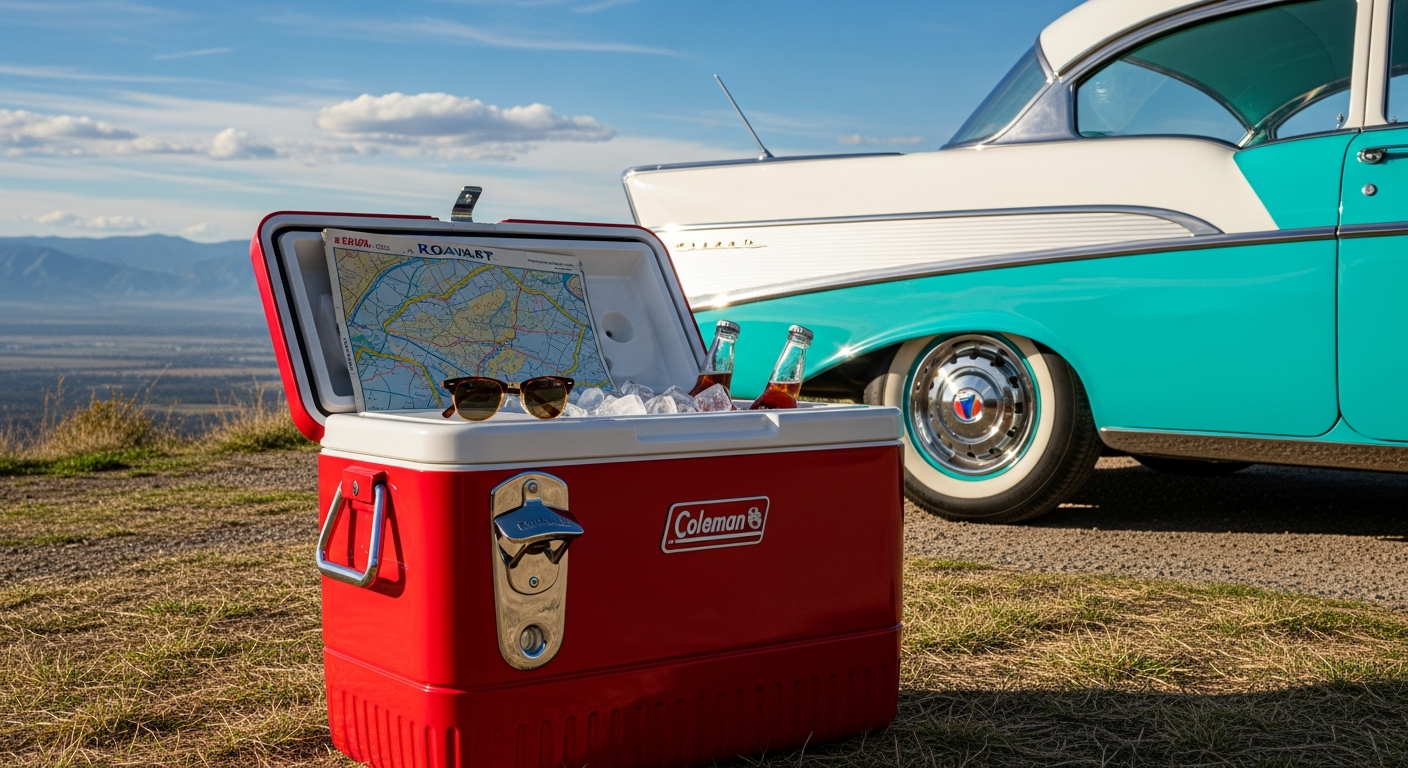
What truly set these steel coolers apart, beyond their good looks, was their construction. They were built like tanks. The steel exterior provided unparalleled durability, able to withstand countless bumps, scrapes, and the rigors of being hauled in and out of car trunks and camp cabins. Inside, thick insulation kept contents colder for longer, a huge leap from earlier, less efficient designs. I remember my uncle’s old Coleman, a deep red beauty, scarred by decades of adventures. It had a dent here from a dropped fishing tackle box, a faded spot there from too many summers baking in the sun at Lake Tahoe, but it still sealed tight, still kept everything cold. That’s the kind of quality, the kind of staying power, we often miss today. These weren’t just products; they were family heirlooms, passed down and imbued with stories.
Vintage Soda Culture: The Taste of a Bygone Era
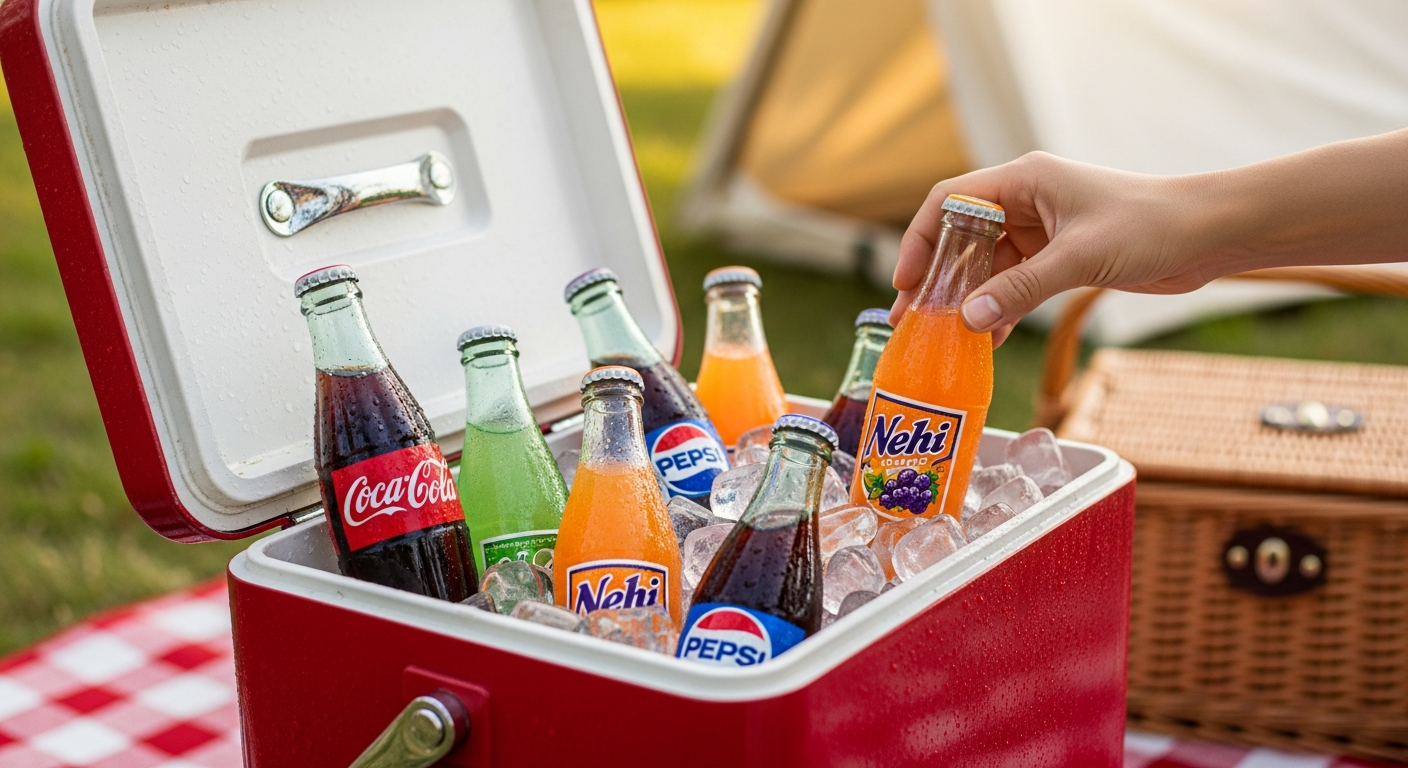
Now, what did these magnificent containers hold? Oh, the memories! The heart of any true ‘vintage cooler with sodas’ was, without a doubt, an array of ‘classic glass bottle sodas’. The sound of those glass bottles clinking together as you carried the cooler, the way the condensation beaded on the outside on a humid day, the satisfying ‘pop’ as you used the built-in opener – these were all sensory hallmarks of an American summer. Forget the plastic two-liter bottles of today; back then, it was all about the individual glass serving, ice-cold and crisp.
Packing the cooler was an art form in itself. My mother, bless her heart, had it down to a science. A layer of ice, then carefully arranged bottles of Coca-Cola, Pepsi, RC Cola, Dr. Pepper, and maybe a few Nehi fruit-flavored sodas for the kids. Sometimes, if we were lucky, there’d be a frosty carton of milk or a few ice-cold hot dogs wrapped in foil. Every item had its place, nestled against blocks or bags of ice, promising relief from the heat. These coolers were the lifeblood of ‘american road trip history’, fueling long drives through Monument Valley or along the coasts.
Imagine pulling over at a rest stop on a scorching day, the cicadas buzzing, and opening that cooler. The cloud of icy vapor escaping, the sight of those jewel-toned sodas, the feeling of the perfectly chilled glass bottle in your hand. That first sip, fizzy and sweet, was pure magic. It wasn’t just a drink; it was a moment, a pause in the adventure, shared with family and friends. These were the moments that forged bonds, the simple pleasures that defined childhood summers. Every time I see a ‘vintage camping gear’ setup, complete with one of these old coolers, I can almost taste that frosty soda and hear the laughter.
A Modern Resurgence: Honoring a Legacy of Cool
For a while there, it seemed the steel cooler might fade into obscurity, pushed aside by lightweight plastic models that prioritized ease of carrying over durability and timeless style. But good design, like a good memory, has a way of coming back around. Today, we’re seeing a wonderful ‘resurgence of vintage-style steel coolers’. Campers, design enthusiasts, and folks who simply appreciate quality are rediscovering the enduring appeal of these classic pieces. There’s a generation looking for items that tell a story, that resist the disposable culture, and that carry a certain nostalgic charm. The ‘retro steel cooler’ fits this desire perfectly.
New brands are emerging, and established ones are reintroducing lines that pay homage to the original steel-belted designs. They recognize that while convenience is king for some, for others, the joy lies in owning something sturdy, something with character, something that connects them to a richer past. It’s about more than just keeping things cold; it’s about embracing a ‘retro outdoor aesthetic’ that speaks to tradition, reliability, and an enduring sense of Americana. When I see one of these beauties, whether it’s an original Coleman from the 50s or a modern interpretation, it fills me with a quiet pride. It’s a reminder of American craftsmanship, of our boundless spirit for adventure, and of the simple, profound pleasures of gathering with loved ones under our wide-open skies.
So, the next time you’re planning a trip or a get-together, consider reaching for a steel cooler. Fill it with your favorite frosty beverages, pack it with good food, and let it be the cornerstone of new memories, just as it has been for generations. It’s more than just a cooler; it’s a piece of our shared history, a symbol of freedom, and a vessel for joy. And that, my friends, feels just right.