
American Lifestyle
The Cult Of The Canvas: How The Trader Joe’S Tote Became An American Lifestyle Icon
In supermarkets across America, a simple $2.99 canvas bag has transcended utility to become the ultimate status symbol of suburban chic. From bustling college campuses to the vibrant local farmers’ markets, the Trader Joe’s tote is carried with a quiet pride, a satisfaction usually reserved for far more expensive designer leather. It is not just a bag, you see; it is a quiet, comfortable declaration of a lifestyle centered on quirky snacks, organic living, and that distinct community warmth we’ve all come to love. This humble carrier, the `trader joes tote bag`, has burrowed its way into the heart of `american grocery store culture`, becoming an unexpected emblem of modern American life. And if you’re anything like me, you’ve probably wondered, ‘why is trader joes bag popular?’
I remember a time, not so long ago, when a reusable bag was just that: a practical item to carry your groceries. But something shifted. Slowly, almost imperceptibly at first, I started noticing it everywhere. On a young mom at the park in Charleston, South Carolina, overflowing with snacks for her little ones. On a student hurrying to class in Berkeley, California, textbooks peeking out. Then came the ‘mini’ version, and that’s when it truly exploded. It became a phenomenon, a `viral grocery bag` that sparked conversations, desire, and even a bit of good-natured competition to find one. This isn’t just about a bag; it’s a fascinating look at what we, as Americans, value and how we express our identities in the everyday.
The Birth of a Grocery Icon: From Humble Utility to Lifestyle Statement
For decades, Trader Joe’s has been a beloved institution, a place where the hunt for unexpected treasures (and reliably good wine) is part of the fun. Their classic, sturdy `trader joes canvas tote` has always been a staple, a practical item for hauling home those beloved Two Buck Chuck bottles and bags of frozen mandarin chicken. But its journey from a humble grocery carrier to a `viral TikTok fashion sensation` is a testament to something deeper brewing in our culture.
It started as many trends do these days, quietly online. People began to share their Trader Joe’s hauls, and the bags were always there, a recognizable backdrop. Then, with the release of the `trader joes mini tote` in early 2024, something clicked. Overnight, these smaller, cuter versions, initially priced at just $2.99, became an overnight sensation. The demand was so overwhelming that stores sold out almost immediately, leading to a frenzy. It wasn’t just about convenience anymore; it was about connection, about being part of something. This particular release highlighted a surprising statistic: within days, these little bags, originally costing less than a cup of coffee, were being resold on platforms like eBay and Facebook Marketplace for upwards of $50, some even reaching $500 for a rare set of four different colors. That’s a staggering 1,500% to 16,500% markup! It wasn’t just a bag; it was a collector’s item, a symbol of playful scarcity in an era of abundant consumerism.
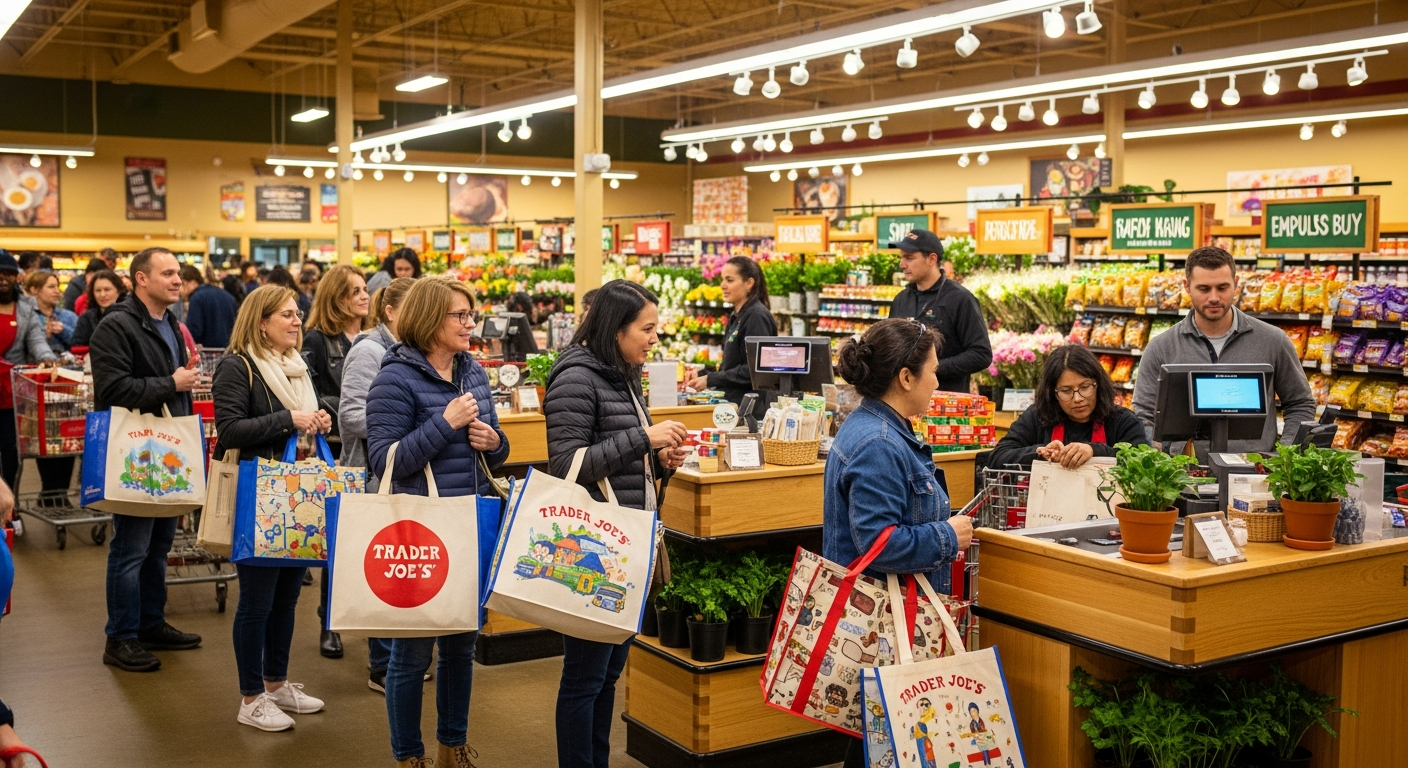
This `canvas tote trend` isn’t entirely new, but the Trader Joe’s iteration pushed it into the stratosphere. It tapped into our desire for approachable luxury, for something that feels special without breaking the bank (at least, at its original price). It became a focal point for what many call the `trader joes lifestyle`, a blend of health-conscious eating, adventurous palates, and a down-to-earth aesthetic that eschews pretension. I saw it firsthand, standing in line at my local Trader Joe’s, chatting with a young woman who had driven an hour just for a chance to snag a mini tote. Her excitement was palpable, not just for the bag itself, but for what it represented to her: a fun, affordable way to express her style and connect with a community she admired.
The Psychology of the Trader Joe’s Tribe: More Than Just Groceries
So, `why is trader joes bag popular`? The answer goes far beyond mere aesthetics or utility. It’s deeply rooted in the unique connection Americans feel with the store itself. Trader Joe’s, founded by Joe Coulombe in 1967 in Pasadena, California, was built on a vision of discovery and value. It was designed to feel like a treasure hunt, a friendly neighborhood market that offered gourmet items at everyday prices. This philosophy has cultivated a devoted ‘tribe’ of shoppers.
A Sense of Belonging, A Dash of Adventure
When you walk into a Trader Joe’s, you’re greeted by Hawaiian shirt-clad crew members who genuinely seem happy to be there. The quirky signs, the hand-drawn labels, the bell system for help (one ring for a new register, two for a question, three for a manager) – it all creates an atmosphere of warmth and approachability. This isn’t just a store; it’s an experience. Shoppers often feel like they’re in on a secret, part of an exclusive club that appreciates good food and a friendly vibe without all the fuss.
The `trader joes lifestyle` is about embracing joy in the small things, about making healthy choices accessible, and about finding adventure in your grocery cart. The tote bag, then, becomes a badge of honor for this tribe. It signifies that you’re part of this community, that you appreciate the values of quality, value, and a little bit of fun. It’s a subtle way of saying, ‘I get it, I’m one of us.’ It’s a wonderful reflection of how we Americans, in our bustling lives, still crave authentic connections and a sense of shared experience, even if it begins in the produce aisle.
Anatomy of a Status Symbol: Affordability Meets Scarcity
The transformation of the `trader joes tote bag` into a status symbol is a fascinating study in consumer psychology, particularly how affordability and perceived scarcity can combine to create a massive wave of desire. The very notion that something so inexpensive could become so coveted speaks volumes about our current market.
The Allure of the Accessible Exclusive
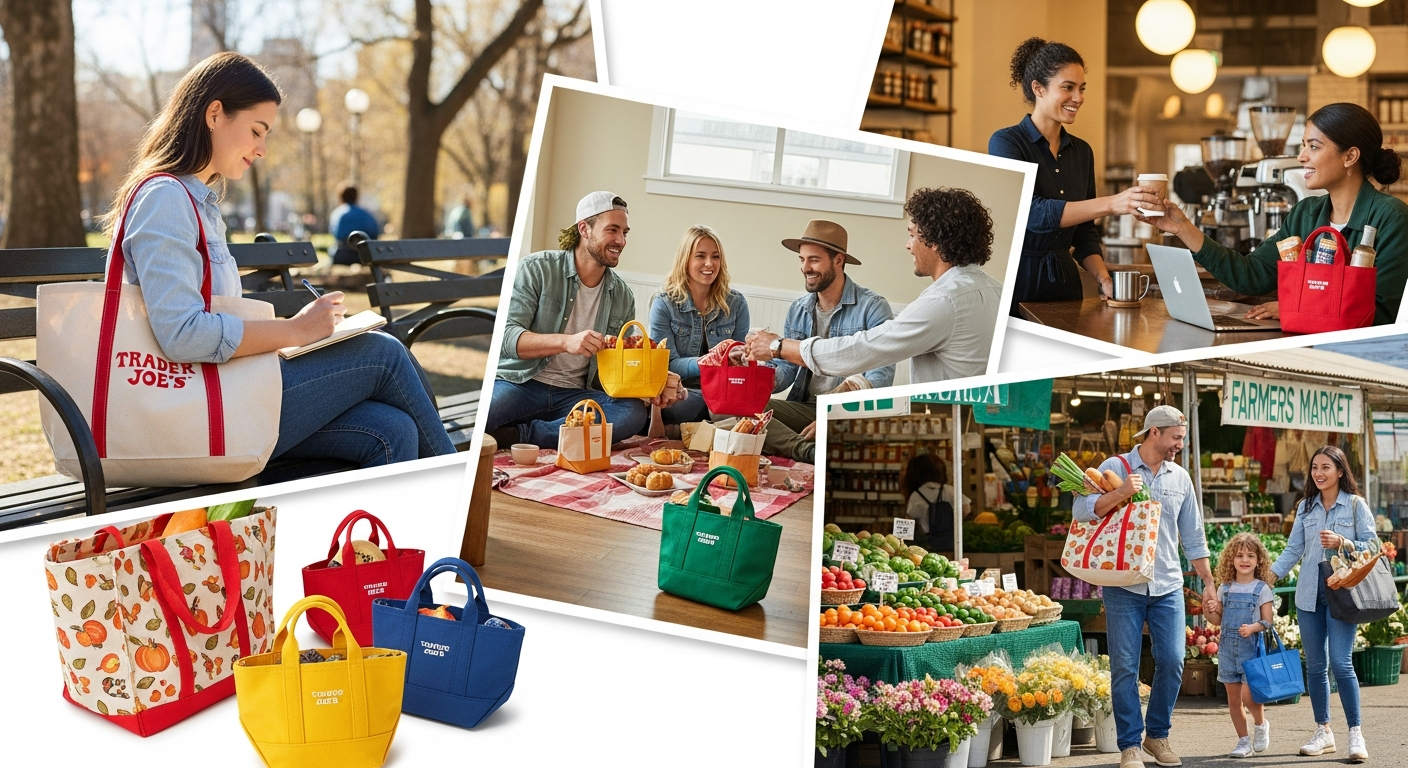
At its core, the appeal of the Trader Joe’s tote, especially the `trader joes mini tote`, lies in its paradox: it’s incredibly affordable, making it accessible to nearly everyone, yet its limited availability creates an instant sense of exclusivity. This isn’t a designer bag that only a select few can afford; it’s a democratic luxury. Anyone can theoretically own one, but only those lucky enough, or quick enough, actually do. This ‘accessible exclusive’ model fuels a unique kind of desire. When something sells out so quickly, it triggers our natural human instinct for wanting what’s scarce, what others deem valuable.
This dynamic created a secondary market that was nothing short of astonishing. As I mentioned earlier, the sudden surge in resale prices for a $2.99 `trader joes canvas tote` became national news. It wasn’t just a quirky phenomenon; it revealed a deep-seated enjoyment of the ‘hunt’ and the thrill of possession. This wasn’t about extravagant spending; it was about smart shopping, about participating in a moment, and perhaps, about a little bit of bragging rights. It also showcased how the internet, particularly social media, can amplify these trends, turning a simple product release into a nationwide event, a form of `trader joes fashion` statement.
Beyond the Checkout Lane: What the Tote Reveals About Us
The enduring popularity of the `trader joes tote bag` is more than just a fleeting trend; it offers a quiet window into modern `american community` and evolving `lifestyle choices`. It’s a statement about our values, our aspirations, and our shifting relationship with consumerism.
A Quiet Declaration of Values
In an age where environmental consciousness is growing, the simple reusable tote becomes a symbol of making better choices. It aligns with the `eco friendly tote bag american trend`, representing a small, everyday step towards sustainability. Carrying a Trader Joe’s bag often signifies a commitment to healthier eating, an interest in organic products, and a desire to support a brand that, while large, maintains a local, community-focused feel. It speaks to a generation that values authenticity and purpose over ostentation.
Moreover, the bag fosters a sense of shared identity. Seeing someone else with a Trader Joe’s tote often elicits a knowing nod, a silent acknowledgment of shared tastes and values. It’s a subtle way we connect in our increasingly digital world, a tangible piece of a broader, more conscious `trader joes lifestyle`. It reminds me of how, back in the day, certain hometown sports team logos or local ‘bakery’ names on a coffee mug would spark an instant conversation; this is that, but on a national scale, centered around a grocery store that feels like home.
From Practicality to Patriotism
In its own humble way, the `trader joes tote bag` embodies a certain American spirit. It’s about ingenuity, about taking a simple idea and making it special. It’s about finding joy and value in the everyday, about building communities around shared experiences, even if those experiences involve standing in line for cookie butter. This bag, whether the classic large `trader joes canvas tote` or the diminutive `trader joes mini tote`, reflects our evolving national identity – one that celebrates affordability, practicality, community, and a growing awareness of our impact on the world.
It’s a testament to our ability to find comfort, connection, and even a touch of whimsical pride in unexpected places. This little bag, woven from simple canvas, truly represents more than just a way to carry groceries; it’s a vibrant thread in the fabric of modern American life, reminding us that sometimes, the most iconic things are the ones we encounter every day.