
American Lifestyle
How Home Design Reflects American Values
I was sitting on my wooden porch just yesterday morning with a hot cup of black coffee. The early sun was coming up, casting long shadows across the wet grass. The world was wonderfully quiet. Moments like that always make me think about the house I grew up in back in the nineteen thirties. Our home design was simple back then. You had a sturdy porch out front where the grown ups sat in the evening to catch a gentle breeze. You had a formal parlor inside that we only used when company came calling. You had a small kitchen in the back where my mother seemed to spend most of her waking hours baking and cooking. The American home is a true mirror of our daily lives. We build our houses, and then our houses build us. They shape our daily habits. That is the situation we find ourselves in today. We can walk down any street and see the story of our people written in brick and wood.
But things got complicated over the decades. We started moving much faster. We built wider roads for bigger cars. We built taller fences to mark our territory. We stopped sitting on the front steps to greet neighbors and started retreating to the backyard. We wanted safety and quiet, but sometimes we just found isolation. The houses changed their physical shapes because what we valued in our hearts began to shift.
So, what do our homes really say about who we are as Americans right now? Are we still that tight knit neighborhood pulling together during hard times, or are we mostly strangers living side by side? The answer is not a simple one. The story of our houses shows a long, winding journey from close community to fierce privacy. Yet, looking at my grandchildren and their friends, I see a beautiful return to connection.
Let me tell you about a little street in Oak Park, Illinois. Decades ago, it was a place where people walked everywhere. The houses were built close to the sidewalk. You could smell Mrs. Gable baking her famous cinnamon bread right next door, and you could hear the local kids playing stickball in the street from sunrise to sunset. A young architect named Frank Lloyd Wright (1867-1959) spent a lot of time walking those very streets. He watched closely how people lived. He saw families gathered around the fireplace. He believed a house should grow naturally from the needs of the family inside it.
He started changing how we thought about the rooms we live in. His work represented a massive shift in American values. He took away those stiff, formal Victorian parlors. He brought in sweeping lines of natural light. He placed a massive stone hearth right at the center of the home to bring the whole family together in one warm space. That was a radical idea at the time. It was the seed of the modern American home, planting the idea that our living spaces should reflect honesty and togetherness rather than strict social rules.
Now, here is something that might surprise you. As we gained more land, we started stretching out. The United States Census Bureau has tracked these trends for a long time. They found that in nineteen fifty, the average size of a new single family home was just nine hundred and eighty three square feet. Whole families shared one single bathroom and tiny bedroom closets. We lived close together because we had to, and we learned how to share our space.
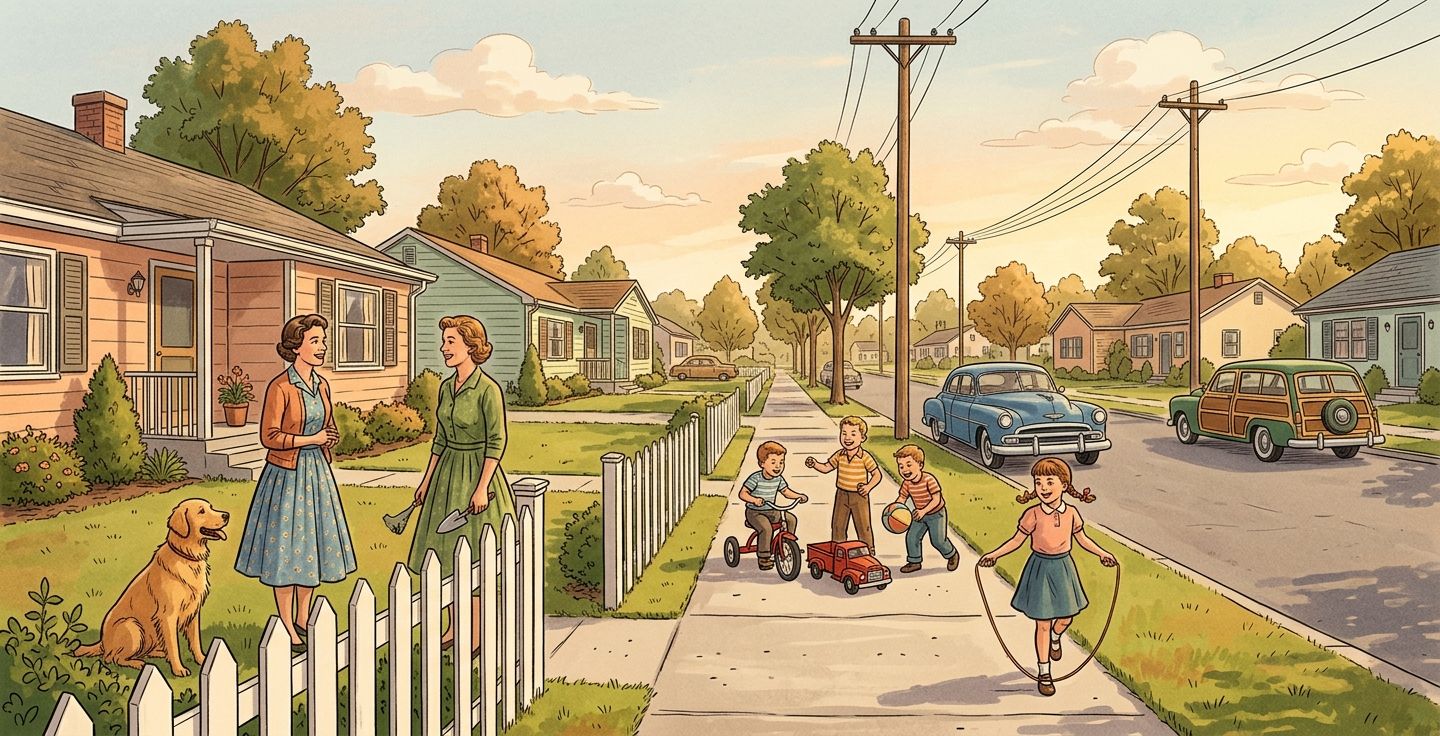
But jump forward to recent years. By twenty twenty two, the National Association of Home Builders reported that the average new home had ballooned to over two thousand five hundred square feet. At the exact same time our houses were growing, our households got smaller. We went from having over three people per home down to about two and a half. We essentially doubled our living space while shrinking the size of the family. We also moved our social lives from the front porch to the private backyard deck. A recent American Institute of Architects survey found that private outdoor living spaces in the back are now the number one requested feature. We traded the friendly neighborhood sidewalk for a private, fenced yard. Those numbers tell a striking story about our growing desire for personal space and a quiet escape.
The Push for a Private Kingdom
I remember when the young soldiers came back from the war. They wanted a quiet place of their own, a patch of green grass for their kids to run around on safely. That is when the suburban dream really took a firm hold on the American imagination. Let us look at a bold man named William Levitt (1907-1994). He saw what these young families needed. He bought up flat potato fields in Levittown, New York. He turned those fields into thousands of affordable houses, building them fast and cheap using assembly line methods.
This was a massive shift in how we lived. Suddenly, almost every working family could afford their own detached house. You did not have to share noisy walls with neighbors anymore. Levitt gave people a very specific version of the American dream. It was a private kingdom. The focus of the family moved inward. We bought shiny new televisions and gathered around them in the evenings in our own private living rooms. We stayed inside more often. The automobile garage became a prominent feature on the front of the house. Instead of walking to the corner store and chatting with the grocer, we drove our cars. The house became a comfortable fortress. We certainly gained wonderful independence and comfort, but we lost a little bit of the casual, daily chatter over the backyard fence.
Knocking Down the Walls
But families are always changing. The way we raise our children and spend our time changes with each new decade. Eventually, the American mother was no longer isolated in a cramped, hot kitchen at the very back of the house while the rest of the family relaxed in the parlor. We wanted to see each other. We wanted to cook, help the kids with homework, and watch the evening news at the same time.
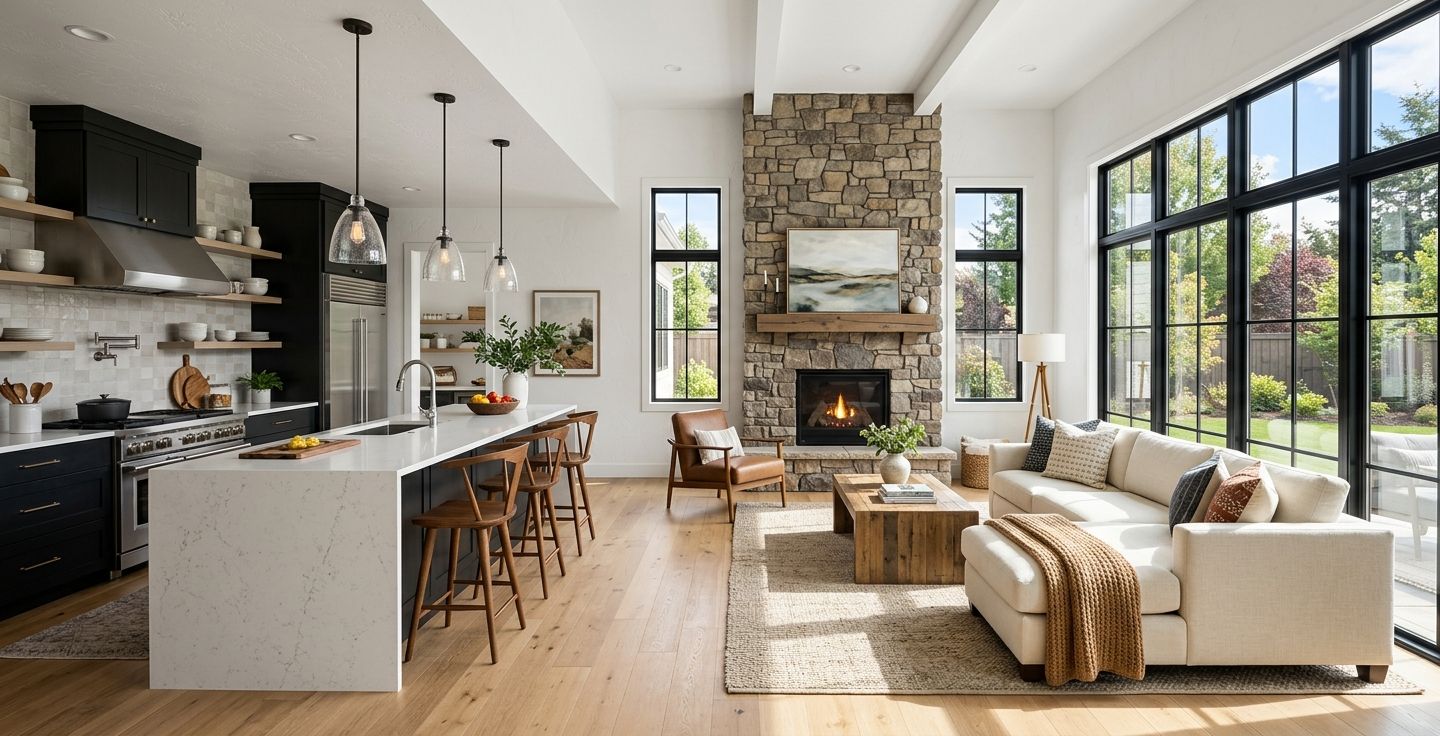
This strong desire created the open floor plan. We knocked down the heavy dividing walls between the kitchen, the dining room, and the living room. It made the house a lot louder, that is for sure. But it also made it significantly warmer and more inclusive. The open concept showed that we valued shared, chaotic time over formal, separate lives. We wanted our homes to be honest and messy and full of vibrant life. It was no longer about having a pristine, untouched parlor just for when guests came to visit. It was about living together, right out in the open, sharing the daily burdens and the joys. The large kitchen island replaced the old formal dining room table as the place where the true heart of the family beats today.
Looking Ahead with Hope
I sit on my porch now and I look at the young people buying houses in my neighborhood today. My own granddaughter just bought her first place, a modest little house a few miles from here. It gives my old heart so much genuine hope. Her generation is doing things differently, and I think they are doing it right. They are planting beautiful vegetable gardens in their front yards instead of hiding them in the back. They are putting comfortable chairs on the front porch again to say hello to the dog walkers. They are looking for ways to share lawnmowers and heavy tools with their neighbors instead of everyone buying their own.
They understand something very profound. A house is just a collection of wood, glass, and metal nails. A home is the warm, beating heart inside it. They are choosing spaces that welcome people in. They are building smaller, smarter, and incredibly kind homes.
I encourage you to take a good look around your own house today. Notice where you naturally spend your time. Think about how you can arrange a few comfortable chairs to encourage a really good conversation with a friend. Open up your heavy blinds. Let the bright sunshine in. Let the neighbors see a little bit of your beautiful life. Build a space that says welcome. We all need a little more connection these days, and it starts right at our own front doors.
Questions You Might Be Pondering
Why did older homes have so many small separate rooms?
In the older days, homes relied on small rooms because they were much easier to heat with individual fireplaces or stoves. We also had different social rules back then, with people wanting separate spaces for formal entertaining, cooking, and private family time.
What exactly caused the front porch to disappear from new home builds?
The arrival of the automobile changed everything. Cars made the front street noisy and dusty. At the same time, central air conditioning made it comfortable to stay inside during the hot summer months. Families naturally moved to the private backyard.
Are open floor plans still popular today?
Yes, they are still very popular because they keep the family connected in one large space. However, recent times have shown us that people are now looking for a little balance. They want open spaces for gathering, but they also want small, quiet nooks for reading or working.
How did suburban growth change our relationship with neighbors?
When we moved to the suburbs, we gained larger lots and more distance between houses. While this gave us wonderful privacy, it meant we had to make a much more conscious effort to go out and speak with our neighbors.
How can I make my own home feel more welcoming?
Start by spending a little more time in your front yard. Set up a comfortable chair by your door. Wave to folks as they walk by. When you show that you are open to conversation, your home naturally becomes a beacon of warmth.