
Geography & the American Landscape
The Nostalgia Of The Empty Corridor: How American Liminal Spaces Tell The Story Of Our Shared Past
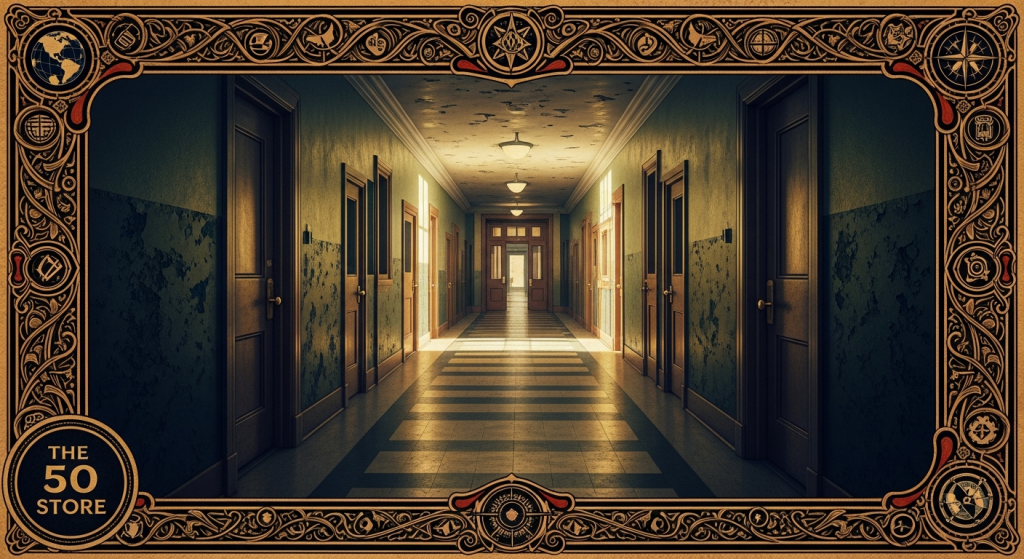
Step into an abandoned 1980s shopping mall at dusk, or walk down a dimly lit, carpeted hotel hallway late at night. Do you feel it? That strange, haunting familiarity? That’s the pull of a liminal space. These transitionary environments, stripped of their usual human bustle, act as quiet monuments to recent American history and consumer culture. They are more than just empty buildings; they are echoes. By exploring these eerie landscapes, we uncover a deeply shared, nostalgic longing for the security, optimism, and distinctive design of bygone decades.
As an outdoor journalist and geographer, I’ve spent countless hours traversing America‘s wild and untamed places, from the rugged canyons of Utah to the vast prairies of the Dakotas. Yet, some of the most profound quietude I’ve ever encountered hasn’t been in a pristine wilderness, but within the man-made canyons of our built environment. These ‘ghosts’ of our recent past, once humming with life, now stand in silent testament, inviting us to look closer at the fabric of our shared memory. They are a uniquely American phenomenon, often drenched in a specific kind of `retro Americana nostalgia`.
Defining the Aesthetic: What Makes an American Space Truly ‘Liminal’
What exactly is a `liminal space aesthetic`? The word ‘liminal’ comes from the Latin word ‘limen’, meaning a threshold. It refers to a transitional state or place, an in-between. Think of airports at 3 AM, empty school hallways on a Sunday, or an unrented storefront in an old strip mall. These are places designed for passage, for waiting, for transition, not for lingering. When devoid of their intended occupants, they reveal their true, often unsettling, character.
For me, the appeal lies in their inherent storytelling. They invite speculation. Who was here? What happened? What dreams were built and perhaps abandoned within these walls? They resonate with our collective subconscious, tapping into universal experiences of growth, change, and the passage of time. The `liminal spaces definition` emphasizes this sense of being on the verge of something, yet also perpetually stuck.
This is particularly true in America, where our history of rapid expansion, consumer innovation, and cultural shifts has left a unique trail of these `abandoned places America` wide. From the grand, now quiet, shopping centers to the roadside motels that once beckoned weary travelers, these sites offer a poignant glimpse into our past.
The Ghost of Consumerism: Dead Malls and the Echoes of Suburban Life
Perhaps no category of liminal space captures the American imagination quite like the `american dead malls`. These monolithic structures, once bustling epicenters of suburban life, now stand as solemn cathedrals to a bygone era of retail therapy and community gathering. I remember visiting the grand Hawthorne Plaza in Overland Park, Kansas in its final days, the echoes of my own childhood visits mingling with the eerie quiet. It was like walking through a dream, or perhaps a memory, made tangible.
The rise of the enclosed shopping mall after World War II was a monumental shift in American consumer culture, championed by visionary architects and developers like Victor Gruen. These were not just places to shop; they were climate-controlled town squares, symbols of prosperity, convenience, and the burgeoning suburban dream. However, changing demographics, the rise of e-commerce, and shifts in consumer preferences have led to a precipitous decline. According to a 2023 report by Placer.ai, over 50% of enclosed malls in the U.S. have experienced a significant decline in foot traffic since 2019, with many facing closure or redevelopment. The term ‘dead mall’ itself became popular in the early 2000s, with websites like deadmalls.com documenting closures for over two decades. 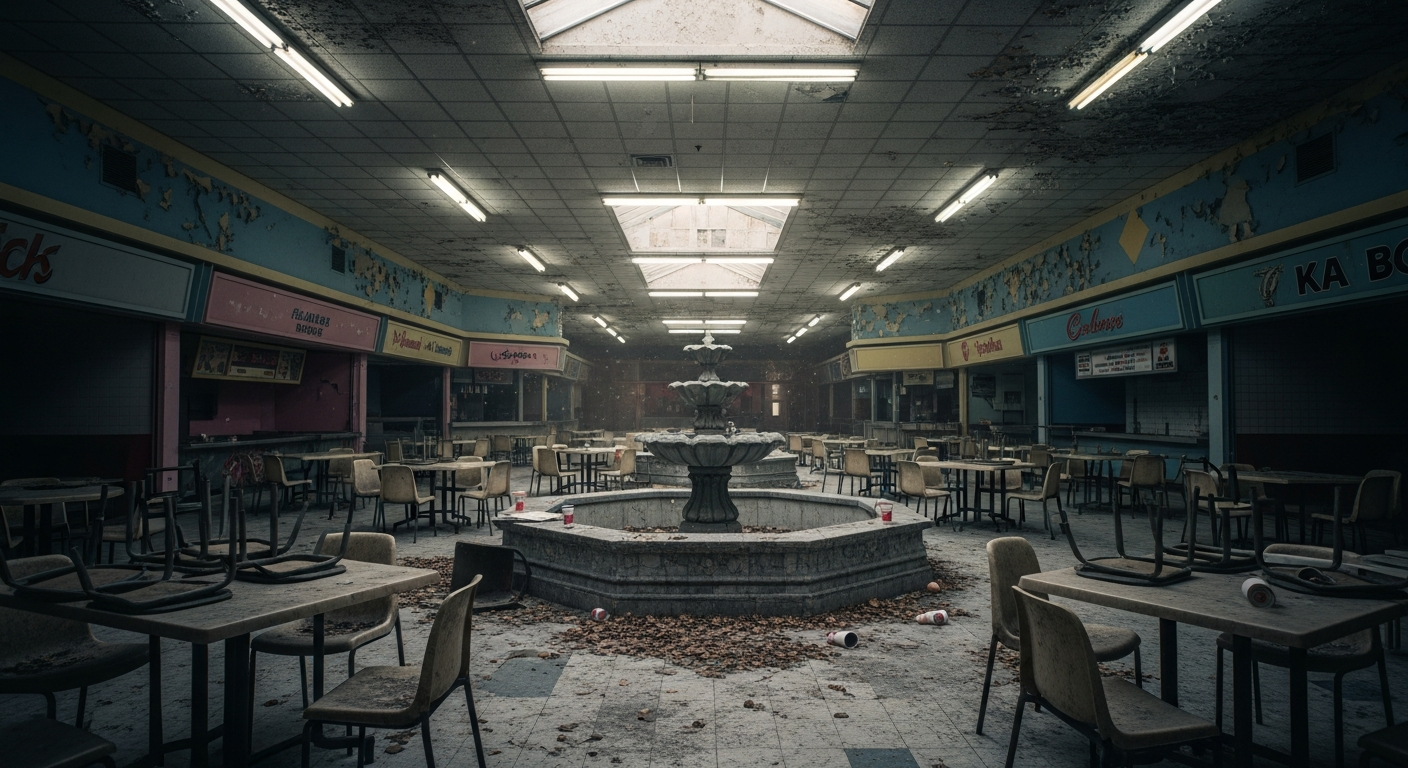
These malls, particularly those from the `1980s mall aesthetic`, often feature specific design elements: skylights bathing empty food courts in diffuse light, faded pastel color schemes, abandoned fountains, and once-vibrant storefronts now boarded up or displaying dusty mannequins. They are the ultimate `nostalgic places` for a generation that grew up with them, a tangible link to a collective past where Saturday afternoons were spent wandering their halls.
Here’s a comparison of the American shopping mall’s journey:
| Era | Key Characteristics | Societal Role | Current Status & Liminal Connection |
|---|---|---|---|
| 1950s-1970s | Innovative designs, anchor stores, climate control, suburban growth. | Community hub, family destination, symbol of post-war prosperity. | Many are still active, though some early examples have become ‘vintage’ or dated. |
| 1980s-Early 2000s | Larger, more elaborate; food courts, arcades, specialized boutiques. | Teen hangout, fashion trendsetter, entertainment complex. | Prime era for ‘dead malls’; evokes strong `1980s mall aesthetic` and `retro Americana nostalgia`. |
| 2010s-Present | Decline due to e-commerce, experiential retail focus, redevelopment or abandonment. | Struggling retail model, cultural curiosity, architectural relics. | Many stand as ultimate `liminal spaces`, subject to `eerie retro photography`, and the focus of `backrooms aesthetic` culture. |
Highway Motels and Late-Night Diners: The Romance of the Transitory Landscape
Beyond the malls, the American road trip has gifted us an entire genre of liminal spaces. I think of the lonely stretches of `liminal highway photos` I’ve captured on countless journeys across the country. The iconic ribbons of asphalt, particularly historic routes like Route 66, are lined with `vintage American motels` and `empty diners at night` that hum with the quiet stories of millions of travelers.
The interstate highway system, initiated in 1956 under President Dwight D. Eisenhower, transformed American travel, creating a network of transient havens. These motels, often sporting faded neon signs and mid-century architecture, were once beacons of rest and temporary community. Now, many stand vacant, their pools filled with leaves, their ‘VACANCY’ signs burnt out. They embody the transient nature of our travels and the fleeting moments we spend in these anonymous yet deeply evocative places. The fluorescent glow of a deserted motel lobby, the silent vending machine down a long corridor – these are scenes that prickle with an almost supernatural calm. 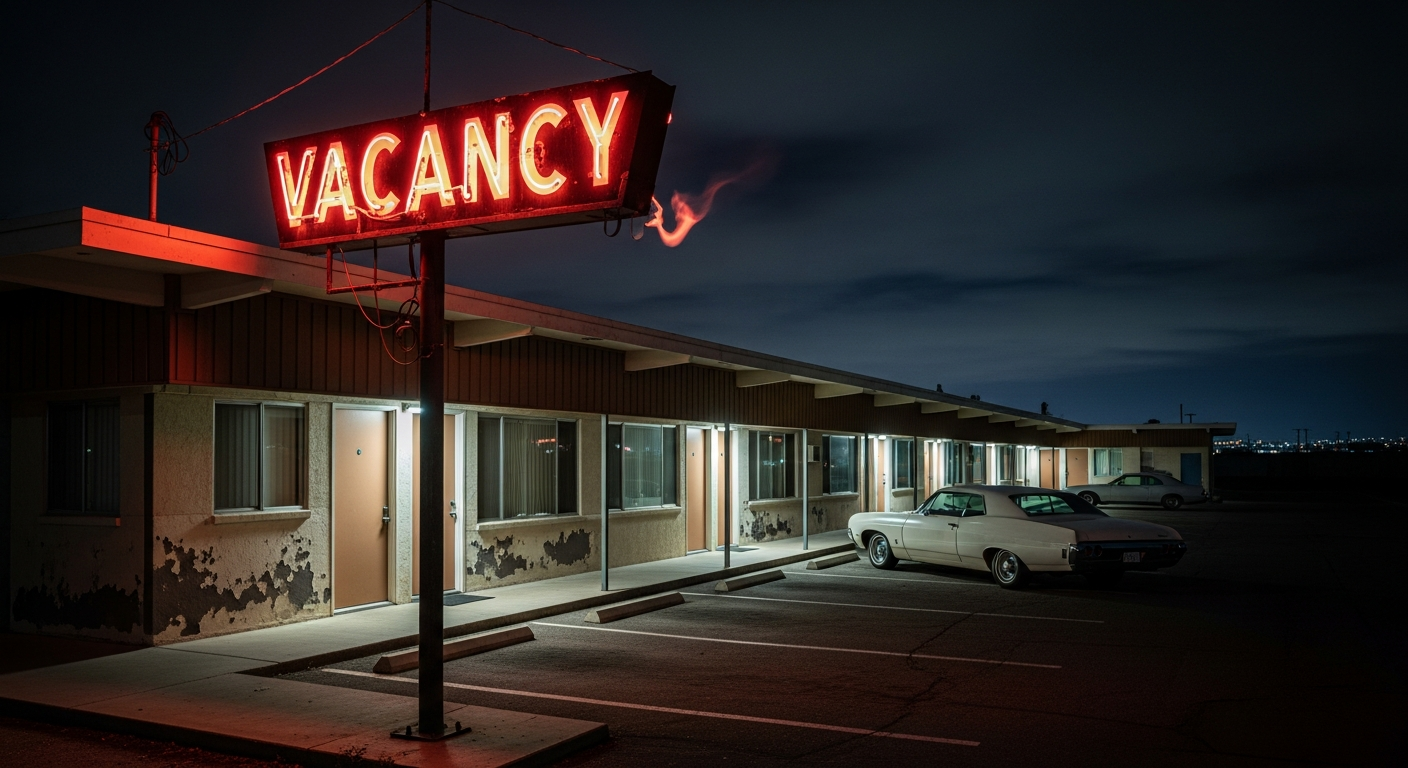
And then there are the diners. The clatter of plates, the scent of coffee, the murmur of conversations – all gone. What remains are the booths, the counter stools, the chrome accents reflecting the dim streetlights outside. These diners, once bustling with late-night conversations and early morning hustles, become stages for our quiet contemplation. They are `nostalgic places` because they represent a specific kind of freedom and anonymity that defined American road culture.
Nostalgia as Art: Why the Internet Is Obsessed with Retro American Environments
The internet, in its infinite capacity for cataloging human experience, has become a vast archive of `liminal space aesthetic`. From subreddits dedicated to `eerie retro photography` to viral TikTok trends showcasing the `backrooms aesthetic`, there’s a collective fascination with these unoccupied American landscapes. This digital obsession is more than just appreciating cool photos; it’s a communal act of remembrance and an exploration of shared emotional landscapes.
The attraction often stems from what we call ‘anemoia’ – a powerful nostalgia for a time you’ve never known. This isn’t just about remembering the 80s or 90s if you lived through them; it’s about feeling connected to an era, a mood, or a feeling that resonates deep within. These images often evoke a sense of uncanny familiarity, a dream-like quality that speaks to universal themes of solitude, transition, and the passage of time.
Documenting Your Own Liminal Discoveries: A Guide
If you’re drawn to these `nostalgic places` and want to explore them responsibly, here’s a quick guide to capturing the `liminal space aesthetic`:
- Prioritize Safety and Legality: Never trespass. Many `abandoned places America` offers are on private property and can be dangerous due to structural instability or hazards. Look for publicly accessible spaces (empty parks, late-night laundromats, quiet hallways in open buildings) or seek permission from owners.
- Go During Off-Peak Hours: The essence of liminality is absence. Early mornings, late nights, or weekdays during work hours are ideal for finding these spaces empty. This is when `empty diners at night` or `liminal highway photos` truly come to life.
- Focus on Composition: Look for leading lines (hallways, corridors), symmetry, and repeating patterns. The inherent design of these spaces often lends itself to powerful, balanced compositions.
- Play with Light: Natural light filtering through windows, the artificial glow of fluorescent tubes, or even the harsh beam of a flashlight can create dramatic effects. `Eerie retro photography` often thrives on low-light conditions and the interplay of shadows.
- Capture Details: A faded sign, a forgotten object, peeling paint – these small details tell a story and add depth to your `retro Americana nostalgia` captures.
- Respect the Space: Leave no trace. Do not disturb anything. The goal is to document, not to alter or damage.
The empty corridors and silent storefronts of America are more than just forgotten relics; they are storytellers. They invite us to pause, to reflect on where we’ve been, and to consider the intricate relationship between our built environments and our collective memory. So next time you find yourself in one of these `nostalgic places`, take a moment. Listen to the silence. Feel the resonance. You might just hear the echoes of a shared past whispering back to you, reminding us all of the beautiful, complicated journey of this nation.
Takes a bad turn.