
American Lifestyle
The Backyard Barbecue Boom: How Post-War Suburbia Created The Charcoal Grilling Culture
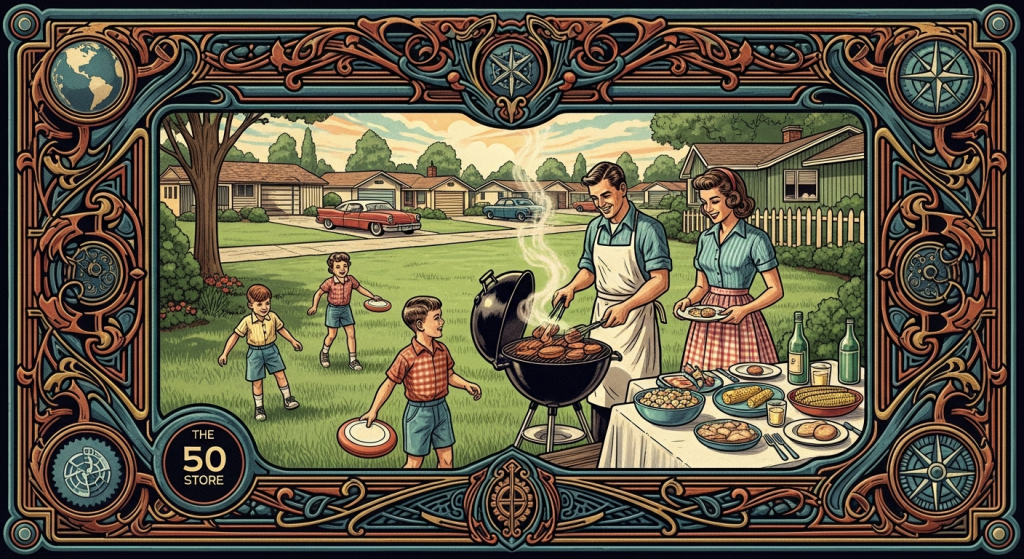
The whisper of a flickering flame, the unmistakable scent of smoldering charcoal, and that joyous sizzle as a burger meets the hot grate. For so many of us, this is the soundtrack and aroma of a perfect summer afternoon. A cold drink in hand, surrounded by loved ones, laughing as smoke billows lazily towards the sky. The backyard barbecue isn’t just a meal; it’s a cherished American ritual, a cornerstone of our collective memory, woven into the fabric of weekend relaxation. But it wasn’t always this way, born in elaborate outdoor kitchens or gourmet grilling trends. No, this beloved tradition, in its most classic form, truly found its footing and spread its roots right after World War II, blossoming in the fertile ground of newly minted suburban neighborhoods across our great nation.
As a folklorist, I’ve always been fascinated by how everyday practices evolve into profound cultural touchstones. The story of the backyard barbecue is a quintessential American micro-history, a beautiful illustration of how innovation, economic shifts, and a shared desire for community can create something truly enduring. It’s a tale of returning soldiers, growing families, and the dream of a little slice of heaven, complete with a patch of green and a trusty grill.
The Suburban Grilling Revolution: How Post-War America Fired Up Its Backyards
Imagine the mid-20th century, a nation emerging from the shadow of war, brimming with a quiet optimism and a profound desire for stability. Millions of servicemen were returning home, eager to build families and lives. The demand for housing soared, and America responded with an unprecedented boom in suburban development. Communities like Levittown, New York, became iconic symbols of this new era, offering affordable, standardized homes, each with its own defining feature: the private backyard.
Before the war, homeownership, especially with a spacious yard, was a luxury for many. But the G.I. Bill, formally known as the Servicemen’s Readjustment Act of 1944, made homeownership a reality for millions of veterans. Suddenly, young families had not only a roof over their heads but also a dedicated outdoor space, ripe for recreation and gathering. Between 1945 and 1960, the suburban population nearly doubled, swelling from 27 million to 53 million. This wasn’t just a demographic shift; it was a cultural one, creating millions of identical canvases for a new kind of American leisure. A study by the U.S. Census Bureau shows that homeownership rates surged from around 43% in the 1940s to over 60% by the mid-1950s, largely fueled by this suburban expansion.
George Stephen’s Buoy: The Birth of the Kettle Grill
While people had cooked over open fires for centuries, and even rudimentary grills existed, they were often cumbersome, exposed to the elements, and difficult to control. The wind would scatter ashes, flare-ups were common, and consistent cooking was a challenge. Then came George Stephen. In 1952, working at Weber Brothers Metal Works in Chicago, Illinois, a company primarily known for fabricating sheet metal products, Stephen had a flash of genius. He was frustrated with open-brazier grills and, looking at the two halves of a metal buoy his company produced, an idea sparked. Why not create a grill that was enclosed, protecting the food from wind and keeping the heat contained?
Stephen cut a buoy in half, used the bottom for the fire bowl, punched air vents into it, and added legs. He then fitted the top half as a lid, complete with a handle. This simple, elegant design solved so many problems. The domed lid trapped heat, allowing for more even cooking, fewer flare-ups, and the ability to smoke food gently. It was revolutionary. This invention, the classic domed kettle grill, became the foundation of Weber-Stephen Products LLC, and its iconic design has remained largely unchanged for over 70 years, a true testament to its perfect functionality. My own grandmother, bless her heart, had one of the very first models; I remember her showing me how to open the vents just so, for the perfect slow cook.
The Charcoal King: Fueling the Fire
Even with the perfect grill, a reliable, easy-to-use fuel was essential. Enter charcoal briquettes. While charcoal had been around forever, its mass production in a standardized, convenient form was a game-changer. Believe it or not, the modern briquette has ties to Henry Ford. In the 1920s, after producing his Model T automobiles, Ford found himself with an abundance of wood scraps from his vehicle production. Ever the innovator, he partnered with Thomas Edison and E.G. Kingsford to create the Kingsford Charcoal Company, converting those scraps into easy-to-light, consistent charcoal briquettes. The original Kingsford plant was built in Kingsford, Michigan, near Ford’s lumber mill.
By the 1950s, Kingsford and other manufacturers were producing briquettes on an industrial scale, making charcoal affordable and widely available in every grocery store. This meant that anyone, even a novice, could easily light a fire and maintain a consistent temperature for grilling. No more foraging for wood or dealing with unpredictable flames. The charcoal briquette made backyard grilling fast, affordable, and incredibly accessible, turning a once-cumbersome task into a simple, enjoyable part of the weekend routine.
The Social Hearth: A Symbol of Americana
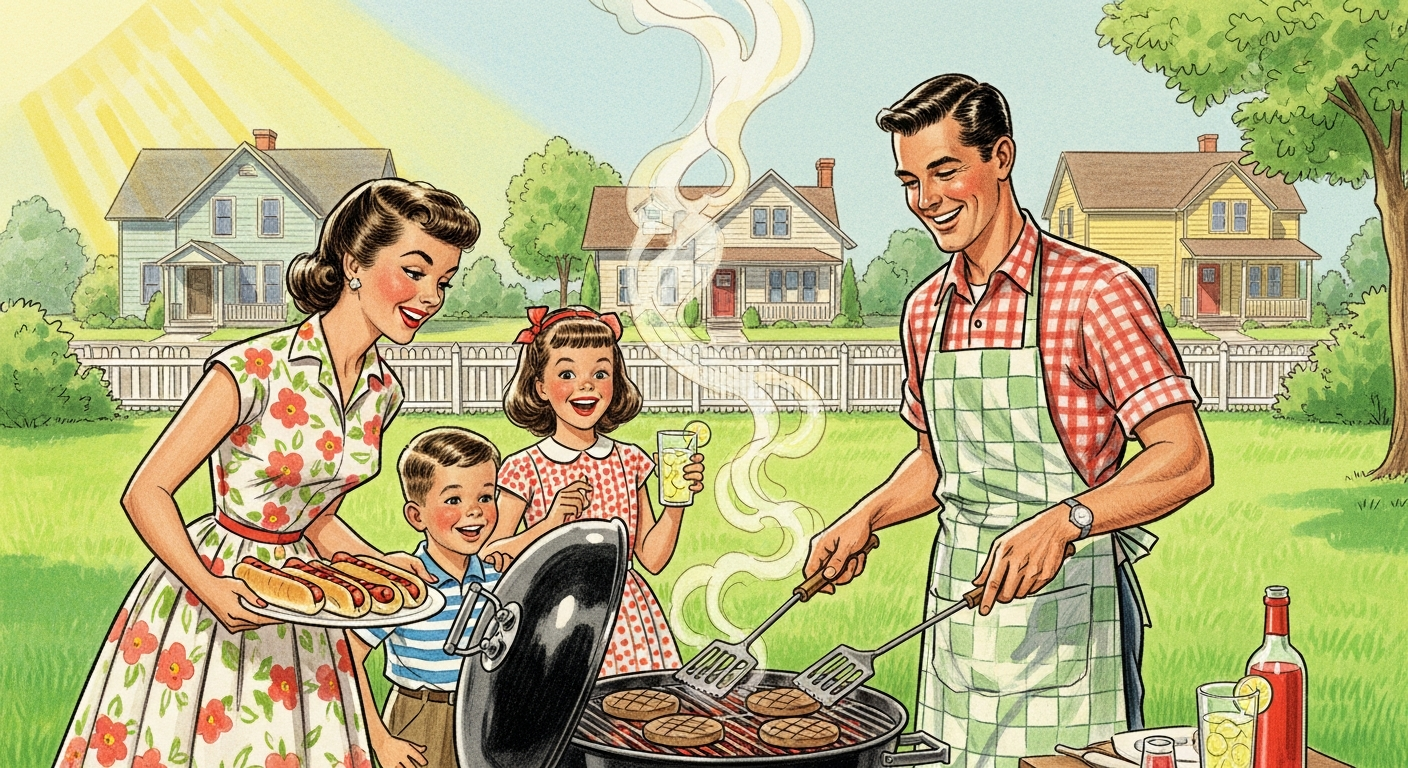
With affordable homes, private backyards, ingenious grills, and convenient fuel, the stage was set for the backyard barbecue to become a powerful cultural phenomenon. It wasn’t just about cooking; it was about lifestyle. The grill transformed cooking from an indoor chore, often relegated to the women of the household, into an outdoor, social event. Suddenly, the father, or ‘King of the Backyard,’ could take center stage, mastering the flames and overseeing the feast. This shift reflected a broader post-war aspiration for leisure and family togetherness.
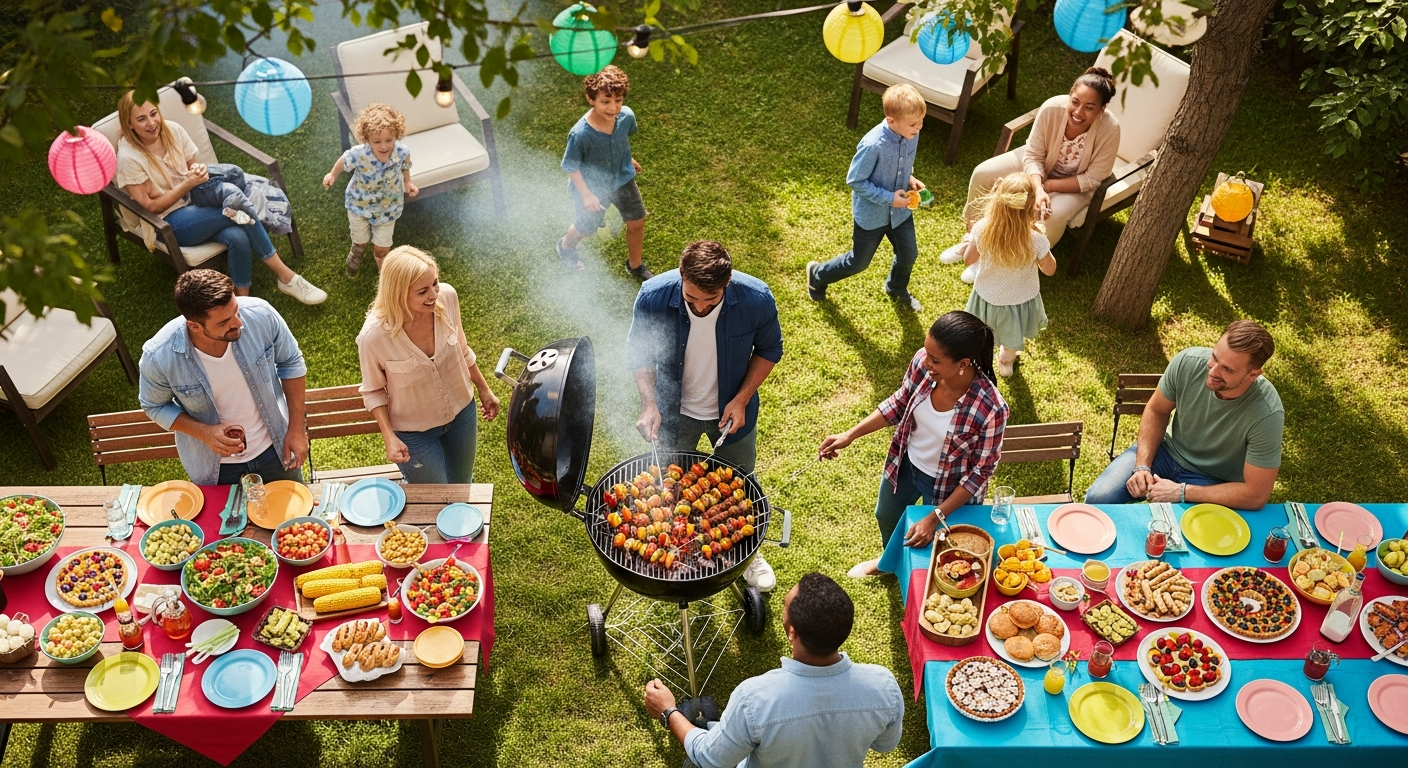
The backyard barbecue became the ultimate symbol of weekend relaxation, family meals, and friendly gatherings. It was where neighbors connected over fences, where children played freely on the lawn, and where simple pleasures reigned supreme. These gatherings fostered a sense of community, of shared prosperity, and of pure, unadulterated American joy. I remember summer evenings in my own Ohio neighborhood, the mingled scents of charcoal and freshly cut grass, punctuated by the laughter of kids and the clinking of glasses. Those were the golden days, truly.
Here’s a look at how these elements converged:
| Year/Period | Key Development | Impact on Grilling Culture |
|---|---|---|
| Post-WWII (1945-1960s) | Suburban housing boom and G.I. Bill incentives. | Millions of homes with private backyards, creating dedicated outdoor living spaces perfect for grilling. |
| Early 1920s | Henry Ford and Kingsford Charcoal Company mass-produce briquettes. | Standardized, affordable, and easy-to-use fuel becomes widely available, simplifying fire management. |
| 1952 | George Stephen invents the domed kettle grill. | Solves problems of wind, ash, and uneven cooking; provides superior heat control for diverse cooking. |
| 1950s onward | Marketing and cultural adoption of backyard grilling. | Transforms outdoor cooking into a popular social event, fostering family bonding and community spirit. |

Grill Chill And Freedom BBQ T Shirt
Wear your story with pride! Celebrate classic American values, history, and heritage with our premium crafted apparel, designed for comfort and durability.
Shop the Look →Becoming the Backyard Grill Master
The beauty of the classic charcoal grill is its simplicity and the amazing flavors it imparts. If you’re looking to embrace this heritage and truly become the ‘King of the Backyard,’ here’s a step-by-step guide to mastering the timeless art of charcoal grilling:
- Choose Your Charcoal Wisely: Opt for good quality briquettes for consistent heat or lump charcoal for a more natural flavor and higher heat. A chimney starter is your best friend for lighting charcoal efficiently without lighter fluid, which can leave an unpleasant chemical taste.
- Build Your Fire: Place charcoal in your chimney starter with a crumpled newspaper or a fire starter cube underneath. Light it. In about 15-20 minutes, the coals will be covered in a light gray ash. This means they’re ready!
- Arrange Your Coals: For direct grilling (burgers, hot dogs, thin steaks), spread the coals evenly across the bottom grate. For indirect grilling (roasts, whole chickens, ribs), push the coals to one side or in a circle around the edge of the grill, leaving the center empty. This allows for slower, oven-like cooking.
- Control the Airflow: The vents on your kettle grill are crucial. Fully open bottom vents feed oxygen to the coals for hotter heat. Partially closing them reduces airflow and lowers the temperature. The top vent controls heat escaping and should generally be left at least partially open to prevent extinguishing the coals.
- Preheat Your Grate: Always place your cooking grate on the grill and close the lid for 5-10 minutes to let it heat up. A hot grate prevents sticking and creates beautiful sear marks. Clean the grate with a wire brush before adding food.
- Master the Flip: Don’t constantly fuss with your food. Let it cook. For most items, one flip is all you need. Resist the urge to press down on burgers or steaks; you’ll squeeze out all those delicious juices!
- Rest Your Meat: Once cooked, transfer your meats to a cutting board and let them rest for 5-10 minutes before slicing. This allows the juices to redistribute, resulting in a more tender and flavorful outcome.
Embracing the charcoal grill isn’t just about cooking; it’s about connecting with a piece of American tradition. It’s about slowing down, enjoying the process, and sharing good food and good company. It’s about creating those indelible memories that only a backyard gathering can foster. There’s a certain pride that comes with tending the fire, with serving up a meal cooked over an open flame, just as generations before us have done.
So, as you stand over your grill this weekend, charcoal smoke curling around you, take a moment to appreciate the journey of this humble backyard fixture. It’s more than just a cooking apparatus; it’s a direct link to the hopeful, community-building spirit of post-war America. And what better way to embody that spirit than with the perfect uniform for your weekend cookout? Our ‘King of the Backyard Charcoal Grilling Tee’ is made from premium combed ring-spun cotton that feels soft and comfortable all day. It’s not just a shirt; it’s a badge of honor for every grill master who understands the heart and heritage behind the flame.