
Immigration, Diversity & Identity
The Brave Irish Brigade Of The Civil War: Fighting To Save Their New Home
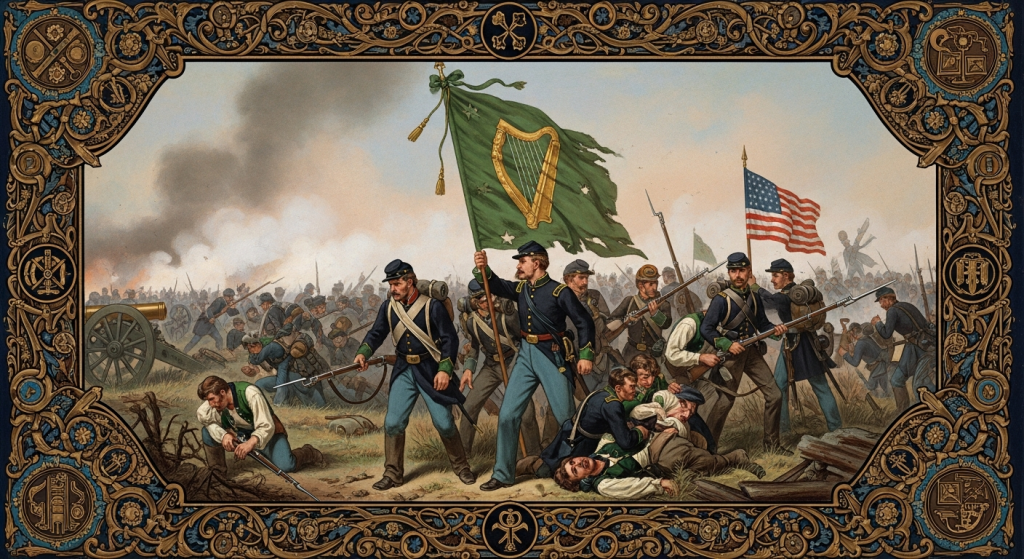
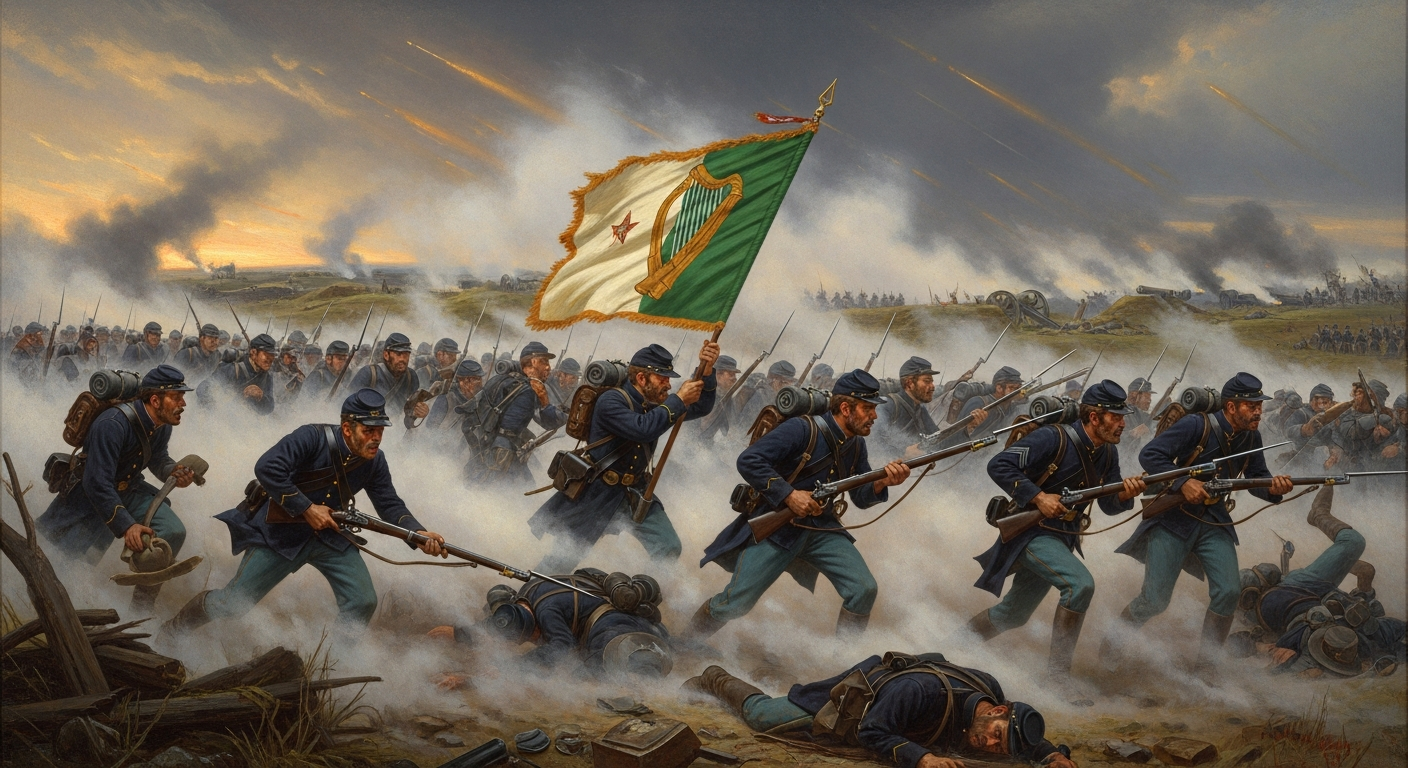
The roar of cannons shook the frozen earth, a brutal crescendo against the Potomac’s winter chill. On December 13, 1862, at the Battle of Fredericksburg, Union soldiers charging Marye’s Heights witnessed a sight that would forever etch itself into the annals of American history. Through the smoke and chaos, a brigade advanced not under the familiar Stars and Stripes alone, but under a solid green flag, emblazoned with a golden Irish harp, fluttering defiantly against the leaden sky.
These were the men of the Irish Brigade. Fresh off the ships, many of them, immigrants who had fled famine and hardship, now fighting with an unparalleled ferocity to save their new home, the United States. Their bravery that day, and in countless battles across the Eastern Theater, earned them the awe and praise of friend and foe alike.
Fleeing the Famine, Finding a Home
My work as a geographer and guide often takes me to the hallowed grounds of battlefields and the bustling ports where our nation’s story truly began. I’ve walked the docks of New York City, imagining the hope and trepidation in the hearts of millions. For the Irish, the mid-19th century brought unspeakable suffering. The Great Famine (1845-1852) devastated Ireland, forcing over a million people to leave their homeland. They arrived in American cities, often impoverished, and faced immediate, intense discrimination. ‘No Irish Need Apply’ signs were common, and they were often relegated to the most grueling and dangerous labor.
Yet, amidst this struggle, a fierce desire to prove their loyalty, to truly belong to this new nation, burned within them. When the drumbeat of war sounded in 1861, it offered an opportunity for these newcomers to demonstrate their unwavering commitment to the Union cause. It was a chance to forge their American identity in the crucible of conflict.
The Call to Arms: A Surprising Statistic
It’s easy to overlook the sheer scale of their contribution. Did you know that by the end of the Civil War, nearly 150,000 Irish-born soldiers served in the Union Army alone? This incredible number, a testament to their dedication, means that roughly 10% of all Union soldiers were Irish immigrants, many of them serving in units like the Irish Brigade. This commitment was not without its costs. The casualty rates for Irish regiments were often staggering, reflecting their position in the thick of the fiercest fighting. For many, the battlefield was the ultimate proving ground, a place where their ‘Americanness’ could be earned through valor.
Thomas Francis Meagher: The Revolutionary Leader
No story of the Irish Brigade is complete without its charismatic leader, Thomas Francis Meagher. An Irish revolutionary and orator, Meagher had been exiled to Tasmania by the British for his role in the Young Irelander Rebellion of 1848. He escaped to America in 1852, finding a new purpose in New York. When the Civil War erupted, Meagher, with his fiery speeches and unwavering patriotism, galvanized the Irish immigrant community. He was instrumental in raising the 69th New York Regiment, which would become the heart of the Irish Brigade.
Meagher understood the deep-seated yearning for recognition among his countrymen. He promised them a chance to fight for freedom, not just for the Union, but for the very idea of a society where their heritage would be respected, and their sacrifices honored. His leadership, often from the front lines, inspired a devotion that propelled his men to incredible feats of courage.
Courage on the Heights: Fredericksburg and Beyond
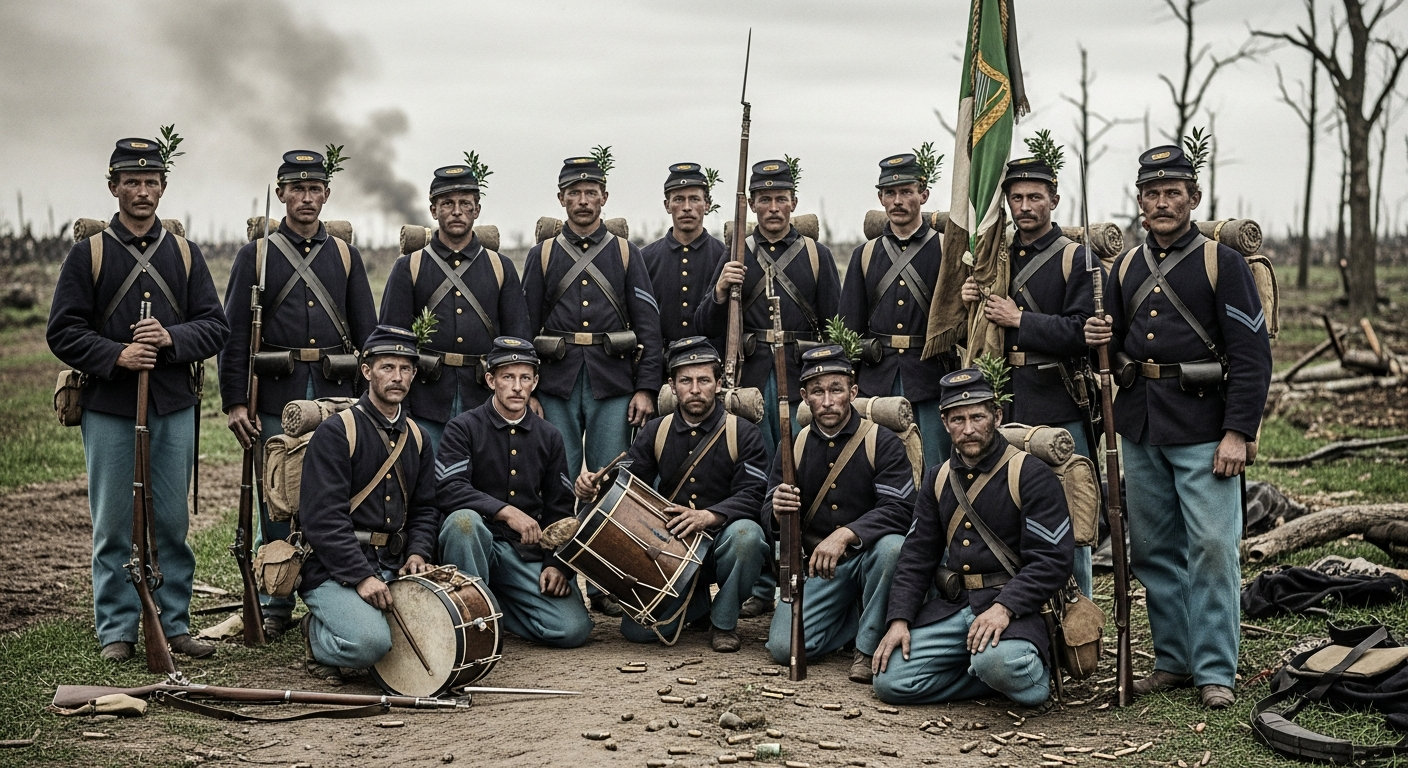
The name ‘Irish Brigade’ became synonymous with fearless determination. At the Battle of Fredericksburg, they faced a near-impossible task: charge across open ground and assault the Confederate defenses entrenched behind a stone wall on Marye’s Heights. As they prepared, a powerful and poignant act of solidarity unfolded. Men plucked sprigs of green boxwood from nearby bushes and fastened them to their caps. It was a silent, powerful declaration: they would die as Irishmen, for their new country. Five times they charged, each wave mown down by relentless Confederate fire. Yet, they kept coming. General Robert E. Lee himself, watching from a distance, reportedly remarked, ‘Never were men so brave. They are the fighting brigade.’
Their sacrifice at Fredericksburg was immense. The brigade suffered over 50% casualties in that single assault. But their legacy wasn’t just in the numbers. It was in the unwavering spirit they displayed. They fought in every major Eastern campaign, from the bloody fields of Antietam to the pivotal struggle at Gettysburg, always at the forefront, always holding the line.
The Sacrifice Remembered: A New Chapter for Immigrants
The extreme bravery and staggering losses of the Irish Brigade permanently altered perceptions. In post-war America, it became much harder to dismiss Irish immigrants as ‘unfit’ or ‘disloyal.’ Their service fundamentally shifted the narrative, paving the way for greater acceptance and integration. They proved, unequivocally, that loyalty to America transcended birthplace. Their courage helped to forge a more inclusive understanding of American identity itself.
Standing on a windswept battlefield, I often reflect on the individual stories of these men. They came seeking refuge, found a cause, and gave everything. Their story is a powerful reminder of how adversity can forge identity, and how the courage of a few can open doors for many.
Honoring Their Legacy: Practical Steps
The legacy of the Irish Brigade is not just a historical footnote; it’s a living testament to immigrant patriotism. How can we, in our modern lives, connect with and honor this profound history?
Tracing Your Ancestors’ Civil War Stories
Many of us have immigrant roots, and the Civil War touched countless families. Here’s a step-by-step guide to researching your own ancestors’ service:
- Start with Family Records: Gather any old letters, photos, Bibles, or oral histories. Look for names, dates, and places of birth.
- Utilize Census Records: Online archives like Ancestry.com and FamilySearch.org contain federal census records (1850, 1860, 1870, etc.) that can confirm family members’ residences and birthplaces.
- Search Military Service Records: The National Archives (NARA) holds extensive Civil War service records. Websites like Fold3.com provide digital access to these, including pension applications, which often contain rich biographical details.
- Explore Regimental Histories: Once you identify a regiment, seek out its specific history. Many regiments have books, online databases, and even dedicated historical societies that can provide context and specific battle details.
- Visit Historical Sites: There’s no substitute for walking the ground where your ancestors may have served. Battlefield parks like Gettysburg, Antietam, and Fredericksburg offer incredible interpretive programs.
Key Battles and Casualties of the Irish Brigade
The following table highlights some of the major engagements where the Irish Brigade distinguished itself, often at great cost:
| Battle | Date | Significance for Brigade | Approx. Casualties (Killed, Wounded, Missing) |
|---|---|---|---|
| Antietam (Sharpsburg) | September 17, 1862 | Heavy fighting in the ‘Bloody Lane,’ suffering devastating losses. | 540 out of ~1,000 engaged (54%) |
| Fredericksburg | December 13, 1862 | Legendary charge on Marye’s Heights under the green flag. | 545 out of ~1,200 engaged (45%) |
| Gettysburg | July 2, 1863 | Crucial defense of the ‘Wheatfield’ against Confederate assaults. | 190 out of ~500 engaged (38%) |
| Wilderness Campaign | May 5-7, 1864 | Sustained brutal fighting in dense woods, further depleting ranks. | Over 200 out of remaining ~600 (33%) |
The Enduring Spirit of the Fighting Irish
The story of the Irish Brigade is truly an American epic. It’s a powerful narrative of courage, identity, and the enduring spirit of those who fought to build and preserve their new home. Their sacrifice forged a path for countless future immigrants and reminds us that America’s strength has always been in its diverse tapestry of peoples, united by common ideals.
To celebrate this incredible legacy of immigrant patriotism and sacrifice, The50 Store offers our ‘Irish Brigade 1862 Green Boxwood Tee.’ It’s printed with a vintage Irish harp emblem, a nod to those brave men who wore green sprigs in their caps, on our premium, breathable combed cotton. Wear it with pride, and remember their story.