
Culture & Traditions
Beans And Franks: The Comforting History Of A Classic American Supper
My dearest friends, gather ’round, pull up a chair. There are some things in life, simple things, that just stick with you. They become a part of who you are, woven into the fabric of your memory, your family, your very American story. For me, and I bet for many of you, few meals conjure up memories of simple, nostalgic American childhoods quite like a hot plate of baked beans and sliced hot dogs. Often called ‘Beanie Weenies,’ this humble, hearty combination has fed millions of families during camping trips, summer cookouts, and busy weeknights.
It’s a dish that might seem too everyday to have a grand tale, too ordinary to hold deep meaning. But believe me, behind this humble pairing of sweet-and-savory comfort lies a truly fascinating story. It’s a tale of American ingenuity, food preservation, military rations, and the enduring spirit of our people, finding joy and sustenance in the simplest of ways. It’s more than just a `classic american comfort food`; it’s a testament to how our nation has grown and changed, one satisfying bite at a time. Let’s take a little stroll down memory lane, shall we, and uncover the rich `history of baked beans and franks`.
The New England Origin: How Boston Baked Beans Paved the Way
To truly understand the journey of `hot dogs with baked beans`, we first have to go way back, long before anyone thought to slice up a frankfurter and toss it in. Our story begins in the frosty, fertile grounds of New England, particularly in the bustling port city of Boston. Here, a culinary tradition took root that would lay the very foundation for our beloved beans.
You see, the early Puritan settlers brought with them a strong work ethic and a strict observance of the Sabbath. Saturdays were for preparing, and Sundays were for rest and worship. Cooking on the Lord’s Day was, for many, out of the question. So, resourceful homemakers devised a plan: a dish that could be prepared on Saturday, slow-cooked for hours, and then kept warm or reheated for a hearty, ready-made meal on Sunday. And thus, Boston baked beans were born.
Indigenous Influence and Colonial Ingenuity
It wasn’t just Puritan strictness, though. The colonists were keen observers. They learned a lot from the indigenous peoples of the region, who had long cooked beans slowly in earthenware pots buried in pits with hot coals. The colonists adapted this, using their newly introduced beans (often navy or pea beans), sweetened with molasses – a cheap and readily available byproduct of the Caribbean sugar trade – and seasoned with salt pork. This wasn’t just about taste; the salt pork added much-needed fat and protein, and the molasses provided crucial calories for hard-working folks.
This slow-cooked, molasses-sweetened bean dish became a regional hallmark. It wasn’t just sustenance; it was community. On Saturday, neighbors would often take their bean pots to the local baker, who would put them in his cooling brick ovens after the bread was done, allowing them to bake gently overnight. Imagine that aroma drifting through the crisp New England air! It’s this deep, sweet, savory bean profile, patiently prepared, that truly defines the original American baked bean and set the stage for everything that followed.
The Convenience Revolution: Canned Beans for a Growing Nation
Fast forward a couple of centuries, and America was changing at a breathtaking pace. The Industrial Revolution was in full swing, people were moving to cities, and the pace of life accelerated. Time was money, and convenience became king. This is where canning steps onto the scene, a game-changer for American kitchens and the ultimate enabler for the widespread adoption of our beans.
The concept of preserving food in sealed containers gained traction in the 19th century. During the Civil War, the need for shelf-stable rations for soldiers like Ulysses S. Grant’s troops was immense. While baked beans weren’t mass-produced in cans for the Civil War in the way they would be later, the war certainly spurred interest in food preservation techniques. By the late 1800s, companies like Heinz and B&M (named for Burnham & Morrill, a company that started in Portland, Maine) began mass-producing canned pork and beans. These weren’t just any beans; they were often in a tomato-based sauce, a delicious evolution from the simpler molasses recipe, though the sweeter Boston-style also persisted.
Beans for the Masses: Fueling America’s Growth
Think about it: a ready-to-eat, protein-rich, affordable meal, sitting on a shelf, requiring no refrigeration until opened. This was revolutionary! It was a godsend for factory workers, homesteaders, and rapidly expanding urban families. Beans went from a Saturday-night ritual to an any-night savior. The advertising campaigns of the early 20th century proudly proclaimed canned beans as a wholesome, quick, and economical choice.
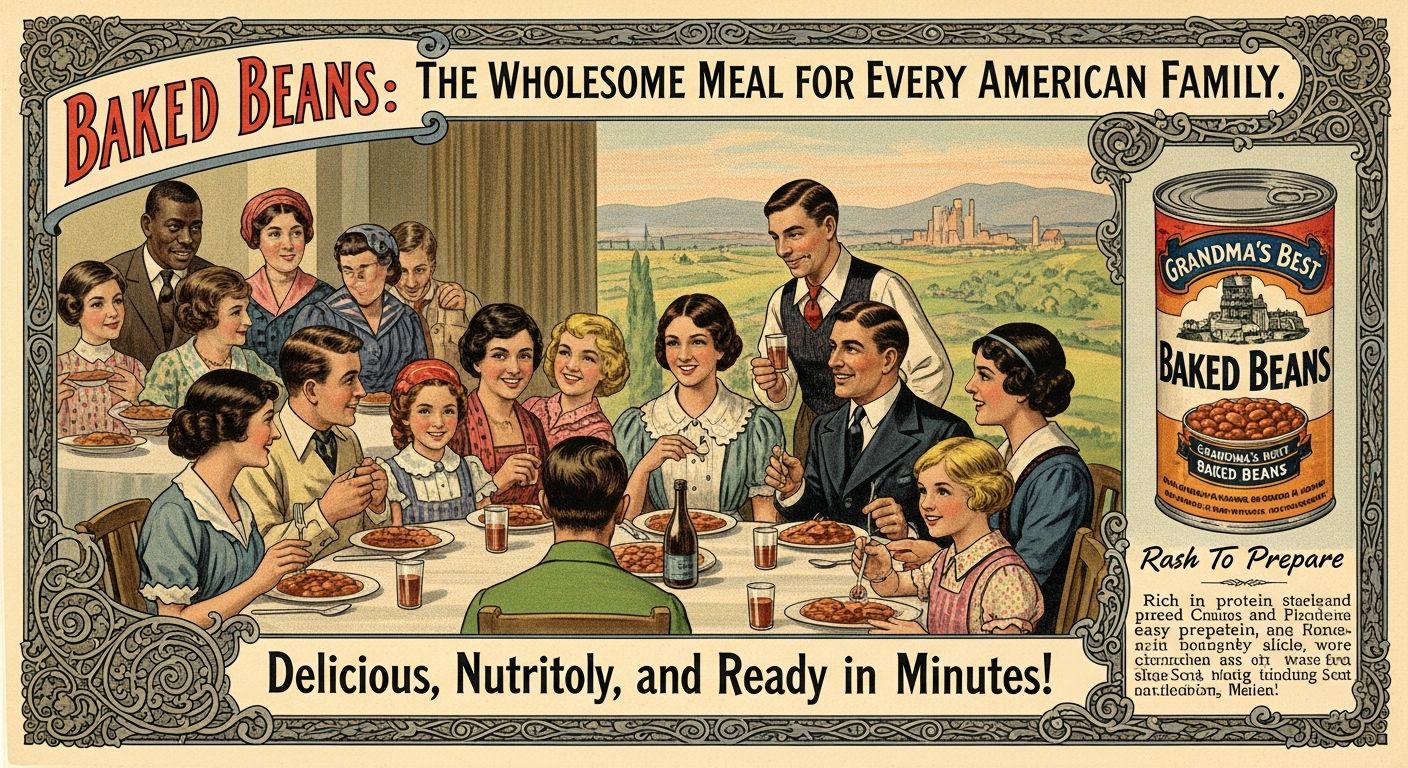
It’s hard to overstate the impact. By the early 1900s, canned goods were transforming diets. Here’s a little tidbit I found surprising: By 1910, the U.S. canning industry was producing over 3 billion cans of food annually! A good chunk of that was dedicated to vegetables and beans. When World War I and then World War II came around, beans in cans became an indispensable part of military rations, feeding our brave men and women abroad. It was a taste of home, a dependable source of energy, and an absolute logistical marvel.
My own grandfather, who served in the Navy during WWII, used to tell me stories about how those cans of beans, sometimes cold right from the can, were a comfort. A small, simple reminder of the America they were fighting for. This `classic american comfort food` was truly a staple, not just at home, but on the front lines too.
The Backyard Mashup: The History of Franks and Beans
Now, we arrive at the magical moment when two great American food traditions finally met: the humble baked bean and the glorious frankfurter. Hot dogs themselves have a rich history, arriving in America with German immigrants in the mid-19th century. They became immensely popular at places like Coney Island, championed by figures like Nathan Handwerker (of Nathan’s Famous fame), and quickly became synonymous with American leisure and ballpark fun.
A Marriage of Convenience and Taste
But when did these two distinct foods become `hot dogs with baked beans`? The exact ‘invention’ is hard to pinpoint to a single person or date. Rather, it was a natural evolution driven by practicality, taste, and the American family‘s changing needs, especially after World War II.
Post-war America saw a boom in suburbia, backyard barbecues, and a new emphasis on family-friendly, easy meals. Canned beans were already a pantry staple. Hot dogs were cheap, readily available, and universally loved by kids and adults alike. It wasn’t a huge leap to combine them. My mother always told me that when she was a young bride in the 1950s, a `beanie weenies recipe` was practically a rite of passage for new homemakers looking for `quick summer dinner ideas` or `camping food ideas`.
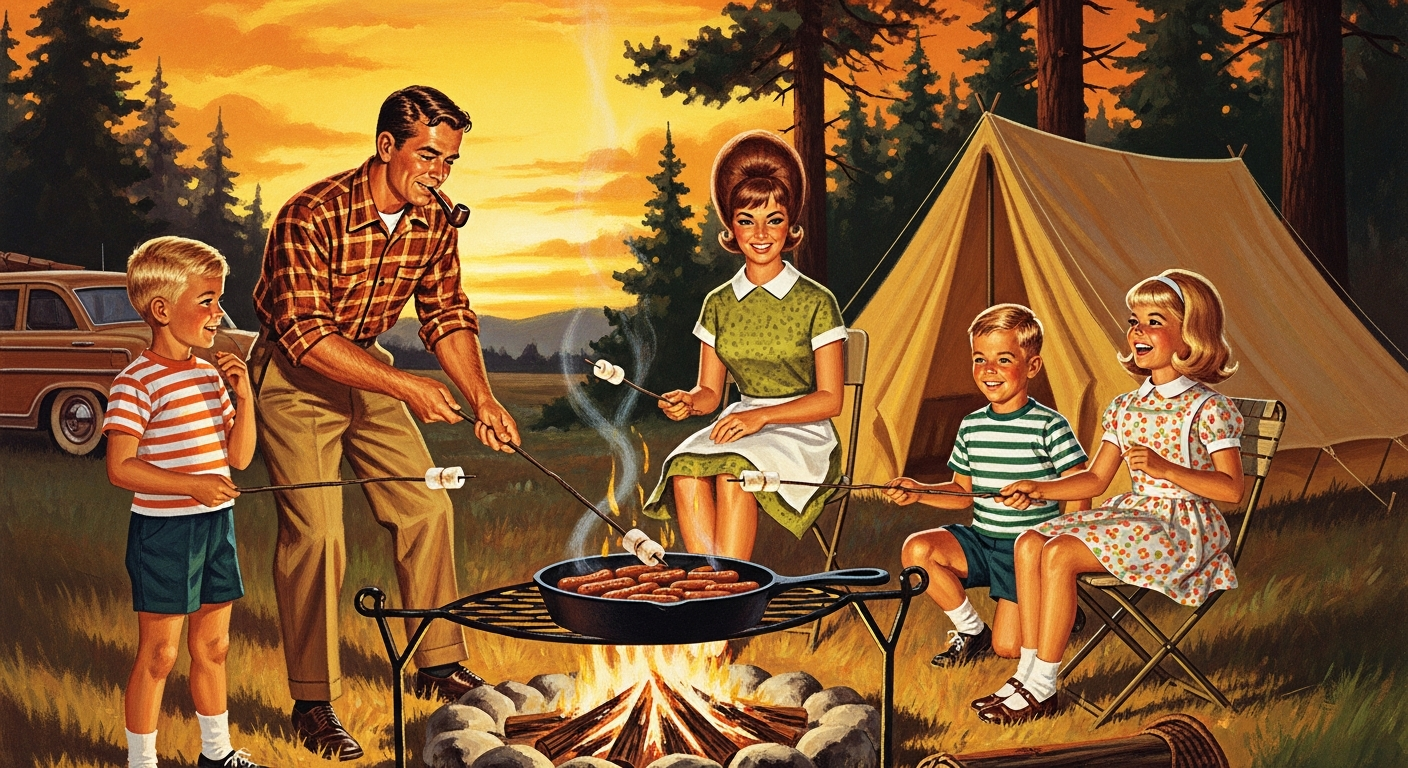
I remember summer nights at our little cabin up north. Dad would get a fire going, and Mom would simply open a big can of baked beans, slice up some frankfurters, toss them into a cast-iron skillet, and let them warm and mingle over the open flame. The way those hot dogs plumped up and caramelized slightly, soaking in that sweet, savory bean sauce? Heaven! It was one of those `simple american suppers` that tasted like pure joy and freedom.
From Weeknight Meal to Cultural Icon
This simple combination wasn’t just practical; it was delicious. The salty, smoky flavor of the frankfurter perfectly complements the sweet, tangy beans. It was a complete meal in one pot (or pan), offering protein, carbs, and flavor without a lot of fuss or expense. This `hot dog and beans history` is really the story of an evolving nation, always seeking efficiency without sacrificing comfort.
Over the decades, variations have emerged. You’ll find `southern baked beans with hot dogs` often incorporating a touch of mustard or brown sugar, sometimes a little Worcestershire sauce or even a hint of liquid smoke, making the flavors deeper and richer. Whether you call them franks and beans, beanie weenies, or just a good old-fashioned plate of `hot dogs with baked beans`, it’s a dish that continues to nourish and delight.
Conclusion: A Beloved Pantry Favorite Today
So there you have it, friends. From the Sabbath-keeping kitchens of colonial New England to the industrial canning factories, and finally, to the backyard barbecues and busy weeknights of modern America, the journey of `franks and beans history` is a truly American one. It’s a journey steeped in tradition, innovation, and a constant search for wholesome, affordable sustenance.
In a world that often feels complicated, there’s something profoundly reassuring about a dish that remains so wonderfully straightforward. It reminds us that comfort doesn’t have to be extravagant, and history isn’t always found in grand monuments, but often in the simple pleasures that connect us across generations.
This `classic american comfort food` stands as a testament to our enduring spirit of resourcefulness and our love for simple, honest flavors. It’s a `vintage american recipe` that continues to be passed down, adapted, and enjoyed. So the next time you find yourself reaching for that can of beans and a package of franks, remember the rich tapestry of history you’re holding in your hands. It’s more than just a meal; it’s a piece of America, warm, comforting, and always ready to welcome you home.