
American Mythos & National Character
The Mighty Oregon Trail Wagon Trains: Democratic Councils And Westward Determination
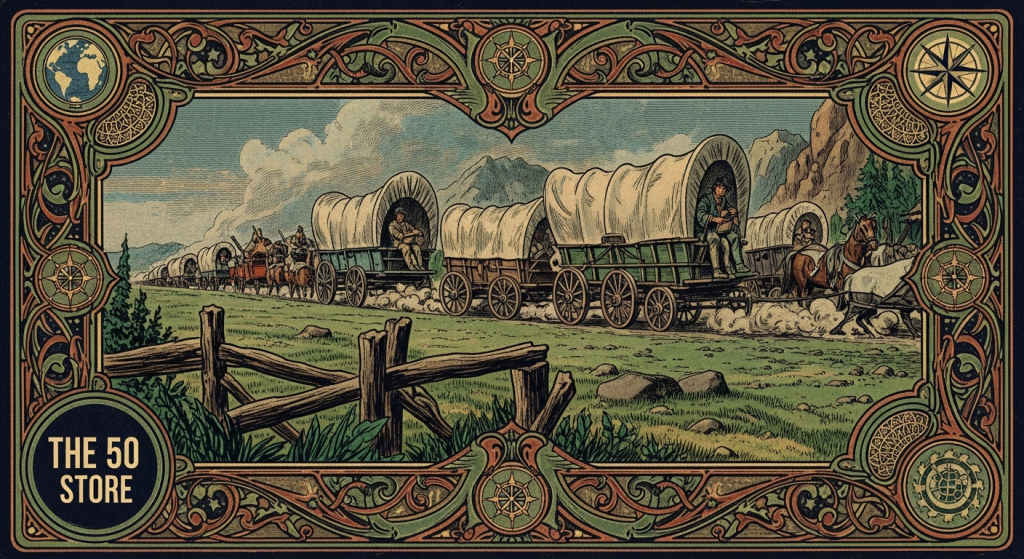
My friends, let me tell you about a story that truly makes my heart swell with pride for this incredible nation of ours. It’s a story of courage, community, and the unyielding American spirit, etched into the very soil of our continent. Imagine, if you will, the bustling scene in the spring of 1843. Over a thousand pioneers, men, women, and children, gathered in Independence, Missouri. The air thrummed with a nervous excitement, a mix of apprehension and audacious hope. They were checking their canvas-covered wagons, their ‘prairie schooners,’ making sure every spoke was tight, every axle greased. They were shoeing their oxen, those magnificent, plodding beasts that would be their engine for the journey ahead.
They were about to embark on an odyssey, a walk of 2,000 miles across a vast, often hostile wilderness, all the way to the distant shores of Oregon. They didn’t know every challenge they’d face, every river they’d ford, or every loss they’d endure. But they knew their destination, and they held an unwavering belief in a better future. They were, in essence, writing one of the most epic stories of westward determination this country has ever known.
The Call of the West: A Nation on the Move
What compels a family to sell everything, to uproot their entire lives, and set off into the unknown? It’s a question I’ve pondered many times, looking out at the endless horizons of this land. For the pioneers of the Oregon Trail, it was a complex mix of aspiration and necessity. Back East, life was often hard. Economic panics, dwindling fertile land, and a yearning for something more substantial drove many to cast their gaze westward. The lure of the Oregon Territory, with its promise of free, incredibly fertile soil and abundant resources, was a powerful magnet. It was a chance for a fresh start, to build a legacy for their children, and to truly own their piece of the American dream.
I can almost picture it: a young farmer, maybe in Ohio or Illinois, poring over maps, listening to tales, real and exaggerated, of the Eden-like Willamette Valley. His wife, perhaps hesitant at first, slowly catching the vision of a sprawling farm, a comfortable home, and a future free from debt. It wasn’t just about escaping hardship, though that was certainly a factor for many. It was about embracing opportunity, about a profound belief in the possibility of forging a better life through hard work and sheer grit. This wasn’t a journey for the faint of heart, but for those with courage burning in their souls, the call of the West was irresistible.
The Wagon Council: Democracy on the Move
Now, how do you manage a group of hundreds of people, dozens of wagons, and thousands of livestock, all traveling together for months through uncharted territory? This is where the truly ingenious, and profoundly American, spirit of these pioneers shines brightest. They didn’t have established governments out there on the prairie. So, they created their own. Wagon trains operated as small, mobile democracies, a beautiful testament to our founding principles.
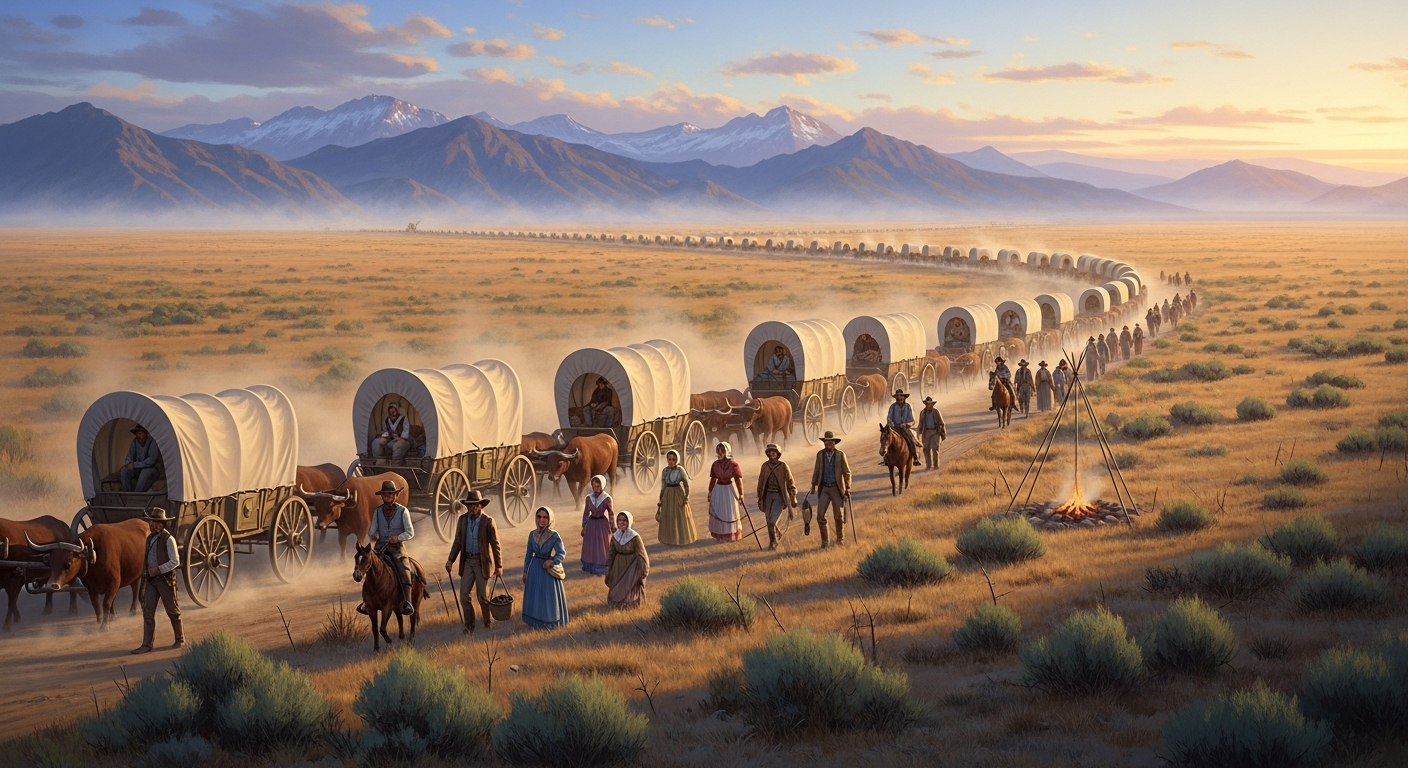
Before they even left, and often throughout the journey, pioneers would form a ‘Wagon Council.’ They would elect leaders, often someone with military experience or a reputation for good judgment. They’d vote on daily routes, decide when to rest, establish strict camp rules, and create safety plans to guard against danger, whether from unforeseen natural hazards or, sadly, sometimes from hostile encounters. This wasn’t some theoretical exercise; it was practical, survival democracy in action. Disputes would arise, as they always do when people live in close quarters under immense stress, but the council provided a forum for resolution, for justice. They established laws and even court systems on the trail, ensuring order and fairness for all.
It’s an astonishing feat when you think about it. Imagine holding a town meeting every few days, debating vital decisions that directly impacted everyone’s survival, all while pushing ever onward. Historians estimate that over 300,000 pioneers traveled the Oregon Trail between 1840 and 1869, making it one of the largest voluntary migrations in human history. To put that in perspective, that’s more people than live in many modern American cities today, all moving at the pace of an ox! It’s also a stark reminder of the risks involved: records indicate that between 10,000 and 20,000 pioneers perished along the trail, primarily from disease like cholera and dysentery, or from accidents. That’s a sobering 3-6% mortality rate, underscoring the incredible bravery required of every single person who undertook this journey.
This self-governance wasn’t just a convenience; it was a cornerstone of their success. It built unity, fostered a sense of shared responsibility, and ensured that every voice, in some way, had a part in shaping their collective destiny. It’s a powerful micro-history, a small-scale example of the democratic ideals that shaped our very nation, playing out day after day on the dusty trail.
The Dusty Trail: A Journey of Endurance
Make no mistake, this journey was no picnic. It was a relentless, arduous test of human endurance. Day after day, for five or six months, they walked. Fifteen miles a day, sometimes more, sometimes less, through sweltering heat, bone-chilling cold, torrential rains, and choking dust. The iconic image of a wagon train often shows people riding, but for most, it was a walking journey. Wagons were packed to the brim with supplies, leaving little room for passengers, save for the very young, the very old, or the sick.
They faced incredible obstacles. Major river crossings like the Platte, the Snake, and the Columbia were treacherous, often claiming wagons, supplies, and even lives. Disease was a constant, silent threat, sweeping through camps and leaving heartbreak in its wake. Yet, they pressed on. They saw incredible sights, too. Natural landmarks that became signposts of hope and progress: the imposing Chimney Rock, the magnificent Scotts Bluff, and the vital outpost of Fort Laramie, where they could resupply and perhaps send a letter back East.
I often think about the children on the trail. What did they see? What did they learn? They learned resilience, certainly. They learned the value of a helping hand, the importance of community. They grew up watching their parents face insurmountable odds, only to find a way through. This shared experience forged bonds that lasted lifetimes, creating a distinct ‘pioneer culture’ built on mutual aid and unyielding optimism. When a wagon broke down, everyone pitched in. When a family lost a loved one, the entire train mourned with them and helped them carry on. It was a true brotherhood and sisterhood of the trail.
The Arrival: A New Beginning in the Willamette Valley
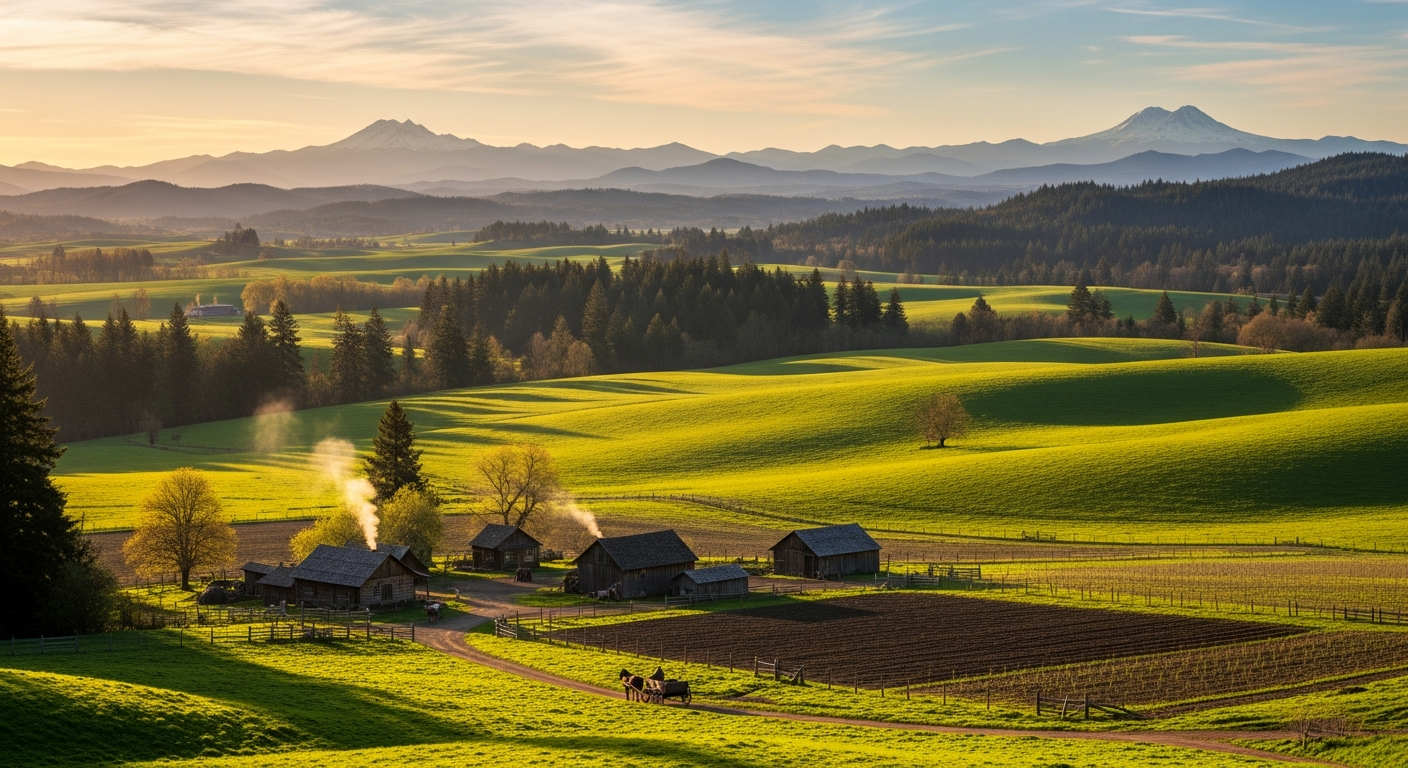
And then, finally, after months of toil, after crossing vast plains, towering mountains, and raging rivers, came the moment they had dreamed of. Cresting the Cascade Mountains, looking down upon the verdant, fertile expanse of the Willamette Valley. I can only imagine the tears, the cheers, the overwhelming sense of relief and triumph. It wasn’t just land; it was salvation. It was the promised land, tangible and real.
These weren’t just adventurers; they were nation-builders. Figures like Marcus Whitman and Narcissa Whitman, though their story ended in tragedy, exemplified the early missionary and pioneering spirit, establishing a presence that paved the way for others. These arrivals laid the groundwork for what would become modern Oregon, planting crops, building homes, establishing communities, and founding towns and cities that thrive to this day. They didn’t just ‘arrive’; they settled, they cultivated, they created. They transformed a wilderness into a vibrant corner of America.
Their story, my friends, is a powerful reminder of what Americans can achieve when united by a common purpose and an unwavering belief in themselves. It’s a legacy of perseverance, ingenuity, and a democratic spirit that continues to inspire us. We stand on the shoulders of these giants, benefiting from the trails they blazed, both literal and metaphorical.
Carry On the Pioneer Spirit: Warmth for Your Own Adventure
Today, we may not be hitching up oxen to cross a continent, but the spirit of the Oregon Trail pioneers lives on in each of us. It’s in the way we face our own challenges, big or small. It’s in our determination to build a better future, to contribute to our communities, and to keep pushing forward, even when the path ahead seems daunting. That same warmth of community, the courage to face the unknown, and the resolve to see things through? That’s what makes us who we are as Americans.
In honor of that incredible spirit, we’ve designed something special. Something built to embody the rugged determination and comforting warmth of those early trailblazers. Introducing our ‘Oregon Trail Pioneer Commemorative Hoodie.’ This isn’t just any hoodie, my friends. It’s built as tough as the pioneers who walked the trail, designed for your own adventures, whether they be a chilly morning walk or a quiet evening reflecting on our history. It features heavyweight fleece, crafted to keep you warm and cozy, just like a roaring campfire after a long day’s journey. It’s a wearable reminder that the American spirit of endurance and hope is always within us, ready to be called upon. Wear it, feel the comfort, and let it inspire you to blaze your own trails, guided by the enduring legacy of the Mighty Oregon Trail.