American History & Origins
The Bloomer Revolution: How A Controversial Garment Redefined American Women’S Freedom
In the mid-19th century, a bold modification to women’s fashion sparked a national scandal that echoed from the halls of Congress to the streets of Seneca Falls. Named after American reformer Amelia Bloomer, the loose-fitting trousers known as bloomers became a battleground for female autonomy. It was a radical statement that physical mobility was the first step toward social and political equality. It was a time when the very fabric of American society felt the tug of change, and women, long constrained by societal norms and their elaborate attire, began to imagine a different kind of freedom.
I’ve always believed that the most profound changes in our nation often start in the most unexpected places. Sometimes it’s a quiet whisper, other times it’s a thunderous debate. With the bloomers, it was a fashion revolution that became a symbol of a deeper longing for justice. It’s easy to look back now and perhaps chuckle at the ‘bloomers controversy,’ but I assure you, for the women who dared to wear them, it was no laughing matter. It was a courageous act of defiance, a stride towards a more equitable future. This isn’t just a story about clothes; it’s a story about the spirit of American progress, about folks pushing boundaries for what they believed was right.
Amelia Bloomer and the Seneca Falls Circle: The Birth of a Bold Idea
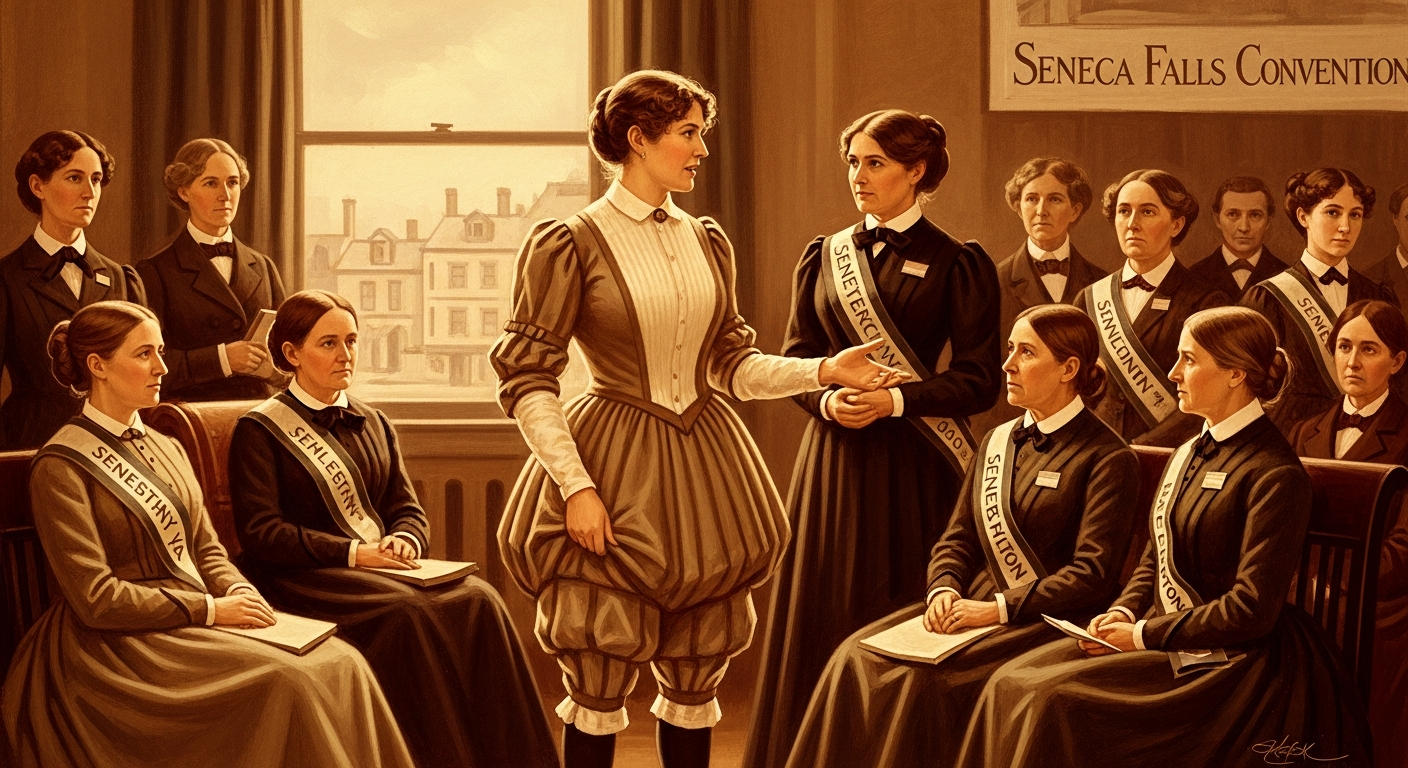
To truly understand the heart of the dress reform movement, we must travel back to the vibrant intellectual circles of Upstate New York in the 1840s and 50s. This was a time of fervent abolitionism, temperance, and burgeoning women’s rights activism. Folks like Elizabeth Cady Stanton, Susan B. Anthony, and Lucretia Mott were already shaking things up, demanding recognition for women as full citizens. But it was Amelia Bloomer, editor of The Lily, the first newspaper by and for women, who lent her name, if not the original invention, to the garment that would become so infamous.
The concept of women wearing ‘Turkish trousers’ under a shorter skirt wasn’t entirely new. Other reformers, like Elizabeth Smith Miller, had experimented with similar outfits for practical reasons. Miller, often credited with being the first to wear the full outfit publicly, found the traditional long skirts and corsets impractical for her gardening. When Amelia Bloomer saw Miller’s outfit, she was immediately taken by its sense of ease and practicality. Soon, Bloomer herself adopted the style and, crucially, began to promote it through her widely read publication. This became known as the amelia bloomer dress reform.
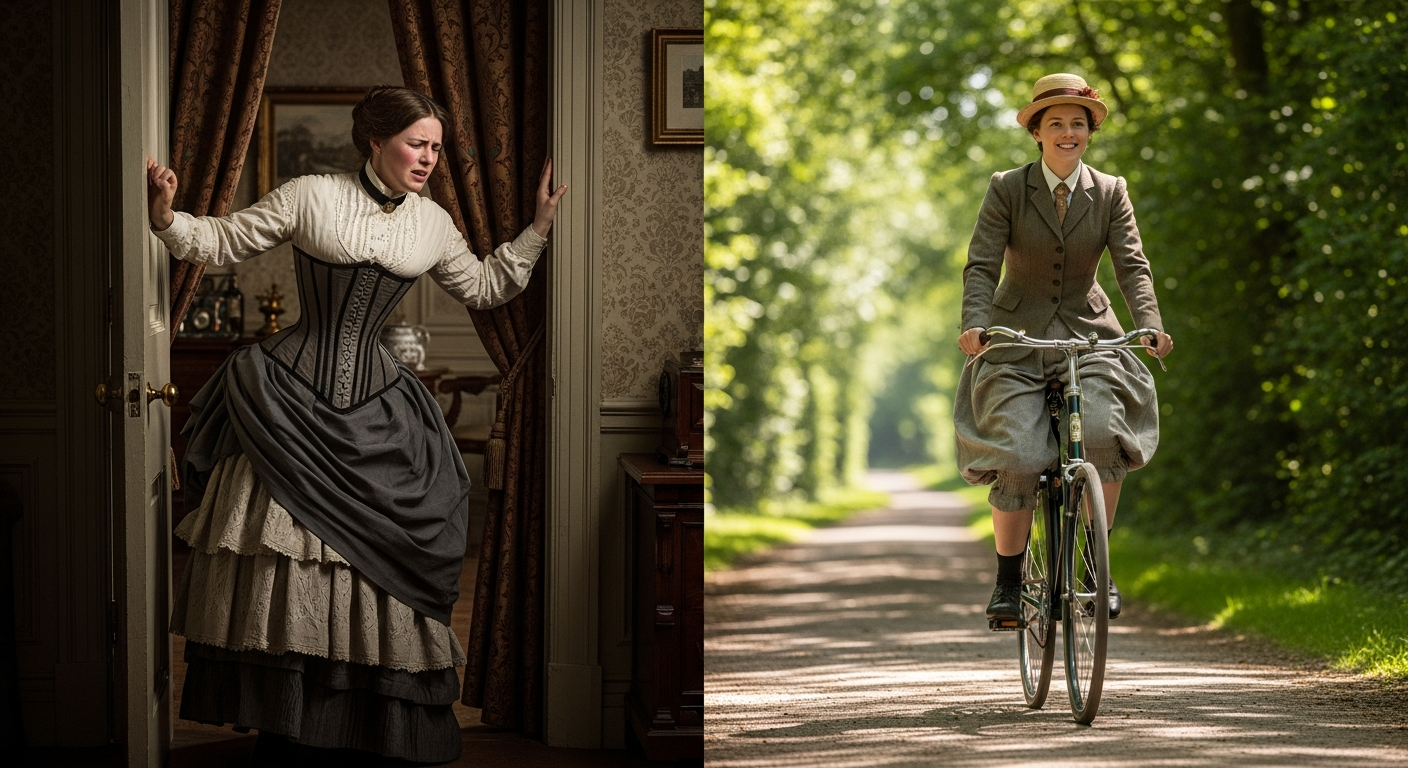
The idea was simple: women’s fashion was literally holding them back. Imagine trying to run a household, engage in physical labor, or even simply walk down the street with grace while encased in layers of heavy fabric, a rigid corset, and several pounds of petticoats. It wasn’t just uncomfortable; it was a physical impediment to active participation in life. The seneca falls dress reform discussions extended beyond suffrage; they recognized that freedom of movement was fundamental to true liberty.
The Weight of Convention: A Real Burden
Let’s pause for a moment and consider the reality of 19th century american women fashion. A typical ensemble for a respectable woman of the era could weigh anywhere from 10 to 15 pounds, sometimes even more. This wasn’t just a stylistic choice; it was a physical burden. Historians have estimated that some elaborate ball gowns, with their crinolines and trimmings, could approach 20 pounds. That’s like carrying a small child around your waist all day, every day. Beyond the weight, the tight lacing of corsets was known to cause a host of health problems, from digestive issues and fainting spells to displaced organs and respiratory difficulties. One study I recall seeing suggested that the average Victorian woman’s waist, due to corsetry, was constricted by several inches, often leading to restricted lung capacity by as much as 20%.
This wasn’t just a fashion trend; it was a public health concern that few dared to voice. When the idea of ‘trousers’ for women emerged, it wasn’t just about modesty or style; it was about health, practicality, and the fundamental right to breathe freely and move unhindered. This was the environment in which vintage bloomers history began to unfold, challenging not just fashion norms but deeply ingrained social expectations about women’s roles and bodies.

Grill Chill And Freedom BBQ T Shirt
Wear your story with pride! Celebrate classic American values, history, and heritage with our premium crafted apparel, designed for comfort and durability.
Shop the Look →Outrage in the Press: A Nation’s Shock
You can imagine the scene: a woman, typically seen in sweeping skirts, suddenly appearing in public with what looked, to many, like men’s trousers peeking out from under a shorter dress. The reaction was swift and often brutal. The bloomers controversy became a national sensation. Newspapers, pulpits, and even street corners buzzed with ridicule, moral condemnation, and outright anger.
Caricaturists had a field day, depicting bloomer-wearing women as masculine, ugly, and domineering, often showing them trying to smoke pipes or wear men’s hats. Ministers preached sermons warning against the moral decay that such ‘unsexing’ attire would bring upon the nation. Women who adopted the dress faced public harassment, insults, and even physical threats. My grandmother once told me a story about her great-aunt, who, though not a ‘bloomer’ herself, remembered the ostracism some women faced in their small town for even hinting at such reforms. It was as if daring to wear trousers meant daring to dismantle the very foundations of society.
The press played a huge role in fanning the flames. Articles mocked the reformers, calling them ‘strong-minded women’ (a pejorative term at the time) and predicting the downfall of marriage and family life. The idea was that if women could wear trousers, what else would they demand? The right to vote? Equal pay? The very thought sent shivers down the spines of many who clung to traditional gender roles. This was truly a watershed moment in women rights fashion history.
It’s fascinating to consider how deeply ingrained these sartorial rules were. The act of wearing a particular garment was seen as a direct challenge to the established order, a public declaration of independence that was simply too much for many to bear. This intense backlash is a clear indication of how much was at stake for those who sought to maintain the status quo.
Freedom of Movement: A Step Towards Liberation
Despite the ridicule, the bloomers offered an undeniable liberation. Imagine the simple joy of walking without tripping over a skirt, or sitting comfortably, or even riding a bicycle (a new invention gaining popularity at the time) without fear of entanglement. For many women, this freedom of movement was revelatory. It allowed them to engage more fully in physical activities, to work more efficiently, and to simply exist in their bodies with less constraint.
The shift away from heavy Victorian corsets and petticoats was not just about comfort; it was about health and capability. The bloomers allowed women to pursue education, engage in physical labor, and participate in public life with a newfound ease. This practical freedom was a quiet but powerful engine for social change. It was a tangible step towards women asserting control over their own bodies and, by extension, their own lives. These historical american women garments became a symbol of a movement.
The Practical Advantages: More Than Just Style
Let’s compare the two styles to truly grasp the difference:
| Feature | Traditional Victorian Gown (1850s) | Bloomer Costume |
|---|---|---|
| Key Components | Corset, chemise, drawers, multiple petticoats (up to 6-7), crinoline/hoop skirt, heavy outer dress. | Loose trousers (bloomers), lighter undergarments, shorter dress/tunic, minimal or no corset. |
| Approx. Weight | 10-20+ pounds (depending on layers and fabric). | 3-5 pounds (significantly lighter). |
| Mobility & Comfort | Severely restricted movement, difficult to sit, walk quickly, or engage in physical tasks. Breath constricting. | Greatly enhanced mobility, freedom to walk, run, climb stairs, and perform household or outdoor tasks with ease. |
| Health Impact | Fainting, digestive issues, respiratory problems, organ displacement due to tight lacing. | Improved breathing, better circulation, reduced physical strain. |
| Social Perception | Symbol of respectability, femininity, and adherence to social norms. | Shocking, scandalous, ‘unwomanly,’ symbol of radicalism and moral degradation. |
It’s clear, isn’t it? The bloomer costume wasn’t just a stylistic whim; it was a rational response to the physical and social limitations imposed by traditional vintage women underwear history and outerwear.
The Legacy of the Bloomer: A Quiet Revolution
While the original bloomer costume, as a daily street outfit, faded from prominence by the late 1850s due to the intense social pressure, its impact was far from forgotten. The seeds of dress reform had been sown, and the idea of women wearing more practical clothing for specific activities took root. By the late 19th century, bloomers reappeared as acceptable attire for sports like cycling, gymnastics, and even early basketball. The fight for rational dress continued, even if the battle over this particular style was largely put on hold.
The bloomers controversy paved the way for the modern American feminist movement by demonstrating a crucial principle: personal autonomy, even in matters of dress, is intrinsically linked to broader social and political rights. It forced a conversation about women’s bodies, their health, their roles, and their desire for greater freedom. The courage it took to wear bloomers in the face of widespread scorn was a precursor to the courage needed to demand the right to vote, to own property, and to pursue higher education.
Organizations like the American Dress Reform Association, though perhaps not as well-known as the suffrage associations, played a vital role in keeping the conversation alive, advocating for healthier and more practical clothing for women. They understood that you can’t truly be free if you’re physically bound by your clothes.
A Timeline of Dress Reform and Women’s Rights
To really appreciate the long road, let’s lay out some key moments that built towards greater freedom:
- 1848: Seneca Falls Convention – The first women’s rights convention in the U.S. issued the Declaration of Sentiments, demanding social, civil, and religious rights for women. This was the intellectual bedrock for many reforms, including dress.
- 1851: Elizabeth Smith Miller’s Innovation – Miller begins wearing the ‘Turkish dress’ publicly, consisting of loose trousers under a knee-length skirt. This practical garment quickly catches the eye of other reformers.
- 1851: Amelia Bloomer’s Endorsement – Amelia Bloomer, through her newspaper The Lily, actively promotes the style, lending her name to the garment and greatly increasing its visibility and notoriety.
- 1852-1856: Peak of the Bloomer Controversy – The bloomers gain widespread attention and ridicule. Many prominent suffragists, including Elizabeth Cady Stanton and Susan B. Anthony, adopt the dress initially but eventually abandon it for daily wear, recognizing that the controversy over clothing overshadowed their core message of suffrage.
- 1860s-1880s: Gradual Shifts in Mainstream Fashion – While bloomers largely recede from daily wear, a gradual evolution in mainstream fashion sees lighter fabrics, slightly less restrictive corsetry, and the introduction of crinolines that, while voluminous, did offer some internal space compared to layers of heavy petticoats.
- Late 1880s-1890s: Bloomers for Sport and Recreation – With the rise of the bicycle craze, bloomers make a triumphant return as practical and acceptable attire for cycling and other physical activities. This marked a crucial acceptance of rational dress for specific contexts.
- Early 20th Century: Further Dress Reform and Women’s Suffrage – The women’s suffrage movement gains momentum, leading to the 19th Amendment in 1920, granting women the right to vote. Meanwhile, mainstream fashion continues to evolve, with shorter hemlines and looser silhouettes becoming more common after World War I, moving further away from the restrictive Victorian era.
It was a long fight, and the bloomers were just one visible skirmish in a much larger war for equality. But it was a vital one. It taught us that progress isn’t always linear, and sometimes, the smallest acts of defiance, like choosing what to wear, can have the biggest ripples. The history of bloomers in America reminds us that freedom, in all its forms, is often hard-won, and worth every bit of the struggle.
As I look around our diverse, bustling nation today, I see countless women enjoying freedoms that were unimaginable to their foremothers. And a small part of that, I believe, started with the brave women who dared to wear bloomers, who understood that true liberty begins with the ability to move freely, think freely, and express oneself without fear. It’s a testament to the enduring American spirit, always striving for ‘a more perfect Union,’ where every citizen can walk tall, unburdened, and free.