
Icons & Symbols of America
Why the Statue of Liberty Is a Global Symbol of Freedom
A Warm Welcome to New York Harbor
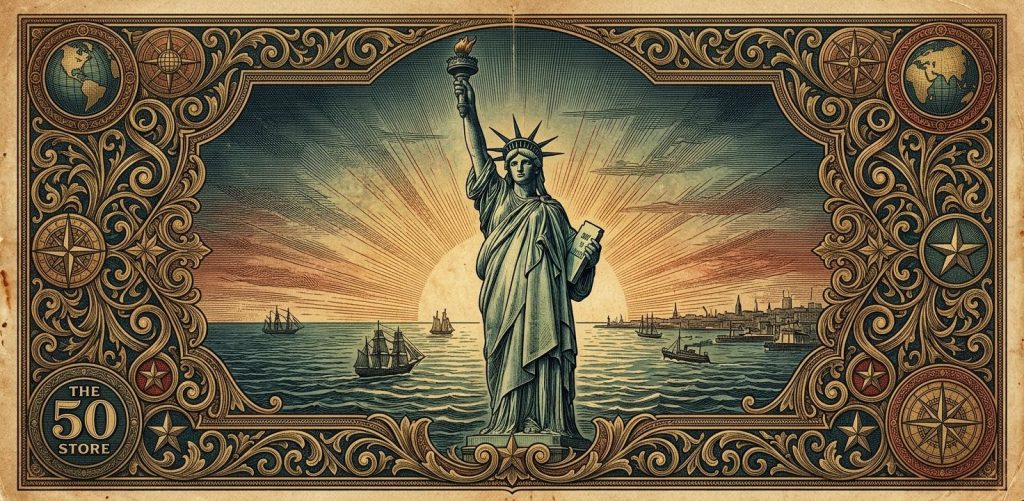
Hello, friends. I have lived in this beautiful country my entire life. From the rocky shores of Maine to the sunlit beaches of California, I have seen a lot of breathtaking sights. But there is one sight that always makes my heart skip a beat. It is the majestic figure standing proudly in New York Harbor. The Statue of Liberty is not just a colossal copper sculpture. She is the very heartbeat of our nation. She is a reminder of the warmth, hope, and grit that make America so special.
Every time I see her standing out there in the water, I think about what she means to all of us. She is a beacon for the tired and the weary. She is a towering mother to those who seek a better life. But her journey from a simple idea to a global icon was not an easy one.
A Gift That Almost Did Not Happen
Back in the late nineteenth century, the idea of building such a massive monument seemed almost impossible. The situation was tricky. France generously offered the statue as a gift of friendship. The complication? The United States had to pay for the massive pedestal she would stand on. We simply did not have the money ready. The project stalled completely. People doubted it would ever happen.
So, how did this struggling project turn into the ultimate symbol of freedom recognized around the entire globe? The answer lies in the spirit of ordinary Americans stepping up when it mattered most, and in the deeply personal stories of the millions who eventually sailed past her.
Surprising Facts About the Copper Lady
Let us look at some surprising facts about her creation. According to the National Park Service, this brilliant lady weighs a staggering 225 tons. Her waist alone measures thirty-five feet across. Even more amazing is her copper skin. It is only about three thirty-seconds of an inch thick. That is roughly the thickness of two pennies pressed together! Despite being so incredibly thin, she has withstood hurricanes, harsh winters, and the test of time. Today, over 3.2 million people from every corner of the earth visit her every single year.
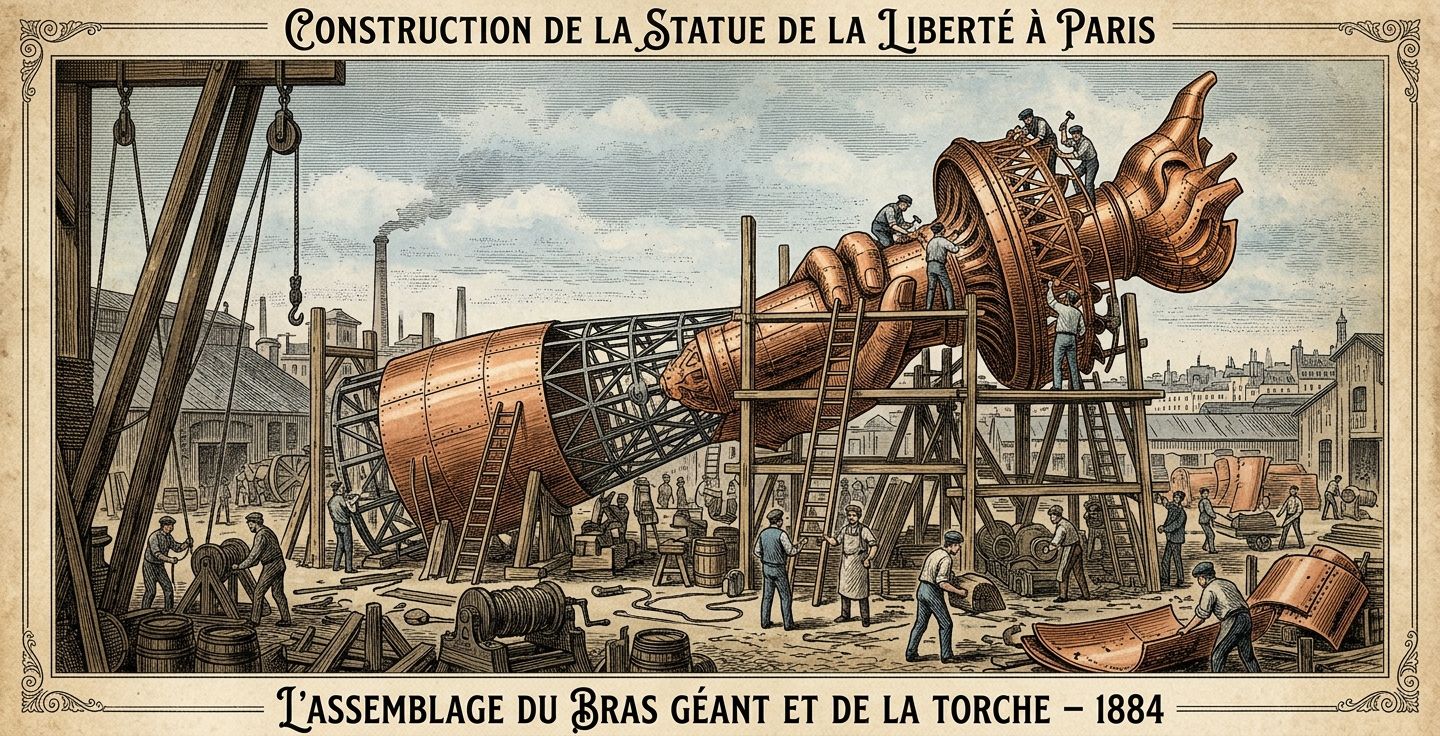
The vision began with a French political thinker named Édouard René de Laboulaye (1811-1883). He deeply admired the United States and wanted to honor our nation for abolishing slavery after the Civil War. He partnered with a passionate sculptor named Frédéric Auguste Bartholdi (1834-1904). They needed an engineering genius to make the structure hold up against strong ocean winds. They found him in Gustave Eiffel (1832-1923). Yes, the very same man who later built that famous tower in Paris.
But let us get back to that empty pedestal waiting in the harbor. When government funds ran dry, a determined newspaper publisher stepped in. His name was Joseph Pulitzer (1847-1911). He started a massive fundraising campaign in his newspaper. He promised to print the name of every single person who donated, no matter how small the amount. Children sent in their pennies. Grandmothers sent in dimes. Street sweepers gave what they could spare. It was a beautiful, collective effort. The pedestal was funded by the regular people, for the regular people.
The Micro-Histories That Define Her
When you look at her, you feel a deep, burning desire to protect the liberties we hold dear. To understand her true magic, we must look at the small stories. The micro-histories of the people who sailed past her in search of a better tomorrow.
Imagine the year 1892. A young Irish girl named Annie Moore (1874-1924) stood on the freezing deck of a steamship. She was only fifteen years old. She had crossed a treacherous ocean with her two younger brothers to reunite with their parents in America. As their ship entered the harbor, the first thing they saw was a giant copper woman holding a golden torch high into the sky. Annie became the very first immigrant processed at the newly opened station on Ellis Island. For Annie, and for millions like her, that statue was not just art. It was a promise. It meant safety. It meant a fresh start. It was the absolute embodiment of the American dream.
Then there is the story of the words etched on her pedestal. Emma Lazarus (1849-1887) was a young writer in New York. She wrote a poem called The New Colossus to help raise money for Pulitzer’s pedestal campaign. She called the statue the “Mother of Exiles.” She gave the silent copper giant a voice, writing those famous lines asking for the tired, the poor, the huddled masses yearning to breathe free. Emma did not live to see the immense impact of her words. She passed away just a few years later. But her poem forever changed the meaning of Lady Liberty. She went from being a monument of international friendship to a welcoming mother for the entire world.
The Physical Details That Tell A Story
Every inch of this magnificent lady was designed with a purpose. Let us walk through what she wears and carries, because each piece is a chapter in our national story.
The Items She Carries
She holds specific items that carry deep historical meaning:
- The Torch: Held high in her right hand, lighting the path to freedom.
- The Tablet: Cradled in her left arm, inscribed with the date July 4, 1776, in Roman numerals.
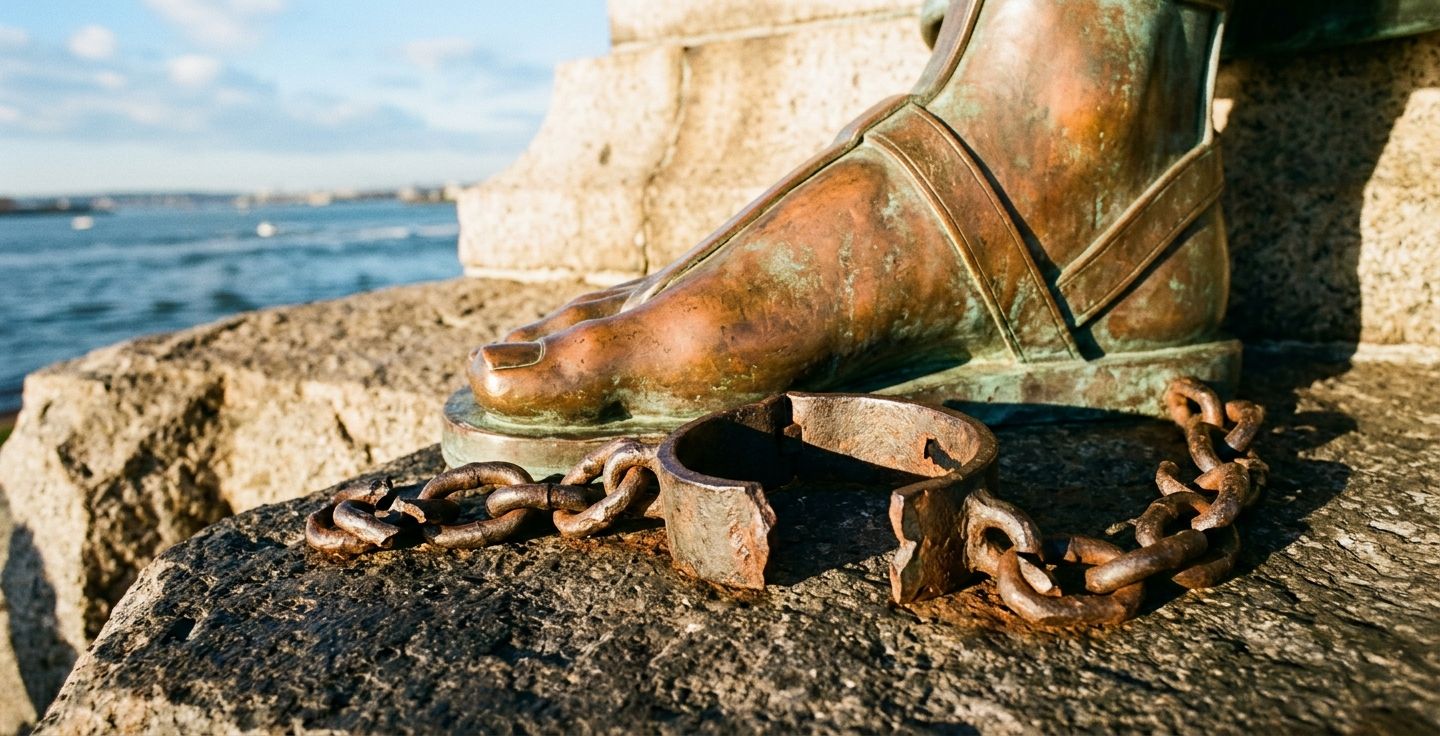
- The Broken Chains: Resting at her feet, symbolizing freedom from bondage.
The Golden Torch
The torch is perhaps her most famous feature. In the early days, it was actually used as a working lighthouse beacon. Sailors could see it gleaming from miles away. Over the decades, harsh weather took its toll. In the 1980s, Americans banded together once again to restore her. The old, leaky torch was replaced with a new one covered in twenty-four-carat gold leaf. When the morning sun hits it just right, it shines like a diamond. It reminds us that freedom is precious and requires constant care.
The Crown and the Spikes
Look up at her majestic head. You will notice a crown with twenty-five windows. These windows represent the gemstones found deep in the earth. Above the windows are seven long spikes. Many folks think they represent a religious halo, but they actually stand for the seven continents and the seven seas. This was Bartholdi’s brilliant way of saying that the concept of liberty is not just for Americans. It is a universal human right. It radiates outward to every corner of the globe.
The Broken Shackles
Perhaps the most powerful, yet least visible, detail is at her feet. Because she is so tall, it is very hard to see from the ground at Liberty Island. But she is not standing still. Her right heel is lifted. She is walking forward. And at her feet lie broken chains and shattered shackles. Laboulaye insisted on this detail to celebrate the end of slavery in the United States. It is a quiet but powerful statement. Freedom means moving forward. It means breaking the chains of oppression and leaving them behind.
A Day of Celebration
Let us go back in time to her dedication day. On October 28, 1886, a grand ceremony was held. President Grover Cleveland (1837-1908) stood before a massive, cheering crowd. The weather was terrible. A thick fog and steady rain blanketed the harbor. But the dreary weather could not dampen the spirits of the American people. A spectacular parade marched down Wall Street. This was actually the very first ticker-tape parade in New York history! Office workers enthusiastically threw spools of ticker tape out their windows to celebrate.
Let us focus for a moment on a young French engineer present that day. His name was Maurice Koechlin (1856-1946). He was the unsung hero who worked under Eiffel to design the complex internal iron framework. While the politicians gave long, grand speeches, Koechlin stood quietly in the background. He watched as the massive French flag veiling the statue face was finally dropped. The crowd erupted into wild cheers. Steamships blew their whistles. For Koechlin, seeing his mathematical equations turned into a beacon of hope must have been an incredible feeling. His personal micro-history teaches us that quiet dedication and hard work behind the scenes can build something that truly changes the world.
A Personal Connection
Let me share a quick story about my own family. My grandfather was a quiet man who worked at a hardware store in Ohio his whole life. He saved up for years to take our family on a road trip to the East Coast. I was just a little boy. I remember standing in line at Battery Park in lower Manhattan, waiting for the ferry. My grandfather held my hand. His hands were rough from years of hard work.
When the ferry pulled up to the island, he did not say a word. He just stood by the railing, staring up at her peaceful face. Later, he told me that his own father had sailed past her when he immigrated from Europe in the early 1900s. He told me, “Son, that lady is the reason we have the life we have today.” That is a story repeated in millions of American families. It is the story of ordinary folks finding extraordinary hope in a new land.
Why She Matters Today
We live in a fast-paced world. Sometimes things move so quickly that we forget to pause and appreciate the foundations of our society. The statue reminds us to slow down. She reminds us of the core values that bring us all together as one nation.
When times get tough, Americans look to symbols of resilience. After the heartbreaking events of September 11, the statue stood firm in the harbor. She was covered in ash from the tragedy, but she never wavered. Her torch remained high. For days, rescue workers and ordinary citizens looked out into the harbor and saw her standing there. She offered a silent comfort. She whispered that the light of freedom would never be extinguished, no matter how dark the night might seem.
A few decades prior, during her centennial restoration, Lee Iacocca (1924-2019) spearheaded a grassroots campaign to fix her up. Once again, millions of everyday Americans donated. Schoolchildren collected aluminum cans to recycle for change. Corporate leaders wrote large checks. It proved that the spirit of Pulitzer’s original campaign was still alive a hundred years later.
Keeping the Light Burning
So, what can we do to honor this incredible legacy? First, if you have never been, I highly encourage you to make the trip. Walk the grounds. Feel the breeze off the harbor. Look up at her face and think about the millions of hopeful eyes that have done the exact same thing over the past century.
Here are three simple things you can do to keep her spirit alive today:
- Learn your family history. Every family has a unique arrival story.
- Welcome newcomers to your community with open arms and a kind heart.
- Participate proudly in our great democracy.
Visiting is just one step. The real action we must take is in our daily lives. We must be welcoming neighbors. We must stand up for what is right. We must cherish our freedoms and treat others with absolute dignity and respect. The true monument is not made of copper or steel. It is made of our actions. By living out the values she represents, we ensure that the light of liberty continues to shine brightly for generations to come. May God bless America, and may Lady Liberty stand tall forever.
Frequently Asked Questions
Who gave the Statue of Liberty to the United States?
The statue was a generous gift from the people of France to the United States. It was given to celebrate the friendship between the two nations and to honor the abolition of slavery after the American Civil War.
What is the Statue of Liberty made of?
She has a strong internal iron framework designed by Gustave Eiffel. This framework is covered by a very thin layer of copper, which has turned green over time due to natural weathering. Her modern torch is covered in 24-carat gold leaf.
How tall is the Statue of Liberty?
From the base of her granite pedestal to the very tip of her golden torch, she stands an impressive 305 feet and 1 inch tall.
What do the seven spikes on her crown represent?
The seven spikes radiate outward to represent the seven continents and the seven seas. This shows that the concept of liberty is universal and meant for people all over the world.
Who wrote the famous poem on the pedestal?
A young American writer named Emma Lazarus wrote the famous poem titled “The New Colossus” in 1883 to help raise funds for the pedestal. It features the famous lines welcoming the tired, the poor, and the huddled masses.
Is the Statue of Liberty located in New York or New Jersey?
She is proudly located on Liberty Island in New York Harbor. While the island itself is situated in waters that are geographically closer to New Jersey, it is officially recognized as part of New York State.