Immigration, Diversity & Identity
The Navajo Code Talkers: The Sacred Native Language That Protected Freedom In Wwii
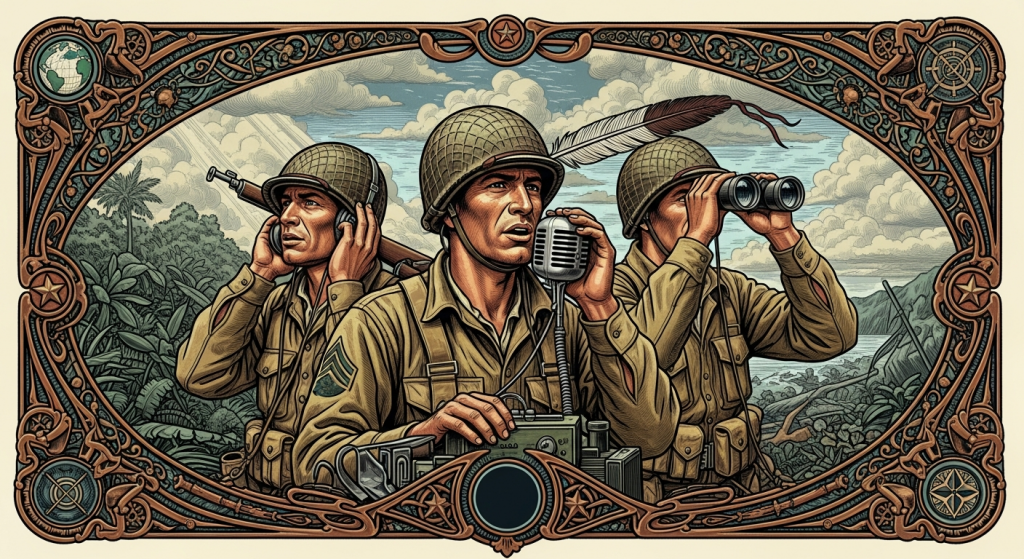
From my home high in the Colorado Rockies, I’ve spent countless hours studying the vast American landscape, from the sun-baked mesas of the Southwest to the rugged peaks of the Sierra Nevada. These lands tell stories – of endurance, of spirit, of the incredible human capacity to adapt and overcome. Few stories resonate as deeply with the spirit of our nation, and with my own fascination with frontier ingenuity, as that of the Navajo Code Talkers.
The Unbreakable Code of the Pacific: A Desperate Plea for Secrecy
Picture this: It’s the early 1940s, and the Pacific theater of World War II is a maelstrom of courage and chaos. American forces are fighting tooth and nail, island by island, against a relentless enemy. But there was a glaring, terrifying weakness undermining every strategic move, every planned assault: the Japanese military possessed an almost uncanny ability to intercept and decode virtually every English-language communication the United States sent. They listened. They learned. And they used that knowledge to devastating effect, costing American lives and slowing our progress.
It was a truly desperate situation. Commanders needed to coordinate complex amphibious landings and troop movements with split-second precision, but every radio transmission felt like shouting secrets into the wind. Traditional encryption methods, no matter how complex, eventually fell prey to skilled Japanese cryptographers. The stakes couldn’t have been higher: securing the Pacific meant finding a code, a language, that no enemy could ever hope to crack.
A Radical Idea and Surprising Statistics
In this crucible of conflict, a truly radical idea emerged, one born not from advanced technology, but from a profound connection to a deeply rooted heritage. Philip Johnston, a WWI veteran and son of a missionary to the Navajo Nation, proposed using the Navajo language itself as a military code. His reasoning was brilliant: Navajo is an unwritten language, its grammar incredibly complex, with a tonal quality that makes it exceptionally difficult for outsiders to understand, let alone decipher. At the time, fewer than 30 non-Navajo people worldwide even understood the language. It was, in effect, a living, breathing cipher.
Think about the sheer scale of the challenge: during World War II, the United States developed numerous codes, but historical accounts from the National Cryptologic Museum Foundation confirm that the Japanese had indeed broken every single U.S. military code they encountered *until* the Navajo code. This wasn’t just a slight edge; it was a game-changer. The speed and security it offered would literally reshape the battlefield. 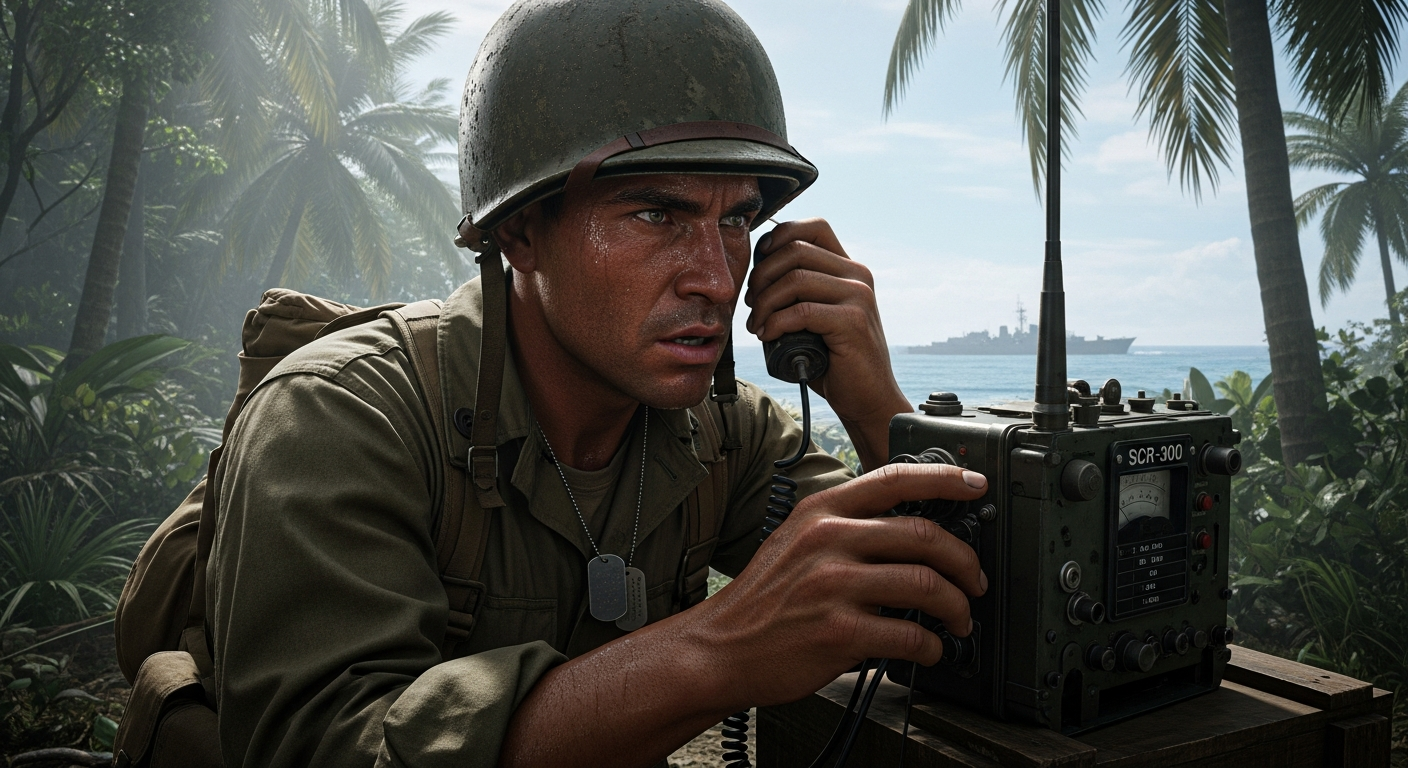
Speaking in Wind and Shadow: The Navajo Marines
The Marine Corps, desperate for a solution, took a chance. In May 1942, 29 young Navajo men arrived at Camp Elliott in California. These ‘First Twenty-Nine’ recruits, including heroes like Chester Nez and Joe Kieyoomia, faced an immense task: not only to master Marine basic training, but to develop a code within their own sacred language that could withstand the scrutiny of the most determined enemy intelligence. It was an honor, and a burden, they carried with immense dignity.
How the Code Worked: A Masterpiece of Linguistic Security
This wasn’t just speaking Navajo over the radio. It was a sophisticated, two-tiered system:
-
Alphabet Code: For words not in their military vocabulary, they devised a system where specific Navajo words represented English letters. For example, ‘A’ was represented by ‘Wol-la-chee’ (ant), ‘B’ by ‘Shush’ (bear), ‘C’ by ‘Moasi’ (cat). This allowed them to spell out names or specific details.
-
Lexicon of Military Terms: They created a specialized dictionary of Navajo words for common military terms. These weren’t direct translations but evocative metaphors. ‘Gini’ (chicken hawk) meant ‘dive bomber.’ ‘Chay-da-gahi’ (turtle) became ‘tank.’ ‘Na-mas-tsaba’ (shark) was ‘submarine.’ A hand grenade became ‘Nimasi’ (potato), and a battleship was ‘Lo-tso’ (whale).
This ingenious layering meant even if an enemy somehow understood some Navajo words, the context of military operations would remain hidden behind these metaphors. It was a language within a language, born from the very land and spirit of the Navajo people. My heart swells when I think of these young men, far from their homes in places like Window Rock, translating the complexities of war into the beautiful sounds of their ancestors.
The Ultimate Test: Iwo Jima
The code was put to the ultimate test in the brutal battle for Iwo Jima in February and March of 1945. It was a fight for a tiny volcanic island, a strategic airstrip, that became one of the bloodiest engagements in Marine Corps history. Here, amid the relentless Japanese resistance, the Navajo Code Talkers proved their indispensable value.
Working around the clock, often under heavy artillery fire and bombardment, these men relayed messages with astonishing speed and accuracy. During the first two days alone, six Code Talkers on the beaches of Iwo Jima worked non-stop, sending over 800 messages without a single error. These weren’t casual conversations; they were crucial commands, intelligence reports, and tactical updates that coordinated air support, artillery barrages, and troop movements, often dictating the difference between life and death. The precision and speed of their communication dramatically shortened response times, saving countless American lives.
| Feature | Description | Impact on WWII |
|---|---|---|
| Linguistic Complexity | Unwritten, tonal language with intricate grammar, unique syntax, and sparse external speakers. | Virtually impossible for Japanese intelligence to understand or decipher without prior knowledge. |
| Two-Tiered Encryption | Utilized an alphabet system (Navajo words for English letters) and a comprehensive lexicon of military metaphors. | Provided robust security; even if some words were guessed, the underlying military meaning remained hidden. |
| Speed of Transmission | Messages could be encoded, transmitted, and decoded rapidly, often in minutes. | Crucial for real-time battlefield coordination, cutting hours off traditional encryption methods. |
| Error-Free Record | Maintained near-perfect accuracy under extreme combat conditions. | Ensured critical orders and intelligence were received correctly, preventing costly mistakes. |
The Unsung Victory: A Code Never Broken
It’s a truth that echoes through the canyons of our history: the Navajo code remained the only military code in modern history that was never successfully cracked by an enemy. Think about that for a moment. In an age of sophisticated espionage and code-breaking, the power of a sacred, ancient language proved to be the impenetrable shield America needed.
Major Howard Connor, 5th Marine Division signal officer during the Iwo Jima operation, famously stated, ‘Were it not for the Navajos, the Marines would never have taken Iwo Jima.’ That’s not just a compliment; it’s a testament to their absolute, critical importance. They carried the weight of national security on their shoulders, speaking in wind and shadow, ensuring our freedom with every word.
After the war, the Code Talkers returned home, their heroic contributions kept secret by military classification until 1968, and even longer for full recognition. Many struggled to reintegrate, their sacrifices largely unknown to the public. But their legacy, once hidden, now shines brightly, a beacon of loyalty, ingenuity, and cultural strength. 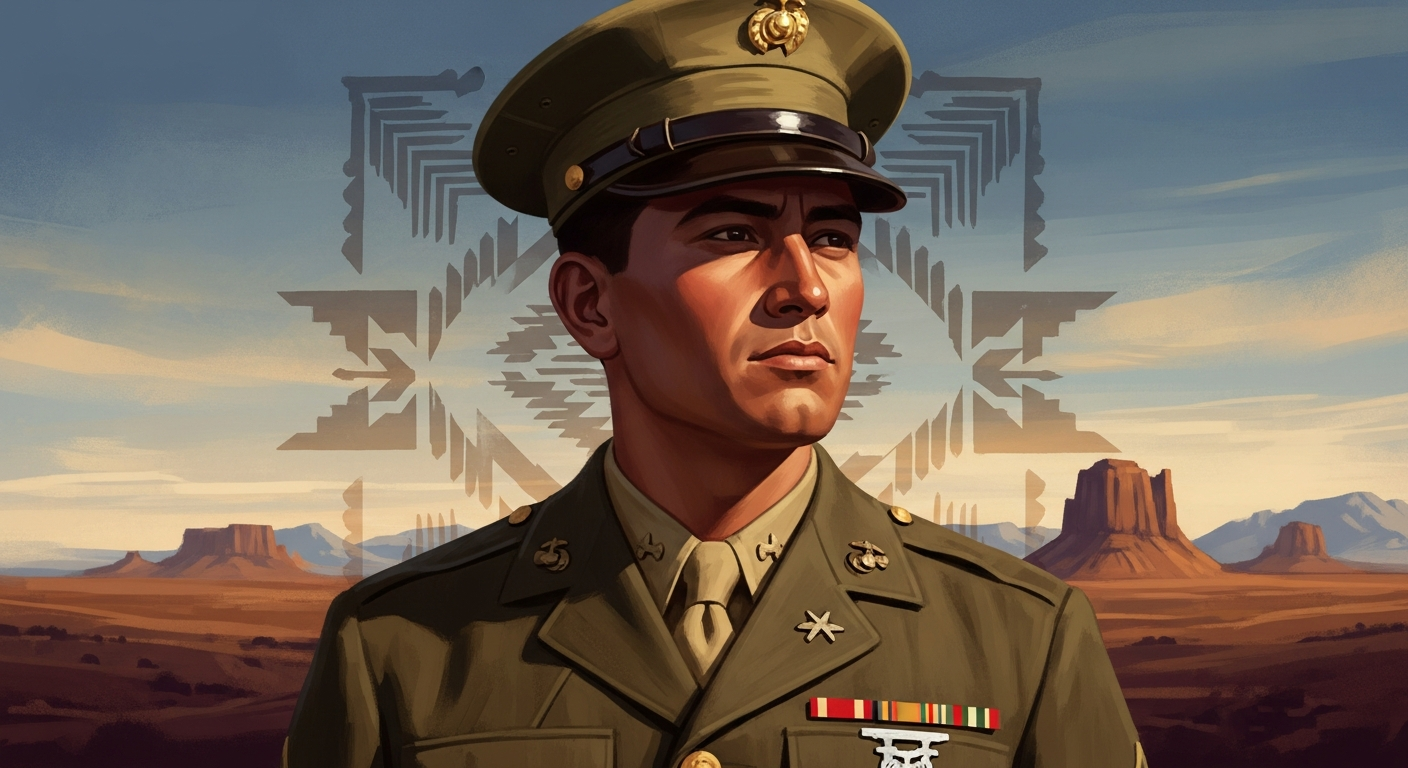
As a guide and geographer, I often find myself standing at overlooks, gazing out at the vastness of the American West. I see the same resilient spirit in the landscape as I do in these incredible men. Their story is a reminder that strength comes in many forms, often from the most unexpected places – from the deep roots of culture, from the unwritten word, and from the unwavering courage of individuals committed to a cause greater than themselves. It’s a story that reminds us of the profound patriotism found in every corner of our diverse nation, a patriotism that saved the world.
The Sacred Language Cap: A Tribute to Unsung Heroes
The story of the Navajo Code Talkers isn’t just history; it’s a living legacy, a powerful narrative of how deeply American culture, in all its forms, contributes to our strength and security. To honor these native heroes who protected our freedom, The50 Store proudly offers the ‘Navajo Code Talkers Commemorative Hat.’ This isn’t just a cap; it’s a symbol. It’s a tribute to their ingenuity, their courage, and the unbreakable code they forged in the crucible of war. Featuring clean vector graphics that subtly evoke their powerful story, it’s a premium unstructured canvas cap designed for durability and comfort – just like the enduring spirit of the Code Talkers themselves. Wear it with pride, and carry their story forward.