American Lifestyle
The Gooey Revolution: How Diy Slime Conquered American Childhood And Creative Play
Oh, the wonders of American childhood! If you’ve spent any time with children in the last decade, you’ve undoubtedly encountered it: that delightfully squishy, endlessly stretchable, and often vibrant substance known as slime. What started as a simple home experiment, often conducted right on kitchen tables just like the ones where my grandmother taught me to bake her famous apple pie, quickly transformed into a multi-million dollar sensory craze. It cleared grocery shelves of glue and shaving cream, becoming a staple of modern American childhood, offering kids a tactile and creative outlet in a highly digital world. For a folklorist like me, it’s a fascinating ‘micro-history’ of how a simple chemical reaction became the defining hobby of a generation.
In a world increasingly dominated by screens, it seems almost counter-intuitive that something so fundamentally hands-on would capture the hearts and minds (and sticky fingers!) of children across the nation. Yet, the slime craze history is a powerful story about innovation, community, and the timeless human need for creative expression. How did this unassuming concoction of polymers and activators rise to such prominence? Let’s pull back the curtain on this gooey revolution.
The Simple Magic of Kitchen Chemistry: How to Make Slime
At its heart, slime making is a delightful introduction to basic chemistry. When I think of all the children crafts ideas I’ve seen over the years at local Ohio fairs, few have sparked such widespread scientific curiosity. It’s truly a testament to the power of hands-on learning.
Understanding the Science Behind the Squish
The magic of DIY slime lies in a chemical reaction called cross-linking. Most slime ingredients start with polyvinyl alcohol (PVA), which is the main component of most liquid school glues, like Elmer’s. PVA is a polymer, meaning it’s made up of long chains of identical molecules linked together. These chains usually slide past each other easily, which is why glue is liquid.
When you add an ‘activator’ (often containing borate ions, found in borax, contact lens solution, or liquid starch), these ions act like tiny bridges. They connect, or ‘cross-link,’ the long PVA polymer chains together. Instead of sliding freely, the chains become tangled and networked, trapping water and forming the characteristic stretchy, gooey texture we know as slime. This discovery of polymers and their properties can be traced back to pioneering chemists like Hermann Staudinger, who won a Nobel Prize in 1953 for his work on macromolecules.
Crafting Your Perfect Batch: A Homemade Slime Recipe
There are countless variations, but the core principles for a homemade slime recipe remain consistent. Here’s a simple, reliable way to make classic glue and activator slime, perfect for an afternoon activity:
- Gather Your Slime Ingredients: You’ll need 1 cup (8 oz) of white or clear PVA school glue, 1 cup of warm water, 1 teaspoon of baking soda, and 1-2 tablespoons of contact lens solution (containing borate or boric acid). Optional additions include food coloring, glitter, or scent.
- Mix the Glue and Water: In a medium-sized mixing bowl, pour in the 1 cup of PVA glue. Slowly stir in 1 cup of warm water until thoroughly combined. This dilutes the glue and helps create a stretchier slime.
- Add Baking Soda: Stir in 1 teaspoon of baking soda. Baking soda helps buffer the pH and ensures the activator works effectively, creating a more stable slime.
- Introduce the Activator: Gradually add the contact lens solution, starting with 1 tablespoon. Stir continuously. You’ll notice the mixture beginning to thicken and pull away from the sides of the bowl. If it’s still too sticky, add the second tablespoon of contact lens solution, a few drops at a time, stirring well after each addition.
- Knead Your Slime: Once the mixture forms a cohesive mass, remove it from the bowl and begin to knead it with your hands. This is a crucial step! The kneading process helps activate the remaining borate ions, making the slime less sticky and more elastic. Keep kneading for several minutes until it reaches your desired consistency.
- Customize and Play: Now is the time to add your favorite food coloring, glitter, or small beads. Enjoy your perfectly squishy, homemade slime!
For those curious about the nuances of different activators, here’s a quick comparison:
| Activator Type | Key Ingredient | Pros | Cons | Typical Slime Texture |
|---|---|---|---|---|
| Borax Powder Solution | Sodium tetraborate | Very strong activator, consistently reliable, creates classic stretchy slime. Economical. | Requires dilution, can be irritating if not handled properly or ingested. | Firm, very stretchy, holds shape well. |
| Contact Lens Solution | Boric acid / Sodium borate | Safe for skin contact (when used in small amounts), widely available, easy to control stickiness. | Needs baking soda as a co-activator; can be more expensive than borax. | Soft, stretchy, slightly jiggly. Good for beginner how to make slime experiments. |
| Liquid Starch | Sodium borate (often in formulation) | Very simple, often just two ingredients (glue + starch), creates quick slime. | Less control over consistency, can be stiffer or break more easily. Less common in homes now. | More rubbery, less stretchy, sometimes opaque. |
From Living Rooms to Global Communities: The Digital Catalyst
While the basic science of how to make slime existed for decades, its meteoric rise in the mid-2010s was undeniably fueled by the digital age. It was a perfect storm of tactile fun meeting online sharing. Just like how regional recipes for preserves or quilting patterns once traveled through community newspapers and word-of-mouth at country festivals, modern trends spread through screens.
YouTube and Instagram became the primary catalysts. Creators, many of them just kids themselves, started sharing their tips, tricks, and ingenious variations. Suddenly, children weren’t just making slime, they were *watching* others make it, reviewing it, and even staging elaborate ‘slime ASMR’ videos. These online tutorials demystified the process, making a seemingly complex chemical reaction accessible to everyone with a bottle of glue.
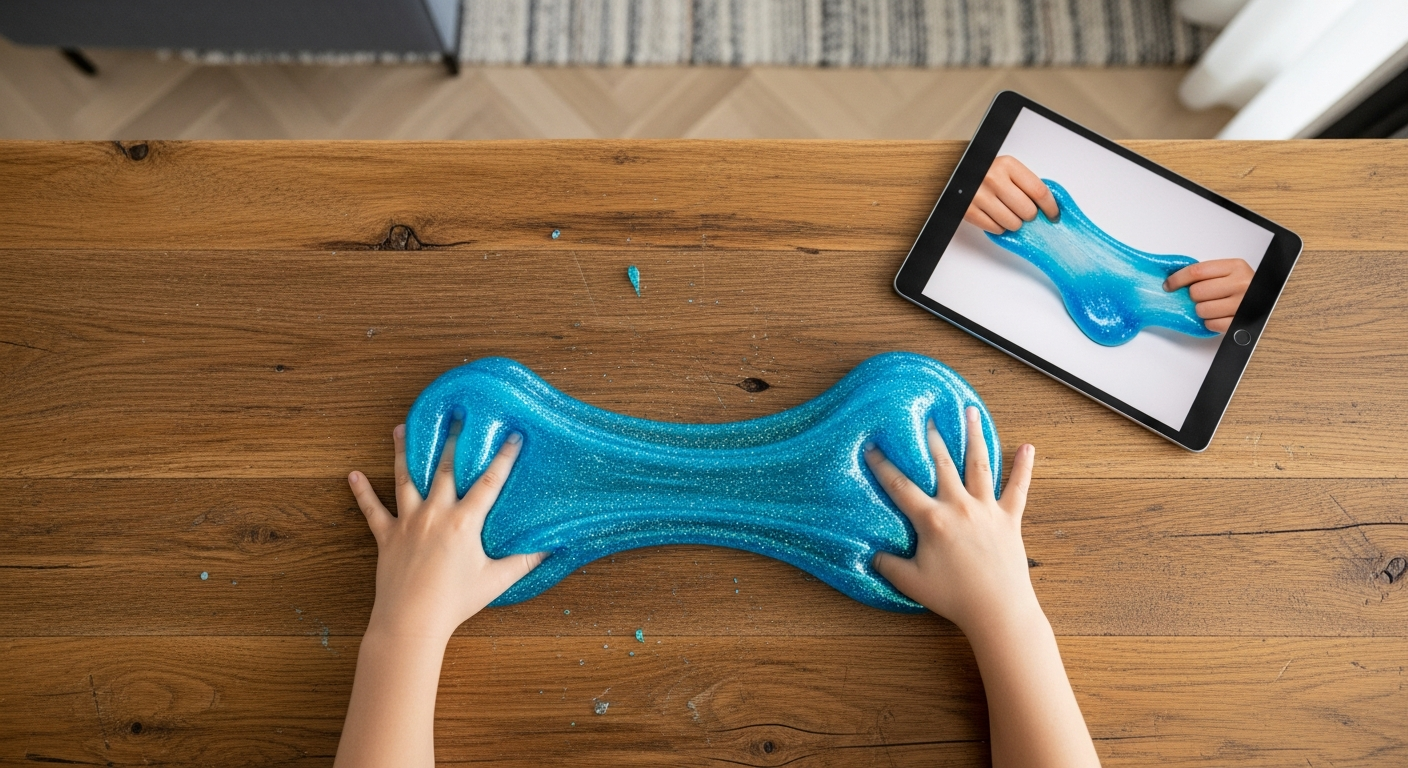
It was fascinating to observe this phenomenon from my own vantage point, often watching my nieces and nephews glued to their tablets, not for video games, but for a fluffy slime tutorial or a review of a new ‘slime shop.’ The collective engagement was staggering. By 2017, searches for ‘slime’ on YouTube were reportedly up 500% year-over-year. Even more incredibly, one major glue manufacturer, Elmer’s, reported that its sales of gallons of glue jumped by over 50% in late 2016 due to the slime craze history, essentially clearing grocery shelves of their product. This isn’t just a trend; it’s an economic force! The headquarters of YouTube LLC in San Bruno, California, undoubtedly played a central role in this global spread of gooey goodness.
The Antidote to Digital Overload: Sensory Benefits
Perhaps one of the most compelling reasons for slime’s lasting appeal is its profound sensory benefits. In a world where screens demand so much of our visual and auditory attention, the simple, squishy satisfaction of DIY slime offers a much-needed break for our overstimulated senses.
Why Tactile Play Matters
As a folklorist, I’ve always championed hands-on traditions, from spinning wool to kneading dough. These activities are not just about the end product; they’re about the process, the connection to materials, and the development of skills. Slime fits right into this tradition. Engaging with sensory play activities like slime provides crucial input for tactile development, helps refine fine motor skills as children stretch, poke, and squish, and can even aid in sensory processing for some children. It’s calming, engaging, and requires focused attention in a non-demanding way.
More Than Just a Toy: A Tool for Well-being
Beyond skill development, slime offers an invaluable antidote to screen-time burnout. It’s a mindful activity that encourages children (and adults!) to be present in the moment. The repetitive motions and pleasing textures can be incredibly soothing, making it one of the best sensory toys for kids for stress relief and emotional regulation. I’ve heard countless parents tell me how making and playing with slime has helped their children unwind after a busy school day, providing a quiet, creative outlet that fosters calm.
From Kitchen Tables to Retail Empires: Young American Entrepreneurs
The slime craze history also tells a uniquely American story of entrepreneurship. What started as a casual hobby for many young people quickly blossomed into legitimate small businesses. Teens began selling their custom-made slimes at school craft fairs, local markets, and eventually, through popular online platforms like Etsy and Instagram.
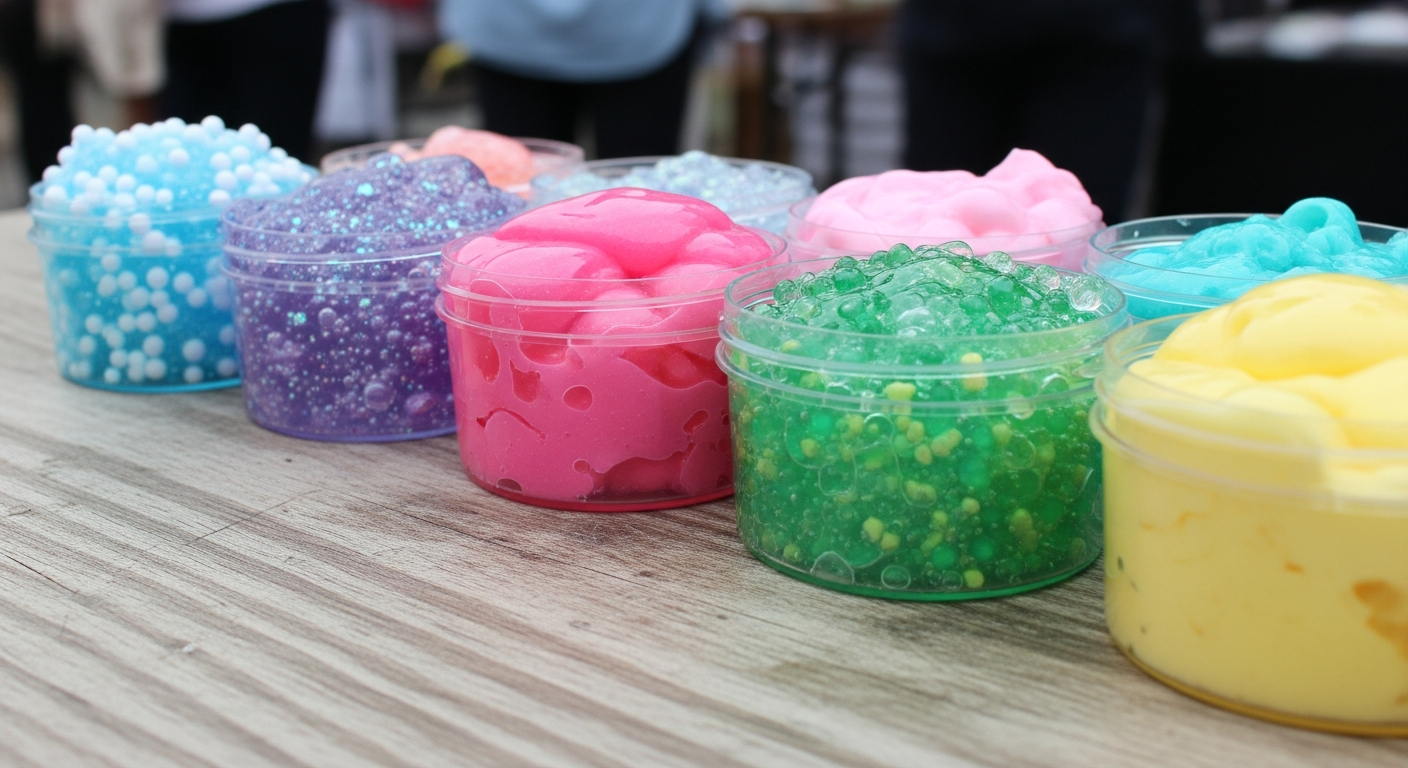
I recall visiting a small artisan market in my local Ohio town a few summers ago, and nestled between stalls selling handmade jewelry and organic soaps was a vibrant table overflowing with colorful, scented slimes, managed by a bright-eyed teenager. She explained her process, her ‘secret recipes,’ and her packaging ideas with the savvy of an experienced business owner. This wasn’t just play; it was practical business experience. These young ‘slime-preneurs’ learned about product development, marketing, customer service, and inventory management, all while perfecting their homemade slime recipe.
It’s a wonderful example of American ingenuity, where a simple, accessible craft empowers a new generation to explore their creativity and develop valuable life skills. It’s not just about the gooey product; it’s about the spark of innovation and the joy of sharing something you’ve made with your own two hands.
The Gooey Legacy of Creativity
The DIY slime phenomenon, from its humble chemical beginnings to its online community and entrepreneurial spirit, truly encapsulates the vibrant, adaptable nature of American childhood. It’s more than just a passing fad; it’s a testament to our enduring need for hands-on creativity and sensory engagement in an increasingly digital world. As I reflect on its journey, I’m reminded that the simplest joys, often found in the textures and colors of our world, can inspire the greatest revolutions in play. So, gather your slime ingredients, embrace the mess, and let your imagination stretch as far as your DIY slime will allow. Happy crafting!