
American Lifestyle
Yes, You Can Bring Slime on a Plane! TSA Rules Guide
Ah, America! The land of amber waves of grain, majestic mountains, and the joyous, sometimes chaotic, symphony of family vacations. There’s nothing quite like packing up the minivan, or nowadays, navigating the bustling terminals of our magnificent airports, bound for adventure. We raise our kids with a spirit of exploration, and part of that often means ensuring they’re comfortable and entertained, even thousands of feet above the ground. For many families, that comfort comes in the form of a squishy, delightful concoction: slime.
I’ve seen it all, friends. From the wide-eyed wonder of a child clutching a homemade batch to the exasperated sigh of a parent wrestling with airport security. It’s a common scene, really. That beloved sensory toy, carefully crafted at home, suddenly becomes a puzzle piece at the security checkpoint, threatening to derail the smooth start to your family’s grand adventure. You might be wondering, ‘Can you bring slime on a plane?’ It’s a question I hear often, and it’s a fair one. The good news is, with a little know-how and a touch of preparation, your journey, and your slime, can make it through seamlessly.
We live in a nation built on innovation and forward-thinking, and that applies just as much to how we travel safely. The Transportation Security Administration (TSA) is there to keep us all secure, and their guidelines, while sometimes seeming a bit intricate, are for the well-being of every American who steps aboard an aircraft. Let’s unravel the mystery of TSA slime rules together, ensuring your family vacation packing tips include all the right moves for those precious sensory toys.
The Unsung Heroes of Our Skies: Understanding the ‘Why’ Behind the Rules
Before we dive into the nitty-gritty of flying with slime, let’s take a moment to appreciate the incredible scale of air travel in our country. It’s truly a marvel. Did you know that every single day, the TSA screens over 2 million passengers across more than 440 federalized airports nationwide? That’s a small city moving through security every 24 hours! And in 2023 alone, TSA officers discovered a record 6,793 firearms at airport checkpoints. These aren’t just numbers; they represent countless potential threats averted and lives kept safe.
It’s within this vast, vigilant system that our questions about kid travel toys guidelines, especially for items like slime, find their answer. The rules aren’t arbitrary; they’re the result of careful consideration for collective security, especially after moments in our history that reshaped our approach to safety, like the tragic events of September 11, 2001, which led to the creation of the TSA under President George W. Bush‘s administration.
The crucial distinction for slime, according to the TSA, is its classification. Slime, much like Play-Doh or silly putty, falls under the category of a ‘gel-like substance’ or ‘soft solid.’ This means it is treated exactly like other liquids, gels, and aerosols when it comes to airport security rules for kids toys, especially in your carry-on bag.
The Famous 3-1-1 Liquids Rule: Your Slime’s New Best Friend
If you’ve flown in America in the last two decades, you’ve likely encountered the TSA’s 3-1-1 liquids rule. It’s a cornerstone of our security procedures, designed to prevent prohibited liquid explosives from being carried onto planes. Here’s a quick refresher on what it means:
- 3: Liquids, gels, aerosols, creams, and pastes must be in containers of 3.4 ounces (100 milliliters) or less per item.
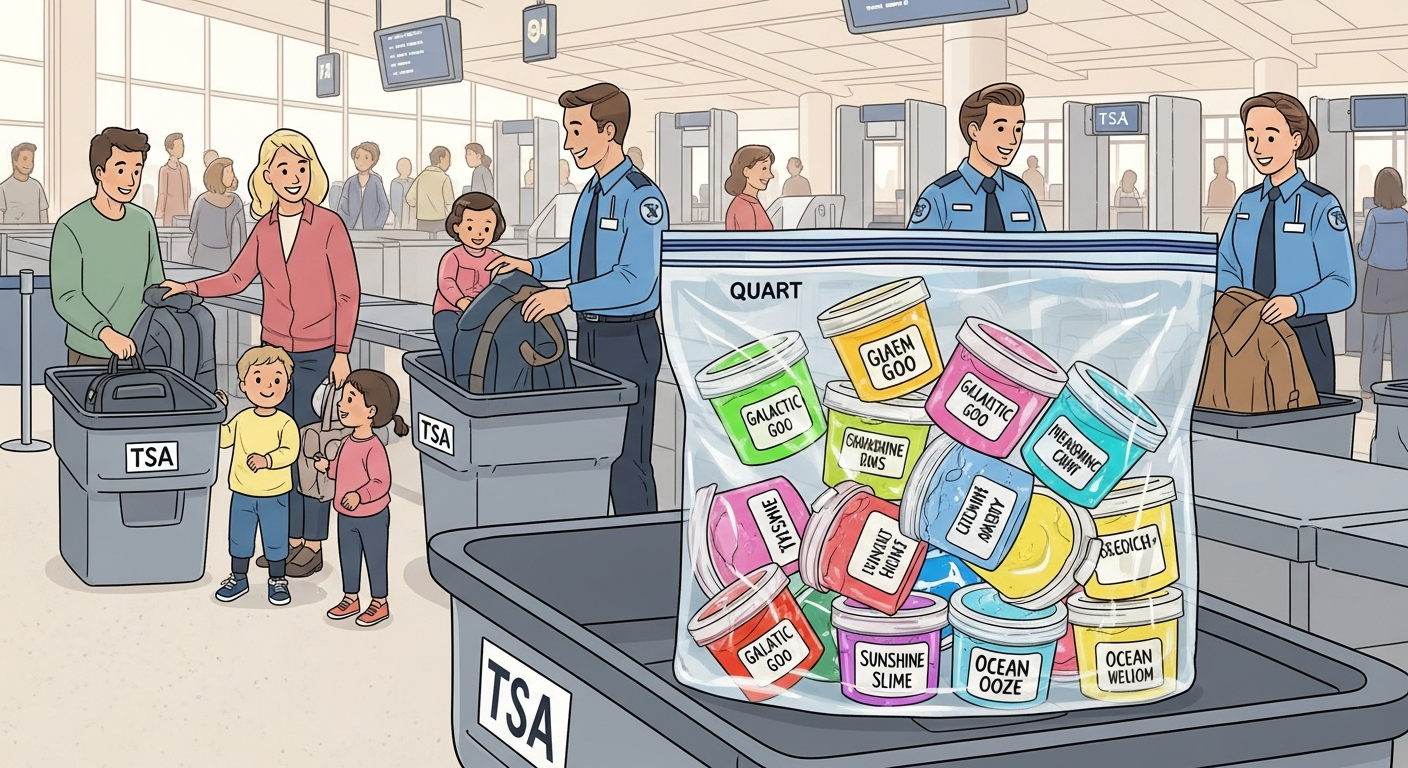
- 1: All items must fit comfortably into one quart-sized (liter-sized) bag.
- 1: Only one such bag is allowed per passenger, which must be removed from your carry-on and placed in a separate bin for screening.
So, when you’re thinking about packing slime for travel, remember this rule above all else. Your child’s favorite slime batch, if it’s got that characteristic gooey, spreadable texture, will be subject to these exact limitations. If it can be squeezed, spread, sprayed, or poured, the 3-1-1 rule applies. This applies whether it’s homemade or store-bought.
Making it Through: Best Practices for Traveling with Sensory Toys
Now that we understand the ‘why’ and the ‘what,’ let’s get to the ‘how.’ This isn’t just about avoiding a fuss; it’s about setting a positive tone for your family’s travel experience. A few simple steps can make all the difference, transforming a potential snag into a smooth sail.
Packing Slime for Travel: A Step-by-Step Guide
Here’s how I’d advise my own grandchildren to prepare their slime for the friendly folks at security:
- Measure Carefully: Ensure each container of slime is 3.4 ounces (100 ml) or less. A small kitchen scale can be helpful, or simply use containers specifically designed for travel-sized liquids. Most small craft store containers are usually under this limit, but it’s always best to check.
- Secure and Seal: Place each individual slime container into a leak-proof, zip-top bag. Trust me, the last thing you want is a gooey surprise leaking onto your important documents or your child’s favorite plush toy! Double-bagging can provide extra peace of mind.
- The Quart-Sized Bag: Gather all your individually bagged slime containers (and any other liquids, gels, or aerosols) and place them into a single, transparent, quart-sized zip-top bag. This is the ‘one bag per passenger’ rule.
- Easy Access is Key: When you get to the airport, be prepared to remove this quart-sized bag from your carry-on bag and place it in a separate bin for screening. This proactive step shows the TSA agent you know the rules and helps speed things along.
- Be Ready to Explain (if needed): While most agents are familiar with various kids’ toys, a friendly explanation like, ‘These are my child’s slime containers, all under 3.4 ounces,’ can be helpful if there’s any momentary confusion.
A little story for you: I remember one time, flying out of a smaller regional airport, a young family ahead of me was held up because their little one had a big, homemade tub of ‘cloud slime’ that was well over the liquid limit. The child was heartbroken, the parents were flustered, and the line slowed to a crawl. It broke my heart a little to see that small joy confiscated. A simple check beforehand would have saved everyone a lot of stress. That’s why understanding these airport security rules for kids toys is so important.
Beyond the Goo: Stress-Free Travel Alternatives for Little Hands
Sometimes, despite our best efforts, or simply because you want to avoid the liquid hassle altogether, it’s wise to consider non-liquid sensory toys. There’s a whole world of delightful distractions that are perfectly airplane-friendly and just as engaging for your young explorers. Think of these as your go-to options for hassle-free entertainment, perfectly aligned with kid travel toys guidelines.
A Comparison of Travel-Friendly Sensory Toys
Here’s a handy comparison of different types of sensory toys, making your family vacation packing tips a breeze:
| Toy Type | TSA Classification | Travel Benefits | Best Practices |
|---|---|---|---|
| Slime (gel-like) | Liquid/Gel (3-1-1 Rule) | Highly engaging, tactile, calming | Under 3.4 oz per container, in quart-sized bag, accessible for screening. |
| Play-Doh/Modeling Clay | Soft Solid (Generally permitted) | Creative, fine motor skills, no screen time. | Small containers, no excessive amounts. May be subject to secondary screening if density is unusual. |
| Fidget Spinners/Pop-Its | Solid Toy (Permitted) | Quiet, discrete, anxiety-reducing. | Pack in carry-on. No specific rules beyond general security checks. |
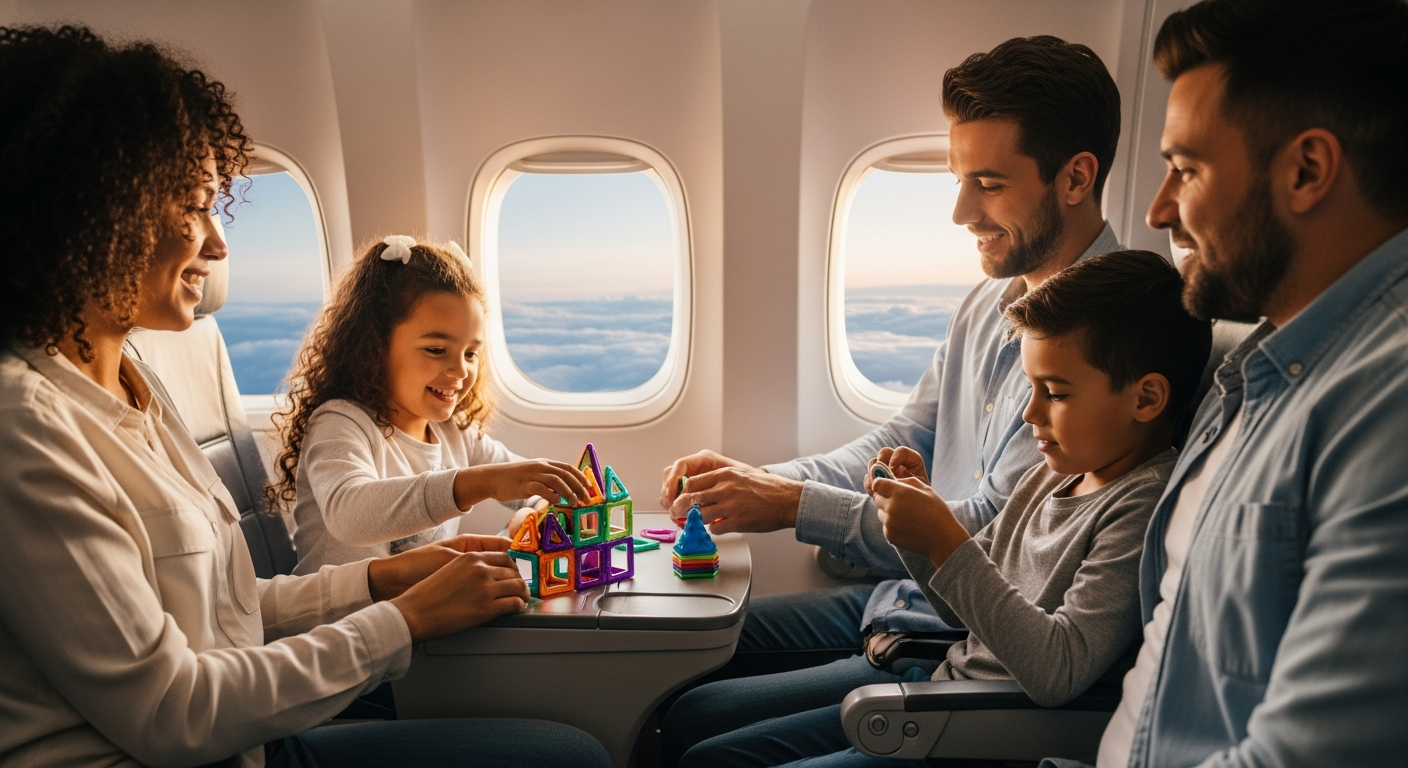
| Magnetic Tiles/Blocks | Solid Toy (Permitted) | Creative building, problem-solving, quiet play. | Pack in carry-on. Be mindful of small pieces with younger children. |
| Water Wow Books/Reusable Sticker Books | Solid Toy (Permitted, water pen liquid is minimal) | Mess-free, reusable, promotes creativity. | Fill water pen just before boarding if needed, or fill with a small amount of water from a permitted bottle. |
When traveling with sensory toys, it’s all about informed choices. Each option offers something unique, and by knowing the TSA guidelines, you’re not just preparing, you’re empowering your family for a smooth journey. It’s about preserving that sense of wonder and freedom that defines so much of the American spirit, even at 30,000 feet.
So, the next time you’re gathering your belongings for a flight, whether it’s to visit family in the tranquil countryside or explore the vibrant streets of a new city, remember these simple guidelines. Our nation’s airports are gateways to discovery, and with a little preparation, you can ensure that every step of your journey, from the moment you approach security to the joyous landing, is as stress-free and fun-filled as can be. Safe travels, my friends, and may your adventures be as boundless as our beautiful country!