
American History & Origins
The Cradle Of Revolution: How The American Tavern Sparked The Flame Of Independence
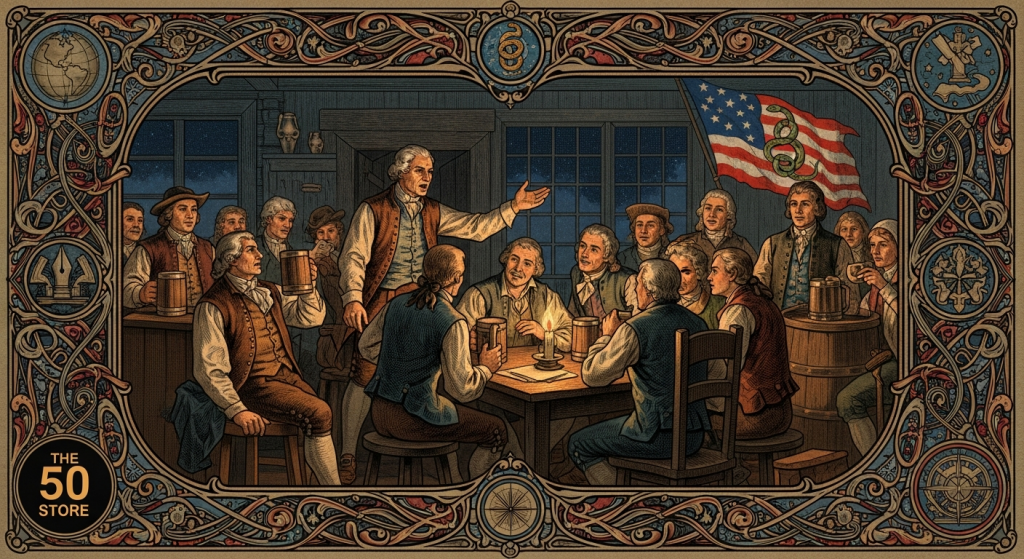
Pull up a chair, friends, and imagine a time, not so very long ago, when the very spark of our nation’s freedom was kindled not in grand government halls, but in the cozy, often smoky, confines of a local gathering spot. Long before the stately halls of Congress existed, the fate of a new nation was indeed debated and decided over pints of ale, the clinking of glasses, and the passionate murmur of voices in the dim light of colonial taverns. These weren’t just places to wet your whistle. Oh no. In cities like Boston, Philadelphia, and New York, the local tavern or pub was far more than a place to drink; it was the town square, the post office, the impromptu courthouse, and, most crucially, the secret meeting hall for rebels. It was within these lively, often boisterous, rooms that the radical ideas of liberty and self-governance were first poured, discussed, and forged into action. This, my friends, is the vibrant and essential tale of american tavern history, a story that pulses with the very heartbeat of our beginnings.
Now, picture the scene. It’s the mid-1700s. Our ancestors, living under the distant rule of the British Crown, faced growing frustrations. Taxes without representation, restrictions on trade, and a profound sense that their voices simply weren’t being heard across the vast Atlantic. Where did ordinary folk, farmers, merchants, artisans, and thinkers alike, go to air these grievances, to share news, and to find common ground? They flocked to the taverns. These weren’t quiet, solitary places. They were vibrant, bustling hubs, the social media of their day, long before the internet or even widespread newspapers.
Historians tell us that in Boston alone, by the mid-18th century, there was roughly one tavern for every 100-200 residents, a staggering number that shows just how integral these establishments were to daily life. Think about that: almost everyone had a ‘local’ where they could connect. Studies by institutions like Colonial Williamsburg suggest that a significant portion of the adult male population, perhaps as much as 70-80% in urban centers, would visit a tavern regularly, making them unparalleled platforms for public discourse. This history of pubs in early america is really the story of how a dispersed population found its collective voice.
The complication, of course, was the very nature of colonial rule. Public assemblies could be monitored, official channels were often choked. So, the question arises: how did a fragmented population manage to organize a revolution, to articulate a unified vision for a new nation? The answer, surprisingly simple yet profoundly effective, lay in these very public, yet subtly private, spaces. The colonial pub revolution wasn’t fought with muskets initially, but with words, ideas, and shared commitment brewed over tankards of ale and rum punch. They became the perfect breeding ground for dissent, a crucible where loyalty to the Crown began to melt away, replaced by a fiery resolve for independence.
The Green Dragon and Fraunces Tavern: Legendary Meeting Spots
Among the countless taverns that dotted the colonial landscape, a few stand out like monumental beacons in our national narrative. They were more than just buildings; they were witnesses to history, silent partners in the birthing of a nation.
The Green Dragon Tavern: The ‘Headquarters of the Revolution’
In Boston, nestled in what is now the vibrant North End (find it on Google Maps: Green Dragon Tavern), stood the legendary Green Dragon Tavern. This wasn’t just any tavern; it was famously dubbed the ‘Headquarters of the Revolution’ by Daniel Webster, and for good reason. It was here that patriots like Paul Revere, Samuel Adams, and Dr. Joseph Warren, all prominent Sons of Liberty, held secret meetings in the cellar. Imagine the hushed whispers, the fervent debates, the plotting of strategies that would forever alter the course of human events. It was from the Green Dragon that Paul Revere set out on his famous ride. The Boston Tea Party was conceived within its walls. These weren’t merely social gatherings; these were war councils masquerading as convivial evenings. This iconic green dragon tavern boston represents the very heart of the early revolutionary movement, one of the most vital sons of liberty meeting places.
Fraunces Tavern: A Symbol of Farewell and New Beginnings
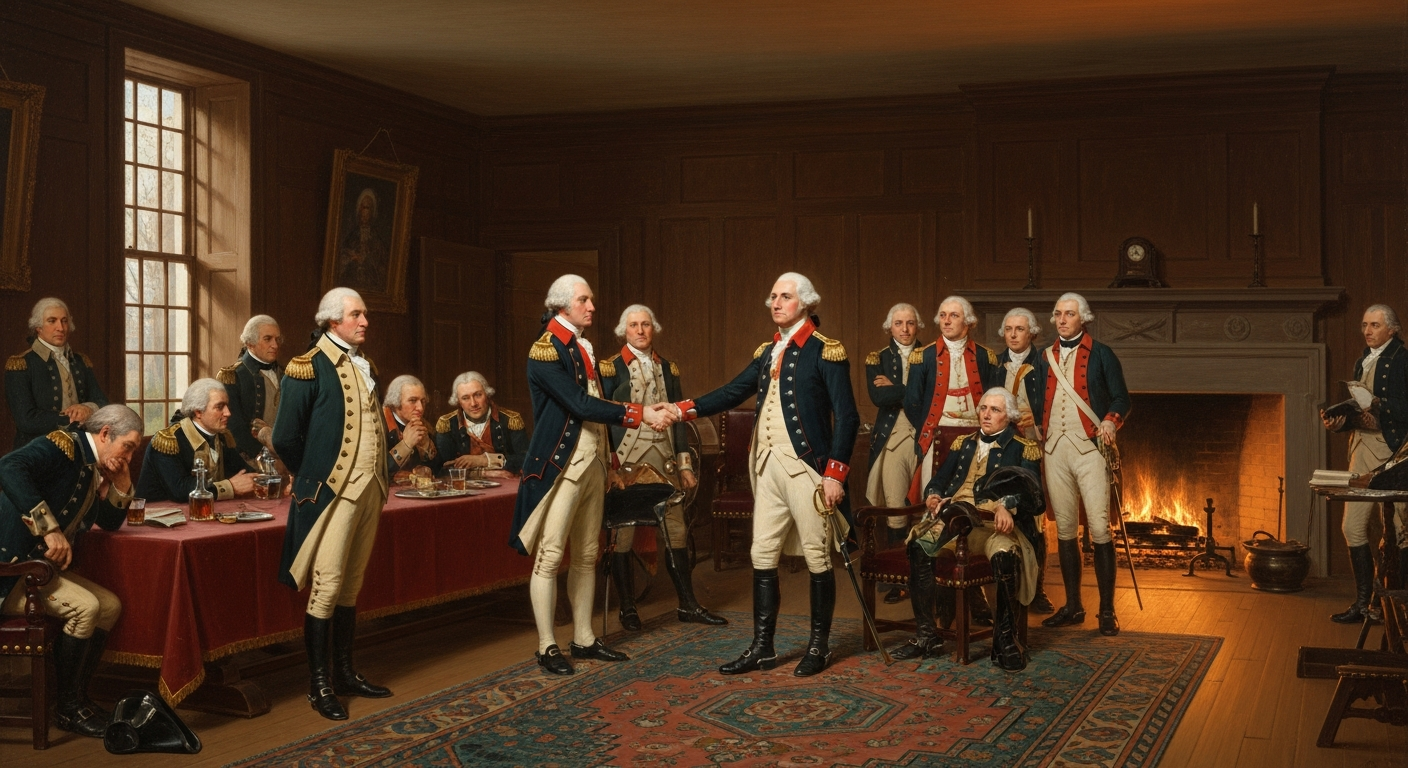
A bit further south, in New York City, another historic establishment played an equally pivotal role: Fraunces Tavern (you can visit it today at Fraunces Tavern NYC). This grand building, still standing proudly in Lower Manhattan, saw some of the most emotionally charged moments of the American Revolution. While the Green Dragon ignited the flame, Fraunces Tavern witnessed its triumph and the transition to a new republic. Most famously, it was here, in the Long Room, on December 4, 1783, that General George Washington bid a tearful farewell to his officers, resigning his commission and setting a precedent for civilian control over the military, a truly astounding act for the time. This was a moment of profound national unity and emotion, a poignant closing chapter to the american revolutionary war taverns story. To think of the weighty conversations held there, the future of a fragile new nation hanging in the balance, it truly fills me with awe. These weren’t just places for a drink; they were sacred spaces where a nation found its courage and charted its destiny.
News, Politics, and Pints: Taverns as Information Hubs
Beyond these legendary sites, the thousands of smaller taverns across the colonies served a critical, daily function in knitting together a nascent society and fueling its political awakening. In an era without widespread newspapers, telegraphs, or radio, taverns were the absolute epicenters of communication. They were the original social networks, if you will.
Post Offices and Public Forums
Imagine a traveler arriving in a new town. Where would they go first? The tavern. It’s where you’d find a bed for the night, a warm meal, and, most importantly, the freshest news. Taverns often served as informal post offices, receiving and distributing mail. Stagecoaches would drop off passengers and parcels right at the tavern door, bringing with them whispers of happenings from distant towns and colonies. Local announcements, notices of town meetings, even laws and proclamations, were often posted on tavern doors or read aloud to the assembled patrons.
This flow of information wasn’t passive. It was actively discussed, debated, and dissected over a pint. Every piece of news, especially concerning British policies, was put under the microscope of public opinion. Think of a farmer from the countryside, newly arrived in town, hearing firsthand accounts of injustices in Boston from a merchant who had just traveled from there. This wasn’t abstract information; it was real, personal, and urgent. This function was vital to the history of pubs in early america, making them essential for public engagement.
Spreading the Revolutionary Message
The Sons of Liberty and other patriot groups masterfully used this network. Agents would travel from tavern to tavern, sharing pamphlets, news sheets, and, critically, their fervent ideas about liberty and self-governance. What began as a local grievance in one town could, through this tavern grapevine, quickly become a widespread colonial concern. The very fabric of the revolution, its ideas and its call to action, was woven through these informal channels. Without them, it’s hard to imagine how a unified front could have emerged against such a powerful empire. The shared drink fostered camaraderie, and camaraderie opened the door to shared political ideals. It was a potent combination.
Taverns as Centers of Democracy: Communal Drinking and Debate
If taverns were the news channels, they were also the purest form of grassroots democracy our young nation possessed. The communal aspects of drinking in colonial America went far beyond simple thirst quenching; it was a deeply ingrained cultural practice that actively fostered open debate and, ultimately, revolutionary fervor.
The Communal Drinking Culture
Back then, water wasn’t always safe to drink, so ale, cider, and other fermented beverages were staples. But it was the communal act of sharing these drinks that truly mattered. People gathered at long tables, sharing pitchers, mugs clinking together. There was a leveling effect. In these rooms, social hierarchies, while never entirely absent, softened considerably. A wealthy merchant might sit shoulder-to-shoulder with a skilled artisan or a common laborer. Everyone had a voice, or at least, the opportunity to make their voice heard. This culture of communal drinking colonial america created a unique social crucible.
Political Debate and Public Opinion
The noise and conviviality of a tavern were perfect camouflage for serious political discussion. Under the guise of socializing, profound political debate historical taverns could flourish. Grievances against the Crown, legal arguments for independence, strategies for protest, even philosophical ideas from Enlightenment thinkers like John Locke and Thomas Paine, were dissected and debated. It was here that public opinion was truly forged, person by person, argument by argument.
I imagine the heated discussions, the fiery speeches, the quiet nods of agreement that slowly solidified a shared resolve. It wasn’t always polite, I’m sure, but it was authentic. These gatherings were where the abstract concept of ‘liberty’ took on real meaning for everyday people. They saw their neighbors, their friends, their fellow citizens, all feeling the same pinch of injustice, all yearning for something better. It was this collective consciousness, born from shared experiences and passionate discussions in these humble establishments, that truly empowered the revolution.
A Lasting Legacy: The Spirit of the Early American Tavern
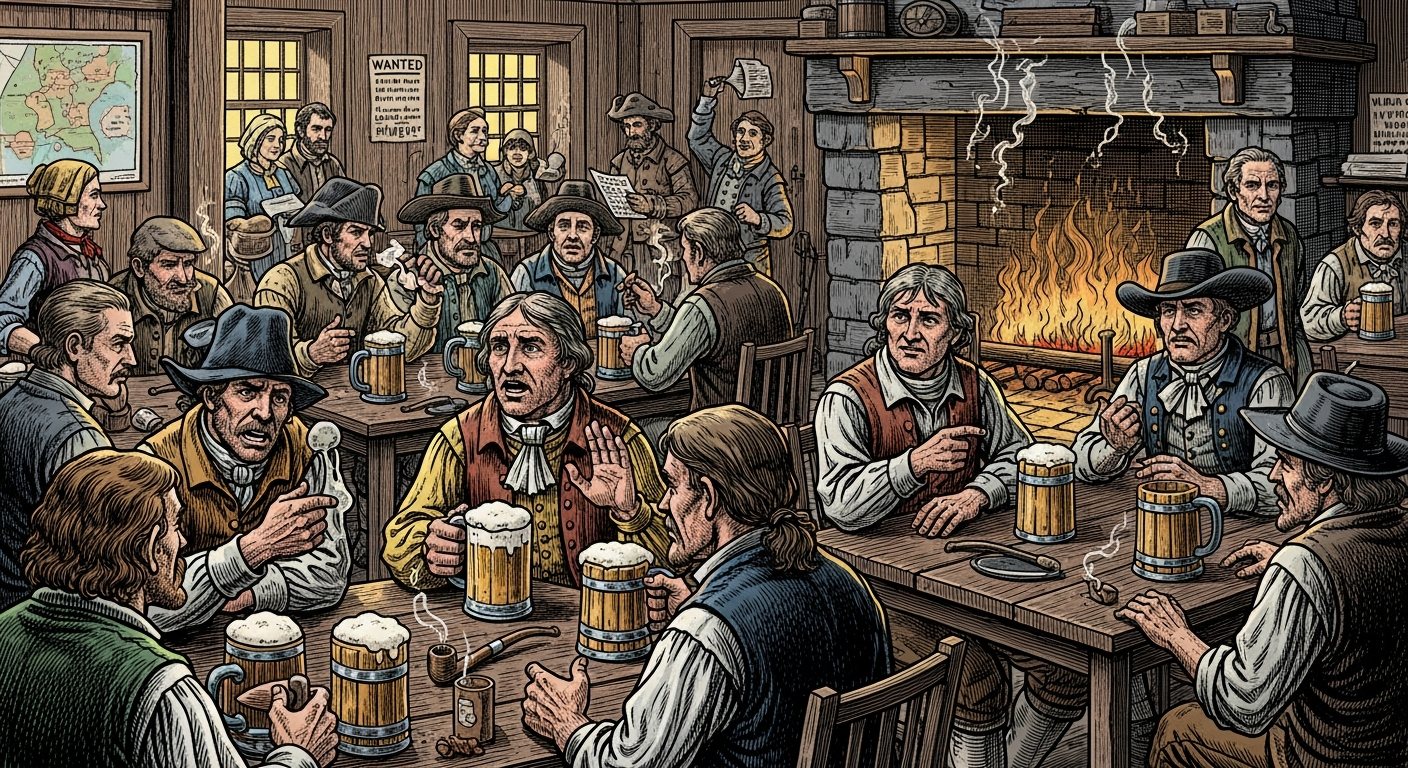
The american tavern history isn’t just a dusty chapter in old books; it’s a living, breathing part of who we are as Americans. The spirit of those early gathering places, where community and lively discussion intertwined, continues to shape our nation’s social traditions and our unique approach to civic engagement.
From Taverns to Town Halls: A Continuous Thread
While formal political meetings moved to dedicated government buildings, the idea of public discourse, of neighbor talking to neighbor about the issues of the day, remained deeply ingrained. The town hall meeting, a bedrock of American local governance, carries echoes of those spirited tavern debates. Our coffee shops, our community centers, even our online forums, are modern iterations of that timeless need to gather, to share, to deliberate, and to influence. We still crave spaces where ideas can be freely exchanged, where differing viewpoints can respectfully clash, and where common ground can be found, or at least earnestly sought.
The Enduring Spirit of Community
What I find most enduring about the story of the american revolutionary war taverns is not just their role in political upheaval, but their profound testament to community. These were places where people found solace, celebrated joys, mourned losses, and built bonds that transcended mere acquaintance. They were vital for individual well-being and collective strength. That spirit, the warmth of belonging, the sense of shared purpose, is something we must never lose sight of. It reminds us that our nation wasn’t just built on grand principles, but on countless small acts of connection, conversation, and mutual support.
As I reflect on this powerful history, I feel a deep sense of gratitude. Gratitude for those who, in simple taverns, had the courage to dream of a better future. Gratitude for the spaces that allowed those dreams to take root and flourish. And a profound hope that we, as Americans, continue to cherish and cultivate those places, whatever form they take today, where open hearts and minds can gather to shape our tomorrow. For the flame of independence, once sparked, must always be tended. It’s in our hands, just as it was in theirs, gathered around those tavern tables, all those years ago. It’s a beautiful legacy, one worth raising a glass to, isn’t it?