
Culture & Traditions
The High School Prom: From 19th-Century Tea Parties to the Ultimate American Rite of Passage
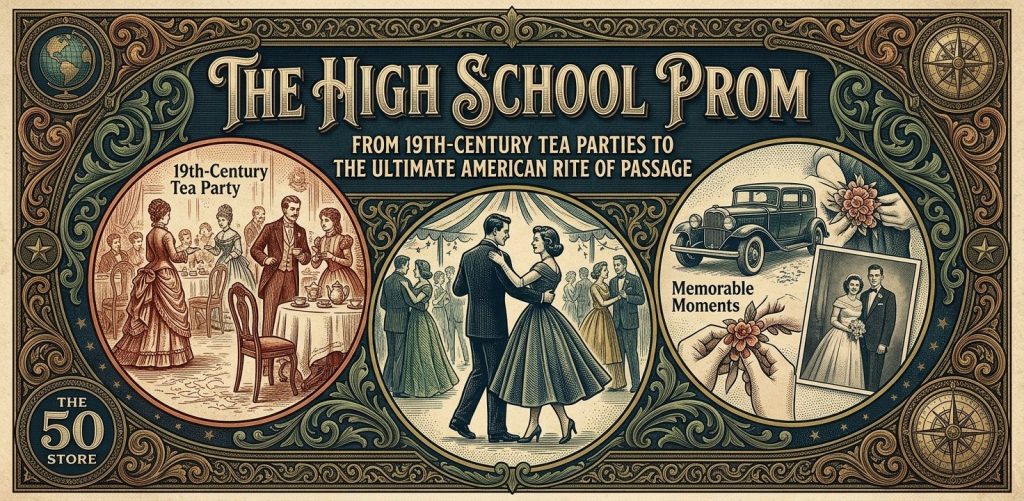
Springtime in America brings a certain magic to our neighborhoods. There is a crispness in the air, the dogwood trees are blooming, and the scent of freshly cut grass signals the end of the school year. As the weather warms up in May, you can walk down almost any suburban street and witness a familiar, heartwarming sight. A nervous young man in a crisp tuxedo stands on a front porch. He holds a clear plastic box containing a beautiful flower. Inside the house, a young woman is putting the final touches on her hair. Soon, the front door will open, parents will snap dozens of photos, and another generation will step into the timeless glow of the high school prom.
The formal wear, the corsages, the limousine rides. Today this event is a multi-billion dollar American rite of passage. But it did not start with DJ booths or gymnasium balloons. It began as a simple, polite 19th-century college tea party.
Think about the incredible bustling energy that takes over a small town during prom season. The local dress shops are filled with mothers and daughters searching for the perfect gown. The neighborhood florists work late into the night, carefully arranging baby’s breath and vibrant roses into delicate wrist corsages. Down at the local formalwear shop, groups of teenage boys are getting measured for tuxedos, often laughing and joking as they try on dress shoes for the very first time. It is an event that stimulates the entire local economy and brings the community together. Grandparents travel from towns away just to sit in the living room and watch the kids walk down the stairs. Neighbors peek out from behind their curtains or step out onto their front lawns to wave. It is a beautiful, deeply ingrained ritual.
As an older American who has seen many springs come and go, I have always been fascinated by how our traditions grow and adapt. The modern prom is a massive undertaking. Did you know that by the mid-2010s, the average American family spent over $900 on prom night? According to historical data from nationwide surveys conducted by Visa, that number even peaked above $1,000 in certain regions of the United States. That is a staggering amount of money for a high school dance.
But how did we get to this point? How did we transition from quiet, polite gatherings where students sipped tea, to renting out grand ballrooms with professional disc jockeys and laser light shows? 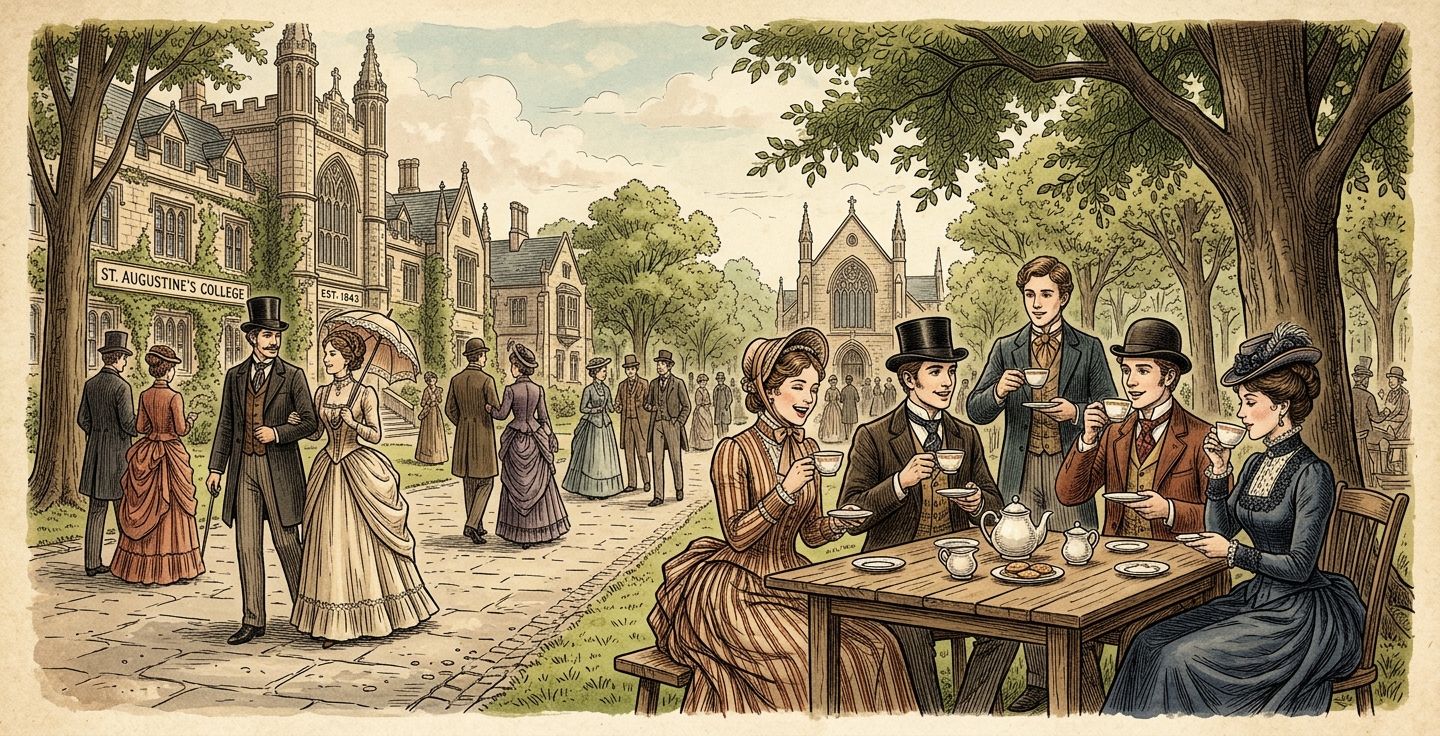
The answer lies in the deeply fascinating story of America itself. The word ‘prom’ is historically true to its roots. It is short for ‘promenade’, which was the formal grand march of guests at the beginning of a high society social ball. Yet, over the decades, we have witnessed a massive cultural shift. We moved from punch bowls and tea to elaborate themes and formal dinners.
The Tea Party That Built the American Prom
Part I: 19th-Century Co-Ed Etiquette
Let us travel back in time to the late 1800s. The setting is not a high school gymnasium filled with teenagers. Instead, picture the polished wooden floors of prestigious northeastern universities. Imagine a bright, crisp afternoon at Smith College, or perhaps a neighboring campus in New England. Our nation was growing rapidly during the Industrial Revolution. University administrators wanted to ensure that their graduating seniors possessed the refinement and etiquette required of the upper class.
Educational leaders of the era, such as Charles William Eliot (1834-1926) who served as the highly influential president of Harvard, placed a very strong emphasis on character building. They believed education was not just about books. It was about learning how to behave in polite society. At these early college gatherings, students did not dance the night away to loud music. Instead, they participated in the promenade. It was an etiquette lesson cleverly disguised as a party.
In these early days, physical contact was strictly regulated. The waltz was considered quite modern and sometimes too scandalous for these formal university gatherings. Therefore, the promenade was the perfect solution. It allowed young men and women to interact without crossing the rigid boundaries of Victorian morality. The focus was on manners, posture, and respectful interaction. A gentleman had to learn exactly how to bow, how to offer his arm, and how to maintain proper distance. A lady learned how to gracefully accept a dance and how to manage her long, heavy skirts on the polished floor. It was a serious affair, entirely devoid of the carefree laughter we associate with modern teen dances. Yet, it was the important first step toward the celebration we know today.
Part II: High School Adoption
As the calendar turned to the 1920s and 1930s, the American educational landscape experienced a major change. High school attendance was no longer a rare luxury reserved only for the wealthy elite. It became a universal standard for teenagers across the country. With this massive influx of youth entering secondary schools, educators looked for creative ways to teach social skills alongside reading, writing, and arithmetic.
Forward-thinking philosophers like John Dewey (1859-1952) argued that schools should accurately reflect society. Dewey believed schools must prepare students for active, responsible civic life. Consequently, high schools began adopting the college prom tradition to teach teenagers how to behave like responsible adults.
Consider the story of a typical high school in the American Midwest during the roaring twenties. The decade brought a brand new sense of freedom and energy. However, school administrators still kept a very tight grip on decorum. A young couple would arrive at the school gymnasium on a Friday night. The junior class had spent the entire week lovingly decorating the gym. They used endless streams of colorful crepe paper and handmade tissue flowers to carefully hide the basketball hoops and bleachers.
The students drank sweet fruit punch from small glass cups. They danced to the tunes of a live, local jazz band. It was a modest affair by today’s standards, but to those kids, it was incredibly special. The teenagers felt grown up, if only for a few hours. They wore their Sunday best, learned how to ask for a dance politely, and practiced making small talk.
Part III: Post-War Suburban Grandeur
The real turning point for the modern prom arrived in the fabulous 1950s. After enduring the bitter hardships of the Great Depression and the immense sacrifices of World War II, America entered an era of unprecedented economic prosperity. The post-war baby boom was fully underway. The suburbs were expanding at a rapid pace across the nation. Our country was filled with a profound sense of hope, relief, and boundless optimism. Parents who had grown up with very little now wanted to give their children the absolute best life possible.
During the steady and calming presidency of Dwight D. Eisenhower (1890-1969), the country enjoyed a prosperous peace. This newfound national wealth quickly trickled down to the youth culture. The high school prom simply outgrew the humble school gymnasium. Teenagers wanted to celebrate their youth in high style. They wanted an experience reflecting the post-war grandeur of the booming American economy. 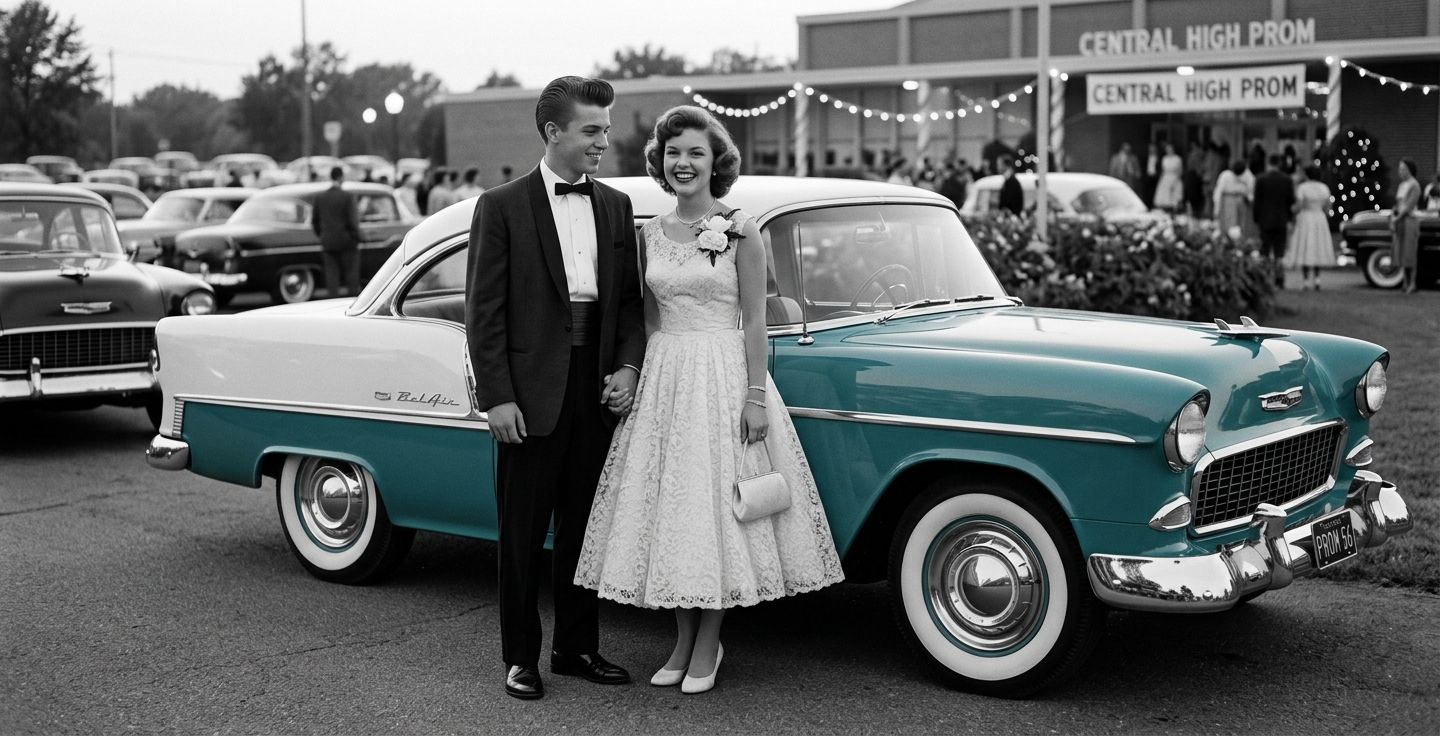
Picture a young man in the spring of 1955. He spent several weeks saving money from his part-time job pumping gas at the local service station. He asked his father for permission to borrow the freshly polished, two-tone Chevrolet Bel Air. He arrived at his date’s house wearing a sharp, rented white dinner jacket. He proudly pinned a beautiful orchid corsage to her dress. Together, they drove not to the school, but to a prestigious, glittering venue. In big cities, schools rented out places like the world-famous Waldorf Astoria in New York. In smaller towns, they rented the beautiful banquet room of the local country club or the finest hotel downtown.
The girls wore dresses featuring miles of pastel tulle. The boys learned how to tip the coat check attendant. After the dance, the night often ended with a joyous sunrise breakfast at a local diner. The prom had officially become an event of true glamour and sophistication.
Part IV: A Rite of Passage
Let us fast forward to the 1980s and 1990s, a time many of us remember fondly. The prom had evolved into a massive pop culture phenomenon. The dresses featured puffed sleeves, bright neon colors, and shimmering sequins. The hairstyles were tall, heavily sprayed, and absolutely magnificent. The music shifted from the smooth big bands of the 1950s to powerful rock ballads and synthesized pop hits. Students would eagerly wait for the DJ to play that one special slow song, often a sweeping power ballad that defined their entire senior year.
Teenagers rented long stretch limousines, sometimes pooling their money with ten other friends just to afford an hour of luxury. They danced under mirror balls and flashing lights, taking endless pictures with instant cameras to capture the magic of the evening. The prom had become a cinematic event in real life.
In recent years, elaborate promposals have become a viral sensation on the internet. Yet, despite all the flashy additions and technological changes, the core meaning of the night has never changed.
The prom remains a enduring, permanent symbol of American youth. It is a beautiful night of nostalgia and the definitive transition into adulthood. It is often the last great gathering of a senior class before they graduate. Soon after that night, those kids will scatter across the country. Some will bravely join the military to serve our country. Others will travel far away to attend college, or they will step right into the hard-working American labor force. Prom is a night where every single student, regardless of their background, gets to dress up, feel like royalty, and celebrate their hard work.
When we look back at our old prom photographs, we see much more than just outdated hairstyles or funny tuxedo colors. We see the smiling faces of our childhood friends. We see the undeniable, bright optimism of our youth. We see a uniquely American tradition that successfully bridges the gap between generations. Your grandmother has her cherished prom story. Your mother has her favorite prom memories. And someday, your own grandchildren will have theirs. It is a beautiful thread that weaves through the fabric of our great nation.
If you want to honor those golden years, you can carry the timeless spirit of American high school nostalgia with you today. Check out our exclusive Class of ’55 Retro Varsity Tee. It is expertly crafted on buttery-soft combed cotton for a truly classic, vintage look. It is the perfect way to remember the great music, the innocent laughter, and the magical spring nights of your youth. Put it on, smile at the wonderful memories, and always remember that the best days of America are still ahead of us.