
Culture & Traditions
The Christmas Ship of Chicago: Bringing Holiday Hope Across a Frozen Lake Michigan
The Hook: A Blizzard on the Great Lakes
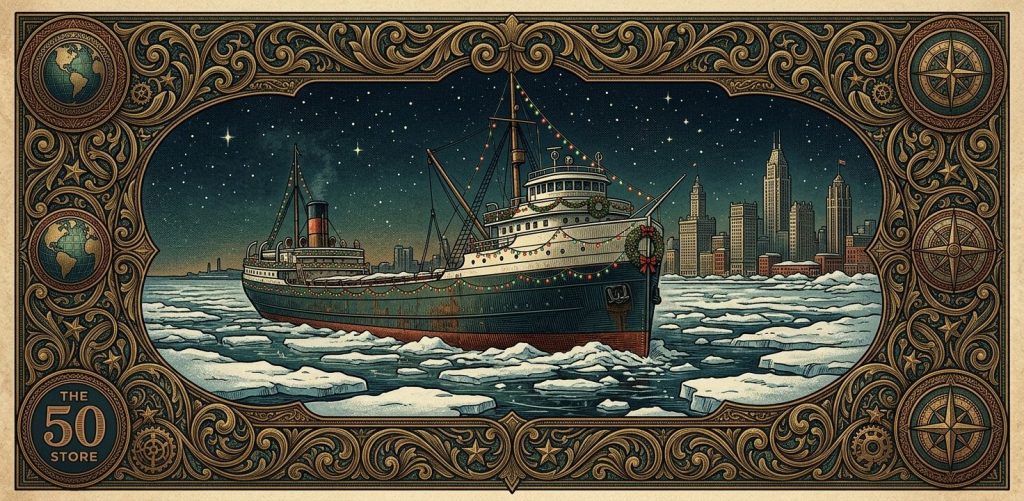
The icy wind howled like a runaway freight train across the black waters of Lake Michigan on November 23, 1912. Freezing spray coated the rigging of the schooner Rouse Simmons in thick layers of heavy ice. At the helm stood Herman Schuenemann (1865-1912). He squinted his tired eyes against a blinding and relentless blizzard. His three-masted wooden ship was riding dangerously low in the angry swells. She was not carrying a typical late-season cargo of heavy iron ore or rough lumber. Her dark hold and her snow-covered decks were stuffed to the absolute brim with over five thousand tightly bound evergreen trees. These beautiful pines were bound for the working poor of Chicago. It was the bold start of a beloved annual tradition that even ice and shipwrecks could not sink.
Friends, let me tell you a story about true American grit. Winter on the Great Lakes was incredibly perilous for early sailors. The gales of November could tear a wooden ship apart in mere minutes. Yet, Captain Herman and his brave crew sailed directly into the teeth of the storm. You might wonder why a seasoned sailor would risk his life for a load of simple pine trees. The situation down in the city was complicated. Chicago was growing at a staggering rate. It was filled with recent immigrants who desperately wanted to celebrate a traditional Christmas. The complication was heartbreaking. Store-bought trees were simply too expensive for the average working-class family. This raises a beautiful question. How could the poorest folks in the city give their children a proper holiday? The answer arrived every single November on the icy decks of a battered sailing ship.
Holiday Hope on Frozen Waves
Part I: Chicago’s Christmas Tree King
For decades, the hardworking Schuenemann family sailed evergreen trees down from the northern forests to the bustling docks of the city. Captain Herman earned a beautiful nickname along the way. He became known far and wide as Chicago’s Christmas Tree King. By the early twentieth century, the maritime shipping industry was undergoing massive and permanent changes. Most sensible captains had long abandoned the risky late-season runs. The autumn weather was simply too unpredictable and dangerous. But Herman knew that thousands of struggling families were counting on him. He refused to let them down.
Let us look at some surprising historical numbers to understand the sheer scale of this operation. According to the Chicago Maritime Museum, by the late eighteen hundreds, over one million Christmas trees were shipped into Chicago annually to meet the demands of a booming population. The vast majority of these trees arrived by rail. Railroads were fast. They were remarkably reliable. Less than a dozen sailing ships still made the dangerous autumn tree run by 1912. Herman was one of the last proud holdouts of a rapidly dying breed.
When his heavily loaded ship finally arrived at the Clark Street Bridge, the entire wooden dock transformed into a wonderful winter festival. He bypassed the greedy city middlemen entirely. He sold his fresh trees right off the deck of his ship. The wonderful scent of fresh pine mixed perfectly with the smoke of roasting chestnuts and the cold city air. Families would line up for blocks just to catch a glimpse of the grand wooden vessel adorned with glowing electric lights. He sold his trees for fifty cents. Sometimes he sold them for a simple quarter.
This brings me to a deeply touching micro-history. Consider a young immigrant father working ten exhausted hours a day in the local stockyards. He barely made enough pennies to keep the small coal stove burning in his tenement apartment. Buying a freshly cut spruce tree at a corner market was an unthinkable luxury. Those store trees often cost well over a dollar. But down at the bustling dock, if that tired father walked up to the ship with empty pockets, Herman would hand him a beautiful and fragrant tree anyway. He did not ask for a single dime. This incredible generosity earned him a second and even more beloved nickname. He was lovingly called Captain Santa by Chicago’s poorest children.
Part II: The Final Voyage
Every heartwarming story has its dark and testing moments. The terrible November gale of 1912 would prove to be the ultimate test of this maritime tradition. Herman and his crew departed from the small port of Thompson, Michigan under gray and deeply threatening skies. The ship was heavily laden with deep green spruce and fragrant balsam. The local lumberjacks had sternly warned him about the dropping barometric pressure. The old sailors on the dock shook their weather-beaten heads. But Herman knew the hopeful children of Chicago were waiting. He gave the final order to cast off the thick mooring lines.
The sudden storm hit them with the furious power of a frozen hurricane. The bitter winds shrieked wildly through the wooden masts. Huge violent waves crashed over the heavily loaded decks. The freezing water instantly turned to solid ice. This added thousands of pounds of deadly weight to the struggling vessel. Other ships wisely sought immediate shelter in safe harbors. But the mighty sailing ship was caught entirely out in the treacherous open water. A nearby rescue station spotted her flying desperate distress flags. They bravely launched a wooden lifeboat into the churning surf. Sadly, the whiteout blizzard completely swallowed the ship before they could reach her. The captain and his entire brave crew went down into the icy depths.
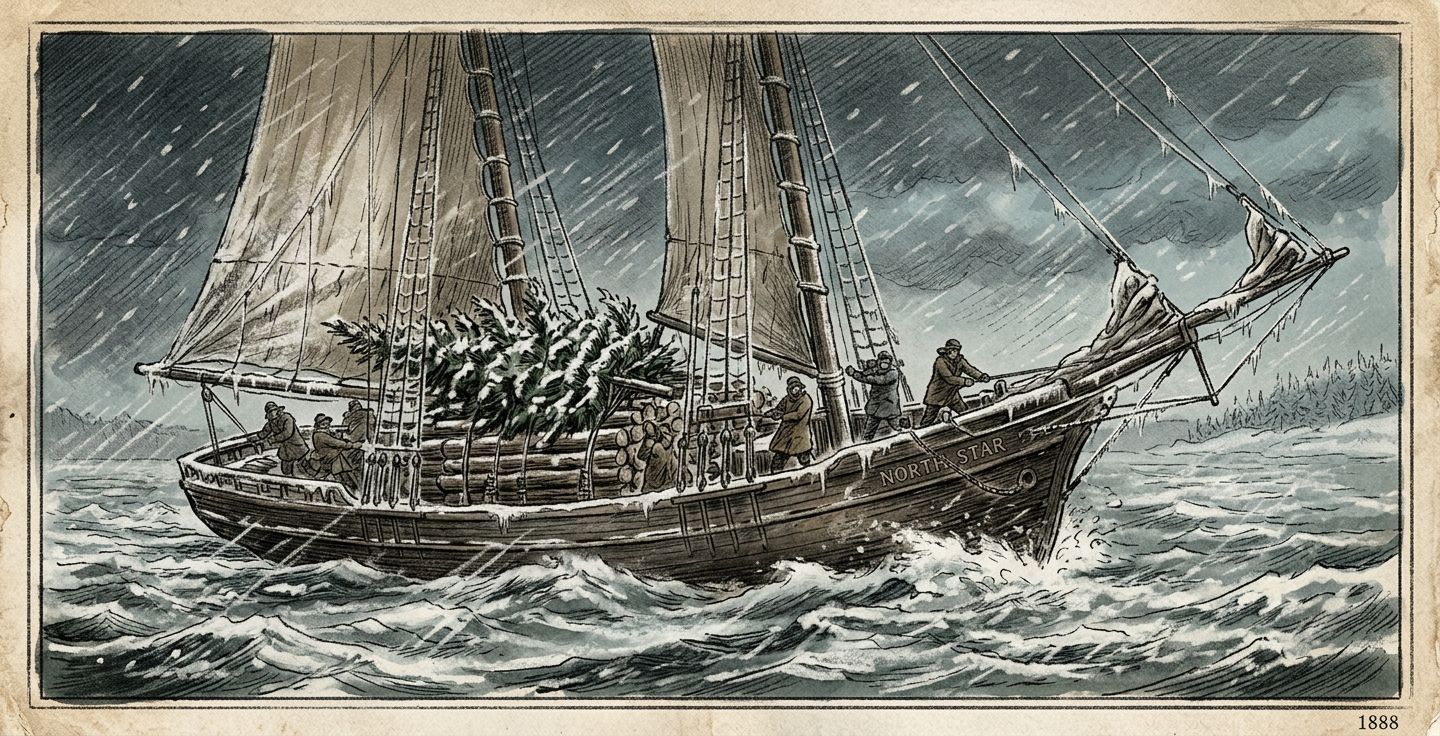
The tragic disappearance left a haunting and beautiful historical mystery in its wake. The exact resting place of the grand ship remained completely unknown for almost six decades. But the deep lake never entirely let the memory die. Over the next several decades, commercial fishermen would occasionally pull up their heavy nets. They would find them tangled with remarkably preserved old pine branches. Green needles and small pieces of the wrecked ship would wash up onto the sandy shores of the lake for years to come. It was as if the brave captain was still trying to deliver his precious cargo.
Part III: The Legacy Continued
A tragedy of this massive scale would normally mark the absolute end of a story. But the true American spirit is built on resilience and unbreakable hope. When the horrible news finally reached the city, the working-class neighborhoods fell into deep mourning. The busy Clark Street docks were eerily quiet. But Herman’s grieving widow and her strong daughters refused to let his beautiful dream sink to the bottom of the lake. They understood exactly what this tradition meant to the struggling community. They wiped away their bitter tears and immediately got to work.
The very next year, the brave Schuenemann women rented another sturdy schooner. They proudly sailed it right back to the exact same dock. They proudly stacked the wooden decks with fresh evergreens. They boldly continued the heartwarming tradition of handing out free trees to the most destitute families. When renting tall ships became completely impossible, they brought the evergreens into the city by train. They stood out in the freezing cold year after year. They faithfully kept the incredible legacy alive for decades. Their selfless dedication ensured that the spirit of generosity remained a permanent fixture of the city.
Part IV: The Christmas Ship Today
Friends, the story does not end in the dusty history books. We are a grateful nation that honors its quiet heroes. Today, the incredible United States Coast Guard has taken up the honorable mantle of this historic run. Every single winter, the magnificent Coast Guard Cutter Mackinaw makes the emotional journey down the freezing lake. Her modern mission is entirely peaceful and deeply rooted in community charity. She serves proudly as the modern Christmas Ship of Chicago.
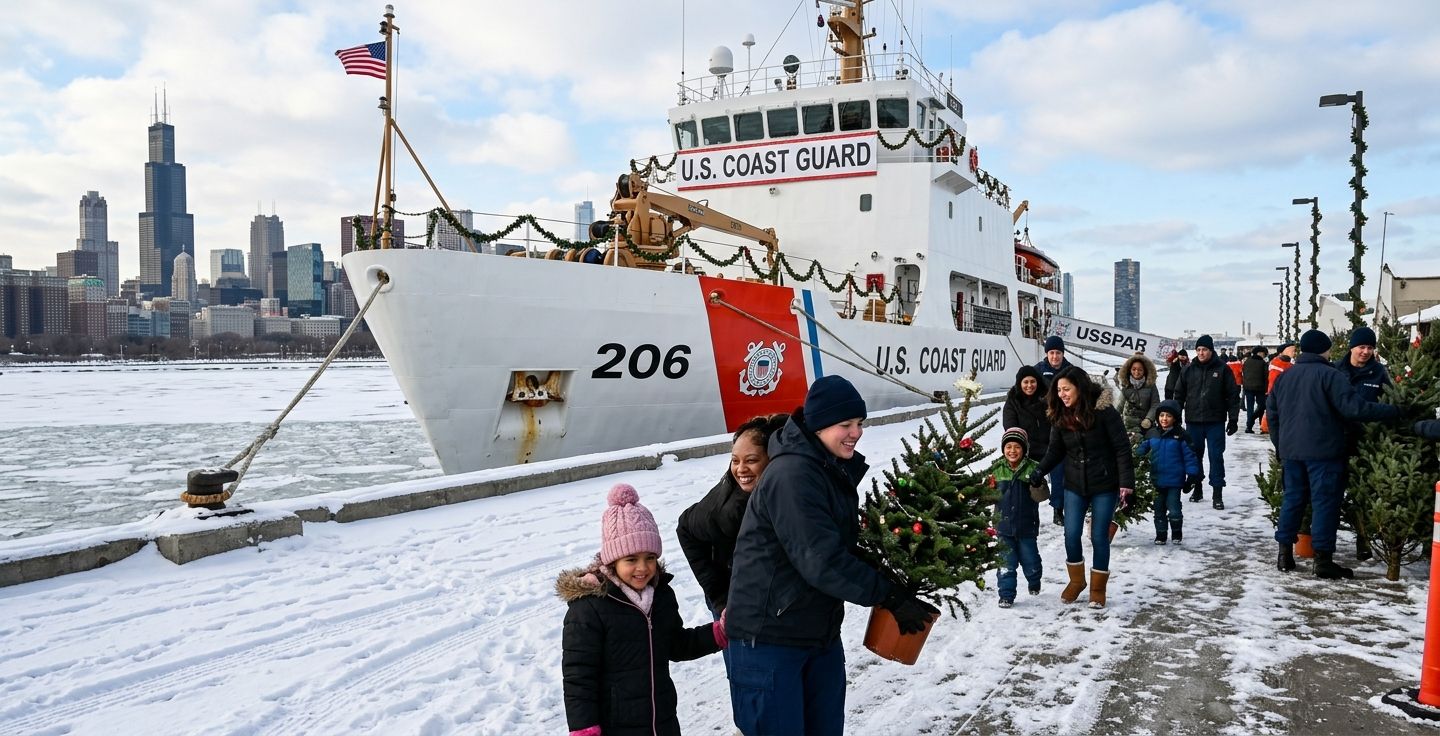
The dedicated crew members gladly trade their heavy duty work gear for crisp winter uniforms. They partner with local volunteer organizations and generous youth groups. Together, they lovingly unload over a thousand beautifully fresh trees onto the snowy Chicago piers. These bright evergreens are distributed directly to deserving families across the entire city. It is a powerful and moving display of modern patriotism. It clearly shows that neighborly love and public service are still the beating heart of this great country. The brave sailors of the past would be incredibly proud to see their mission living on so brilliantly.
Celebrate Maritime Heritage
We must always remember the incredible folks who paved the way for our modern comforts. You can proudly remember this history with the Christmas Ship of Chicago Embroidered Hat. Celebrate the warmth of holiday hope and maritime grit. Features simple, clean vector art on a classic durable strapback. It is the perfect way to honor the legacy of a legendary captain and his unbreakable family. Wear it with immense pride as a daily reminder that true American generosity can weather absolutely any storm.