
American Mythos & National Character
Pecos Bill And Western Frontier Tall Tales: Humor And Grit In The Vast Wild West
Goodness gracious, where do I even begin with a fellow like Pecos Bill? As a retired history teacher, I’ve had the joy of introducing countless young minds to the vibrant tapestry of American history. We’ve talked about founding fathers and revolutionary battles, but sometimes, the stories that truly stick are the ones born from the everyday grit and boundless imagination of the American people. And few figures embody that spirit more spectacularly than Pecos Bill, the legendary cowboy hero whose exploits stretched as wide and wild as the Western frontier itself.
I remember one bright-eyed student, during our unit on westward expansion, asking, ‘Mr. Vance, how did folks not get scared out of their wits by all that empty space?’ It was a fantastic question, a simple query that cut right to the heart of the pioneer experience. The answer, in part, lies in the power of storytelling, in the creation of heroes bigger than life itself, heroes who could tame the untamable. And Pecos Bill, well, he was the ultimate example.
The Cowboy Who Lassoed a Cyclone: A Tall Tale for a Vast Land
Imagine, if you will, a land so immense, so untamed, that it often felt more like an alien planet than a place for human settlement. The American West of the 19th century was precisely that. Settlers streamed westward, driven by dreams of land and opportunity, yet met with isolation, punishing weather, and a sheer scale of nature that could humble even the toughest soul. For instance, did you know that during the height of Western migration, particularly after the Homestead Act of 1862, a staggering 78% of homesteaders in some regions, like the semiarid Great Plains, ultimately failed to ‘prove up’ their claims and abandoned their land? That’s a testament to the brutal realities they faced, from droughts and blizzards to locust swarms and sheer loneliness. They needed something to cling to, something to laugh about, something to believe in.
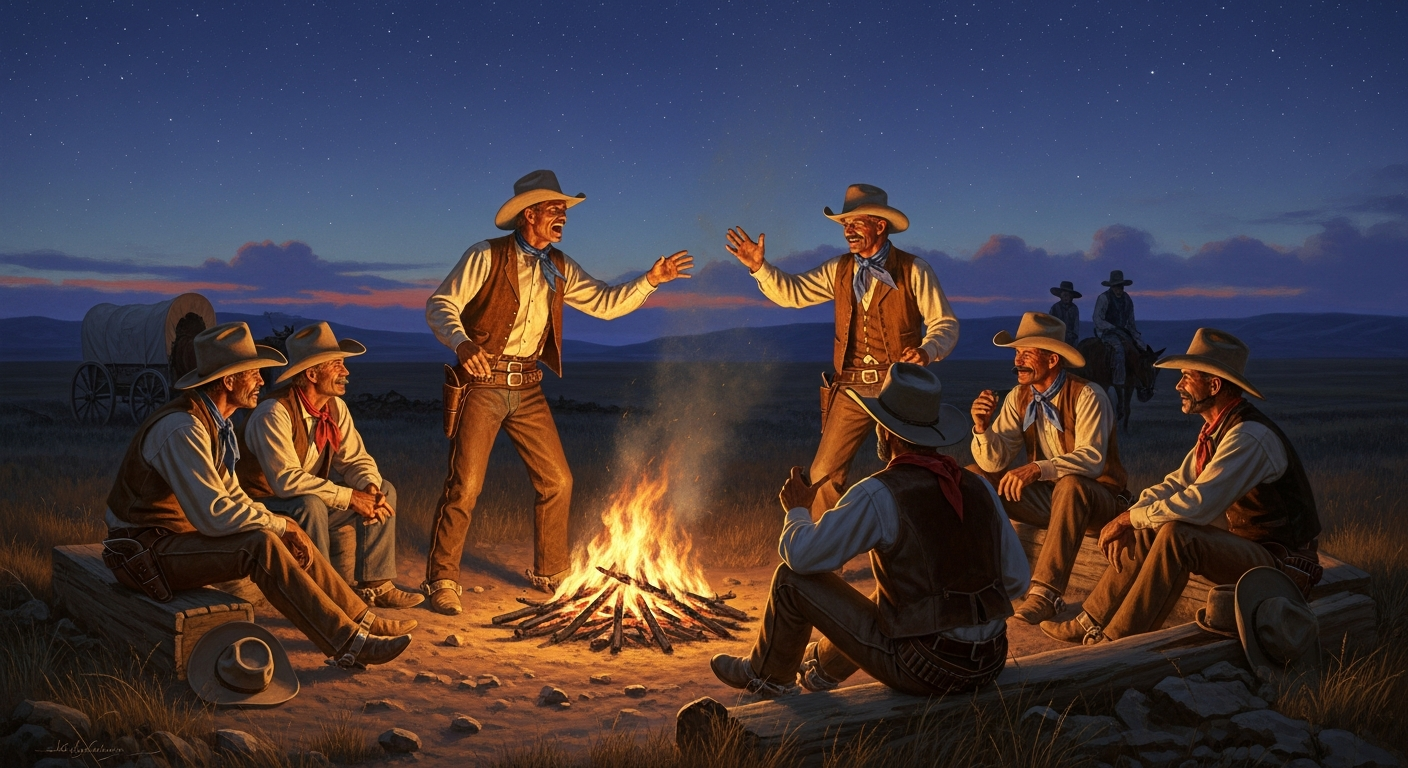
This is where Pecos Bill steps in. He was, according to legend, raised by coyotes, rode a mountain lion, and used a live rattlesnake as a whip. He’s not just a character; he’s a magnificent, grinning answer to that student’s question about fear. He’s the embodiment of a human spirit refusing to be cowed by the wilderness. These tall tales, shared around crackling chuckwagon campfires under an endless sky, weren’t just entertainment. They were social currency, a way to build community, relieve stress, and project human mastery onto an often-unforgiving landscape. They made the impossible feel a little less daunting, the terrifying a little more humorous.
The 1776 Winners History Premium Tee
Wear your story with pride! Celebrate classic American values, history, and heritage with our premium crafted apparel, designed for comfort and durability.
Shop the Look →Folklore of the Frontier Campfire: Bill’s Incredible Journey
Let’s dive into some of Bill’s most famous ‘micro-histories,’ the exaggerated anecdotes that cemented his place in American folklore. These weren’t penned by literary giants initially; they grew organically, passed by word of mouth, before finally being collected and published, most notably by Edward O’Reilly in *The Century Magazine* starting in 1923.
Raised by the Wild
The story goes that little Bill, a babe in swaddling clothes, fell out of his family’s covered wagon near the Pecos River in Texas. Lost but not forgotten, he was adopted by a family of coyotes. He grew up running with the pack, believing himself to be one of them, even conversing in coyote howls. His family, meanwhile, just kept moving west, thinking he’d been eaten. It wasn’t until a real cowboy, passing through, spotted the odd sight of a human boy chasing jackrabbits on all fours, and pointed out, ‘Son, you don’t got a tail!’ that Bill realized his true human nature. It’s a hilarious image, and it immediately establishes his deep connection to the wild, making him a son of the very land he would later ‘tame.’
Lassoing the Storm
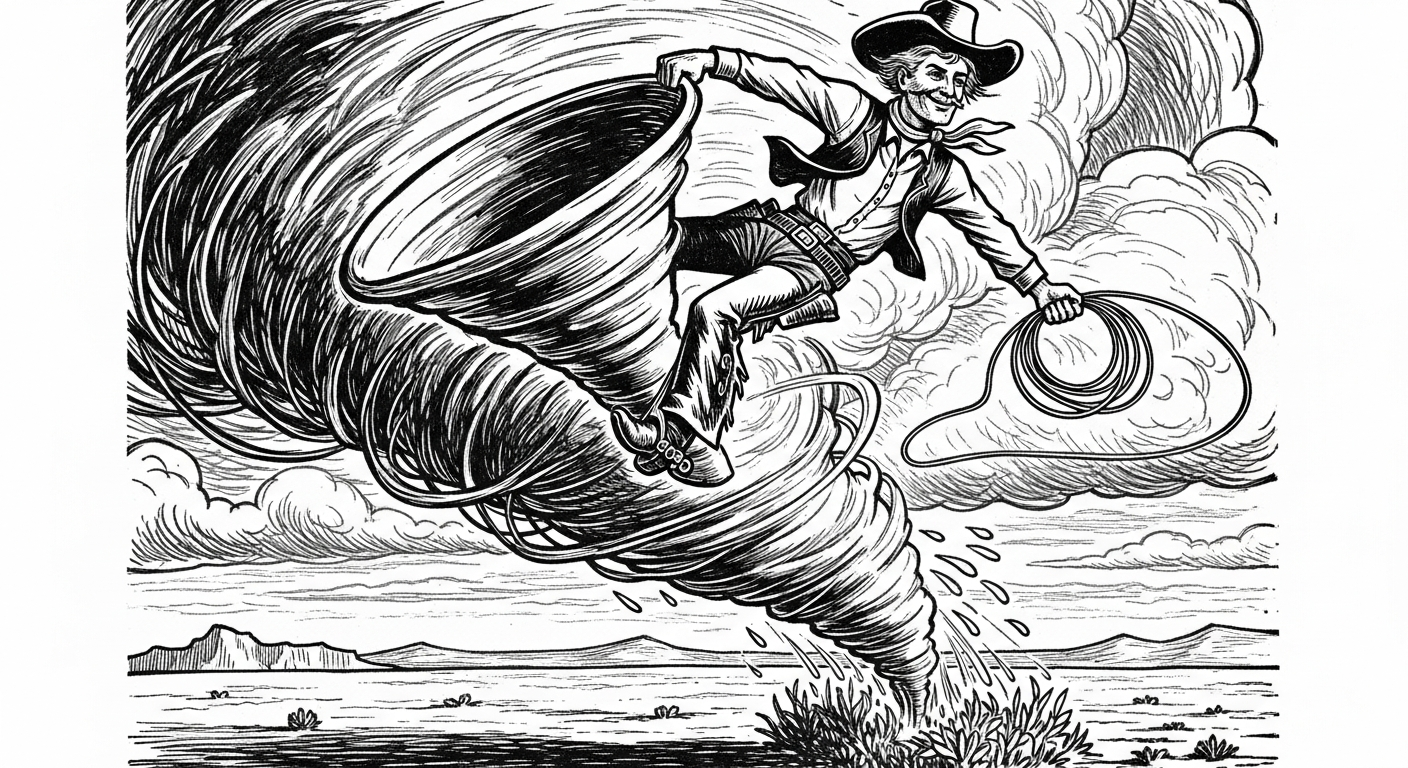
Perhaps Bill’s most iconic feat, and one that always got a chuckle out of my high schoolers, was his legendary encounter with a massive Texas cyclone. This wasn’t just any storm; it was the ‘biggest, baddest’ cyclone Texas had ever seen, tearing across the plains. Bill, ever the problem-solver, couldn’t stand to see the land so dry and parched. So, what did he do? He jumped onto that funnel cloud, grabbing it by the tail, and rode it like the wildest bucking bronco. For days he wrestled that storm, guiding it across the deserts, ‘milking’ the rain out of it to water the thirsty landscape. He wrangled it so hard, he eventually choked it down to a mere shower, saving the entire Southwest from drought. It’s a wonderful metaphor, isn’t it, for humanity’s eternal struggle and ultimate (sometimes exaggerated) triumph over nature’s overwhelming power.
Slue-Foot Sue
Even a man like Pecos Bill, solitary and wild, found love. His sweetheart, Slue-Foot Sue, was every bit his equal in grit and larger-than-life personality. She rode a giant catfish, the biggest ever caught in the Rio Grande, and famously wore a wedding dress made with a bustle so bouncy, it had a spring steel mechanism. Their wedding day, however, was as wild as their courtship. When Sue, insisted on riding her beloved fish to the ceremony, the bustle caught on a tree branch, catapulting her into the sky. Legend has it she bounced from the earth to the moon and back for days. Bill, in his grief and frustration, tried to lasso her down, but she just kept bouncing. It’s a testament to the uncontainable spirit of frontier love and the humorous absurdities of life.
Meaning Behind the Myth: More Than Just a Laugh
These stories, while utterly fantastical, served a very real purpose. The vastness of the West, its unpredictable weather, its dangerous wildlife, and the sheer isolation could be overwhelming. By creating a character who could lasso a cyclone or befriend a pack of coyotes, settlers psychologically ‘tamed’ the environment. It was a way to make the unknown less terrifying, to laugh in the face of hardship, and to foster a sense of shared identity and resilience. Pecos Bill became a symbol of the rugged individualism, the unyielding humor, and the sheer determination required to forge a new life in a challenging land.
The Art of the Tall Tale: A Frontier Storyteller’s Guide
If you’re ever sitting around a campfire, or perhaps just want to entertain some young ones, here’s a quick guide to spinning your own frontier tall tale, inspired by Pecos Bill:
- Start with a Grain of Truth (or a Problem): Begin with a relatable challenge or a simple observation. (e.g., ‘The wind sure does blow hard out here,’ or ‘That critter was mighty feisty.’).
- Exaggerate to Absurdity: Take that truth and stretch it beyond belief. Make the wind powerful enough to blow mountains over, or the critter so feisty it could out-wrestle a grizzly bear with one paw tied behind its back.
- Introduce an Impossibly Capable Hero: Your hero needs to be able to solve the exaggerated problem with even more exaggerated means. They don’t just ride a horse; they ride a tornado. They don’t just tie a knot; they tie a knot so complex, even a seasoned sailor would scratch his head.
- Use Vivid, Colorful Language: Paint a picture with your words. ‘Sky so wide it swallowed the sun,’ ‘muscles like oak trees,’ ‘a roar that shook the very dust from your boots.’
- Inject Humor and Wit: The heart of a tall tale is its ability to make you smile, even chuckle. The humor often comes from the sheer impossibility of the situation and the hero’s deadpan reaction to it.
- Connect to a Universal Theme: Underneath the exaggeration, these tales often speak to courage, ingenuity, love for the land, or community spirit.
These stories weren’t just about heroes; they were about us, about humanity’s capacity to find joy and strength even in the toughest circumstances. They remind us that sometimes, the best way to face a problem is with a hearty laugh and a story so grand, it makes the problem itself seem small.
Comparing Frontier Legends
Pecos Bill wasn’t alone in the pantheon of American tall tale heroes. Here’s how he stacks up against some other famous figures:
| Legendary Figure | Key Feat/Origin | Themes Represented | Region/Industry |
|---|---|---|---|
| Pecos Bill | Raised by coyotes, lassoed a cyclone. | Mastery over nature, cowboy grit, Western humor. | Southwestern Frontier (Ranching) |
| Paul Bunyan | Giant lumberjack, created lakes and rivers with his axe. | Strength, hard work, logging industry, shaping the land. | Northern Forests (Logging) |
| John Henry | ‘Steel-driving man,’ raced and beat a steam drill. | Human versus machine, perseverance, African American folk hero. | Railroad Construction |
| Mike Fink | King of the keelboatmen, champion marksman. | Rough-and-tumble spirit, river-life dangers and bravado. | Ohio and Mississippi Rivers (Keelboating) |
Ride the Storm with Frontier Style
It’s no wonder these stories resonate still today. They tap into something deeply American – that spirit of ingenuity, humor, and plain old stubbornness in the face of challenge. The image of Pecos Bill, hat firmly on his head, riding that bucking cyclone, perfectly captures this enduring legacy.
Here at The50 Store, we deeply appreciate these threads of history that weave through our national identity. That’s why I was so pleased to see the ‘Pecos Bill Cyclone Rider Vintage Tee’. It features a classic, hand-drawn vector woodcut design that truly captures the spirit of those old frontier illustrations, printed on premium, breathable combed cotton. It’s more than just a shirt; it’s a wearable piece of American folklore, a reminder of the humor and grit that built this nation. Imagine wearing it and sharing a bit of Bill’s story with your own friends and family. It’s a way to keep these wonderful tales alive, just as they were shared around those campfires of long ago. Let’s keep those stories going, friends!