
Geography & the American Landscape
Saving The River Of Grass: How Marjory Stoneman Douglas Protected The Florida Everglades
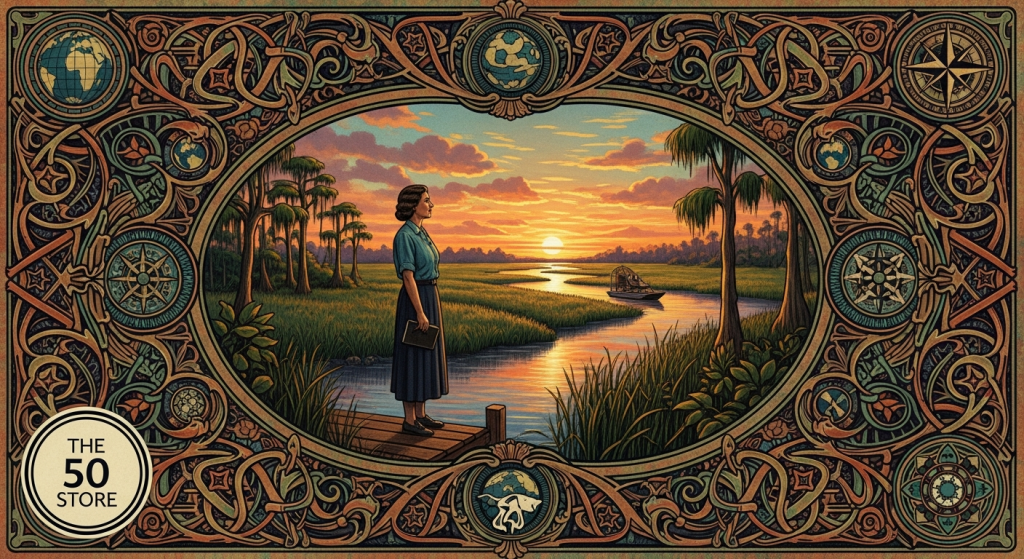
My friends, let me tell you about a quiet, determined woman who taught us all a powerful lesson about love for our land. In the booming 1940s, after our brave soldiers returned home and prosperity bloomed, many folks looked at the vast expanse of the Florida Everglades and saw nothing but a nuisance. A wet, mosquito-filled ‘swamp’ that needed to be conquered, drained, and paved over for progress. Imagine the audacity, the short-sightedness! But there was one voice, clear and unwavering, that rose above the clamor: a journalist named Marjory Stoneman Douglas. She didn’t see a swamp; she saw a sacred ‘River of Grass,’ a vibrant, living heart of Florida that had to be protected at all costs. And her fight, a battle fought with words and relentless spirit, forever changed how we see this national treasure.
The Woman Who Saved the Everglades
It’s easy to forget, in our modern world of designated national parks and environmental awareness, just how radical Marjory’s ideas were. Back then, the prevailing wisdom, driven by agricultural and real estate interests, was that the Everglades was simply undeveloped land ripe for exploitation. Miami was growing, tourists flocked to the beaches, and the idea of transforming wild wetlands into productive farms and sprawling suburbs seemed like a logical, even patriotic, endeavor.
Think about it: the post-World War II era was a time of immense optimism and expansion. We built, we innovated, we dreamed big. But sometimes, in our rush forward, we don’t always look closely at what we might lose. The Everglades, stretching majestically from Lake Okeechobee south to Florida Bay, had its natural water flow increasingly diverted and controlled. Massive canals were dug, dikes were built, all in the name of flood control and creating more dry land for development and sugarcane fields. This wasn’t just a slight adjustment; it was a fundamental alteration of an entire ecosystem, piece by piece, acre by acre.
The Silent Erosion of a Wilderness
The numbers from that period are truly startling, even heartbreaking. Before these ambitious ‘reclamation’ projects began in earnest around the turn of the 20th century, the Everglades covered an astonishing 11,000 square miles. By the time Marjory published her seminal work, roughly half of its original expanse had already been lost to development or dramatically altered. The lifeblood of this unique ecosystem, the slow, shallow sheet flow of water, was being choked off, reduced by an estimated 70% in some areas. What many didn’t grasp was that this wasn’t merely ‘draining a swamp’; it was systematically dismantling a complex, interconnected water system that provided drinking water for millions of Floridians and supported an incredible diversity of life.
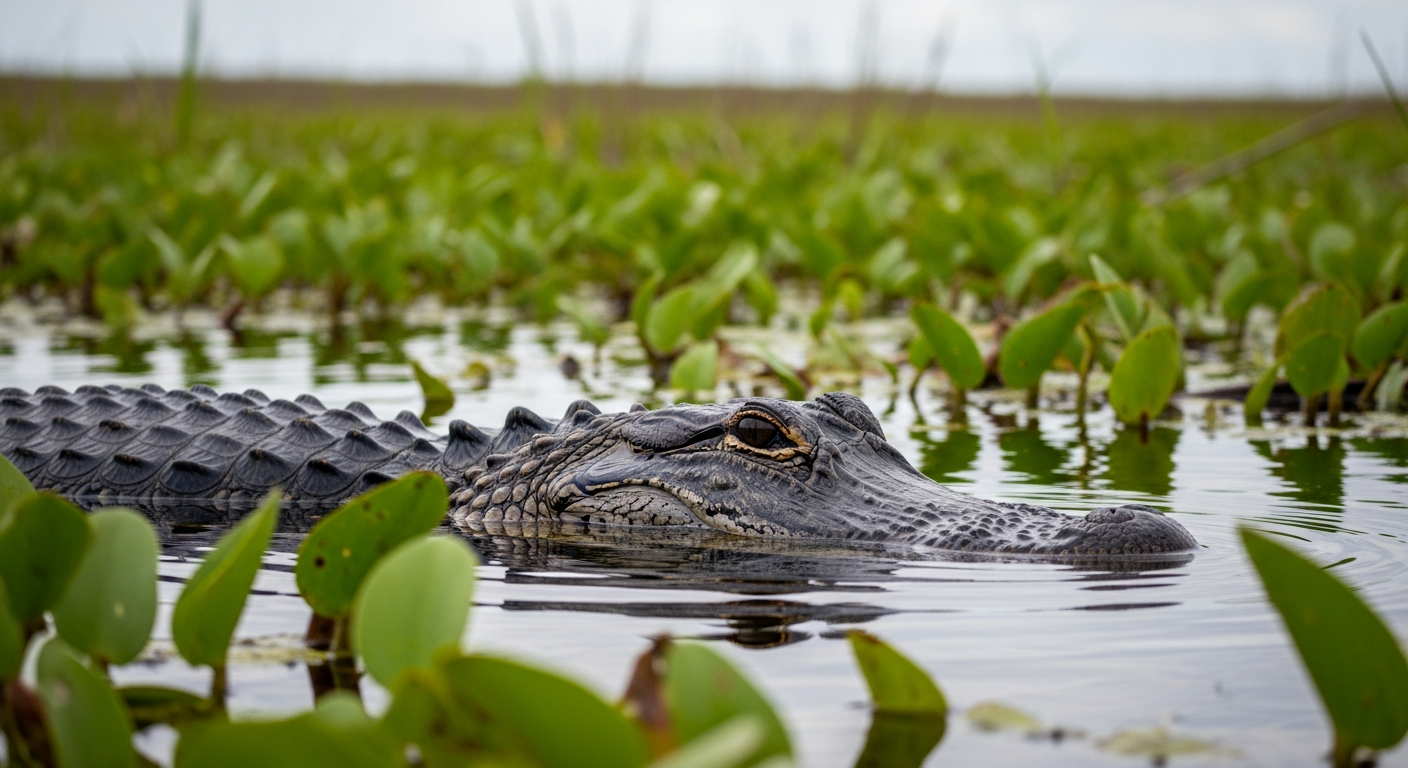
We’re talking about a place that’s home to some 36 threatened or endangered species, from the elusive Florida panther to the graceful manatee. And here’s a truly surprising fact that always puts a smile on my face: the Everglades is the *only* place on Earth where alligators and crocodiles coexist in the wild! These ancient reptiles, one thriving in freshwater, the other in brackish, are a living testament to the unique blend of ecosystems here. Yet, all of this was under threat, unseen by many, until Marjory Stoneman Douglas shined a light on it.
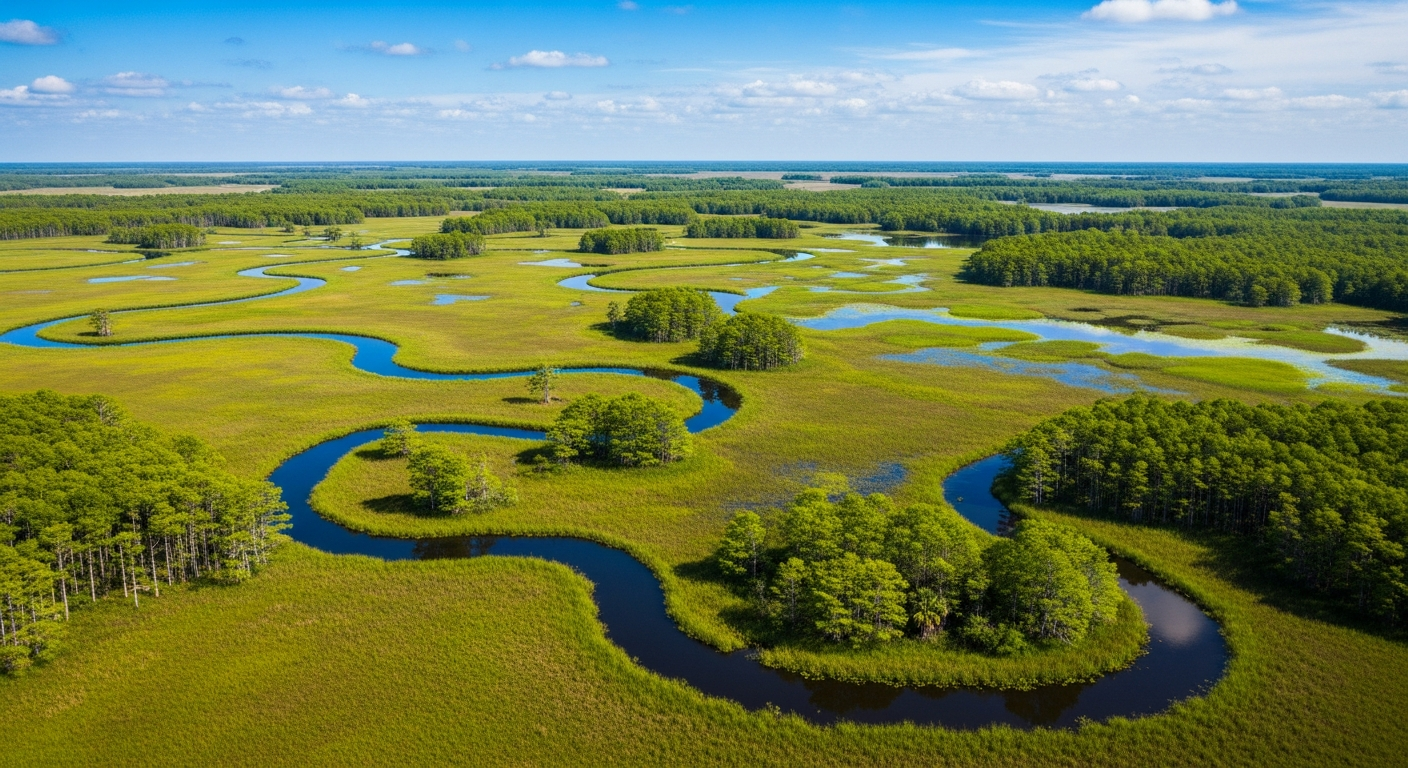
Defending the River of Grass: Marjory’s Masterpiece
Marjory wasn’t a scientist by training, but she had a journalist’s keen eye, a writer’s gift for storytelling, and a deep love for the natural world. Born in Minneapolis in 1890, she had lived a remarkable life even before she became the ‘Grand Dame of the Everglades.’ She was a suffragist, served with the Red Cross in Europe during World War I, and worked as a reporter and editor for the Miami Herald. It was in 1947, at the age of 57, that she published her defining work, The Everglades: River of Grass. This wasn’t just a book; it was a revelation.
A New Vision for an Ancient Landscape
In elegant prose, Marjory described the Everglades not as a stagnant, worthless swamp, but as a dynamic, slow-moving river, critical to the region’s ecology and future. She meticulously detailed its intricate web of life, its delicate balance, and the devastating consequences of human interference. Her book wasn’t just a natural history; it was a passionate plea, a call to action. It fundamentally shifted public perception, helping people understand that the Everglades was a vital system, not a wasteland. The timing was impeccable too, coinciding with the dedication of Everglades National Park the very same year, giving her arguments an even stronger platform.
But publishing the book was just the beginning. Marjory understood that awareness wasn’t enough; constant vigilance and direct action were necessary. For decades, she remained a fierce advocate. Even at the remarkable age of 79, when many would be enjoying a well-deserved retirement, she founded the ‘Friends of the Everglades’ in 1969. This organization became a powerful voice, fighting tirelessly against countless threats: the proposed construction of a massive jetport in the Big Cypress Swamp, plans for new dams, and further drainage projects. She spent her days writing letters, giving speeches, and rallying support, always with that sharp mind and unwavering conviction. She lived to be 108 years old, passing away in 1998, having fought for the Everglades until her very last days. What an American hero!
Let’s take a moment to appreciate the journey of this remarkable woman and the Everglades she championed:
| Year | Marjory Stoneman Douglas & Everglades Milestones |
|---|---|
| 1890 | Marjory Stoneman Douglas is born in Minneapolis, Minnesota. |
| Early 1900s | Initial drainage projects begin in the Everglades to promote agriculture and development. |
| 1915 | Moves to Miami, Florida, and begins working for the Miami Herald. |
| 1920s-1930s | Period of intense development and further drainage of Everglades land. |
| 1947 | Publishes ‘The Everglades: River of Grass,’ redefining public perception. Everglades National Park is established by President Harry S. Truman. |
| 1969 | Founds the ‘Friends of the Everglades’ at the age of 79, to vigorously oppose further development. |
| 1970s-1990s | Leads and supports numerous conservation battles, including preventing the Everglades Jetport. Earns national recognition. |
| 1993 | Awarded the Presidential Medal of Freedom by President Bill Clinton. |
| 1998 | Passes away at the age of 108, leaving behind a profound legacy for Everglades protection. |
A Wetland Reborn: Our Shared Legacy
Thanks to Marjory’s fierce defense and the dedicated work of countless others she inspired, the Everglades is not only protected, but it’s also undergoing the largest ecosystem restoration project on Earth. This long-term effort aims to restore the natural flow of water, repair past damages, and ensure the health of this vital ecosystem for generations to come. It’s a testament to the power of one individual’s vision, coupled with persistent advocacy, that we now recognize wetlands like the Everglades not as ‘swamps’ to be conquered, but as invaluable, life-sustaining landscapes. Her work didn’t just save a park; it helped establish the very principles of modern wetland ecology in the public consciousness.
The Everglades today is a vibrant, living laboratory and an irreplaceable national treasure. It provides crucial ecosystem services, from filtering water to protecting our coastlines. And it’s a place of breathtaking beauty, where you can feel the pulse of untamed America.
How You Can Be a Friend of the Everglades
Inspired by Marjory Stoneman Douglas? I sure hope so! We can all do our part to appreciate and protect this incredible ‘River of Grass.’ Here’s a simple guide to exploring and supporting the Everglades responsibly:
- Plan Your Visit Wisely: The best time to visit Everglades National Park is during the dry season (December to April) when temperatures are cooler, and wildlife is more active and visible near water sources. Mosquitos are also less prevalent.
- Choose Your Entry Point: The park has several distinct entrances and visitor centers, each offering different experiences:
- Shark Valley: Located off US 41 (Tamiami Trail), this is fantastic for a 15-mile paved loop ideal for biking or tram tours. The observation tower provides panoramic views.
- Ernest Coe Visitor Center (Homestead): The main entrance on the park’s east side, leading to popular trails like Anhinga Trail (famous for alligators and wading birds) and Pa-Hay-Okee Overlook.
- Gulf Coast Visitor Center (Everglades City): On the west side, offering access to boat tours into the Ten Thousand Islands, ideal for seeing manatees and dolphins.
- Explore Trails with Respect: Stick to marked trails and boardwalks. They are designed to protect both you and the fragile ecosystem. Never feed or approach wildlife, especially alligators.
- Consider an Airboat or Kayak Tour: These are wonderful ways to experience the unique environment. Choose operators that are certified and adhere to ethical wildlife viewing practices. Remember, airboats are generally not allowed inside Everglades National Park boundaries but operate just outside.
- Support Conservation: If you’re moved by Marjory’s story, consider donating to organizations like ‘Friends of the Everglades’ or the Everglades Foundation. These groups continue her work, advocating for restoration and protection. Even small contributions make a difference.
- Spread the Word: Share what you’ve learned about the Everglades and Marjory Stoneman Douglas with your friends and family. Education is a powerful tool for conservation.
As you venture into the natural wonders of our great nation, you might find yourself needing something to keep you comfortable. For those cooler mornings on the boardwalks or evenings under the vast Florida sky, our ‘Florida Everglades River of Grass Hoodie’ is just the ticket. Crafted with thick, durable fleece, it’s built to accompany you on any trail and keep the evening chill away on your outdoor explorations. It’s more than just a hoodie; it’s a nod to the enduring spirit of the Everglades and the remarkable woman who taught us to see its true value. Let’s carry her torch, my friends, and protect these precious lands for all time.