
Icons & Symbols of America
The Neon-Lit Story of the American Diner: From Horse Wagons to Nighttime Hubs
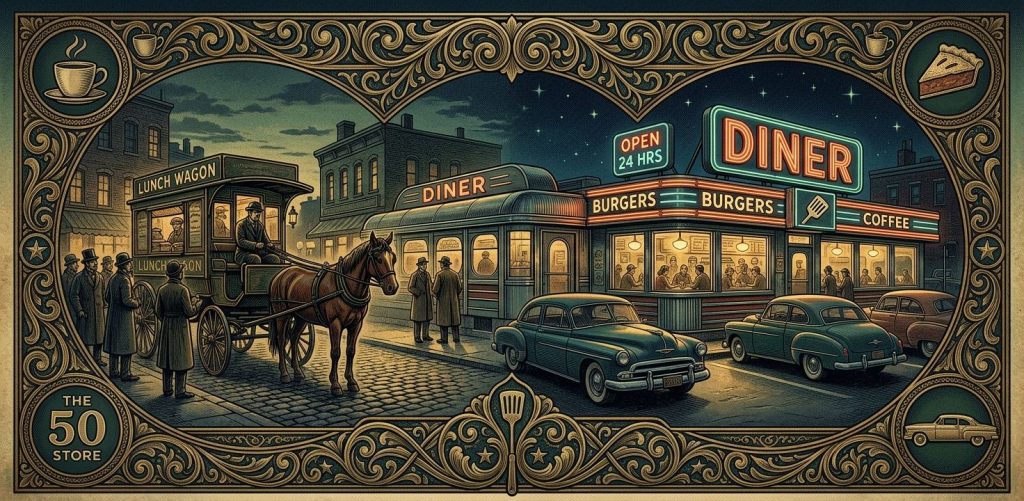
The Neon Sanctuary of the Open Road
Have you ever pushed open the heavy glass door of a roadside diner at two in the morning? It is a profoundly welcoming experience. You step out of the cold, dark night and are greeted by a wave of comforting heat. The little bell above the door chimes. You are met instantly with familiar, beautiful sights and sounds. You see the gleaming chrome counter reflecting the overhead lights. You feel the comforting weight of those heavy porcelain mugs in your hands. You hear the low, steady hum of the jukebox playing a classic country tune in the corner. You smell the absolute perfection of sizzling bacon on a seasoned flat-top grill.
The American Diner is a sacred cultural hub. However, this magnificent institution did not start as a shiny brick-and-mortar restaurant. It began as a humble horse-drawn lunch cart rattling down cobblestone streets.
My fellow Americans, pull up a stool and let the waitress pour you a hot cup of coffee. We are going to explore a story of pure American ingenuity. It is a story of warm lights shining through cold nights. It is a beautiful reminder of how simple, hardworking ideas can grow into beloved national treasures. In every corner of our great country, diners stand as beacons of hope, hospitality, and hard work. They represent a time when people looked each other in the eye, shared a hearty meal, and found common ground. Let us look back at how these neon-lit sanctuaries came to be.
From Lunch Wagons to Chrome Masterpieces
Part I: The Horse-Drawn Night Owl
We have to start our journey way back in the year 1872. The place is Providence, Rhode Island. The situation in the city was quite simple. Industrialization was in full swing across the nation. Hardworking men and women were taking on long, grueling night shifts at local factories. The local newspaper offices were packed with pressmen who stayed up all night to print the morning editions. Yet, when the clock struck midnight, every single restaurant in town was completely closed. These hardworking folks had absolutely nowhere to get a warm meal.
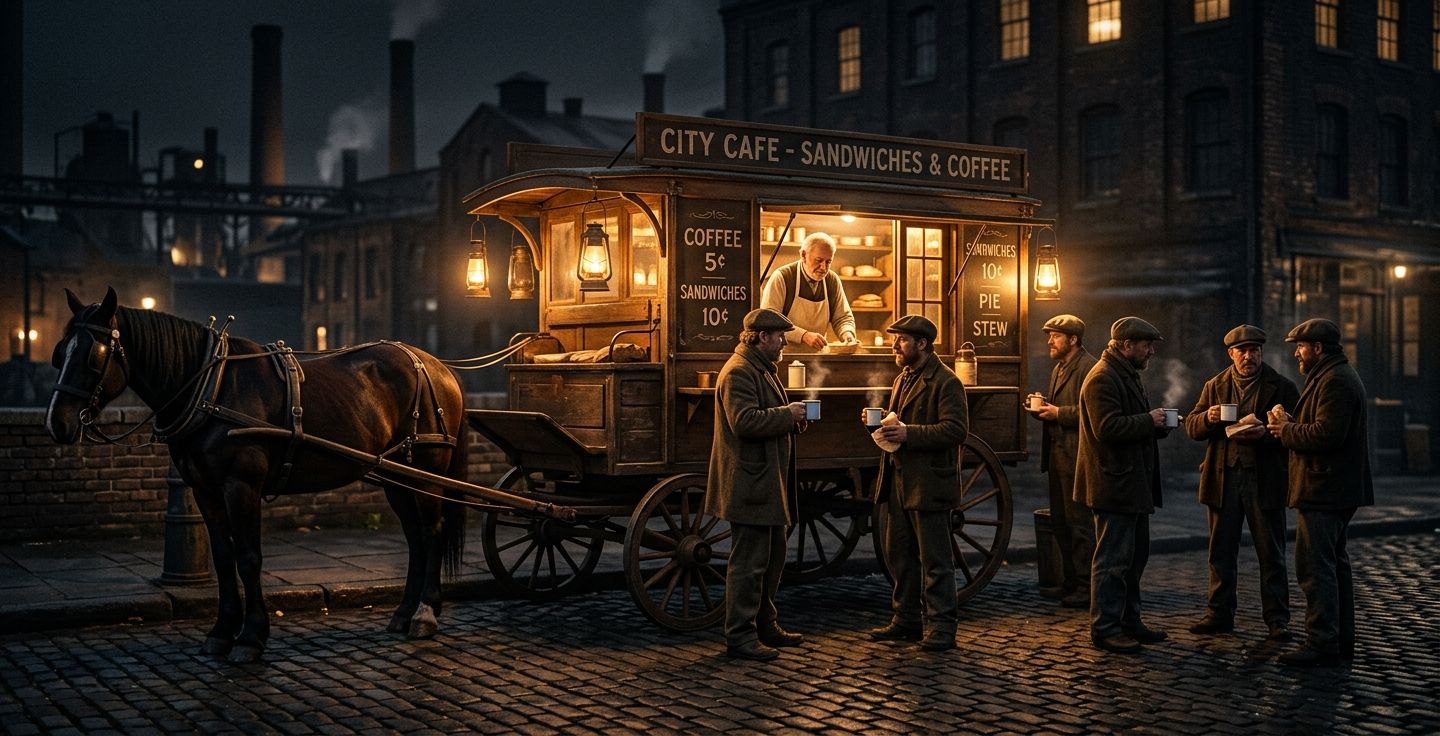
Enter Walter Scott (1841-1924). Walter was a pragmatic, blue-collar man who saw a problem and decided to fix it. He did not have the massive capital required to build a fancy, sit-down restaurant. Instead, he purchased a simple horse-drawn freight wagon. He modified the wagon by cutting small serving windows into the wooden sides. He parked his humble cart right outside the offices of the Providence Journal.
Walter began selling hot coffee, sliced sandwiches, and sweet pie to the hungry night-shift workers. The response from the community was overwhelming. The workers loved the convenience and the warmth. They finally had a place to gather, rest their tired feet for a moment, and enjoy a hot meal in the middle of a freezing New England night. Walter Scott had unknowingly invented a completely new dining concept. The era of the lunch wagons was officially born.
This micro-history is the perfect example of the American entrepreneurial spirit. A single citizen noticed his neighbors were hungry and cold. He took a calculated risk to serve them. Within a few short years, other ambitious business owners began copying his successful model. These rolling carts became a comforting staple of nighttime city life across the Eastern seaboard.
Part II: The Prefabricated Diner
As the years rolled on, the lunch carts grew in both popularity and physical size. However, local town councils started complaining about street traffic and late-night crowds. The wagon operators knew they had to evolve to survive. By the early twentieth century, brilliant builders started creating larger, stationary models.
This is where the unique design of the modern diner truly took shape. Companies began manufacturing modular, streamlined lunch cars. The builders constructed these establishments completely off-site in large manufacturing facilities. Once finished, they loaded the entire restaurant onto a flatbed truck or a train and transported it directly to the final location. Because they had to fit safely on standard roads and rail lines, these new restaurants were exceptionally long and narrow. They closely resembled sleek railroad dining cars.
Innovators like Patrick Tierney (1884-1939) changed the roadside game forever. He brought the restrooms indoors. He added beautiful tiled floors that were easy to clean. He installed those iconic, heavy-duty counter stools we all know and love. The prefabricated diner became an architectural marvel. It was incredibly efficient, brilliantly bright, and spotless.
There is a remarkable beauty in this type of mass-produced architecture. Working-class families could step inside these gleaming chrome masterpieces and feel like royalty. The polished stainless steel exteriors sparkled in the morning sunlight. The large glass windows let in a tremendous amount of natural light. These modular restaurants popped up in bustling cities and quiet small towns alike. They offered an affordable, respectable place for American families to enjoy a wonderful evening out together.
Part III: The Neon Boom and the Open Road
After the glorious end of World War II, America experienced an incredible economic expansion. Brave soldiers came home, bought cars, and started taking their growing families on exciting road trips. The newly built interstate highway system connected our vast country like never before. With millions of eager Americans hitting the open road, the demand for reliable roadside food skyrocketed.
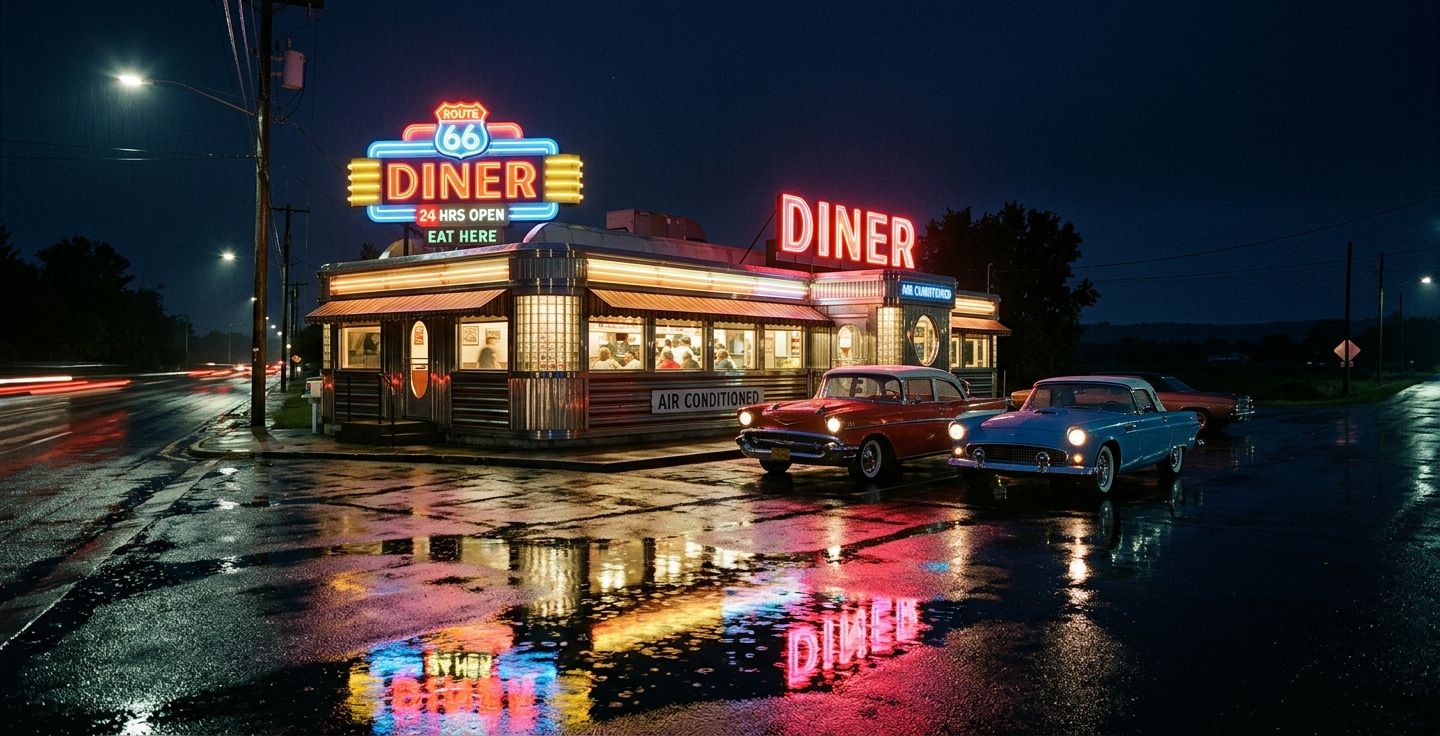
This era gave birth to the magnificent neon boom. Diners adopted gigantic, glowing neon signs to attract weary travelers from miles away. The brilliant pinks, blues, and reds cut through the dark night sky. The diner became a twenty-four-hour sanctuary for happy road-trippers, dedicated truck drivers, and tired shift workers.
The sheer scale of this expansion is astonishing. According to the Smithsonian Institution, by the 1950s there were over 6,000 diners operating across the United States. They proudly served millions of hot meals every single day. The diner was no longer just a Northern city phenomenon. It was a beloved nationwide sensation. From the bustling avenues of New York to the dusty, romantic stretches of Route 66, the diner was a trusted friend on a long journey.
But here we face a complication in our hopeful story. As the decades passed, the world started moving much faster. Massive fast-food chains began dominating the roadside landscape. These new corporate giants focused strictly on speed and uniformity. They offered impersonal drive-through windows and mass-produced, paper-wrapped burgers. The warm, personal touch began to fade from the highway.
A pressing question arose. How could the independent, mom-and-pop diner survive in a modern world that suddenly valued rapid convenience over human connection? Would the beloved chrome counter simply become a dusty relic of the past?
Part IV: The Heart of the Neighborhood
The comforting answer to that question lies in the very soul of the American people. Diners survived, and continue to survive, because they offer something a sterile fast-food window never could. They offer genuine, heartfelt community.
Diners possess immense cultural value. They have always served as democratic melting pots. If you walk into a diner on a busy Tuesday morning, you will see a beautiful cross-section of American society. You might find a wealthy corporate executive in a tailored suit sitting at the counter right next to a weary truck driver in denim overalls. They are drinking the exact same strong coffee. They are eating the exact same fresh eggs. In the diner, everyone is equal. Everyone is a respected neighbor.
Furthermore, the food speaks directly to our collective childhood memories. The laminated menus are famously vast, but the staples remain blissfully unchanged. It is the ultimate comfort food. Whether you order a tall stack of fluffy pancakes dripping with butter, an open-faced turkey sandwich smothered in rich gravy, or a simple slice of warm cherry pie, you are tasting a cherished recipe. These are meals passed down through generations of hardworking cooks.
The local diner remains the irreplaceable heart of the neighborhood. It is the special place where the waitress actually knows your name and remembers your usual order. It is the place where local high school football teams gather to celebrate a thrilling Friday night victory. It is a safe refuge from the chaotic, fast-paced modern world. As long as Americans value good food and good company, the diner will never disappear.
The Neon Diner Tee
I truly believe we should carry that warmth and resilient spirit with us every single day. We should hold firmly onto the things that make our local communities strong and vibrant.
If you want to proudly display your love for this classic American institution, I have something very special to share with you. Our Diner Coffee Indestructible Tee is designed specifically for the hardworking folks who appreciate lasting quality. Celebrate the warm comfort of the diner counter. Printed on premium, heavy-weight combed cotton designed for daily wear. This shirt feels just like a warm hug from your favorite hometown waitress. It is tough, reliable, and fundamentally classic. Grab yours today and wear a beautiful piece of American history proudly on your chest.
Frequently Asked Questions
What exactly defines a classic American diner?
A classic American diner is typically characterized by its prefabricated structure, long and narrow design resembling a train car, and stainless steel or chrome exterior. Inside, you will usually find a long counter with fixed stools, booth seating, and a large menu specializing in traditional comfort food served twenty-four hours a day.
Who is credited with inventing the very first diner?
Walter Scott is widely credited with inventing the first diner concept in 1872. He operated a horse-drawn lunch wagon in Providence, Rhode Island, selling hot coffee and sandwiches to night-shift workers who had nowhere else to eat after standard restaurants closed.
Why do so many old diners look exactly like train cars?
Early diners were built completely off-site in large manufacturing factories. To transport them to their final permanent locations, they had to be loaded onto flatbed trucks or railway cars. Their long, narrow design was a practical necessity for shipping, which gave them their iconic train car appearance.
Are traditional diners still popular in America today?
Yes, traditional diners remain highly popular today. While they face heavy competition from modern fast-food chains, many people still seek out diners for their nostalgic atmosphere, hearty home-style meals, and strong sense of community. They continue to serve as beloved local gathering spots.
What is the most iconic food you can order at a diner?
While menus are famously massive, classic diner food revolves around hearty American staples. Popular items include all-day breakfasts like pancakes and eggs, thick cheeseburgers, club sandwiches, meatloaf, milkshakes, and fresh slices of fruit pie.