
American History & Origins
The Midnight Ride of Israel Bissell: The Trail Paul Revere Omitted
Hello, neighbor. Pull up a chair and make yourself comfortable. I want to share a story with you today about this wonderful country of ours. Sometimes, the loudest tales in our history books end up drowning out the quiet acts of unimaginable grit that actually built our nation.
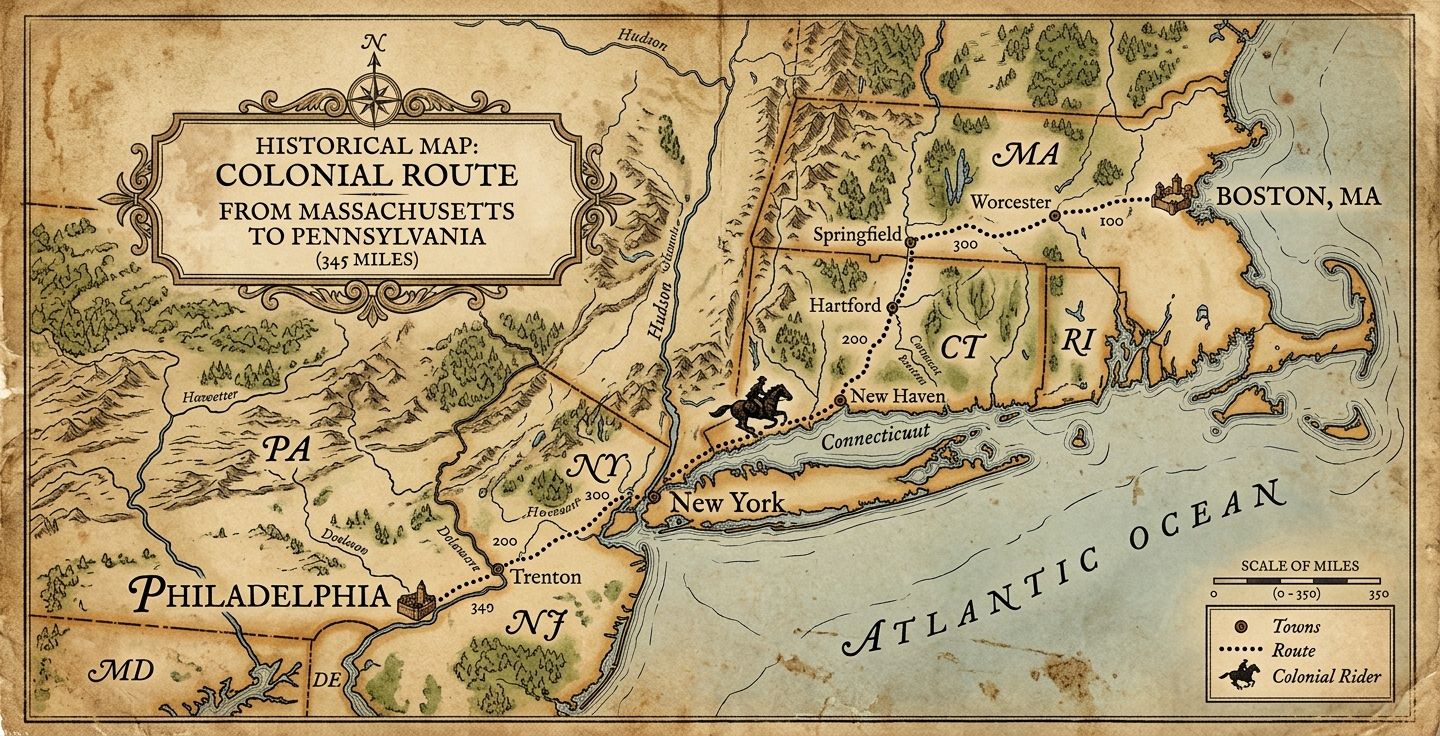
On April 19, 1775, the air in Lexington was thick with the acrid smell of black powder smoke and pure chaos. A young post rider named Israel Bissell (1752-1823) fled those smoldering fields carrying a very heavy burden. He bore a message of war. Now, we all grew up hearing the famous poem about Paul Revere (1734-1818). It is a truly fine story, filled with courage, lanterns, and midnight shadows. But the hard truth is, Paul Revere was captured by British patrols after riding only about twenty miles. His part in that historic drama ended quite quickly. Israel Bissell, on the other hand, rode for four days and six hours straight. He covered a staggering 345 brutal miles.
The Ride that Armed the Colonies
How does a fractured collection of small colonies stand up to the greatest military superpower on earth? In 1775, the British Army boasted tens of thousands of highly disciplined soldiers. The American colonies had no standing army, no central command, and a widely scattered population of farmers, blacksmiths, and shopkeepers. The complication was simple and terrifying. The shooting had started, but the rest of the continent did not know it yet. If word did not spread faster than the British troops could march, our rebellion would be crushed before it even began.
Part I: Lexington has Fallen
The morning of April 19 changed absolutely everything. A small micro-history here tells us so much about the mood of the people. Consider a local farmer working his rocky fields near Watertown, Massachusetts. He heard the distant, sharp crack of muskets on the morning breeze. Within a few hours, the terrifying rumor became a verified nightmare. The King’s troops had fired upon everyday citizens. American blood was spilled on the village green.
The Call to Arms was not just a dramatic rallying cry. It was a desperate, immediate necessity. The call had to reach all thirteen colonies right away to organize a coordinated defense. The fate of our infant nation literally hung on the speed of a single rider traversing the colonial landscape.
Part II: The Post Rider’s Relay
General Joseph Palmer, a steadfast patriot leader, knew exactly what was required in that dark hour. He hastily scribbled an official dispatch. It detailed the bloodshed and pleaded for the colonies to rise up together. He handed this sacred, terrifying piece of paper to Israel Bissell. Israel was tasked with carrying this document through the rugged dirt paths of Connecticut, down into New York, and all the way to Philadelphia.
Imagine the sheer geography of this relay. This was an era long before paved highways, telegraphs, or modern vehicles. To get from New England to the heart of Pennsylvania meant braving muddy trails, treacherous river crossings, and the constant threat of Loyalists who would happily intercept a treasonous messenger. Historically speaking, this ride is a well-documented trail. Bissell carried the original hand-written call to arms. At every major town, local leaders read the dispatch, carefully copied it, and endorsed it with their signatures before sending him onward. Those very papers are preserved in our national archives today, serving as undeniable proof of his incredible journey.
Part III: Ride Till the Horse Drops
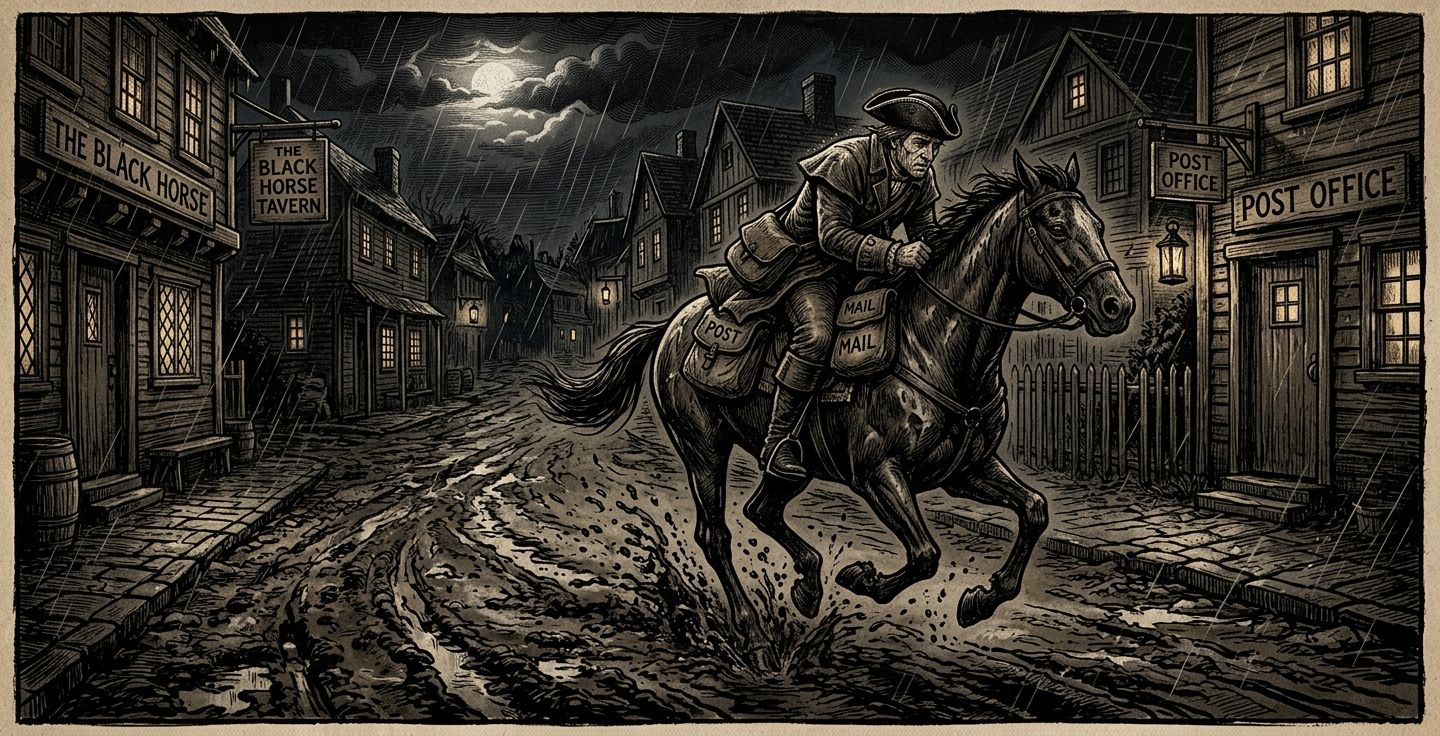
Let us pause for a minute and think about the physical reality of riding 345 miles in just over four days. Israel Bissell rode day and night. He did not stop for a warm meal by a fire. He did not rest in a soft, comfortable bed. He rode with the furious conviction of a man who held the future of his homeland in his saddlebags. As he tore through quiet villages, he shouted out, To arms, to arms, the war has begun!
His physical intensity was absolute. Near Worcester, Massachusetts, just a few dozen miles into his marathon ride, his first horse simply collapsed. The poor beast died of utter exhaustion right there on the road. Most ordinary men would have taken a long breath, found a local tavern, and passed the message to someone else. Not Israel. He acquired another horse and pushed forward.
He rode down through Pomfret, Connecticut. That is the very town where another famous patriot, Israel Putnam (1718-1790), famously unhooked his horse from his plow and left it sitting in the dirt to join the fight after hearing the news. Through New Haven, through the bustling streets of New York, and across the flatlands of New Jersey, Bissell rode on. The sleep deprivation, muscle cramps, and saddle sores must have been completely agonizing. Yet, he did not quit.
Here is a surprising statistic that really puts things into perspective. According to historical postal records, in 1775 it typically took a letter up to two weeks to travel from Boston to Philadelphia. Israel made it in just over four days. Let that sink in for a moment. He traveled at almost three times the speed of normal mail delivery during the colonial era. It was a superhuman effort fueled by pure patriotism.
Part IV: Uniting the Seaboard
By the time he reached Philadelphia on April 24, Israel Bissell was likely half-dead himself. His clothes were ruined, his voice was hoarse, and his muscles were entirely spent. But his mission was a complete success.
What was the grand result of this agony? His grueling ride successfully mobilized thousands of militiamen along the entire East Coast. Within just a few days of his ride, thousands of armed volunteers were already marching north to besiege the British forces trapped in Boston. The colonies were no longer isolated, bickering provinces. Because Israel Bissell endured the pain, the colonies united into a single fist. They answered the call together. The sheer speed of his warning gave the Second Continental Congress precious time to assemble, debate, and ultimately form the Continental Army under George Washington.
Remembering the Quiet Patriots
It makes a fellow proud, does it not? We live in a fast-paced world now. We can send a message across the globe in a fraction of a second with a little glass screen. But there is something deeply comforting about remembering a time when freedom depended entirely on the strong back of a horse and the relentless spirit of an ordinary American.
Israel Bissell never asked for glory or riches. He did not get a famous poem written about him by a celebrated author. After the Revolutionary War was won, he just went back to farming, moved out to western Massachusetts, and lived a quiet, honorable life.
That is the American spirit in a nutshell. We step up when it counts. We do the hard, necessary work. We do not boast about it afterward. We just get the job done for our neighbors and our families. Whenever you feel tired, or whenever the road ahead looks entirely too long, think of Israel Bissell pushing through the dark, cold woods of Connecticut. Think of the boundless hope he carried in his heart.
Gear Up for Your Own Journey
Now, you and I might not be riding horses across three states to start a revolution, but we all have our own trails to blaze. Whether you are up before the sun to work the land, hiking up a frosty mountain trail, or just heading out to support your local community in the crisp autumn air, you need reliable gear. You need clothing that works exactly as hard as you do.
That brings us to the Israel Bissell 345-Mile Trail Hoodie. Designed for the long haul. Made with thick, high-density cotton-polyester fleece to keep you warm on any journey you undertake.
This is not just a standard piece of clothing. It is a humble nod to the grit of our founding generation. It wraps you in deep comfort so you can focus entirely on the task ahead. When the bitter wind howls and the winter nights grow long, you will be very glad you have something sturdy and true to rely on. Get yours today, and proudly wear a piece of American endurance.
Who was Israel Bissell?
Israel Bissell was an American post rider during the Revolutionary era. He is best known for his grueling 345-mile ride from Massachusetts to Pennsylvania in April 1775 to warn the American colonies that the Revolutionary War had begun.
How far did Israel Bissell ride?
Israel Bissell rode a total of 345 miles over the course of four days and six hours, traveling continuously day and night to deliver the call to arms.
Why is Paul Revere more famous than Israel Bissell?
Paul Revere became widely famous due to a highly popularized poem written by Henry Wadsworth Longfellow in 1860. While Revere’s ride was historically important, he was captured after riding only about 20 miles, whereas Bissell completed a much longer 345-mile journey that went largely unrecognized in popular literature.
What was the exact route of Israel Bissell’s ride?
He started in Watertown, Massachusetts, just outside of Lexington, and rode south through Connecticut, passed through New York and New Jersey, and finally ended his journey in Philadelphia, Pennsylvania.
Did Israel Bissell’s horse really die during the ride?
Yes, according to historical accounts, Bissell pushed his first horse so hard to spread the urgent warning that the animal collapsed and died from exhaustion near Worcester, Massachusetts.
Where is the original dispatch Israel Bissell carried?
The original call to arms documents, complete with the signatures of the local colonial leaders who endorsed them along Bissell’s route, have been carefully preserved in American historical archives and historical societies.