American History & Origins
The Deaf Community of Martha’s Vineyard: A Bilingual Colonial Haven
The Island That Spoke with Its Hands
Hello there, friend. Pull up a chair on the porch, pour yourself a warm cup of coffee, and let us take a little journey back in time. The United States is a vast, beautiful country, and its history is filled with incredible stories of resilience, ingenuity, and community. We often hear about the great battles and the famous inventors. But some of the most inspiring chapters of our American story happened quietly, in small towns and coastal villages where ordinary folks looked out for one another. Today, I want to share a hidden truth about a very special place.
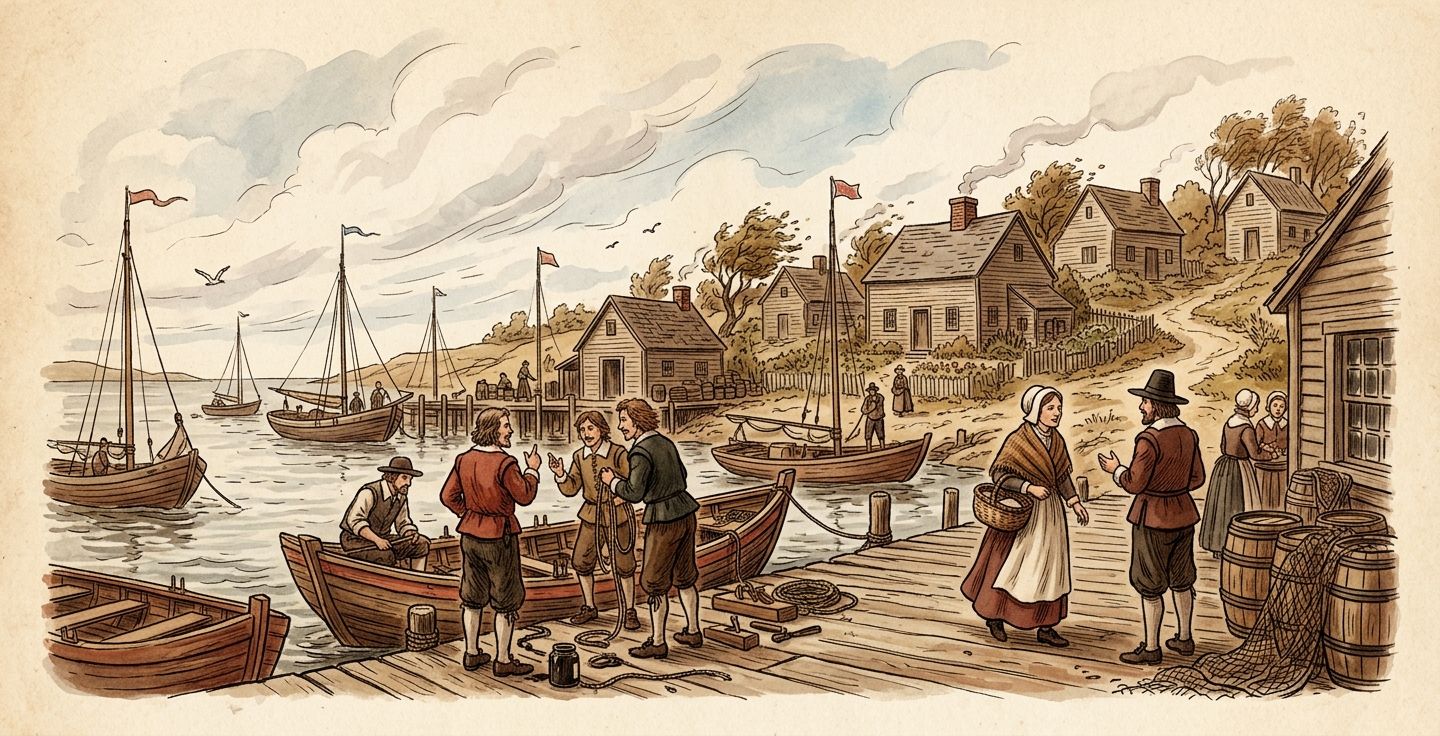
For over two centuries, the residents of Martha’s Vineyard shared a unique reality. You probably know this island off the coast of Massachusetts as a beautiful summer vacation spot. You can see it right here on the map: Martha’s Vineyard. But long before the ferries brought over crowds of tourists, this isolated stretch of rocky shores and salt marshes was home to a tightly knit farming and fishing community. On this isolated island, deafness was so incredibly common that virtually every single resident, hearing and deaf alike, was completely bilingual in sign language.
They did not view being deaf as a weakness. They did not view it as a burden. Instead, they adapted. They built a society where everyone belonged, proving that true community is created when we break down the walls between us.
A Haven of Total Integration
Part I: Genetic Isolation
To understand how this beautiful community came to be, we have to look back to the very foundations of our country. In the 1690s, a small group of English settlers arrived on the island. They brought with them a strong work ethic, a love for liberty, and, unknowingly, a recessive genetic trait for deafness. Because the island was geographically isolated, folks tended to marry within the community. Over generations, this specific genetic trait spread throughout the local families.
Let us talk about some surprising statistics to really put this into perspective. Back in the 1800s on the mainland of the United States, the rate of deafness was roughly one in nearly six thousand people. But on the island, the numbers were astonishing. In some villages, the rate was one in twenty-five. In the remote western town of Chilmark, Massachusetts, the concentration was even heavier. In certain neighborhoods, up to one in four residents was born deaf. These were not just statistics in a ledger. These were brothers, sisters, sons, and daughters.
Part II: No Barriers, No Differences
Now, here is the complication. In most of the world during the eighteenth and nineteenth centuries, deaf individuals faced a difficult, isolated life. They were often pushed to the margins of society. They were treated as disabled, unable to participate in the civic and social life of their towns.
So, how did this small American community handle such a high rate of deafness?
The answer is profoundly simple and deeply American. They did not bat an eye. Hearing neighbors did not treat their deaf neighbors as ‘disabled’ or ‘less than.’ Instead, they simply spoke in sign language. They signed at the local tavern over a pint of cider. They signed at the church during Sunday sermons. They signed on the decks of wooden fishing boats, where the howling Atlantic winds made spoken words completely useless anyway.
Think about a man named Josiah, a typical island boat builder in the mid-1800s. Josiah was born deaf. In any other part of the world, he might have been kept out of sight. But here on the island, Josiah negotiated lumber prices, hired deckhands, and hotly debated local politics at the town hall meeting. When a hearing neighbor stopped by his workshop, they naturally switched to sign language to discuss the weather and the latest catch. There were absolutely no social barriers. Josiah was simply a man, an American, doing his honest work.
Part III: The Vineyard Sign Language
This daily communication led to the development of a unique, vibrant local language. We call it Martha’s Vineyard Sign Language. It was not a rigid system invented by doctors or scholars. It was a living, breathing language born out of necessity and love. Children learned it naturally in the schoolyard. Hearing toddlers picked up the signs just as quickly as they learned to speak English. It was completely woven into the fabric of daily life.
This beautiful local dialect did not stay confined to the island forever. When Thomas Hopkins Gallaudet (1787-1851) helped found the very first permanent school for the deaf on the American mainland in Connecticut, several children from the island were sent there to get a formal education. They brought their expressive, home-grown signs with them. In the schoolyards of Connecticut, their island signs mingled with the French signs taught by the instructors. This historic blending heavily influenced the creation of what we proudly know today as American Sign Language.
Part IV: The Modern Legacy
As the twentieth century approached, the world changed. Improved transportation made the island less isolated. New families moved in, and local folks began marrying people from the mainland. Gradually, the recessive gene became less concentrated. By the 1950s, the last native deaf signer of the island had passed away, closing a remarkable chapter of American history.
But the legacy of this tiny island remains a powerful lesson for us today. It proved that true community integration is built by breaking barriers together. It showed that a disability is often just a mismatch between a person and their environment. When the environment adapts, the disability practically disappears. That is the heart of the American spirit, neighbors pulling together to make sure everybody has a seat at the table.
Daily Life in a Dual-Language World
Let us look a little closer at how this shared culture operated on a daily basis. The level of integration was so complete that historical researchers later found it difficult to even identify who was deaf from reading old town records. Deaf islanders held vital public offices. They served in the local militia. They ran major businesses, owned large tracts of farming land, and raised large, happy families.
There is a famous story about the great scientist and inventor Alexander Graham Bell (1847-1922). In the late nineteenth century, Bell traveled to the island to study the phenomenon of hereditary deafness. He went around interviewing the older residents, asking them to list which of their childhood friends had been deaf and which had been hearing. Time and time again, the older folks would pause, scratch their heads, and struggle to remember. It was not that their memories were failing them. It was simply that a person’s hearing status had been completely irrelevant to their friendships and working relationships. It simply did not matter.
Imagine that kind of society. Imagine a place where your neighbors care so much about including you that they learn an entirely different language, just to make sure you can join in the jokes at the general store. It fills my heart with hope. It reminds me that beneath the loud and often divisive noise of our modern world, we Americans have a deep-seated tradition of looking out for one another.
Celebrate Our Shared American Spirit
Stories like this remind us of the rich, diverse history that makes our nation great. It is about working hard, facing challenges head-on, and making sure nobody is left behind. It is about the quiet dignity of a well-lived life, surrounded by people who care about you.
If you want to carry a piece of this proud heritage with you, I encourage you to check out our Martha’s Vineyard Heritage Tee. Celebrate true community and American unity with this beautiful shirt. Crafted from premium ring-spun cotton that gets softer with every wash, and built to last through all your own life’s adventures. When you wear it, remember the islanders who showed the world what true equality looks like.
We can all learn a little something from the good folks of the island. Next time you see someone facing a unique challenge, think about the farmers and fishermen who simply learned to speak with their hands. Let us keep that wonderful spirit alive today.