
Icons & Symbols of America
The Return of the Bald Eagle: The Salvation of America’s Living Emblem of Liberty
Saving America’s Living Icon
Have you ever stepped out onto your back porch on a crisp, clear morning, looked up into the vast blue sky, and seen it? There is nothing quite like that unmistakable silhouette of broad, powerful wings catching a warm updraft, circling higher and higher above the tree line. There is a deep, quiet pride that swells in the chest of any American when they spot our national bird in the wild. It is a feeling I have known and cherished my entire life.
Growing up, my grandfather would always roll down the window of his old, beat up pickup truck whenever a shadow crossed the dirt road ahead of us. He would point up with a weathered finger and teach me that this bird is much more than just feathers and bone. It is the living, breathing spirit of our great nation. It represents the freedom of the frontier and the strength of our convictions.
But there was a dark time, not too long ago, when that beautiful shadow almost faded away forever. In the 1960s, the bald eagle, America’s living symbol of freedom since 1782, was on the absolute brink of extinction. This is the inspiring story of how a nation rallied to save its favorite bird from disappearing from our skies. It is a story of hope, hard work, and the unbreakable American spirit that proves we can fix the mistakes of the past.

Patriotic Bald Eagle Vintage USA Flag T-Shirt
Wear your story with pride! Celebrate classic American values, history, and heritage with our premium crafted apparel, designed for comfort and durability.
Shop the Look →The Fight for the Canopy
Part I: The Invisible Poison
To truly understand how close we came to losing our national emblem, we have to look back to the years immediately following World War II. Our country was booming with new industry and agricultural advancements. Farms were producing more food than ever before to feed a growing, prosperous nation. We had a new miracle chemical called DDT that promised to wipe out crop destroying pests and disease carrying mosquitoes. It seemed like a perfect, modern solution to an age old problem. We did not realize, however, the heavy and tragic cost it was exacting on the natural world around us.
DDT was an invisible, slow moving poison. It washed off our green farm fields into the creeks, poured into the rushing rivers, and finally settled into our great lakes. The tiny aquatic insects absorbed it. The small fish ate the insects. The large predatory fish ate the small ones. Finally, our magnificent eagles swooped down and ate the large fish. With every single meal, the poison concentrated further in the eagles’ bodies.
The chemical did not always outright kill the adult birds. Instead, it did something far more insidious. It severely altered their calcium metabolism. When mother eagles laid their eggs in their massive, heavy nests high up in the forest canopy, the shells were painfully thin. Imagine the absolute heartbreak of a devoted eagle parent. They would carefully sit on their precious eggs to keep them warm against the crisp spring wind. Because of the DDT, the mere weight of the mother or father bird would crack and crush the fragile eggs beneath them.
Entire generations of eagles simply never hatched. The skies grew quiet and still. By 1963, a shocking nationwide census revealed the grim, undeniable truth. The population had crashed to an astonishingly low 417 nesting pairs in the entire lower forty eight states.
We were literally on the verge of losing the very creature that Charles Thomson (1729-1824) purposefully placed on the Great Seal of the United States. Thomson knew deep down that our young republic needed a symbol of immense strength and fierce independence. Yet, nearly two centuries later, that proud symbol was slipping like sand through our fingers.
Part II: Declaring Protection
How could the most powerful and resourceful nation on earth just sit back and let its defining symbol die? The simple, resounding answer is that we could not. We would not. Americans are, at our very core, problem solvers. When we see a terrible wrong happening in our own backyard, we roll up our sleeves, set aside our differences, and work together to make it right.
This massive turning point required both brilliant, brave science and bold political leadership. A courageous marine biologist named Rachel Carson (1907-1964) sounded the national alarm with her powerful writings. She showed everyday citizens exactly what was happening to our beautiful birds. People across the country listened and grew deeply concerned. A grassroots movement swelled from local farming communities and small towns all the way to the marble halls of Washington, D.C..
In 1972, the federal government took decisive, historic action and permanently banned the agricultural use of DDT. But simply stopping the flow of poison was only the first step on a long road to recovery. The very next year, Congress passed the historic Endangered Species Act. This law was a profound, lasting promise made by the American people. We stood up and declared that our native wildlife is an essential, irreplaceable part of our national heritage, and we absolutely will not let it perish on our watch.
Part III: The Reintroduction Relays
Passing laws and signing bans in Washington are necessary actions, but pieces of paper do not raise baby birds. That incredibly difficult job fell to a dedicated, tireless army of wildlife biologists, ordinary citizens, and passionate volunteers. They packed their gear, headed into the deep woods, and embarked on what I like to call the great reintroduction relays.
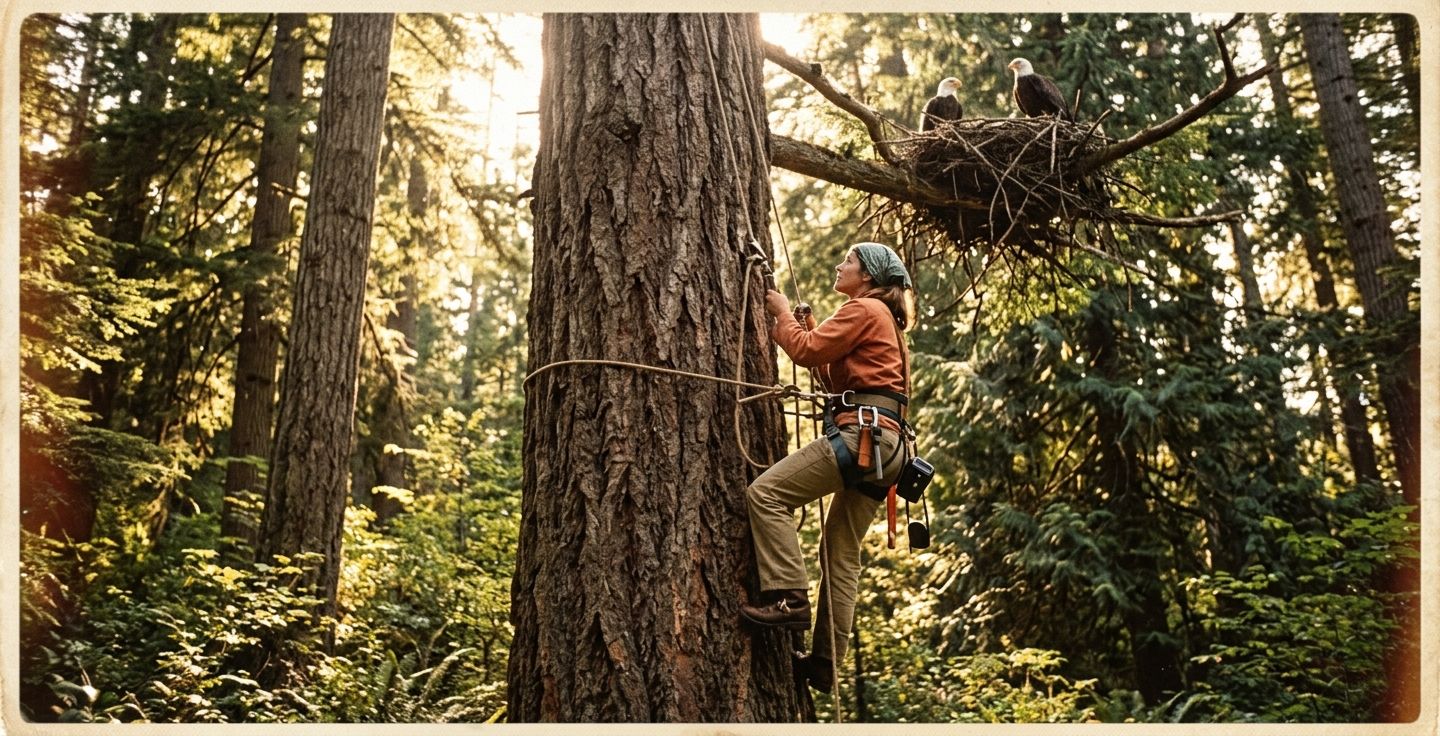
This is where the story gets incredibly personal and remarkably touching. Across the country, dedicated biologists undertook dangerous, daring missions to save the few remaining eagles. They strapped on climbing gear and scaled towering Douglas Firs and ancient, sprawling oaks. They went hundreds of feet into the air to gently rescue fragile eggs from failing nests before they could break. They carefully placed these precious eggs in padded incubators, strapped them to their chests, and repelled back down to bring them to secure laboratories where they could be safely hatched.
But a brand new, unexpected problem arose. If human beings hand fed the fragile baby eaglets, the young birds would imprint on people. They would grow up thinking they were humans. They would never learn how to be wild, fierce predators. They would never learn how to soar freely over rugged places like the Channel Islands or hunt for salmon in the rushing, icy rivers of the Pacific Northwest.
So, our resourceful scientists got creative. They built highly realistic hand puppets shaped exactly like adult eagle heads. Hiding themselves behind wooden blinds and dark curtains, these dedicated men and women spent countless hours wearing these rubber puppets. They carefully offered tiny bits of fresh fish and raw meat to the hungry, chirping chicks. The baby birds looked up and truly thought they were being raised by their own wild mothers.
When the chicks were finally old enough and strong enough, they were moved to artificial nesting platforms built high in the trees, a process known as hacking. Volunteers camped out in tents below these nests for weeks on end. They guarded the young birds from natural predators, tracked their health, and cheered quietly when the eagles successfully took their very first majestic flights. It was a labor of pure, unadulterated love. Every single successful flight from a hacking tower was a major victory for the entire nation.
Part IV: Soaring High Today
All those long, cold nights in the woods, all those daring, dangerous tree climbs, and all that beautiful national cooperation paid off in a way that still brings tears of joy to my eyes. The recovery of our national bird is widely considered one of the greatest conservation success stories in the history of the world.
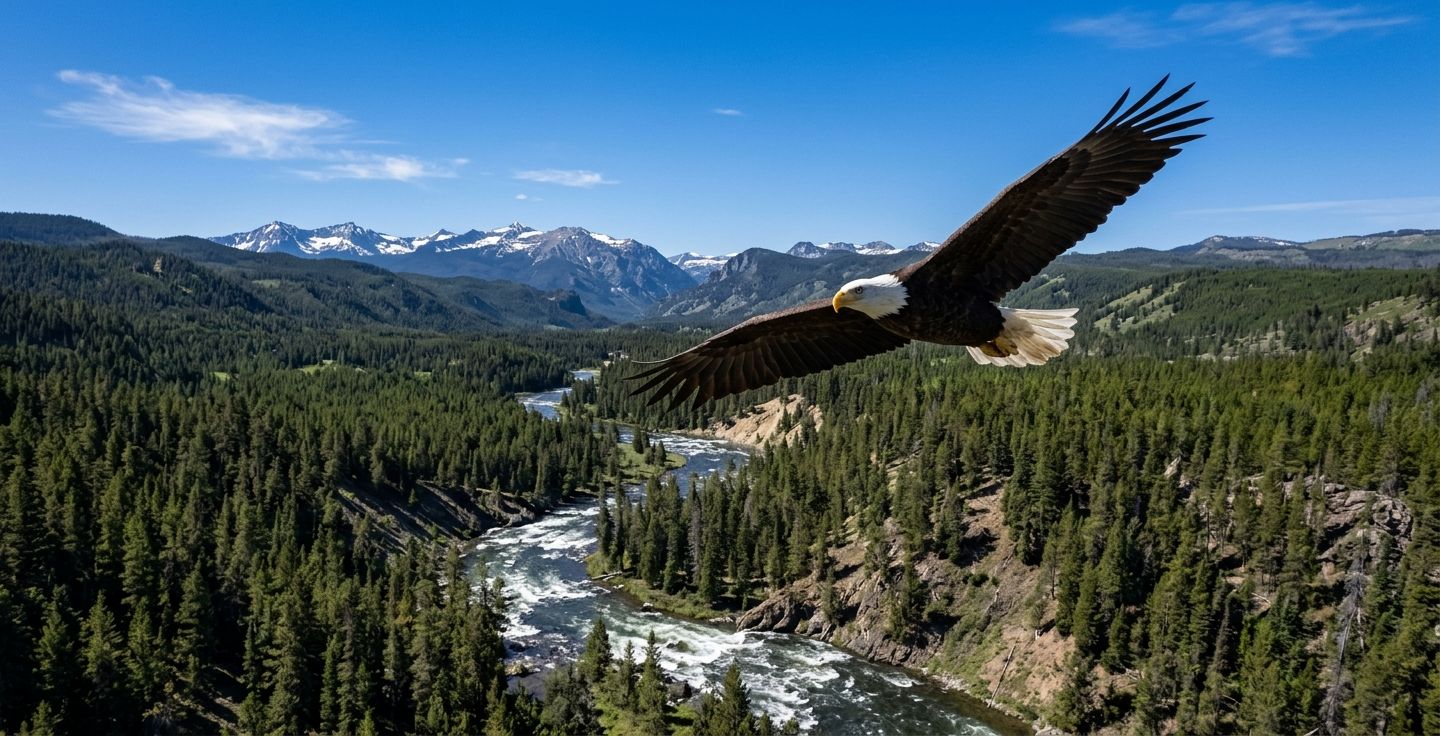
In the summer of 2007, the federal government proudly and officially removed our favorite bird from the endangered species list. The eagles did not just survive their brush with extinction. They bounced back and thrived. Today, if you pack up your family and visit Yellowstone National Park, or even if you just take a quiet morning walk near a local river right in your own hometown, you have a very good chance of seeing that familiar, stunning white head and tail.
From that heartbreaking, frightening low of just over four hundred pairs, we now have an estimated population of more than 300,000 individual birds soaring in the wild across the country today. They are back where they belong. They proudly command the American sky once again, strong, resilient, and totally free.
Wearing Our Pride and Resilience
Every single time I see an eagle now, I do not just see a beautiful bird. I see a perfect mirror of our own American journey. We face hard times, we face unseen threats, and we sometimes stumble. But we always find a way to bounce back far stronger than we were before. That is what true freedom looks like. That is what enduring hope looks like.
If you are anything like me, you want to carry that incredible story of triumph with you wherever you go. You want to remind yourself, your children, and everyone you meet that our wild heritage is always worth fighting for. That is exactly why you need the Bald Eagle Freedom Commemorative Hoodie.
This is not just a piece of clothing to throw on in a hurry. It is a wearable symbol of resilience and a nod to the great American outdoors. Wear the symbol of resilience and freedom. Features heavy, rugged fleece construction built to keep the chill away on your outdoor hikes, your early morning fishing trips, or those long, quiet evenings sitting around a crackling campfire with the people you love.
Do not let the biting cold keep you indoors this season. Get out there, breathe in the fresh air, look up at the vast sky, and celebrate the incredible, beautiful land we are so blessed to call home. Pick up your commemorative hoodie today, stay warm on the trail, and always keep your eyes peeled for the majestic shadow of the great American eagle.
When did the bald eagle become the official national symbol of the United States?
The bald eagle officially became the national emblem of the United States in 1782 when Charles Thomson included it in his final, approved design for the Great Seal. It was chosen to represent strength, independence, and the boundless freedom of the new nation.
Why did the bald eagle population decline so rapidly in the 20th century?
The primary cause of the severe population decline was the widespread agricultural use of a pesticide called DDT. The chemical washed into waterways and contaminated the fish that eagles ate, which severely weakened their eggshells, causing the eggs to break before the chicks could hatch.
How many bald eagles were left at their lowest point?
At the absolute lowest point of their decline in 1963, a nationwide survey found that there were only 417 nesting pairs of bald eagles remaining in the lower forty eight states.
What actions were taken to save the bald eagle from extinction?
The recovery effort involved banning the use of DDT in 1972, passing the landmark Endangered Species Act in 1973 to federally protect the birds, and launching massive breeding and reintroduction programs led by dedicated wildlife biologists.
How did biologists feed baby eagles without them imprinting on humans?
To prevent the baby eagles from imprinting on their human caretakers, biologists hid behind blinds and used realistic hand puppets shaped like adult eagle heads to feed the chicks. This ensured the young birds retained their natural, wild instincts.
How many bald eagles live in the United States today?
Thanks to decades of dedicated conservation work, the bald eagle was successfully removed from the endangered species list in 2007. Today, there are estimated to be over 300,000 individual bald eagles thriving in the wild across the country.