
Culture & Traditions
The Front Porch Campaign: How Neighborhood Architecture Shaped American Politics
The Front Porch That Changed Politics
Think about the sheer noise of a national election. You have probably seen the parades, the endless rallies, and the candidates rushing from one state to another. In the late 19th century, political campaigns were just as loud, expensive, and chaotic. Men seeking the highest office in the land would travel from town to town, standing on the back of dusty train cars, shouting themselves hoarse to crowds of strangers. It was a traveling circus of noise and sheer exhaustion. But in 1896, a quiet, dignified candidate named William McKinley (1843-1901) decided to try something entirely different. He won the presidency without ever leaving his house.
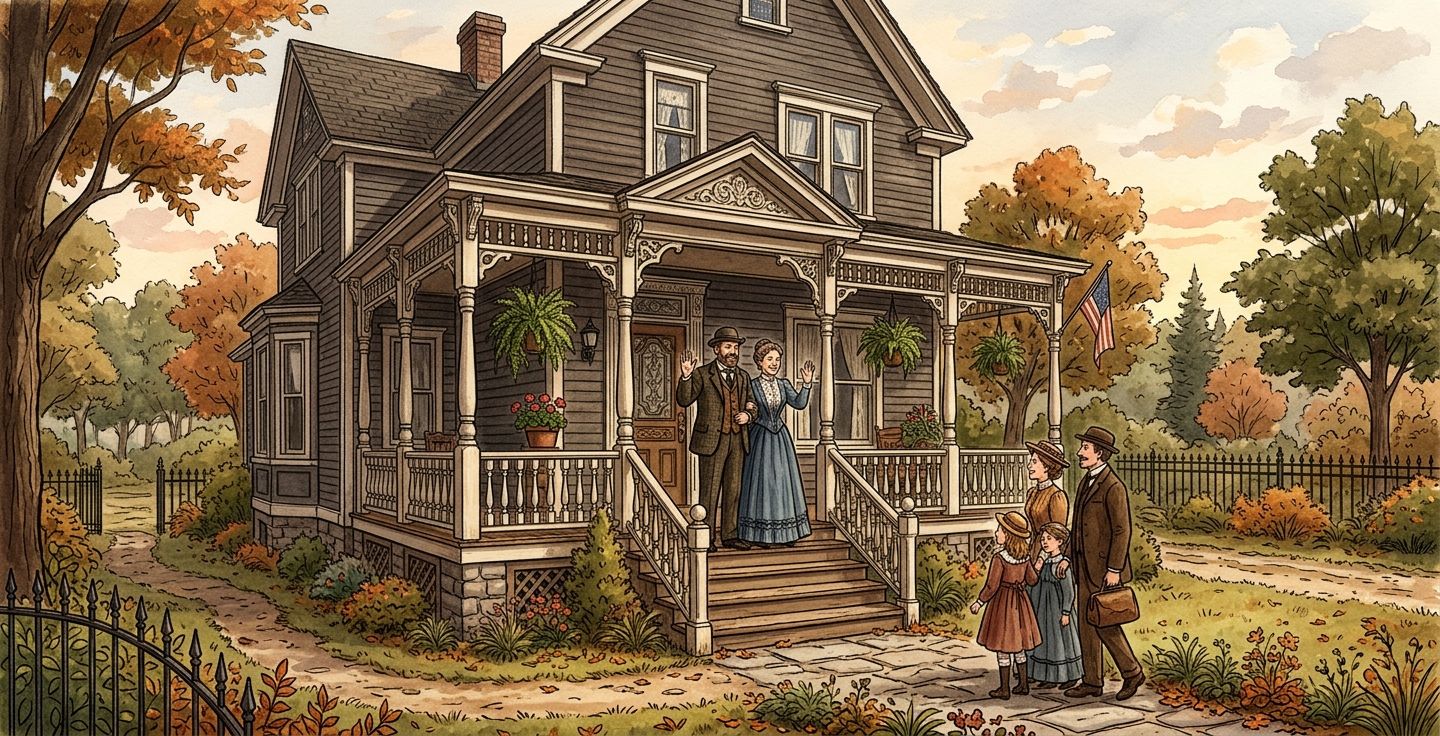
I have lived in America my entire life, and I can tell you that there is nothing quite like the honest comfort of a neighborhood porch. It is a place of peace. McKinley knew this better than anyone. He achieved his amazing victory by running his entire national campaign directly from his front porch in Canton, Ohio. It was an astonishing strategy that changed the very fabric of our national elections. Let me tell you how a simple wooden structure attached to a family home managed to bring a massive, growing country together.
Bringing the Nation to the Doorstep
Part I: The Railroad Era
You might be asking a very logical question. How could a man win the highest office in the land by sitting in his rocking chair? If he was not going out to meet the voters, how in the world did they know who he was or what he stood for? The answer lies in the incredible expansion of the American railroad system. This was a time of massive growth and boundless American hope.
By the time the 1896 election rolled around, the United States was deeply connected by steel rails. According to historic railway records, the nation had laid down roughly 180,000 miles of track by that year. This was a surprising and staggering statistic for the time. Every small town and farming community suddenly had a direct line to the rest of the country. Rather than McKinley packing his bags and exhausting himself on the road, the Republican party organizers used these vast railroad networks to bring the voters to him. Special discounted train tickets were offered to anyone who wanted to visit Canton. The trains brought America directly to his doorstep.
Part II: The Front Porch Sanctuary
There is a beautiful, very personal reason why McKinley chose to stay home. It is a story of deep devotion that speaks volumes about his character. McKinley was completely devoted to his wife, Ida Saxton McKinley (1847-1907). Ida suffered from multiple severe health issues, including epilepsy, and she required constant care. Her husband flatly refused to leave her side for months on end to go on an exhausting speaking tour. His family came first. That is the kind of solid American value that resonates across generations.
Because he would not leave Ida, he made his family home his campaign headquarters. The front porch became a sanctuary of love and a brilliant stage for political discourse. While his opponent, William Jennings Bryan (1860-1925), traveled an agonizing 18,000 miles and delivered hundreds of speeches until he was visibly drained, McKinley stayed rested. He stood on his porch. He welcomed visitors with a warm smile and a clear voice. It was a true front porch campaign. He turned a potential weakness into his greatest strength, proving that you do not need to shout the loudest to be heard across the nation.
Part III: The Neighborhood Picnic
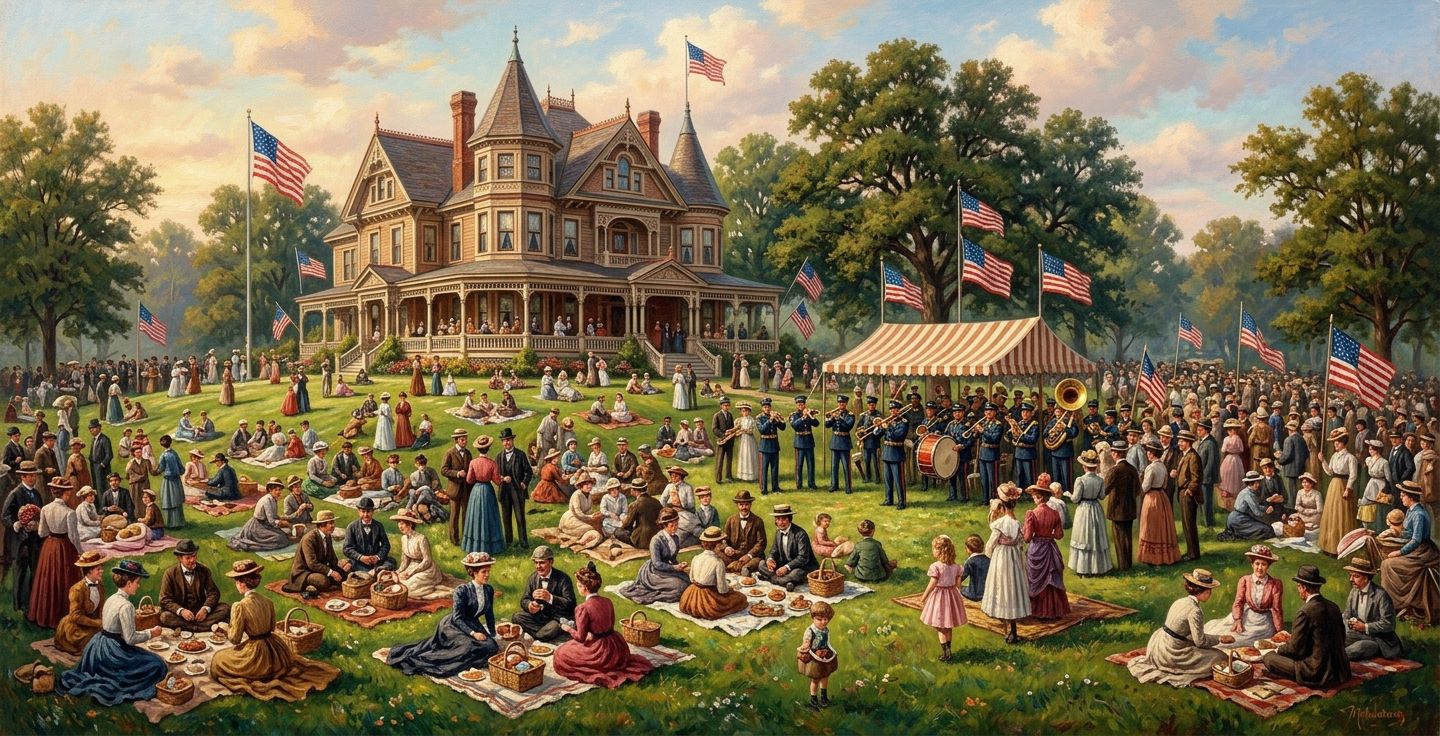
What happened next was nothing short of a miracle of grassroots enthusiasm. People did not just come in small handfuls. They came by the thousands. Over the course of the campaign season, an estimated 750,000 citizens from all walks of life traveled to Canton to see the candidate. They came from the deep coal mines of Pennsylvania, the sweeping wheat fields of the Great Plains, and the bustling streets of New York City.
Let me share a truly incredible historical fact. On a single day, over 30,000 people stepped onto McKinley’s lawn to hear him speak. Can you imagine the sight? The neighborhood was transformed into a massive, joyous gathering. It felt exactly like a grand neighborhood picnic. Citizens brought picnic lunches and ate on the grass. Brass bands played patriotic tunes. Bicycle clubs rode in formations down the street. McKinley would step out of his front door, stand behind a small wooden rail, and speak to the crowds as if they were his lifelong neighbors. It was respectful, it was calm, and it was deeply unifying. He respected their effort to visit him, and they respected his quiet strength.
Part IV: Architecture of Democracy
The 1896 election did more than just put William McKinley in the White House. This campaign cemented the front porch as a sacred symbol of midwestern hospitality and civic life. Before this era, a house was largely seen as a private fortress. The front porch changed all of that. It bridged the gap between the private safety of the home and the public square of the community.
Think about the neighborhood architecture of a classic American home. The porch invites conversation. It is a place where you can wave to your neighbor, share a glass of sweet tea, and talk about the issues of the day without anger or bitterness. McKinley proved that open dialogue could happen right in our own front yards. The front porch became a living monument to American democracy. It showed that our leaders are not untouchable royalty hiding in castles. They are our neighbors. They live among us, and they are always ready to welcome us with an open door and an open mind.
Bring the Heritage Home
Friends, we could all use a little more of that front porch spirit in our lives today. We could use more of that relaxed, welcoming atmosphere where friends and neighbors gather to share stories and build a stronger community. That is exactly why we created the Front Porch Heritage Comfort Tee.
Crafted from soft combed cotton, built to be as relaxed and comfortable as a warm summer evening on the front porch. This is not just a piece of clothing. It is a tribute to William McKinley and the timeless values of American hospitality. When you wear it, you carry a piece of that neighborhood warmth with you wherever you go. The fabric breathes beautifully, making it perfect for sitting outside and watching the world go by. Grab yours today, pull up a rocking chair, and celebrate the beautiful history of our great nation.
Who was William McKinley?
William McKinley was the 25th President of the United States. He is famous for running his 1896 presidential campaign directly from his front porch in Canton, Ohio, eventually winning the presidency through a strategy of welcoming voters to his home.
What exactly is a front porch campaign?
A front porch campaign is a political strategy where the candidate stays close to home and gives speeches to supporters who travel to visit them, rather than the candidate traveling around the country on an exhaustive speaking tour.
Why did McKinley refuse to travel for his campaign?
McKinley was incredibly devoted to his wife, Ida Saxton McKinley. She suffered from severe health issues, and he refused to leave her side for the long months required by a traditional traveling campaign tour. His dedication to his family kept him at home.
How many people visited McKinley in Canton?
Historians estimate that over 750,000 citizens traveled to Canton, Ohio, over the course of the 1896 campaign. On one single record-breaking day, more than 30,000 people gathered on his lawn to hear him speak.
Who did McKinley run against in 1896?
He ran against William Jennings Bryan. Bryan took the exact opposite approach, traveling over 18,000 miles and delivering hundreds of speeches in a highly energetic but utterly exhausting nationwide tour.
How did voters travel all the way to Ohio back then?
The late 19th century was the golden era of the railroad. The United States had built around 180,000 miles of train tracks by 1896. Political organizers arranged for heavily discounted train fares to encourage Americans to make the trip to Canton.
Where can I visit William McKinley’s hometown today?
You can visit Canton, Ohio, today to learn more about his legacy. The city features the McKinley Presidential Library and Museum, as well as the impressive McKinley National Memorial where the President and his wife Ida are resting in peace.