
Icons & Symbols of America
Washington and Emily Roebling: How a Devoted Wife Finished the Brooklyn Bridge
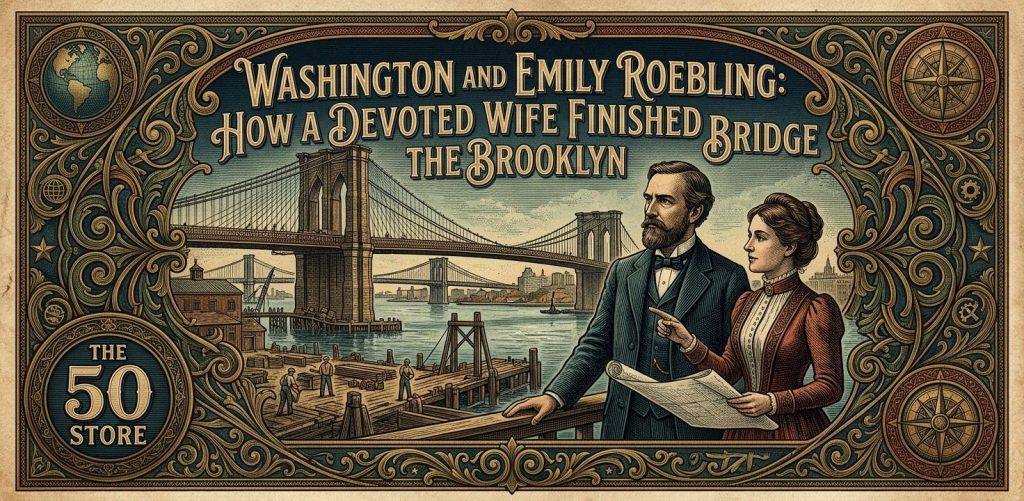
Welcome back, my friends. Let us sit a spell on the porch and talk about a real, enduring American story. One that shows exactly what we are made of when the chips are down. You look at the skyline of New York today, and there it stands, proud and unmoving. The bridge. It is a soaring monument of cut stone and woven steel. But we should always look deeper than the surface. When we look at a towering suspension bridge, we should see pure devotion. We should see the sheer, unyielding willpower of the everyday people who built it.
In the late eighteen hundreds, New York and Brooklyn were two separate, booming cities. They desperately needed a connection across the treacherous currents of the East River. John Roebling, a brilliant immigrant who saw the boundless potential of his new country, designed a true masterpiece. But his foot was crushed by a ferryboat, and he died of tetanus before construction truly began. His son, Washington Roebling (1837-1926), took over. Soon, tragedy struck again. Washington was severely crippled by decompression sickness from working deep underwater. He was entirely bedridden. The project seemed utterly doomed. How could the greatest engineering feat of the century be finished without its chief engineer?
History books sometimes skip over the real answer. The truth is, the bridge was completed by his wife. Her name was Emily Warren Roebling (1843-1903). When her husband could no longer walk the site, she did not just pass along his letters. She taught herself higher mathematics and civil engineering to save his dream, and in doing so, she built an American icon.
Let us look at some surprising facts from historical records. Building this bridge took fourteen long years of backbreaking labor. Over six hundred men worked day and night in brutal conditions. The cables contain over fourteen thousand miles of steel wire. That is enough wire to stretch halfway across the globe. At a staggering cost of fifteen million dollars, it was a massive gamble for its time. How did a bedridden man and a woman with no formal engineering background pull off this miracle? The answer lies in eleven years of silent, steadfast engineering.
Part I: The Crippled Engineer
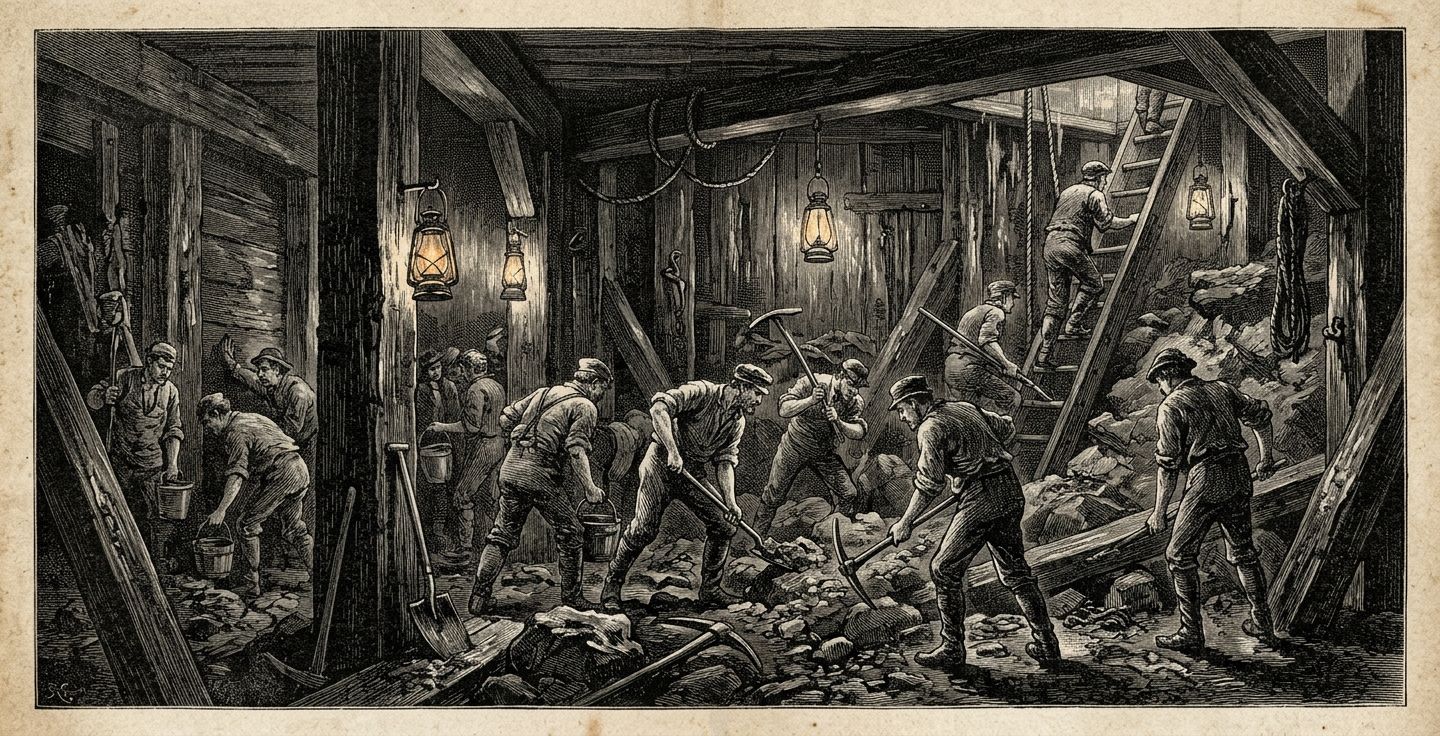
The work at the bottom of the East River was terrifying. Men dug in giant, pressurized wooden boxes called caissons. They shoveled mud, hacked at tree roots, and blasted solid rock in the sweltering dark. The air pressure was kept intensely high, sometimes causing extreme headaches and nosebleeds, just to keep the muddy river water from rushing in and drowning them all. When workers returned to the surface too quickly, nitrogen bubbles formed in their bloodstream. They called it the bends, or caisson disease. It was a brutal affliction. It brought agonizing joint pain, paralysis, and sometimes death.
Washington Roebling was a man who led from the front lines. He spent hours down in those wooden caissons alongside his laborers, breathing the heavy, stifling air. In eighteen seventy two, the disease caught up with him. He was paralyzed, partially blind, and deafened, permanently trapped in his bed in Brooklyn Heights. He could only watch the construction site through a telescope mounted at his window. He could not speak directly to his foremen. He could not inspect the massive stone masonry. The city panicked. A project of this magnitude simply could not survive a paralyzed leader.
Part II: Emily Steps into the Caissons
This is where the story shifts from a heartbreaking tragedy to a soaring triumph of American grit. Emily Warren Roebling loved her husband dearly. She also fiercely loved the vision they shared for the bridge. She knew that if Washington resigned, his life’s work would be snatched away and given to a rival. So, she stepped into the breach. She became his eyes, his ears, and eventually, his mind on the construction site.
At first, Emily simply acted as a daily liaison. She carried handwritten notes from his quiet sickroom down to the noisy site. But passing notes was not enough for a project of this scale. To explain his highly technical instructions, she had to truly understand them. So she went to work. Emily studied every engineering book she could find. She learned the complex mathematics behind catenary curves. She mastered material strength, stress analysis, and intricate cable construction. Before long, she was no longer just the dutiful messenger. She was the chief engineer in practice.
Think about the micro-histories of that era. In the eighteen seventies, women were absolutely not permitted to be engineers. A prominent society wife was expected to entertain guests and manage the household, not debate tensile strength with rough foremen. Yet, Emily’s quiet transformation reflects a broader shift in our history. She proved that when necessity calls, conventional rules fall away. She stepped out of her comfortable parlor and into the muddy, dangerous world of heavy construction.
Part III: Managing the Titans
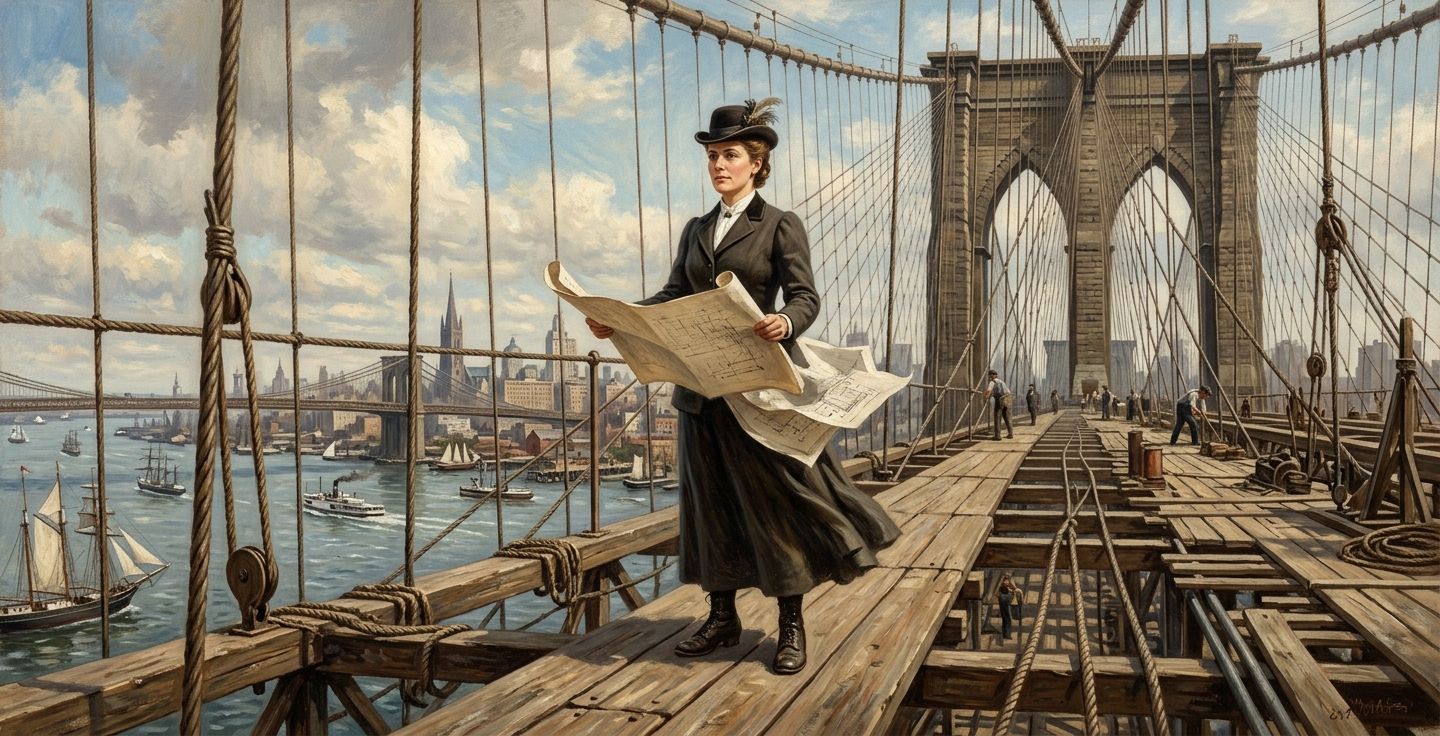
For over a decade, Emily was the absolute authority on the bridge. Her uncompromised truth is that she managed the daily on-site construction of the massive project for eleven long years. She negotiated with fierce politicians who constantly wanted the project halted or defunded. She dealt with corrupt contractors who tried to pass off faulty wire and line their own pockets. She bravely walked the swaying wooden catwalks high above the East River to inspect the progress herself, with the wind whipping around her.
The laborers on site were tough, hardened men. They did not take kindly to outsiders, let alone a woman telling them how to build a suspension bridge. But Emily earned their immense, unwavering respect. When she spoke about the mathematics of the suspension cables, she was flawless. When a problem arose with the gigantic stone anchorages, she provided the exact calculations to fix it. The workers soon realized that Mrs. Roebling was as brilliant and tough as the massive granite blocks they were hoisting into the sky using steam powered derricks.
Part IV: First Across the Span
After fourteen years of struggle, heartbreak, and unyielding labor, the great project was finally finished. The Brooklyn Bridge officially opened to the public on May twenty fourth, eighteen eighty three. It was the longest suspension bridge in the entire world, spanning over one thousand five hundred feet across the river. President Chester A. Arthur attended the grand ceremony alongside the mayor of New York. Brass bands played proudly, ships sounded their horns, and fireworks lit up the night sky over the East River. It was a day of pure national rejoicing.
But the highest honor of the day went to Emily. She was the very first person to cross the completed span. She rode in an open carriage, proudly holding a live rooster in her lap as a traditional symbol of victory. As she crossed, the thousands of workers who had built the bridge cheered for her. They tipped their hats to the woman who had guided them through the hardest years of their lives. The project had started with the dreams of her husband, but it was finished by her capable hands.
A Legacy Immortalized in Bronze
Today, millions of people walk, bike, and drive across this majestic structure every year. Many stop to take photos of the soaring gothic towers and the beautiful web of steel cables against the skyline. But if you look closely at the main tower, you will find a special plaque. This bronze plaque rightfully immortalizes Emily Warren Roebling alongside her husband and her father in law. It stands as a quiet, proud reminder that behind every great American achievement, there is often a hidden story of deep sacrifice and relentless determination. She did not just build a bridge. She built a pathway for future generations of women.
Enduring Style for the Everyday Pioneer
When we think about Emily and Washington Roebling, we think about endurance. We think about everyday people who face incredible odds, roll up their sleeves, and just get to work. That same spirit of pioneering grit and quiet devotion inspires the things we want to wear to remember our proud history.
That is exactly why I absolutely love the Brooklyn Bridge Heritage Embroidered Hat. It is a perfect, stylish tribute to the tough folks who built this nation from the ground up. The hat features a clean, minimalist embroidered design that honors the great bridge. It is built tough, designed to be as enduring as the bridge itself. Whether you are walking the streets of your hometown, going fishing on the lake, or visiting New York City for the first time, this cap is a wonderful way to carry a piece of American history with you. Put it on, step out your front door, and remember the grit that made this country what it is today. Let it remind you that no matter how impossible a task may seem, hard work and a devoted heart can cross any river.
Now, let us cover a few questions folks often have about this incredible story.
Who was the chief engineer of the Brooklyn Bridge?
Washington Roebling was officially the chief engineer, taking over after his father, John Roebling, passed away. However, after Washington became bedridden, his wife Emily Warren Roebling effectively acted as the chief engineer for over a decade.
What illness did Washington Roebling suffer from?
He suffered from decompression sickness, commonly known as the bends or caisson disease. This painful condition is caused by nitrogen bubbles forming in the bloodstream after returning too quickly from the highly pressurized underwater construction caissons.
How did Emily Warren Roebling learn engineering?
Emily learned civil engineering by diligently studying her husband’s notes, textbooks, and technical manuals. She mastered higher mathematics, stress analysis, and material strength entirely on her own to ensure the bridge was completed safely.
How long did it take to build the Brooklyn Bridge?
The construction of the bridge took fourteen long years. The grueling project began in eighteen sixty nine and finally opened to the public in eighteen eighty three, requiring the labor of over six hundred dedicated workers.
Why did Emily Roebling carry a rooster across the bridge?
During the opening ceremony, Emily rode in the first carriage across the bridge carrying a live rooster in her lap. The rooster was a traditional symbol of victory and good luck, representing the triumph of finishing the massive project.
Can you see a tribute to Emily on the Brooklyn Bridge today?
Yes, there is a prominent bronze plaque located on the main tower of the bridge. It officially honors Emily Warren Roebling, her husband Washington, and her father in law John, cementing her vital role in American history.