
Geography & the American Landscape
The Great Serum Run of 1925: Overcoming the Frozen Wilds to Save Nome
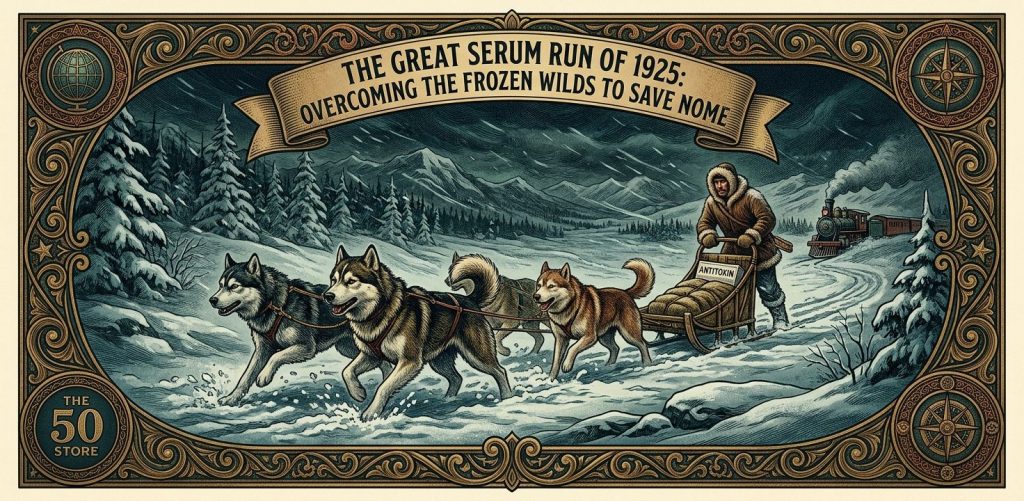
The Arctic Race of Mercy
Pull up a chair, friend, and pour yourself a hot cup of coffee. When the winter wind rattles your windows and the cold settles deep into the bones of the countryside, it is easy to feel small against the power of nature. But today, I want to tell you a story about what happens when Americans refuse to back down. In January 1925, a deadly outbreak of diphtheria threatened the children of isolated Nome, Alaska. With frozen seas and howling blizzards blocking planes, the town’s only hope was a 674-mile relay of mushers and sled dogs running through -50°F whiteouts. We call it the Arctic Race of Mercy, and it is a testament to the unyielding grit that runs deep in our nation’s veins.
The situation was terrifying. Nome was entirely cut off by a brutal winter. The complication arose when a disease known as the strangling angel began to take the lives of the town’s youngest residents. The question weighing heavily on the hearts of every mother and father in the territory was simple but desperate. How do we get medicine to these children across hundreds of miles of deadly, shattered ice? The answer came from the ancient, unspoken bond between man and dog. It took twenty incredibly brave mushers and over one hundred and fifty dogs to look the storm in the eye and say that they would not be defeated.
674 Miles of Frozen Grit
Part I: The Nome Outbreak
Nome in the 1920s was a rugged, beautiful place. The great Alaskan gold rush had faded into memory, leaving behind a tight-knit community of tough, hard-working folks. Dr. Curtis Welch (1874-1948) was the only physician for the town and the surrounding native communities. In the bitter, dark heart of winter, he started seeing children falling ill with severe sore throats. He soon realized with a heavy heart that it was diphtheria.
To truly grasp the terror of this moment, we have to look at the history. In the 1920s, diphtheria was one of the most feared diseases in the world. The Centers for Disease Control and Prevention notes that in 1921 alone, there were over 206,000 cases of diphtheria in the United States, resulting in more than 15,000 deaths. It was a suffocating shadow that spared no mercy for the young. Dr. Welch immediately went to his medical supplies, praying he had enough antitoxin to stop an epidemic. His heart sank. His entire batch had expired.
The death toll began to rise. Let me share a small piece of this history with you. Dr. Welch, a man dedicated to healing, sat by his radio transmitter in the freezing dark. He tapped out a frantic distress signal across the vast, frozen tundra to the outside world. He was a small-town doctor thrust into a massive crisis, fighting a war he could not win without ammunition. His message was clear. Send help, or the children of Nome will perish.
Part II: The Sled Dog Relay
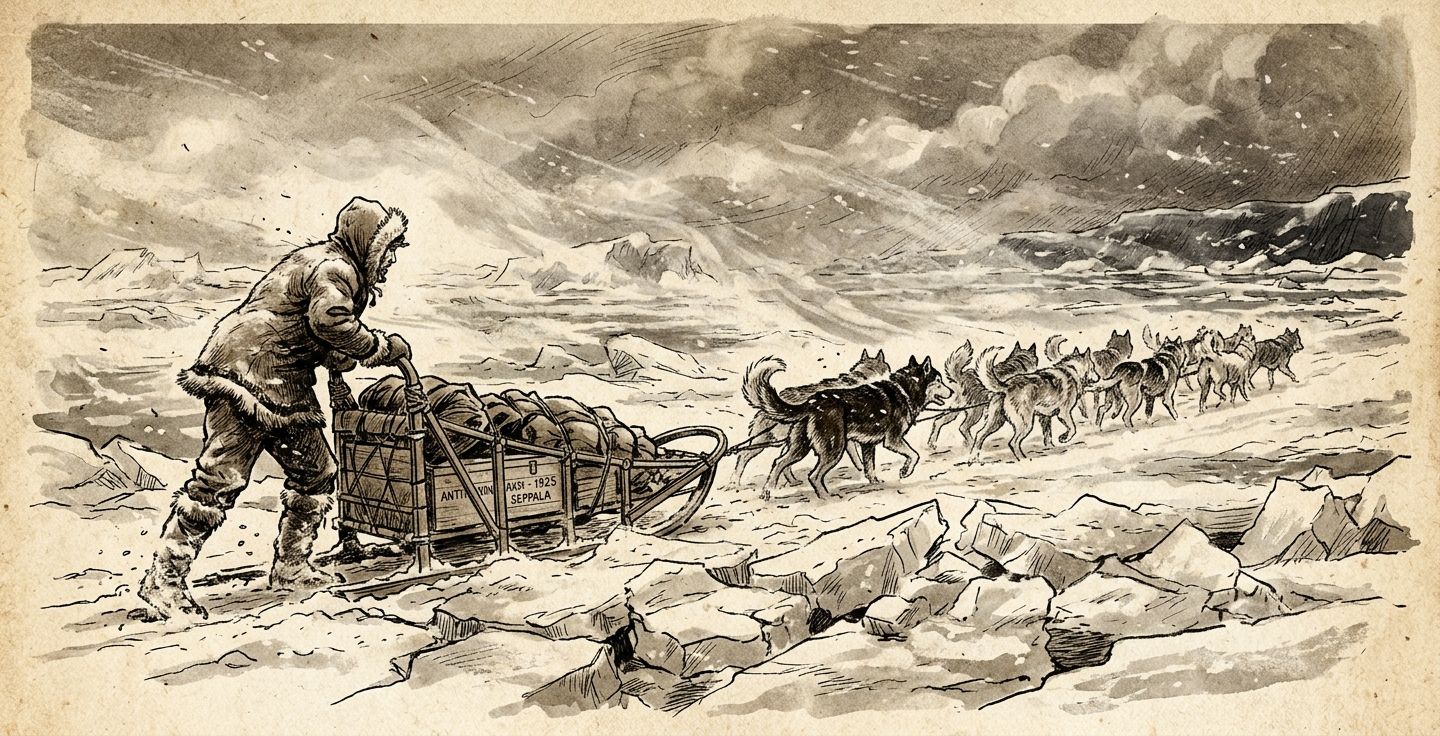
The nearest usable medicine was in Anchorage. Officials managed to send a twenty-pound cylinder of glass vials by train to Nenana, but from Nenana to Nome lay 674 miles of brutal, untamed Alaskan trail. With airplanes grounded due to the extreme weather and ships locked out by the frozen Bering Sea, the territory relied on its oldest method of transportation. Twenty mushers and 150 dogs banded together to carry the medicine across the treacherous, cracking ice of Norton Sound.
Here is a surprising statistic that will put this incredible feat into perspective. The regular mail delivery dogsleds took about 25 days to cover that exact distance. These brave teams knew they had to do it in less than six days. If they took any longer, the medicine would freeze solid and spoil.
The conditions were unimaginably harsh. The temperature dropped to -50°F. With the gale force winds blowing off the sea, the windchill plummeted to an agonizing -85°F. These were tough frontiersmen, but the cold was merciless. It began freezing the mushers’ hands and faces. “Wild Bill” Shannon ran the very first leg of the relay. By the time he reached his destination, he was suffering from severe facial frostbite. Another musher, Edgar Kalland, had his hands freeze completely to the handlebars of his sled. When he arrived at the roadhouse, the proprietor had to pour boiling water over the handlebars just to free his hands. Yet, neither man complained. They handed off the precious cargo to the next team and wished them godspeed.
Part III: Togo & Balto
The most dangerous section of the trail fell to a master musher named Leonhard Seppala (1877-1967). Seppala was a Norwegian immigrant who built a life in the American frontier, a man who knew the snow like the back of his own hand. His lead dog was named Togo.
Togo was twelve years old at the time. In dog years, he should have been resting by a warm stove. As a puppy, he was so mischievous and undersized that Seppala actually gave him away. But Togo broke through a glass window and ran miles to return to his master. He was born to lead. During the Great Serum Run, Togo ran the longest and most perilous 260-mile leg of the relay. Seppala and Togo crossed the open ice of Norton Sound in the dead of night. The ice was groaning, shifting, and cracking beneath their paws. One wrong step meant being swallowed by the freezing black water. Togo led his team through blinding whiteouts with the unerring instincts of a true survivor.
The final stretch of the journey was given to Gunnar Kaasen (1882-1960). His lead dog was Balto. Now, Balto was a sturdy, barrel-chested working dog, not traditionally seen as a star racer. But when Kaasen became completely blinded by a ferocious snowstorm, it was Balto who took charge. The wind was blowing so hard it flipped the sled over, and Kaasen had to dig through the snow with his bare hands to find the buried medicine cylinder. Through it all, Balto kept his nose to the trail, leading the final team into Nome through the blinding snow when human eyes were utterly useless.
Part IV: Delivering the Cure
On February 2, 1925, Gunnar Kaasen and Balto pulled into the snowbound streets of Nome. The impossible journey was complete. They delivered the medicine in a record-breaking 5.5 days. Dr. Welch carefully thawed the serum and immediately began administering it to the sick children. The outbreak was halted in its tracks. The children of Nome were saved.
It was a moment of pure triumph that captivated the entire country. Our nation stood united, tracking the progress of the relay through newspaper updates and radio broadcasts. It showed the very best of who we are. When our neighbors are in trouble, we do not hesitate. We brave the storms. We endure the bitter cold. We sacrifice for one another.
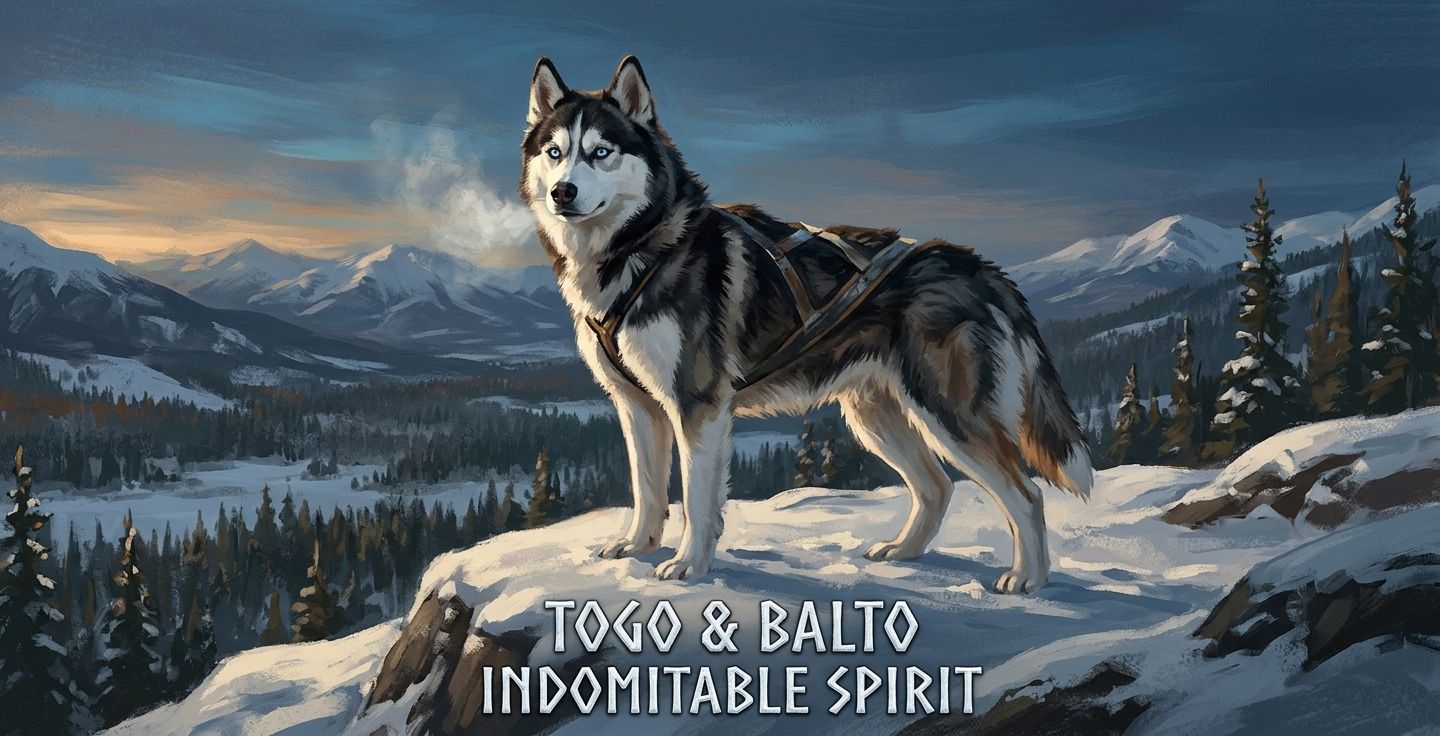
Today, if you walk through Central Park in New York City, you will find a beautiful bronze statue of Balto standing tall. The plaque beneath it honors the “indomitable spirit” of the sled dogs that risked everything for a town they barely knew. It is a lasting tribute to loyalty, courage, and hope.
Carrying the Spirit Forward
It is a story that warms the heart, even when the wind blows cold outside your own window. And speaking of the cold, we all need something reliable to keep us warm during the harsh winter months. We honor our history best when we carry its spirit with us every single day.
That is exactly why I am so proud to share the 1925 Serum Run Commemorative Hoodie with you. Built to withstand the coldest trails. Features thick, warm fleece lining inspired by the rugged mushers who raced against time to save Nome. Every time you pull it on, you are wrapped in comfort and reminded of the incredible courage of those mushers and their faithful dogs. Treat yourself or a loved one to a piece of history that keeps the cold at bay, and wear it with American pride.
What was the Great Serum Run of 1925?
The Great Serum Run of 1925 was a famous 674-mile sled dog relay that delivered life-saving diphtheria antitoxin to the isolated town of Nome, Alaska, during a severe winter storm.
How cold was it during the 1925 Serum Run?
The temperatures dropped to a bitter -50°F during the relay. With gale force winds, the windchill plummeted to an estimated -85°F, freezing the hands and faces of the mushers.
Who was the doctor in Nome during the outbreak?
Dr. Curtis Welch was the only physician in Nome at the time. He discovered the diphtheria outbreak and sent frantic radio messages requesting the life-saving antitoxin.
Why could they not use airplanes to deliver the medicine?
Aviation was still in its early years in 1925. The extreme cold and ferocious blizzards grounded all available aircraft, making sled dogs the only viable option to transport the medicine.
Which dogs were the most famous in the relay?
Togo and Balto are the most famous dogs from the run. Togo led his team on the longest and most dangerous 260-mile stretch, while Balto bravely led the final team into Nome through blinding snow.
Where is the statue honoring the sled dogs located?
A beautiful bronze statue of Balto stands in Central Park in New York City. It was dedicated in late 1925 to honor the indomitable spirit of the sled dogs.