
American Mythos & National Character
The Frontier Barn Raising Spirit: Pioneer Neighborly Aid And Rural Collaboration
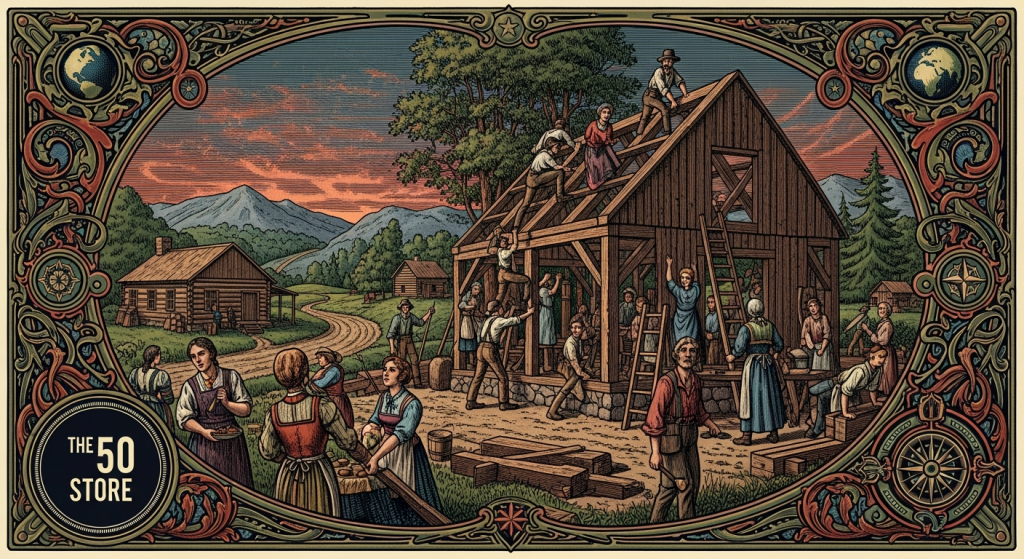
Good morning, fellow history enthusiasts and friends! Arthur Vance here, your old history teacher from Virginia. Today, I want to take you back to a time when community wasn’t just a word, but the very bedrock of survival: the American frontier. It’s a period I’ve always cherished discussing in my classroom, particularly the moments of extraordinary human cooperation.
On the American frontier, life was hard, and a single twist of fate, a rogue spark from a hearth, or a furious summer storm could wipe out a family’s entire livelihood in moments. A barn, often the heart of a farm, housing livestock, tools, and harvested crops, was indispensable. To lose it meant peril. But pioneers, you see, didn’t face these disasters alone. Instead, in a display of neighborly aid that warms my heart even now, an entire community would gather, sometimes from miles around, to raise a new barn from its foundations to its rafters in just a day or two. It was truly a testament to the old adage: many hands make light work.
The Craft of Community: More Than Just Building
I often asked my students to imagine what it must have felt like, living so far from established towns, with no immediate access to stores or skilled laborers. That isolation, paradoxically, forged the strongest bonds. Barn raisings weren’t just construction projects; they were profound social contracts, ensuring that everyone had a safety net. It was a beautiful, practical form of insurance.
The Call for Aid: A Whisper on the Wind
When a family lost their barn, or simply grew beyond the capacity of their old one, the word would spread. Perhaps a rider on horseback, or simply the sound of an ax ringing through the woods in a new, urgent rhythm, signaling a need. The host family would prepare, gathering food and perhaps felling some of the larger trees, but the bulk of the labor and materials would come from the community itself. Imagine that trust! Imagine knowing that your neighbors, without question, would drop their own chores to come to your aid. It’s a spirit I believe we can still learn so much from today.
Let’s consider some facts to truly grasp the context. In the early 19th century, nearly 90% of Americans lived in rural areas, making community interdependence not just helpful, but absolutely vital for survival and progress. (U.S. Census Bureau data from that era confirms this profound rural dependence.) These communities, especially in places like the Ohio River Valley or the Appalachian foothills, were often isolated, making self-reliance and mutual aid the cornerstones of their existence. While it’s hard to pin down an exact statistic on the frequency of barn fires, we know from historical accounts that accidental blazes were a constant threat in wooden structures, especially before modern fire suppression. A single fire could indeed devastate a family’s year, sometimes their entire future.
Division of Labor: A Symphony of Effort
A barn raising was a meticulously orchestrated event, though perhaps not with a conductor, but with seasoned farmers who understood every angle and every joint. 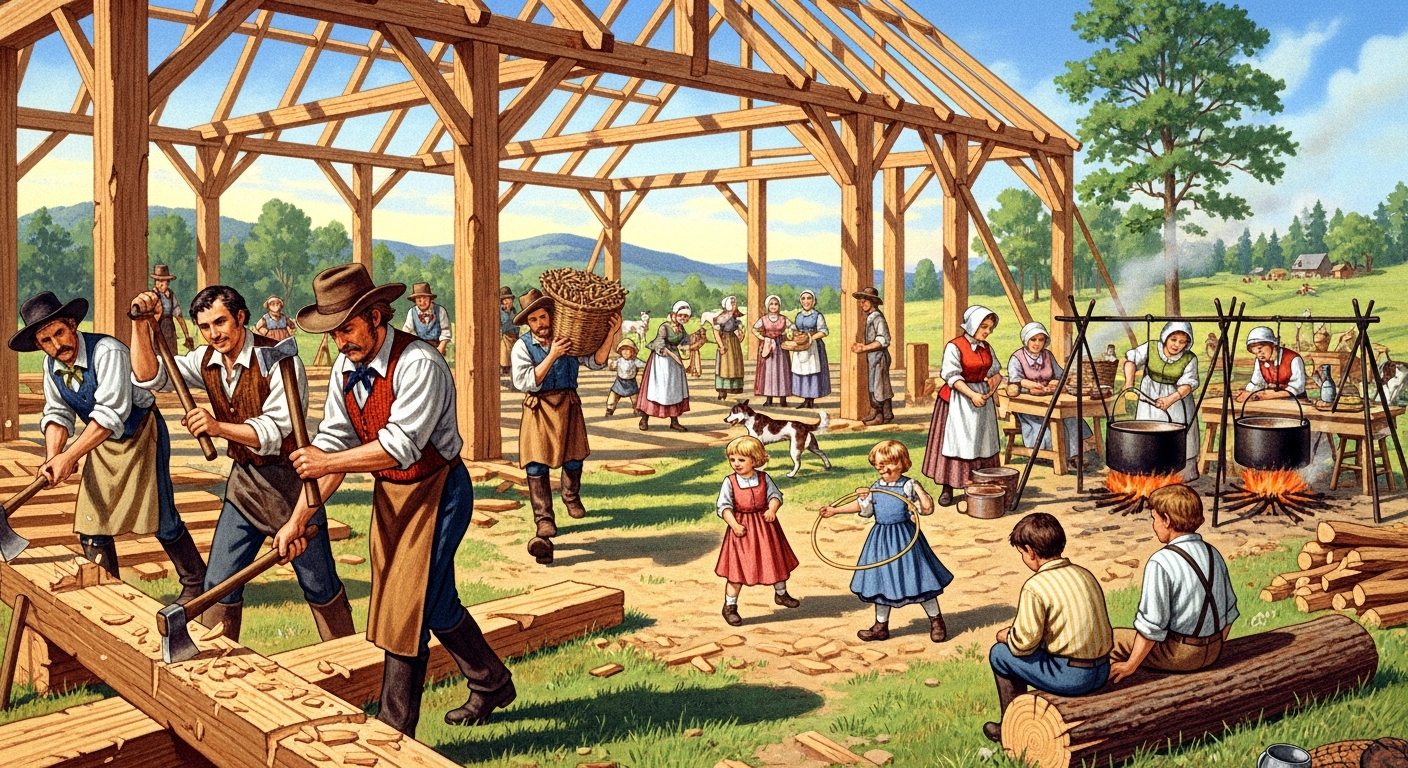
| Group | Typical Tasks | Key Tools/Materials |
|---|---|---|
| Skilled Craftsmen (Framers) | Design, measure, mortise and tenon joinery, directing the lift. | Adzes, chisels, saws, mallets, levels, plumb bobs. |
| Strong Men (General Labor) | Felling trees, hewing beams, hauling timbers, lifting bents. | Axes, broadaxes, cant hooks, ropes, long poles. |
| Young Men/Boys | Carrying wooden pegs, fetching water, assisting with lighter tasks. | Buckets, small hand tools, wheelbarrows. |
| Women | Preparing massive communal meals, tending children, community networking. | Cooking pots, hearths, large tables, fresh ingredients. |
The materials, as noted in many historical accounts of the American Frontier, were almost entirely local. Timber from the surrounding woods was hand-hewn, jointed with meticulous mortise and tenon connections, and secured with sturdy wooden pegs. This was true ‘zero waste’ construction, long before the term became popular. No expensive, imported nails or hardware were needed, making the process not only communal but incredibly self-sufficient.
Raising the Bents: The Heart-Stopping Moment
This was the climax of the day, a moment of incredible tension and coordinated effort. A ‘bent’ is essentially one of the cross-sectional frames of the barn, built horizontally on the ground. Once all the joinery was complete, it was time to raise these massive wooden frames upright. I remember describing this to my students as a giant, human-powered puzzle where one wrong move could be catastrophic.
How a Bent Was Raised: A Step-by-Step Feat of Strength
- Positioning: The assembled bent, often weighing thousands of pounds, was carefully positioned on the sill plates of the foundation.
- Initial Lift: Teams of men, using long wooden ‘pike poles’ (some reaching 20 feet or more), would get under the bent and, on a shouted command, push upwards in unison.
- Gradual Elevation: As the bent slowly rose, men would shift their positions, constantly adjusting the poles, preventing it from toppling. Ropes were often used for added control and safety, particularly for bracing.
- Setting the Pegs: Once vertical, the tenons (protruding ends of beams) would drop into the mortises (receiving slots) on the sill plate. Other workers, standing on ladders or scaffolding, would then drive in the wooden pegs to lock the joints securely. This was often done with a loud ‘thwack’ of a mallet, a sound of triumph!
- Bracing: Temporary braces were immediately added to hold the bent plumb and stable until the girts (horizontal timbers connecting the bents) and roof structure could be installed.
And then, they’d repeat the process for the next bent! It was a breathtaking display of teamwork and raw human power. No heavy machinery, just muscle, skill, and an unwavering commitment to helping a neighbor.
The Celebration Feast: Food, Fiddles, and Friendship
As the sun began to set, casting long shadows across the newly framed structure, the hard work would culminate in a joyous celebration. The women, who had been cooking tirelessly all day, would lay out a feast that was legendary: roasted meats, fresh breads, pies, and vegetables, all shared communally. 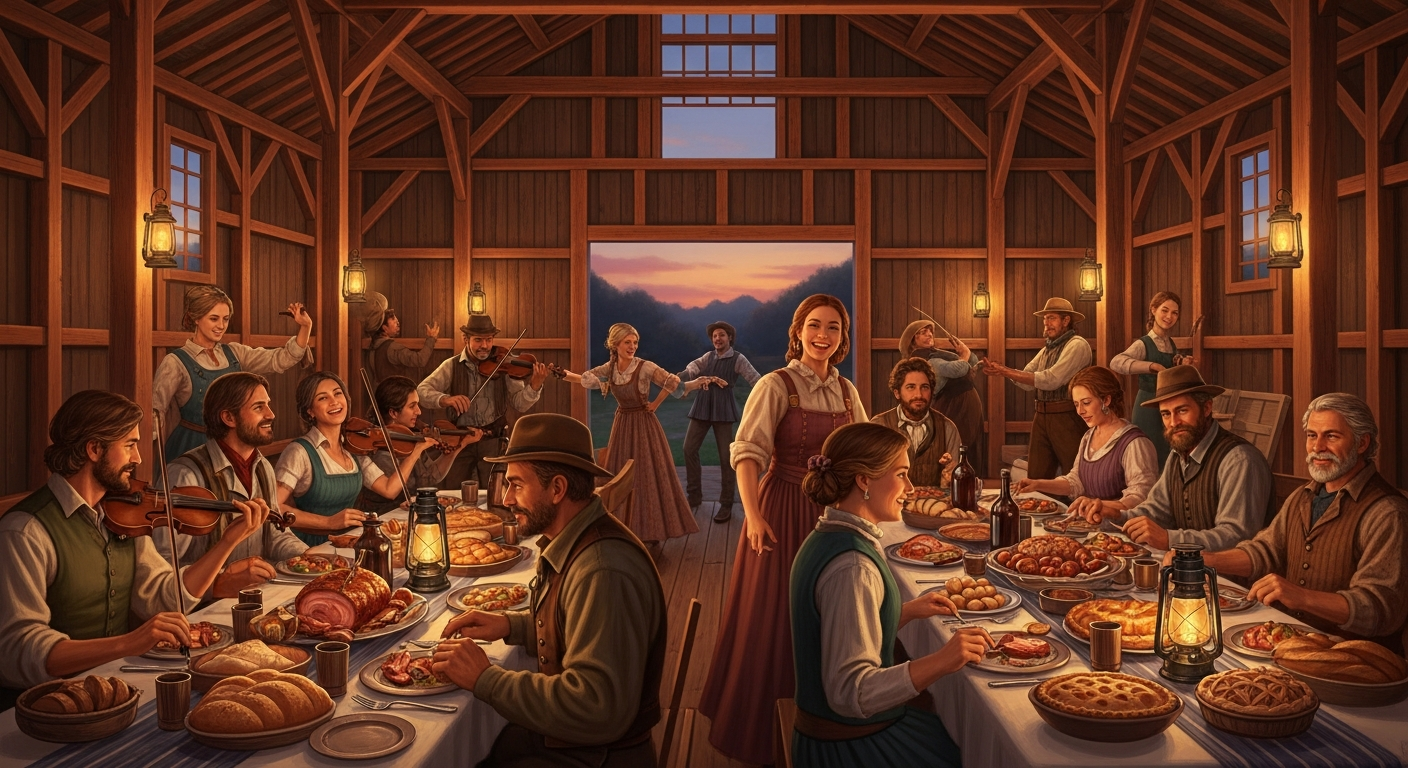
It’s these stories that truly humanize history for me. They show us not just what people did, but why they did it. The barn raising wasn’t just about constructing a building; it was about building community, about mutual respect, and about the deep understanding that ‘we are all in this together.’ These acts of collective support were the true foundation of American frontier life.
Wear the Spirit of Neighborly Aid
The spirit of the barn raising, of rolling up sleeves and helping a neighbor, is something I believe we need to remember and celebrate. It’s a fundamental part of our American heritage, a spirit of self-reliance coupled with profound community support. It reminds us that our strength often lies in our unity.
That’s why I’m particularly fond of The50 Store’s ‘Frontier Barn Raising Commemorative Tee.’ It’s more than just a shirt; it’s a wearable reminder of that powerful era, of hands helping hands, of community triumphing over adversity. Wear the spirit of neighborly aid with pride. This tee is printed with premium water-based inks on our buttery-soft, retail-ready combed cotton, ensuring both comfort and a lasting tribute to a truly remarkable American tradition.