
Culture & Traditions
The American County Fair: Celebrating Rural Grit and Blue-Ribbon Pride
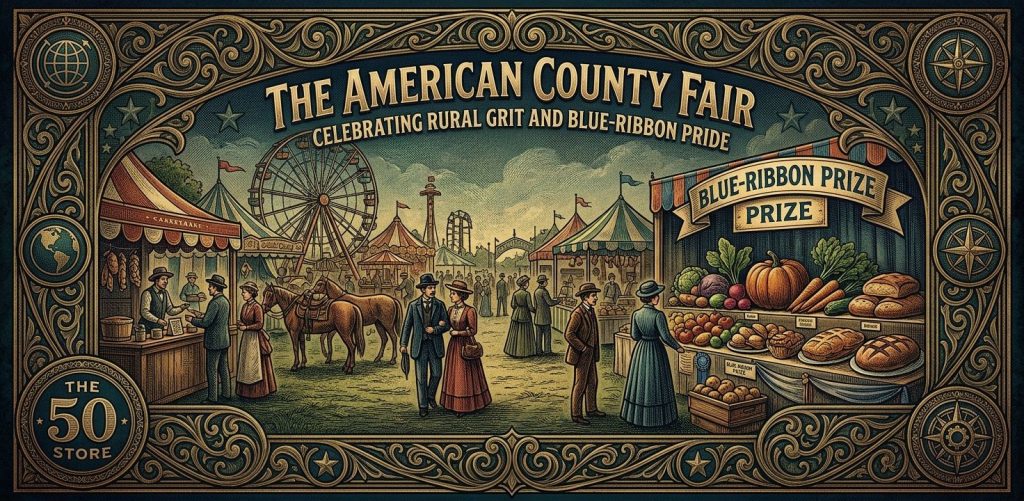
The Blue-Ribbon Pride of Rural America
Welcome, friends. Gather around the porch and let us talk about a tradition that beats at the very heart of our great nation. Long before theme parks existed, the American County Fair was the undisputed highlight of the summer. It was the sacred arena where rural families brought their best livestock, largest pumpkins, and finest preserves to compete for a simple blue ribbon. You can almost smell the sweet blend of funnel cakes and fresh hay just thinking about it. For generations, this event has not just been a place to go, but a vital part of who we are. I remember my own childhood, saving up quarters all summer just to spend an evening under those glowing string lights. The fair is a timeless capsule of Americana. We are a people of the soil, and the fair is our grandest celebration.
Picture the sprawling, untamed landscape of the early United States. The situation for an American farming family in the early nineteenth century was one of immense, profound isolation. Miles of thick forests, unpaved muddy trails, and rugged mountains separated neighbors. The pioneers who settled this land faced monumental tasks. Clearing rocks from fields, felling massive timber to build humble cabins, and securing enough food to last through brutal winters took every ounce of their strength.
The complication arose when these hardworking folks needed to improve their crop yields, share livestock breeding techniques, or simply find comfort in the company of others. They were completely on their own, battling harsh weather with nothing but their own hands and unwavering faith. How could a growing nation bring these scattered individuals together to learn, to trade, and to find a sliver of joy after a grueling harvest season? The answer came in the form of a grand, dusty, joyous gathering that would forever change the fabric of rural America.
Roots of the Harvest Competition
The Agricultural Hub
Let us walk back in time to the 1800s. Farming in those days was not just a profession or a business. It was a rigorous, daily survival test. Men, women, and children worked from the moment the roosters crowed until long after the crickets began their night songs. They needed an agricultural hub. They desperately needed a centralized place to share heirloom seeds, swap plowing stories, and measure their progress against their peers.
I often think of a micro-history from my own family tree. My great-grandfather used to sit in his rocking chair and tell me stories about his grandfather. That old pioneer would hitch up his wooden wagon once a year, load up his absolute best bushel of corn, and ride two full days over rutted dirt roads just to see how his crop stacked up against the boys in the neighboring county. It was never about vanity. It was about survival. If a neighbor had a stronger strain of wheat, you needed to know about it. The early fairs provided a rare chance for these isolated pioneers to look each other in the eye, shake hands, and share the hard-earned secrets of the land.
Elkanah Watson’s Dream
Every great American tradition starts with a visionary who sees the potential in everyday people. For the county fair, that visionary was Elkanah Watson (1758-1842). Watson was a true patriot, an avid traveler, and a man who deeply loved the American soil. Watson was a man of action. Before dedicating his life to agriculture, he had traveled to Europe, carrying messages for Benjamin Franklin during the Revolutionary War. He understood the importance of unity. In the year 1810, he organized the very first formal agricultural exhibition in Berkshire, Massachusetts. 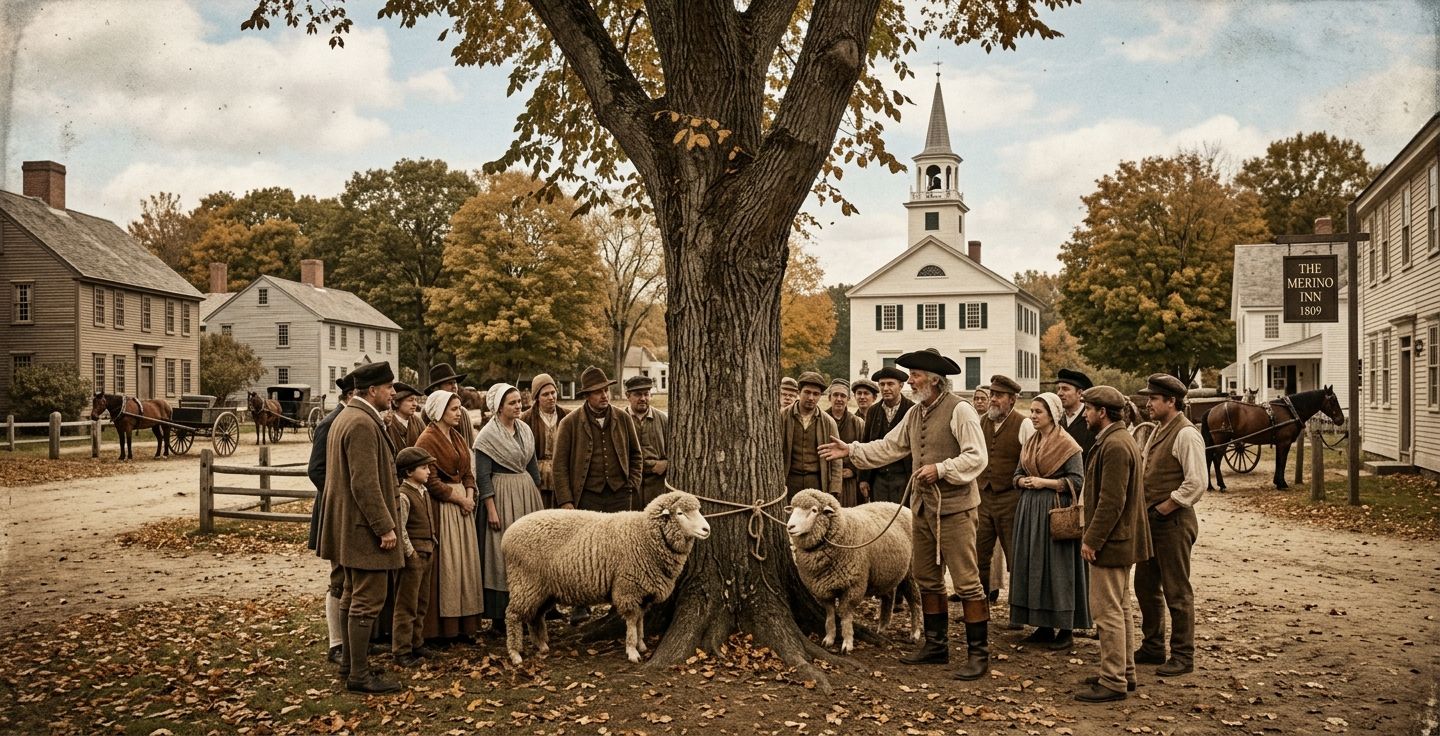
The story goes that Watson simply tied two of his finest Merino sheep to a large elm tree in the center of the town square. He wanted to show his neighbors the incredible value of good livestock breeding. The sheep drew a curious crowd, and that small, humble act sparked a massive fire of inspiration. It was Elkanah Watson who realized a fundamental truth about the American spirit. He saw that farmers would travel miles for a little healthy competition and a chance to proudly display the fruits of their endless labor.
He soon formed the Berkshire Agricultural Society. But Watson did something incredibly smart. He knew that dry, academic lectures about soil acidity and crop rotation would eventually bore the crowds. So, he introduced pageantry. He added marching bands, grand parades, and special competitions for domestic crafts like weaving and pie baking to ensure women were equally celebrated. He took a simple agricultural meeting and turned it into a grand, patriotic festival that everyone in town looked forward to attending.
The Carnival and the Midway
Now, let us look at the incredible growth of this tradition. It is fascinating to consider the sheer scale of these events today. According to the International Association of Fairs and Expositions, over 150 million people visit fairs in the United States every single year. That is nearly half the population of our entire country gathering to eat, play, and celebrate.
How did we get from two sheep tied to an elm tree to a sprawling festival of neon lights, deep-fried treats, and thrilling rides? As the decades rolled by, the fair evolved alongside the nation. Organizers quickly realized that to draw larger crowds from the growing cities and industrial towns, they needed dynamic entertainment. Enter the Midway.
Suddenly, the quiet agricultural exhibits were flanked by towering Ferris wheels, the mechanical hum of carousels, and the irresistible smell of fresh popcorn and cotton candy. The fair became a true sensory masterpiece. 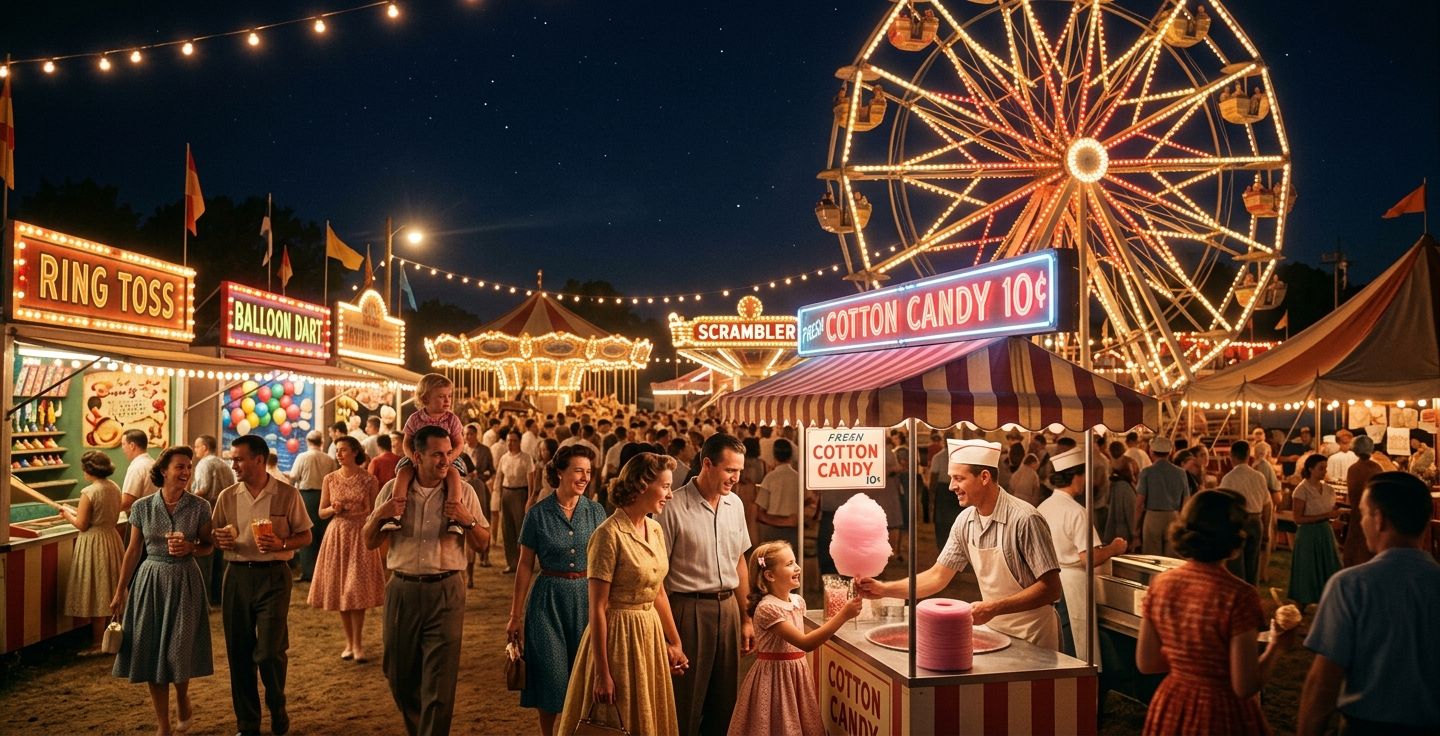 It grew into a place where a young boy could spend his saved pennies to win a stuffed bear for his sweetheart. It became the spot where a grandfather could admire the gleaming paint on a brand-new steam tractor while his grandchildren rode the tilt-a-whirl. The addition of the carnival did not erase the agricultural roots. Instead, it built a beautiful bridge between the hard work of the farm and the carefree joy of a late summer party.
Celebrating Grit
Despite the flashing neon lights and the thrilling roar of the rides, the absolute heart of the fair remains rooted in dirt, sweat, and undeniable grit. It is about celebrating the uncompromised truth of rural life. The county fair laid the bedrock foundation for modern agricultural education and incredible youth organizations like 4-H and the Future Farmers of America.
When you walk into those historic, wood-timbered exhibition halls built over a century ago, you can physically feel the history in the air. The heavy oak beams have absorbed generations of laughter, cheers, and the distinct smells of livestock and leather. The uncompromised truth is that these old halls represent the very best of our communities.
Inside these historic buildings, you see teenagers who have spent every morning since March waking up in the dark. They have been out in the cold barns feeding, washing, and walking their steers, pigs, and sheep before the school bus even arrives. When a seasoned judge walks down the dusty line and finally hands one of those kids that simple, highly coveted strip of blue silk, it is a profoundly emotional moment. That ribbon validates the early mornings, the calloused hands, and the absolute dedication required to raise a living creature. The fair teaches our youth that hard work pays off and that taking pride in your labor is the truest American way.
Keep the Tradition Alive
We carry this beautiful nostalgia with us everywhere we go. It is a feeling made of warm summer nights, the distant, cheerful sound of a carousel organ, and the fierce pride of a local community coming together as one big family. You can carry that exact feeling with you, and you can wear that pride right on your chest with our American County Fair Heritage Tee.
Printed with a distressed retro style on our classic, buttery-soft combed cotton, this vintage tee is absolutely perfect for warm summer nights and weekend events. It is designed for those who respect the dirt on their boots and the history in their hometowns. This shirt is a comfortable, stylish tribute to the farmers, the dreamers, and the builders of this beautiful country. Grab yours today, wear it with pride, and keep the timeless spirit of the American midway alive for generations to come.
Frequently Asked Questions
What is the historical origin of the American county fair?
The American county fair originated in the early nineteenth century as a way for isolated farming families to gather, share agricultural knowledge, and display their best crops and livestock. It began as a practical meeting and quickly evolved into a joyful community celebration.
Who is known as the father of the American agricultural fair?
Elkanah Watson is widely considered the father of the American agricultural fair. In 1810, he organized the first formal exhibition in Berkshire, Massachusetts, showing his prized Merino sheep to encourage better breeding practices among local farmers.
How did the county fair impact early farming practices?
Early county fairs provided a crucial hub for pioneers to share heirloom seeds, discuss new farming equipment, and learn successful livestock breeding techniques. This friendly competition drove rapid improvements in local agriculture.
Why do modern county fairs include carnival rides and games?
As towns and cities grew, fair organizers realized they needed entertainment to attract broader crowds beyond the farming community. The addition of the midway helped fund the agricultural exhibits and turned the fair into a massive summer festival.
What is the importance of youth agricultural programs at the fair?
Programs like 4-H use the county fair as a culmination of a year of hard work. Youth members exhibit livestock, crafts, and agricultural projects, learning essential life skills such as responsibility, work ethic, and sportsmanship.
What does a blue ribbon signify at a fair?
A blue ribbon signifies first place in a specific competition category. More than just a prize, it represents months of dedication, early mornings, and the absolute highest standard of agricultural or domestic excellence.
Are historic exhibition halls still used today?
Yes, many county fairs across the country still carefully maintain and utilize their original, wood-timbered exhibition halls built over a century ago. These historic structures add a deep sense of nostalgia and heritage to the modern fair experience.