
American History & Origins
Robert Smalls and the Stealing of the USS Planter: A Bold Voyage to Freedom
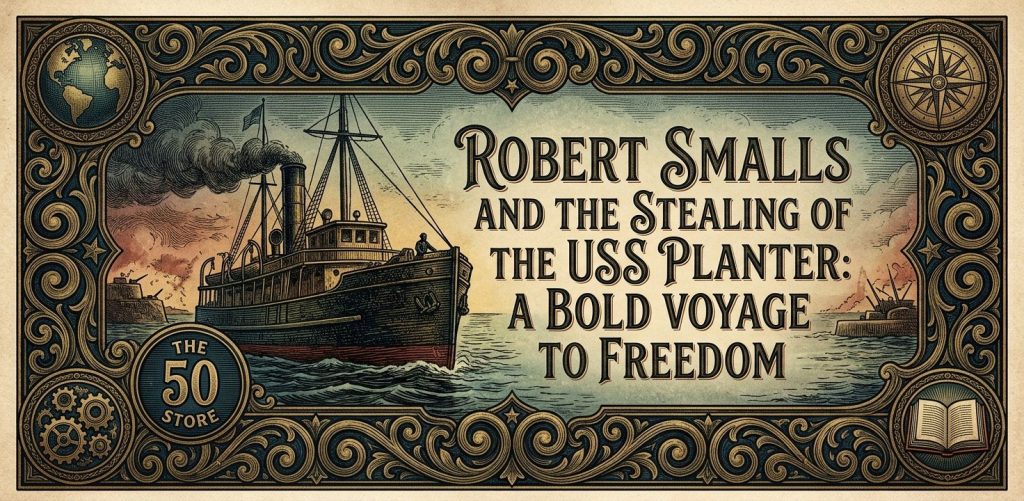
The Steamboat to Freedom
In the dead of night on May 13, 1862, an enslaved wheelman named Robert Smalls (1839-1915) boarded a Confederate military transport ship in Charleston Harbor. The air was thick with coastal humidity and the heavy silence of a sleeping city. The dark waters lapped gently against the wooden hull of the massive vessel. He wore the overwhelming weight of his family’s future on his shoulders and a very specific item on his head. Wearing the captain’s straw hat, he successfully steered the vessel past armed forts to deliver his family and the warship to the Union blockade.
Hello there, my friends. Pull up a comfortable chair and let me share a story with you. It is a story about the true, enduring heart of America. Our great nation was built by everyday folks who looked out at the horizon and decided that liberty was worth risking absolutely everything. When we talk about American heroes, we often picture famous generals or presidents carved into stone. But true patriotism often wears the face of an ordinary citizen who refuses to accept the chains of injustice. This is the incredible tale of a young man who literally took the wheel of his own destiny. It is a story filled with warmth, profound hope, and the undeniable American spirit.
Steering Toward the Morning Light
Part I: The Charleston Harbor Trap
To fully understand the sheer bravery of this historical act, we must look at the dangerous situation Robert found himself in. He was an enslaved crewman aboard the USS Planter. This ship was a busy Confederate military transport vessel. Every single day, Robert and his fellow enslaved crewmen worked tirelessly on the water. They looked out past the heavy harbor defenses to the open ocean. They could see the tall masts of the United States Navy ships stationed just out of reach. Those ships represented the ultimate dream of freedom. However, the waters between the bustling docks and that blockade were a deadly trap.
Let us look at some surprising historical numbers to paint the picture of this era. According to historical records from the 1860 census, the enslaved population in South Carolina was over 400,000 people. That represented roughly 57 percent of the entire state population. The Confederate forces relied heavily on this enslaved workforce to build earthwork forts, move heavy supplies, and maintain their naval vessels. The ship Robert worked on was a massive 147-foot sidewheel steamer. It was not a small rowboat that could easily slip away in the dark. It was an intimidating, wood-burning beast capable of hauling heavy artillery and hundreds of troops.
The complication in this story was clear and terrifying. How could an enslaved man pilot a heavily armed ship out of the most fortified harbor in the Confederacy without getting blown out of the water? The harbor was guarded by five separate, heavily armed Confederate forts. These forts were fully staffed with watchful guards. One wrong move or misplaced signal meant certain death for everyone on board.
Part II: The Straw Hat Disguise
The answer to that terrifying question was a brilliant combination of deep observation, quiet patience, and nerves of absolute steel. On the warm evening of May 12, the white officers of the ship made a crucial mistake. They decided to bend military rules and go ashore to spend the night with their families. They left the enslaved crew alone on the vessel to maintain the boilers.
Robert knew this was his moment. He had been planning this specific escape for weeks, studying the harbor currents and the guards’ routines. He gathered his fellow crewmen in the quiet shadows of the deck and shared his bold vision. They agreed to follow his lead. Before setting off into the treacherous channel, they had to pick up their families who were hidden on another boat nearby. This brings us to a beautiful piece of personal history. Robert’s beloved wife, Hannah Smalls, worked at a local hotel in the city. She lived with the constant, agonizing fear that her precious children could be sold away at any moment. Hannah made a quiet but profound contribution to this grand escape. She managed to secure a large white bedsheet from her workplace. That simple piece of cotton cloth would soon become their ultimate flag of salvation.
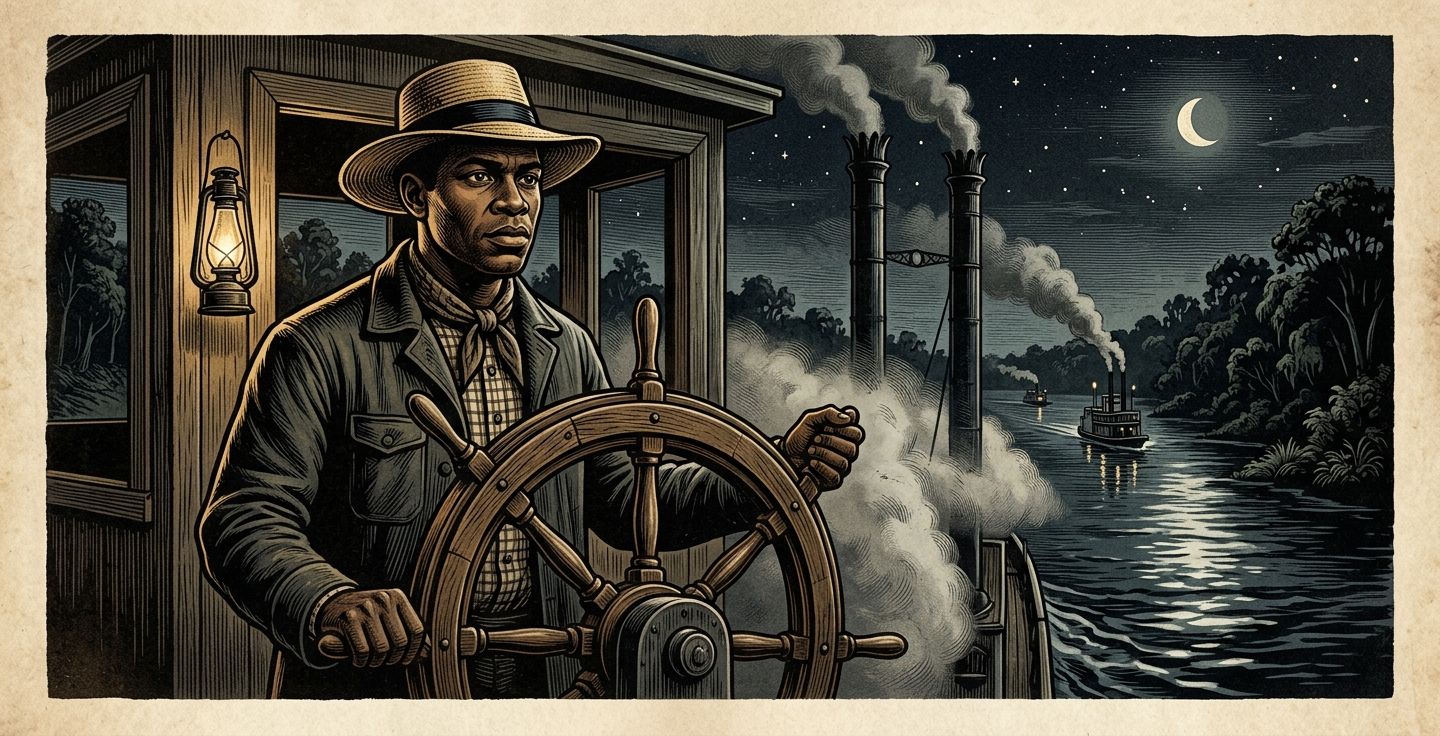
With his family safely hidden below deck, Robert took his proper position in the pilothouse. He then executed a masterstroke of clever deception. He put on the Confederate captain’s formal uniform coat. More importantly, he placed the captain’s signature wide-brimmed straw hat firmly on his head. From a distance in the foggy dark, he looked exactly like the man in charge.
Part III: Passing Fort Sumter
The journey out to sea was agonizingly slow and fraught with tension. Robert carefully guided the mighty ship through the dark, choppy waters. He had to navigate past several distinct checkpoints. At each one, he stood exceptionally tall in the pilothouse. He mimicked the exact gestures and casual posture of the white captain. He crossed his arms just right. He leaned against the window frame just right. He hid his true identity in plain sight.
Then came the ultimate, heart-pounding test. They approached Fort Sumter. This was the legendary fortress where the Civil War had begun just a year prior. It was packed with heavy cannons pointing directly at the water channel. Robert steered the ship right alongside the massive brick walls at point-blank range. Giving the secret whistle signals to Confederate forts at this incredibly close distance required unimaginable courage. His hand must have trembled as he reached for the cord, but his grip was firm. He pulled the whistle cord. Two short blasts, followed by one long blast. The loud hiss of steam cut through the quiet night air.
The crew below deck held their breath, clutching their children tightly. They all knew one slip-up meant instant execution. They waited in the agonizing silence for a response. Finally, the guard at the fort shouted out into the darkness. “Pass the Planter!” The wave of relief that washed over the crew must have felt heavenly. They maintained a slow, steady, unsuspicious pace until they were finally out of the cannons’ deadly range.
Part IV: The Captain of his Destiny
Once they were clear of the Confederate guns, Robert ordered the crew to accelerate. They fired up the massive boilers and raced toward the open ocean. As the sun began to rise, illuminating the morning sky with beautiful beams of pink and golden hope, they approached the United States Navy vessels. The Union sailors aboard the USS Onward saw a Confederate gunboat charging aggressively toward them. They immediately prepared to open fire on the approaching threat.
Robert quickly ordered the crew to lower the enemy flags. In their place, they frantically raised the white bedsheet Hannah had brought from the hotel. The Union ship recognized the sign of surrender and held its fire. When the Union officers boarded the vessel, Robert Smalls stood tall, doffed his famous straw hat, and formally surrendered the ship. He proudly announced that he had brought them some old United States guns to help the cause.
Robert Smalls surrendered the ship to the Union forces and received a massive hero’s welcome in the northern press. His bold voyage completely changed the course of his life and the lives of countless others. Following the war, this brave wheelman returned to his home state of South Carolina as a free man. He remarkably purchased the house where he had once been enslaved. He went on to serve his local community and his nation, later becoming a respected United States Congressman.
True Courage and Military Impact
When we look back at this historic night, two incredible achievements truly stand out. First and foremost is the beautiful human element. True courage is rarely a selfish act. Smalls did not just save himself from bondage. He rescued 17 people. That precious cargo included his wife, his children, and his fellow brave crewmen. He skillfully steered his family out of the suffocating darkness of slavery and into the bright, promising light of freedom.
Secondly, we must recognize the profound military impact of his daring actions. The Union navy gained a highly valuable transport ship loaded with cannons and ammunition. But Robert brought them something even more precious than the iron and wood of the vessel. He delivered a secret book of critical defense maps of the harbor. These documents detailed the exact, hidden locations of underwater mines and Confederate troop positions. His bold actions directly aided the United States in its noble effort to preserve the union. Furthermore, his undeniable heroism helped convince President Abraham Lincoln (1809-1865) to officially authorize Black soldiers to fight in the Union army.
The Courage and Freedom Tee
Friends, the story of this brave man is a testament to the American ideal. It reminds us all that we each have the power to navigate our own unique course in life. No matter the towering obstacles in our way, the American spirit is beautifully defined by those who absolutely refuse to give up the wheel.
We want to help you carry this inspiring historical legacy with you wherever you go. Take a moment to check out our “Robert Smalls: Wheel of Freedom Tee”. Honor the courage to steer your own course. Crafted on buttery-soft combed cotton, styled with vintage woodcut artwork of the historic steamboat. It is so much more than just a piece of comfortable clothing. It is a meaningful conversation starter and a handsome tribute to one of our greatest national heroes. Wear it with immense pride, knowing the incredible history woven into every single thread.
Who was Robert Smalls?
Robert Smalls was an enslaved African American man from South Carolina who famously escaped to freedom by commandeering a Confederate military ship. He later became a naval hero, a successful businessman, and a United States Congressman.
What ship did Robert Smalls steal?
He commandeered the USS Planter, a 147-foot sidewheel steamer that the Confederate army was using as a heavily armed military transport vessel.
When did the escape take place?
The daring escape took place in the dead of night on May 13, 1862, during the early years of the American Civil War.
How many people did Robert Smalls rescue?
He successfully rescued 17 people. This group included his wife Hannah, their young children, and his fellow enslaved crew members and their families.
What disguise did Robert Smalls use?
He wore the Confederate captain’s uniform coat and signature wide-brimmed straw hat. He also mimicked the captain’s mannerisms to trick the guards at the forts in the dark.
Where did this escape happen?
The escape took place in Charleston Harbor, South Carolina. The ship had to pass several heavily armed Confederate checkpoints, including the famous Fort Sumter.
What military impact did his escape have?
Besides delivering a fully equipped transport ship to the Union navy, he provided critical defense maps that detailed the locations of Confederate underwater mines and fortifications.