
American History & Origins
The Secret Ink of the Culper Spy Ring: Espionage in the Revolution
The Hidden Truth of Washington’s Invisible Army
Hello there, friend. Pull up a comfortable chair and pour yourself a warm cup of coffee. Today, I want to share a story with you about the very soul of our great nation. When we sit back and think about the American Revolution, our minds naturally picture the grand and sweeping scenes of battle. We see the majestic flutter of starry flags in the breeze. We hear the sharp, deafening crack of muskets across green pastures. We imagine brave men standing shoulder to shoulder in the thick smoke of combat. Those moments are absolutely true, and they are incredibly glorious. But there is another side to the birth of our country. It is a quiet story. It was written in the shadows, far from the battlefields.
While the proud Redcoats occupied the busy streets of New York, a quiet merchant, a humble tavern keeper, and a resourceful Long Island housewife were busy winning the Revolutionary War. They were not wearing brilliant uniforms. They carried no gleaming swords. Instead, they were members of the Culper Spy Ring. They communicated using complex codebooks and a revolutionary formula for invisible ink. This is the story of how everyday Americans, armed with nothing but their wits and a fierce love for freedom, helped build the country we are so blessed to call home today.
The 1776 Winners History Premium Tee
Wear your story with pride! Celebrate classic American values, history, and heritage with our premium crafted apparel, designed for comfort and durability.
Shop the Look →The Shadow Patriots of 1776
Part I: Blind in Occupied Manhattan
The situation in the late summer of 1776 was incredibly grim. Following the disastrous Battle of Long Island, British forces marched in and completely took over New York. The harbor was absolutely choked with massive warships. The streets were crawling with soldiers in bright red coats. For the American cause, the situation seemed hopeless. The complication was that George Washington (1732-1799) was practically blind to the enemy’s movements. Conventional scouting was simply not working. Early attempts at gathering information had ended in heartbreaking tragedy, most notably with the capture and execution of young Nathan Hale. The General knew he could not defeat the mighty British Empire through sheer force alone.
How could a ragtag army of farmers and blacksmiths break through the iron grip of British occupation? Washington realized he needed an invisible army. He needed a network of everyday people who could move freely behind enemy lines. According to historical records maintained by the Central Intelligence Agency, it is estimated that up to twenty percent of Washington’s discretionary military funds went directly to intelligence operations. That is a staggering statistic when you consider how poorly supplied the Continental Army was at the time. Men were freezing without proper boots, yet Washington knew that information was the most valuable weapon he could buy.
Part II: Code Names and Clotheslines
To build this invisible army, Washington turned to Major Benjamin Tallmadge, a brilliant young officer who organized a network of trusted friends. The most crucial among them was Robert Townsend (1753-1838). Townsend was given the code name Culper Jr. He was a quiet, unassuming Quaker merchant who hated violence but loved the idea of a free America. Townsend ran a dry goods shop and a coffee house right in the heart of occupied Manhattan.
Townsend played his part perfectly. He acted like a loyal subject to the Crown. British officers would come into his coffee house to escape the cold. They would drink rum, complain about their commanders, and carelessly brag about troop movements or upcoming supply shipments. Townsend would just smile warmly, wipe down the wooden tables, and memorize every single detail they let slip.
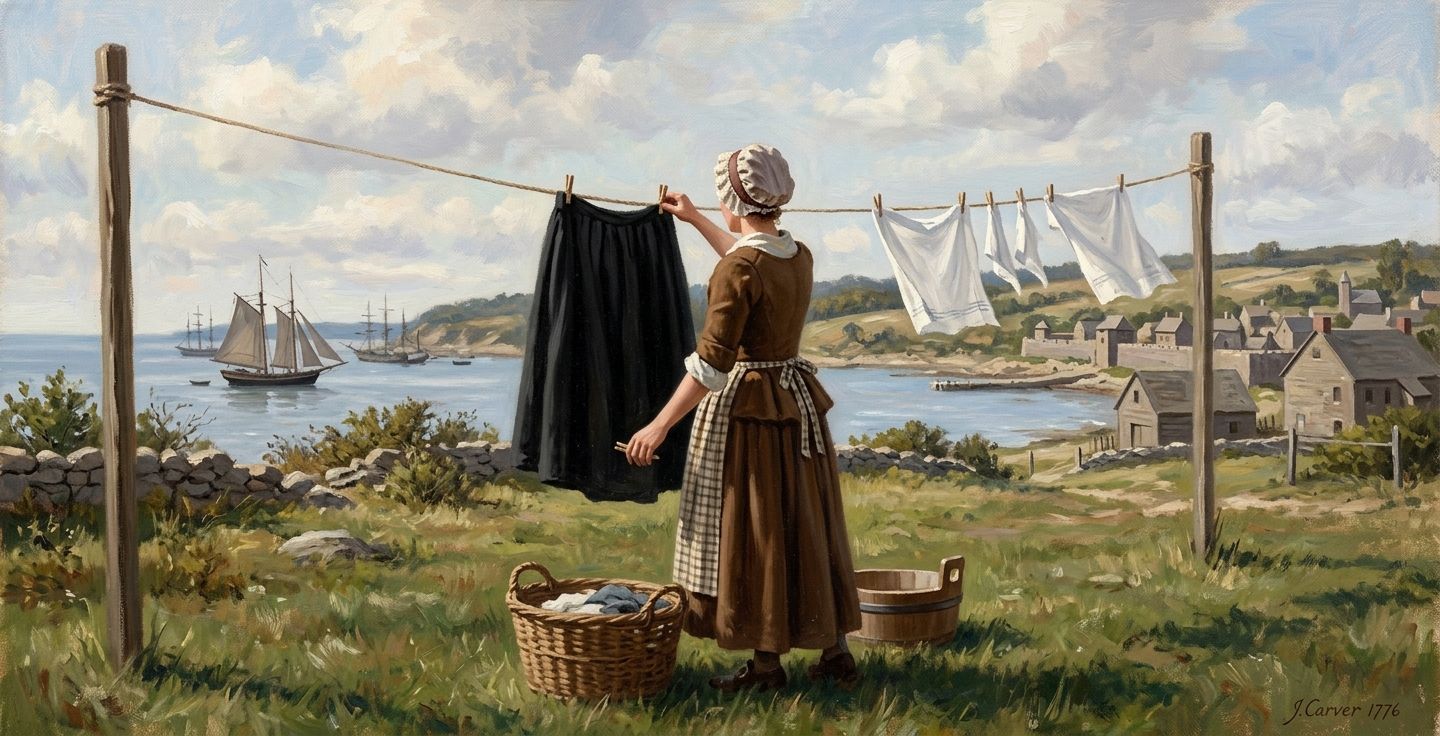
But gathering the information was only half the battle. They had to transport it safely out of the city. This is where we find one of the most beautiful micro-histories of the entire war. Enter Anna Strong (1740-1812), a brave housewife living in Setauket on Long Island. Anna used her laundry as a highly sophisticated signaling system. Whenever a courier arrived to pick up Townsend’s hidden messages, Anna would casually walk out into her yard and hang a black petticoat on her clothesline. This signaled to Caleb Brewster, a spy boat captain hiding in the Long Island Sound, that a message was ready.
She would then hang a specific number of white handkerchiefs next to the black petticoat. The number of handkerchiefs corresponded to a specific hidden cove along the rocky shoreline where Brewster should park his boat. Imagine the sheer courage of this woman. British soldiers would routinely march right past her front gate. They probably nodded politely to her as she smiled back, completely unaware that her everyday chores were actively directing the intelligence efforts of the American Revolution.
Part III: The Stain of Sympathy
If these secret messages were intercepted by British patrols, every single member of the ring would have been hanged for treason without a trial. The risk was unimaginable. To protect his network, Washington utilized a brilliant piece of technology known as the sympathetic stain. This was an advanced form of invisible ink created by Doctor James Jay, the brother of founding father John Jay.
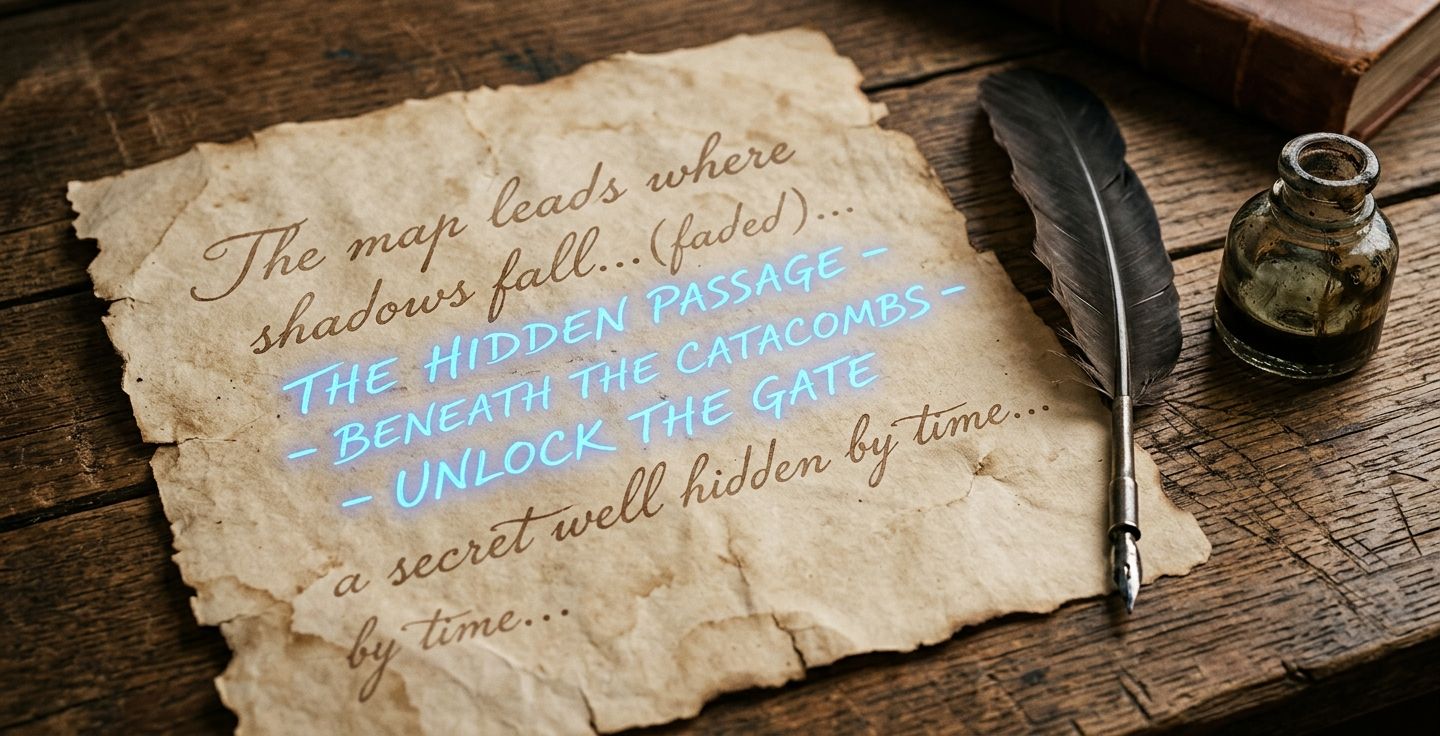
The system was pure genius. A spy like Robert Townsend would sit down at his desk and write a completely normal, boring letter to a fake friend. He might write about the chilly autumn weather or the rising price of flour. But between those mundane lines, Townsend would dip his quill into the sympathetic stain and write the real intelligence. This liquid was essentially a mixture of water and tannic acid. When it dried on the heavy paper, it completely vanished. The page looked entirely innocent.
The magic only happened when the letter reached George Washington or one of his trusted handlers. They would take a second chemical mixture, usually a solution containing iron sulfate, and carefully brush it over the paper. Suddenly, the hidden words would glow to life in a rich, dark color. This allowed the secret letters to pass right through the hands of British guards who thought they were simply inspecting personal mail. It was a perfect blend of science and patriotism.
Part IV: Saving West Point
The greatest test of this shadow network came during one of the darkest hours of the war. We all know the tragic story of Benedict Arnold (1741-1801). He was a celebrated American general who allowed his bitter resentment and greed to poison his heart. Arnold was secretly plotting to surrender the vital fortress of West Point to the British army.
If the British captured this strategic fort, they would gain total control over the Hudson River. This would physically split the New England colonies away from the rest of the country. The rebellion would have been starved out and completely crushed. However, the spies in New York heard whispers of a high ranking American officer conspiring with the British. They utilized their clotheslines, their hidden boats, and their chemical inks to rush the warnings out of the city.
Because of this constant flow of intelligence, the plot was disrupted. British Major John Andre was captured with the incriminating papers hidden inside his boot. West Point was saved, and the entire tide of the war shifted. The quiet folks working in the shadows had just saved the entire nation from absolute disaster.
Uncompromised Truths and George’s Code
One of the most remarkable things about these brave men and women is that they never asked for any glory. They never asked for medals or parades. The uncompromised truth of their sacrifice is that the identities of several Culper spies remained an absolute secret for over 150 years. Robert Townsend took his secret identity to the grave when he passed away. It was not until the twentieth century that diligent historians finally analyzed handwriting samples and decoded the true identities of these shadow patriots.
To further protect themselves, the network used a highly complex cipher system that we now fondly refer to as George’s Code. Major Tallmadge created a pocket dictionary that assigned a specific number to 763 different words, names, and places. Instead of writing a name that could lead to an arrest, they simply wrote a number. For instance, the number 711 meant General Washington. The number 727 stood for New York. The word “gun” was 356. It was a painstaking process to encode and decode every single message by candlelight, but it ensured the survival of the ring.
These ordinary citizens understood that freedom is never free. It requires quiet grit, steadfast faith, and a willingness to put everything on the line for your neighbor. They did not fight with cannons or bayonets. They fought with quills, laundry lines, and numbers. Their immense courage helped pave the way for the beautiful, thriving country we share today.
Wear a Piece of Secret History
When we look back at the incredible sacrifices made by the Culper Spy Ring, we are reminded that true patriotism does not always make a loud noise. Sometimes, it is the quiet, steady dedication of everyday people that changes the entire world. It is a spirit that still lives deep inside the American heart today.
We believe in honoring that quiet grit. That is exactly why we created the Culper Spy Ring Code 763 Tee. It allows you to literally wear a piece of America’s secret history. Printed with clean, crisp vector graphics on our signature buttery-soft combed cotton, this shirt is built for those who appreciate the deeper, untold stories of our heritage. Whether you are running errands around town or sitting on the porch enjoying a peaceful evening, it is a perfect reminder of the brilliant minds that helped secure our liberty. Let us always remember the shadow patriots, and let us always cherish the freedom they secured for us.
What was the Culper Spy Ring?
The Culper Spy Ring was an intelligence network organized by Major Benjamin Tallmadge under the direct orders of General George Washington in 1778. Operating primarily in New York City and Long Island, the ring gathered vital information about British military movements during the American Revolutionary War.
Who invented the invisible ink used in the Revolutionary War?
The advanced invisible ink used by the Culper Spy Ring was developed by Doctor James Jay, an American physician and the brother of founding father John Jay. This ink was crucial for hiding sensitive military intelligence from British inspectors.
How did Anna Strong help the Culper Ring?
Anna Strong was a resident of Setauket, Long Island, who used her laundry clothesline to send secret visual signals. A black petticoat indicated that a spy boat had arrived, and the number of white handkerchiefs hung beside it signaled the specific hidden cove where the boat was waiting.
What was the sympathetic stain?
The sympathetic stain was a special two-part chemical ink system. A spy would write a secret message using a clear liquid that vanished when dry. The recipient would then brush a second chemical reagent over the paper, causing the hidden words to become visible.
Did the British ever catch the Culper Ring?
No, the core members of the Culper Spy Ring were never caught or unmasked by the British forces. Their strict security measures, including code names and complex ciphers, kept their true identities hidden not only during the war but for more than a century afterward.
How did the spy ring help save West Point?
The network of spies operating around New York intercepted critical intelligence regarding a high-ranking American officer colluding with the enemy. This flow of information helped lead to the capture of British Major John Andre and the exposure of Benedict Arnold’s treasonous plot to surrender the fort at West Point.