
Culture & Traditions
Why Diners Are a Cultural Icon in the U.S.
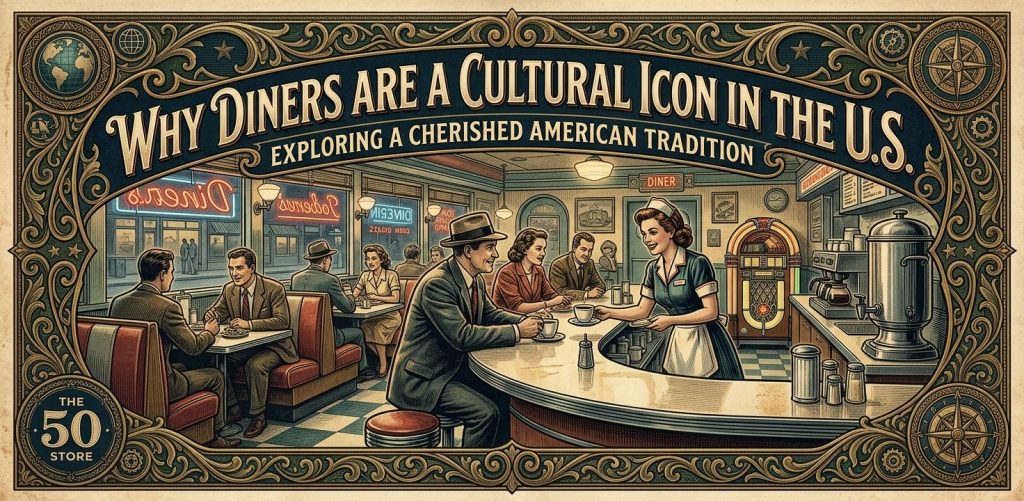
The Warmth of the Glowing Neon
The rain taps a steady rhythm against the heavy glass window. You pull open the thick stainless steel door, and a tiny brass bell announces your arrival. Immediately, you are enveloped by the comforting smell of sizzling bacon grease and rich coffee brewing in a glass pot. You slide into a cracked vinyl booth. The waitress calls you honey and slides a heavy ceramic mug across the table. It feels wonderfully safe. You look around the room and see a perfect cross section of your town. This is a scene repeated across thousands of American towns. It is a deeply shared experience. For decades, I have watched neighborhoods rise and reinvent themselves. Through all those shifting seasons of change, one thing has remained constant on the corner of Main Street. The diner.
A Humble Beginning on Muddy Streets
But it was not always this way. Before the gleaming chrome, there were rugged wooden wagons navigating muddy streets. Let us take a moment to look at Walter Scott (b. 1841, d. 1924). He was a printer working the night shift in Providence, Rhode Island. In those days, Providence was a noisy hub of industry. The textile mills churned continuously. The streets were filled with workers toiling under the moonlight. Yet, when the midnight whistle blew, there was nowhere to buy a hot meal. In 1872, Scott saw an opportunity. He bought a battered horse drawn freight wagon, cut a small window into the side, and parked it outside the Providence Journal office. He sold hard boiled eggs, thick buttered bread, and hot coffee. It was a humble beginning, but that little wagon was the seed from which a nationwide movement grew. He solved a social problem with simple hospitality.
By the Numbers: A Nationwide Phenomenon
You might be surprised by the sheer scale of this movement. According to records from the Smithsonian Institution, by the mid twentieth century, over six thousand prefabricated diners were shipped across the country. They were mass produced in factories and transported on flatbed train cars. Today, the New Jersey Chamber of Commerce notes that their state proudly houses over five hundred operating diners, making it the undisputed diner capital of the world. Furthermore, recent consumer surveys from the National Restaurant Association reveal that nearly seventy percent of adults still actively prefer independent, locally owned restaurants for their breakfast meals. The appetite for this unique experience is a living preference deeply ingrained in our daily lives.
How Did We Get Here?
So, we arrive at the heart of the matter. How did a simple horse drawn cart evolve into a glittering stainless steel monument? Why do these roadside beacons continue to hold such a powerful grip on our collective imagination, standing strong against a tide of generic fast food chains?
The Romance of the American Road
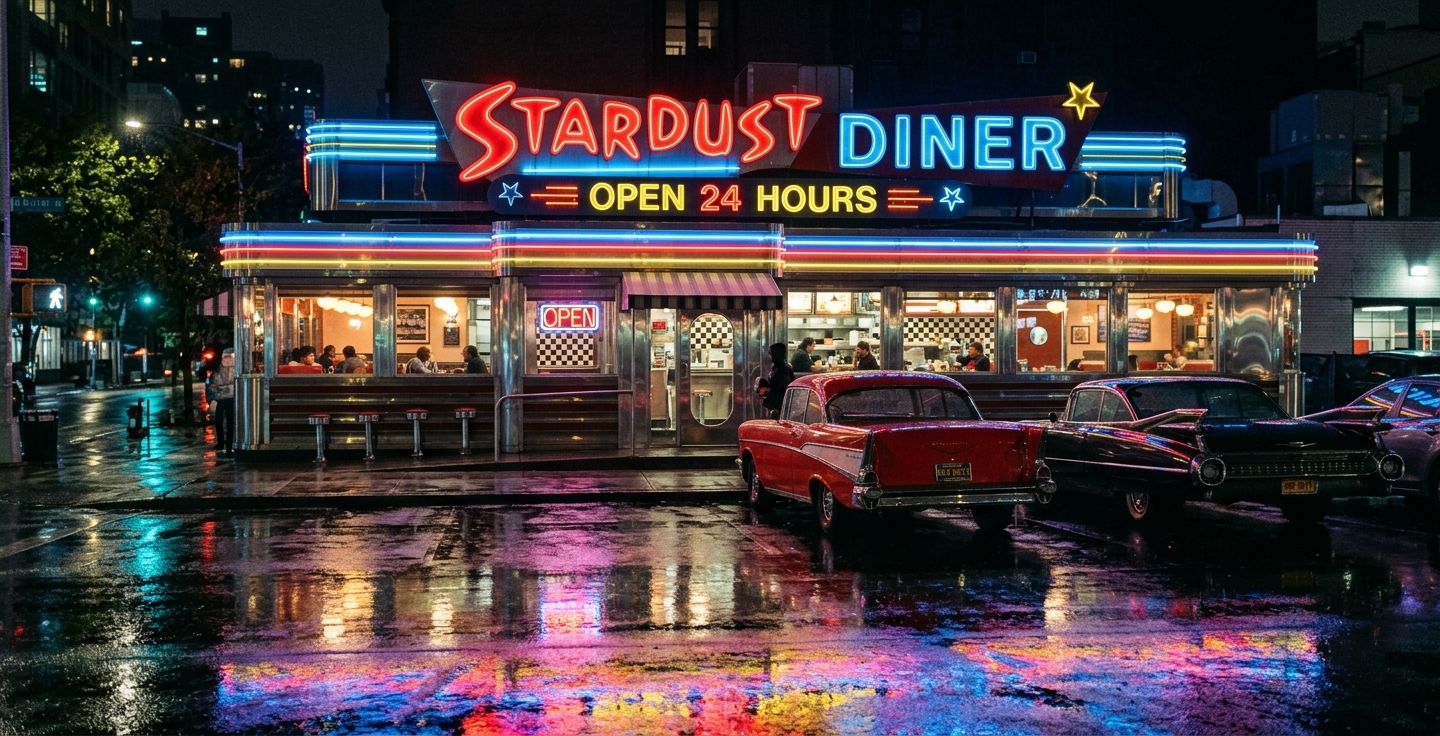
To answer that, we must look at the American road. As automobiles became affordable, Americans hit the highways with unbridled enthusiasm. They needed places to stop and refuel. Manufacturers started building structures that resembled the sleek, aerodynamic train cars of the era, using heavy stainless steel panels and curved glass blocks. The American diner was born from a national love of forward motion. The buzzing neon signs acted as lighthouses for weary travelers navigating the dark stretches of Route 66. Inside, it was a magnificent theater of culinary efficiency. The open kitchen design meant you could watch the short order cook flip your eggs. There were no secrets behind closed doors, just hard work and a wonderful performance of speed.
The Great Equalizer
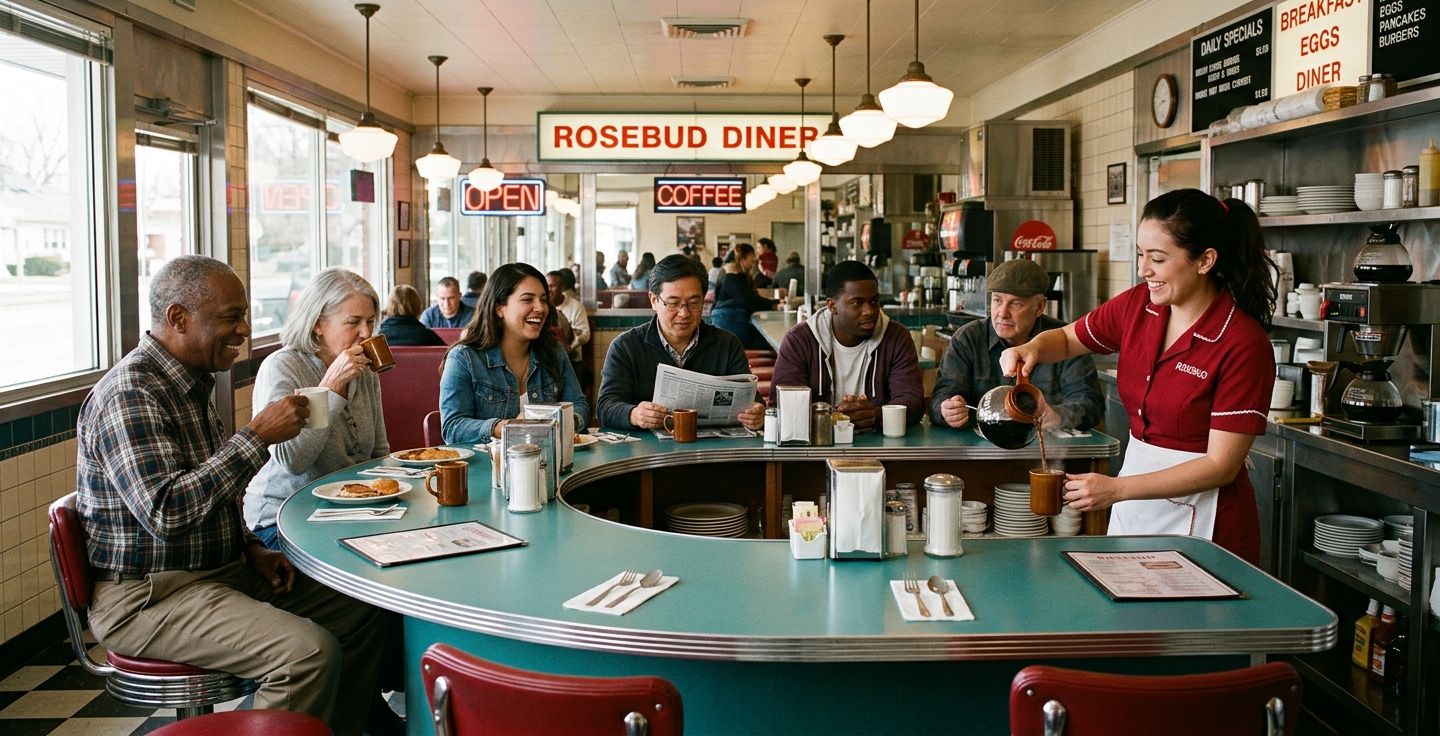
The true magic is found in the people sitting on those spinning chrome stools. A diner is the great American equalizer. I have seen weary factory workers sitting shoulder to shoulder with bank managers. I have seen teenagers on awkward first dates sitting a booth away from retired couples quietly enjoying Sunday pancakes. Everyone is equal under the warm glow of the pendant lights. When you order from a laminated menu, you are ordering quintessential comfort food. A slice of warm cherry pie or a hot open faced turkey sandwich is not just a meal. It is a warm hug on a cold day, a reliable anchor of familiarity in a fast moving world.
Art and Courage at the Counter
To fully understand the emotional weight of these special places, look at the art they inspired. Think of the great American painter Edward Hopper (b. 1882, d. 1967). In 1942, he painted Nighthawks, showing a late night diner on a quiet street, viewed from the outside through a large glass window. The patrons sit under bright fluorescent lights, surrounded by the dark, empty streets of Greenwich Village, New York. Hopper captured the deep isolation of modern city life, but he also captured the diner as a beacon of warmth and refuge. It is a unique place where you can be alone, but you do not have to be lonely.
Beyond offering physical comfort, these counters witnessed the necessary growing pains of our nation. They were the public stage for profound courage. Consider brave students like John Lewis (b. 1940, d. 2020). He and many others participated in nonviolent sit ins at segregated lunch counters in places like Nashville, Tennessee. They dressed in their Sunday best, sat straight and tall, and simply asked for a cup of coffee and equal dignity. Their quiet, unyielding bravery at those formica counters helped force a monumental change in the laws of the country. The diner proved that the right to sit side by side and eat together is a fundamental part of the American promise.
A Hopeful Look to the Future
People sometimes complain that everything is moving entirely too fast now. I politely disagree. Our local community needs these physical gathering spaces more than ever before. We desperately need a room where the coffee is hot, the faces are familiar, and the clock seems to slow down just a little bit. I see young folks today discovering the tactile charm of a tabletop jukebox. They are putting their digital phones down and actually talking to one another over plates of golden hash browns. It gives me a profound sense of hope for the future. The appreciation for true authenticity never dies out completely. It just skips a beat and waits patiently for the next generation to pick up the rhythm.
A Small Favor for Next Sunday
So, my friends, I have a small favor to ask of you. Next Sunday morning, ignore the fast food drive through lane. Skip the sterile chain coffee shop. Take a deliberate detour down Main Street. Find that old brick building with the glowing clock. Pull open that heavy glass door, slide into a booth, and order something classic. You are not just buying a plate of scrambled eggs. You are actively preserving a true cultural icon. You are investing in your neighbors. Most importantly, you are keeping the beautiful, wonderful American story alive and well for the next generation to enjoy.
Frequently Asked Questions
What officially defines a classic American diner?
A classic diner is generally defined by its wide variety of affordable comfort foods, long operating hours, and casual, welcoming atmosphere. Historically, true diners were prefabricated modular buildings, constructed in factories and transported to their final locations. They are instantly recognizable by their heavy use of stainless steel, bright neon signs, and long counter seating.
Why are these establishments typically open twenty four hours a day?
The tradition of continuous, round the clock service dates all the way back to the late nineteenth century lunch wagons. These early mobile carts catered specifically to night shift factory workers and emergency personnel who needed hot meals after standard restaurants closed. This commitment to serving the community at all hours remains a beloved hallmark of the industry.
How did they get their unique, streamlined shape?
During the early twentieth century, manufacturers wanted to capitalize on the public fascination with the luxury and speed of train travel. They designed the buildings to closely mimic the aerodynamic look of railroad dining cars. Additionally, the narrow, elongated shape was highly practical, allowing the fully built structures to be easily transported by rail or truck.
Are new modular diners still being built today?
Yes, they are absolutely still being built, although in much smaller numbers than during the post war economic boom. Several specialized manufacturing companies continue to design and construct retro style modular buildings. Furthermore, many passionate owners are meticulously restoring vintage cars, saving these historical landmarks from scrapyards and bringing them back to life.
What is the most popular food item ordered?
While menus are famously vast, traditional breakfast items easily hold the top spot. Dishes like fluffy buttermilk pancakes, customized omelets, and thick cut bacon are wildly popular at any hour. However, classic staples like homemade meatloaf, hot turkey sandwiches, and warm fruit pies are also highly cherished by regular, lifelong patrons.
Why is New Jersey widely considered the diner capital?
New Jersey earned this famous title due to its incredibly high concentration of these specific eateries, boasting over five hundred operating locations. This occurred because the state was a massive manufacturing hub for builders in the twentieth century. Its dense network of highways and a working class population created the perfect environment for these businesses to thrive.