
American Mythos & National Character
What “Rugged Individualism” Really Means
The Myth We Grew Up Believing
I remember walking down the dust swept boards of Front Street, Dodge City, Kansas as a young boy. The prairie wind had a way of whispering through the wooden slats of the old storefronts, carrying the scent of dry earth and sagebrush. My grandfather used to hold my small hand in his rough, calloused palm and tell me stories about the folks who built that town from nothing but dirt and sheer determination. He pointed out the old buildings where the first blacksmith worked and the very spot where the first schoolhouse stood. We have this grand picture in our heads of the American pioneer. We see a lone cowboy riding into the golden sunset. We imagine a solitary homesteader chopping wood in the silent, snow covered forest. We picture a solitary figure battling the fierce elements entirely alone, needing no one and asking for nothing.
That is the situation we so often believe. We think the foundation of our great nation was built by solitary folks who lived as islands unto themselves. It is a romantic idea. It makes for wonderful movies and thrilling dime novels.
The Harsh Reality of the Frontier
But then you look at the stark reality of history. The winters on the open plains were brutal and completely unforgiving. The soil was stubborn, thick with deep prairie grass roots that could snap a wooden plow in half. A single person trying to raise a timber barn or harvest a vast field of wheat before the first killing frost would simply fail. The complication is that total isolation meant absolute, certain ruin. The lone wolf rarely survived the bitter winter cold. Sickness would come in the dark of night. A wooden wagon wheel would splinter on a rocky trail. The heavy, blinding snows would trap a family miles away from the nearest trading post. In those desperate moments, the myth of the solitary hero faded away.
So what does true rugged individualism really mean if it is not just being completely alone in the wilderness?
Strength for the Sake of Others
It means having the deep personal strength to stand on your own two feet so you can be strong enough to help your neighbor when they fall. It is not about stubborn isolation. It is about building your personal capacity to be of service.
Let us look back at the historical origins of the phrase. President Herbert Hoover (1874-1964) is the man who truly popularized the term. He used it during a famous, impassioned campaign speech in the fall of 1928. Now, Hoover was orphaned at a young age. He knew what it meant to rely on his own hard work, but he also relied on the kindness of his extended family. He was not talking about running away to the woods to hide from society. Hoover himself was a massive organizer of global relief efforts. He famously organized the feeding of millions of starving European families during and immediately after the devastating First World War. When he spoke of this concept, he was talking about personal initiative working hand in hand with local, voluntary neighborhood support. He believed that grand, distant institutions should not replace the organic, neighborly care that strong individuals voluntarily provide to one another.
Here are some surprising facts that historians and researchers have uncovered over the years, proving that our ancestors were deeply connected. During the peak years of the Oregon Trail migration in the 1840s and 1850s, less than one percent of pioneers traveled alone. It was practically unheard of to set out across the great expanse entirely by yourself. The mortality rate on the trail was roughly ten percent due to sudden disease and terrible, crushing accidents. However, historical anthropologists note that solitary travelers faced an estimated ninety percent failure rate. They absolutely needed the organized wagon train. They needed the combined, cooperative strength of dozens of families to safely cross swollen rivers like the Platte. They had to chain their heavy wagons together to safely descend steep, terrifying mountain passes. Women shared precious medicinal remedies and cared for each other’s children when fever struck. Men labored side by side to repair broken axles.
We see this beautiful truth reflected in modern studies as well. Today, organizations like the National Conference on Citizenship report that states with the highest levels of civic engagement also boast the highest rates of economic resilience. Furthermore, a recent Pew Research Center study found that while fifty two percent of Americans say they are highly reliant on themselves, the specific communities with the highest rates of neighborhood volunteering recover from natural disasters twice as fast as disconnected communities. It turns out that profound personal drive and deep neighborhood reliance go together perfectly.
A Story from Main Street
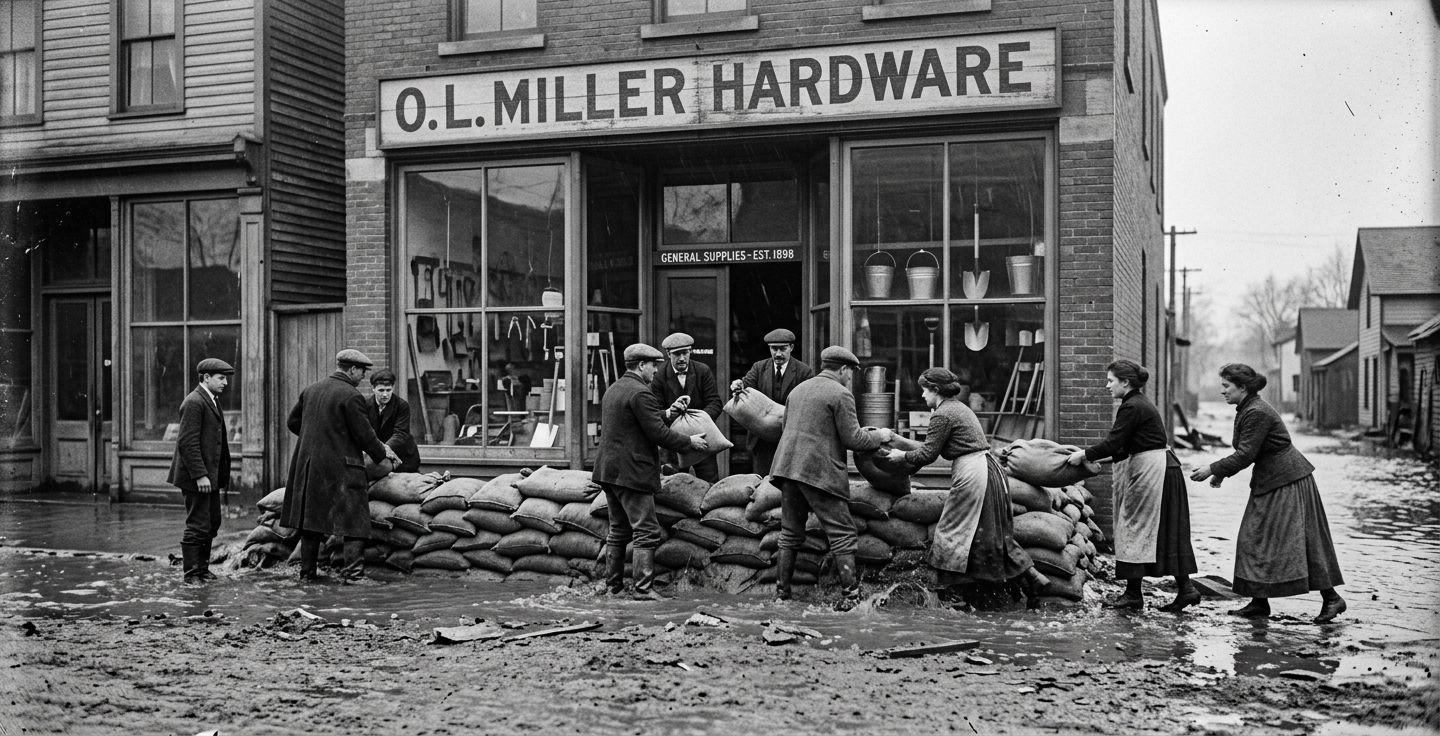
Let me tell you a little story about a man named Elias. Elias ran a small, cluttered hardware store on Main Street, Concord, Massachusetts back in the early decades of the twentieth century. Elias was the very picture of true self-reliance. I remember folks talking about how he built his own wooden shelves by hand, sanding them down until they were smooth as glass. He kept his own detailed ledger books with perfect penmanship. He woke up before the sun every single day to sweep the concrete sidewalk out front. He never once asked for a handout from anyone in town.
But when the terrifying great flood of 1936 washed through the sleeping town, Elias did not just fiercely protect his own shop. He did not hastily board up his large glass windows and ignore the rising, muddy waters. He opened his wooden doors wide. He cheerfully handed out every single sandbag and heavy iron shovel he had in his entire inventory to his frantic, terrified neighbors. He waded waist deep into the freezing, debris filled water to help the town baker next door move heavy, precious sacks of flour to the second floor. Elias lost half his valuable inventory that dark week. But his quick actions helped save the street.
Elias deeply understood the authentic pioneer spirit. You work tirelessly to build your own strength so you can eagerly lend a hand when the water inevitably rises. You fortify your own strong house so you can offer warm shelter to the family whose roof tragically caves in.
The Quiet Heroes of the Neighborhood
I saw this exact same spirit clearly when I was a young man in the vibrant 1960s. We lived in a modest, tree lined neighborhood where folks took immense, quiet pride in taking care of their own green lawns and painting their own white picket fences. We had a wonderful neighbor named Arthur. Arthur was a retired railroad worker. He was a quiet, observant man who kept his garage tools impeccably sharp and his vegetable garden perfectly weeded. One humid summer afternoon, a terrible, roaring thunderstorm knocked a massive oak tree right onto the roof of a young widow living three doors down.
Not a single person waited for the city crews to show up. Arthur was out there at the very break of dawn with his heavy chainsaw. Soon, five other strong men from the block quietly joined him in the yard. The neighborhood women brought out hot, steaming coffee and thick ham sandwiches to feed the workers. By dusk, the massive tree was entirely gone and a heavy, waterproof tarp was securely nailed over the broken shingles. That is true, authentic independence. We did not need outside intervention because we had carefully cultivated enough personal capability to solve the sudden problem ourselves. We practiced beautiful community cooperation through our honed individual skills.
Hope for the Generations to Come
Sometimes I hear folks my exact age complaining loudly about the younger generations. They sigh and say the young folks are too entirely focused on glowing screens and not focused nearly enough on honest hard work. But I tell you, I do not see it that way at all. I watch the young men and women today, and I feel a profound, warming sense of hope in my chest.
I see them bravely starting their own small, highly creative businesses in a challenging economy. I see them cleverly inventing new digital technologies that connect lonely people across vast, empty distances. They are finding their own unique, brilliant paths in a world that is much more complicated and fast paced than the quiet one I grew up in. But they are also organizing massive neighborhood cleanups. They are crowd funding overwhelming medical bills for perfect strangers they have never even met. They are happily discovering that genuine mutual aid is just the shiny other side of the independence coin.
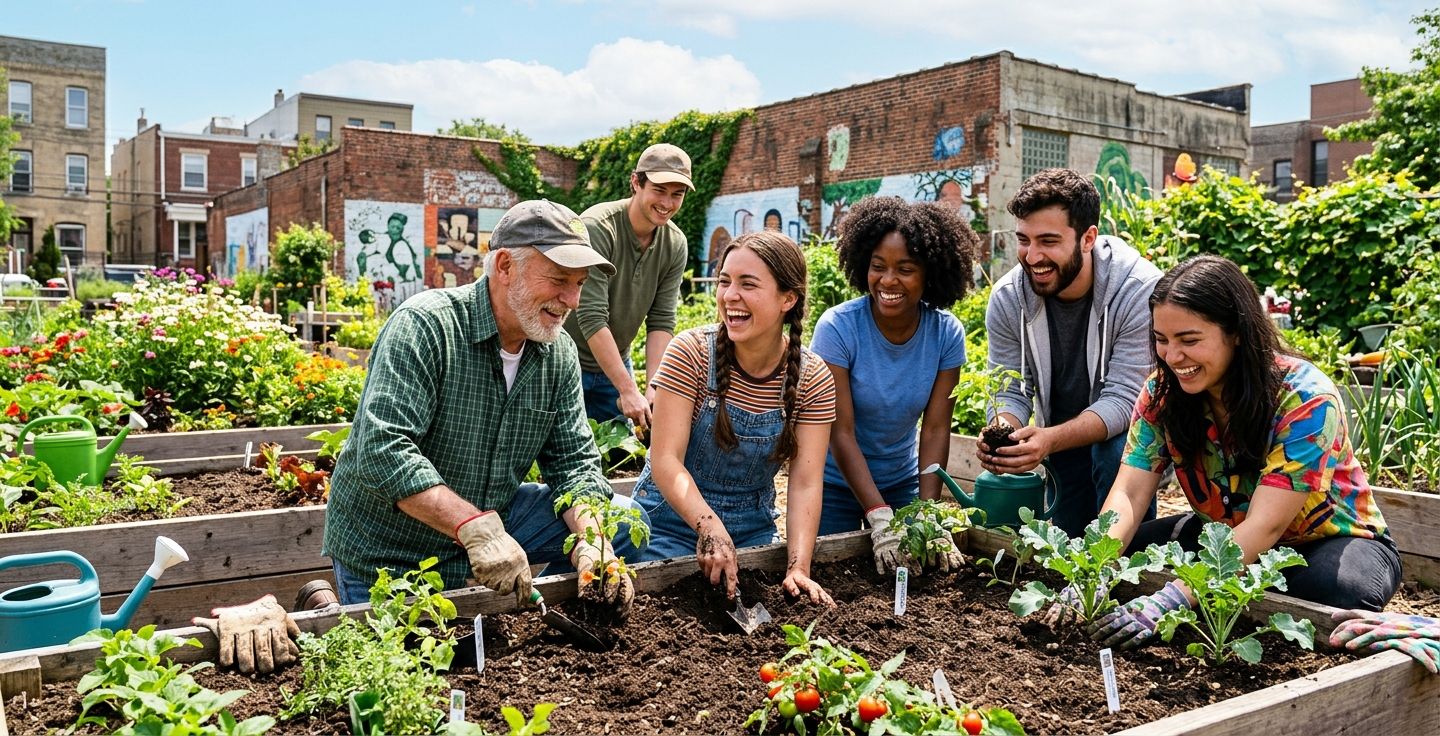
The younger generation understands something very special and very deeply true. They know that being strong alone is a good thing, but being strong together is absolutely unbreakable. They are expertly taking the old, reliable tools of personal responsibility and actively applying them to highly complex modern community problems. I see dedicated young parents patiently teaching their small children to grow organic vegetables in tiny, urban backyard gardens. They are beautifully returning to the old ways but making them fresh, vibrant, and new.
A Challenge for Tomorrow
I deeply encourage you to take immense pride in your own hard work. Cultivate your unique skills with burning passion. Read heavy books. Learn exactly how to fix broken things with your own two capable hands. Be as entirely independent and fiercely capable as you can possibly be in this life. But when you have patiently built that sturdy, reliable foundation, take that massive strength and look right next door.
Check on an elderly neighbor who might be feeling lonely. Share the crisp vegetables you grew in your own garden. Eagerly offer to mentor a struggling young person who is merely trying to find their own way in this big world. That is the real, beating heart behind the famous phrase. It is the golden legacy we proudly inherited from the hearty souls who built this nation. It is also the beautiful, compassionate future you are all building right now. You possess the incredible power to be strong, and you have the magnificent heart to share it.