
American History & Origins
How the Homestead Act Gave Free Land to Settlers
I often sit on my porch as the sun dips low and think about the generations who walked this soil before us. You can almost feel their presence if you sit quietly enough. Picture a young father in the middle of the nineteenth century. He is standing in a dusty, crowded street in an eastern city. He looks at his calloused hands. He works from dark until dark, yet he owns nothing. The air smells of coal smoke and crowded tenements. He looks at his children and wonders what kind of life he can offer them. This was the reality for so many folks back then. America was vast. The land stretched out like an endless ocean of grass toward the setting sun. We had millions of acres of wild territory. Yet, the common working man felt entirely fenced in.
There was a heavy problem resting on the shoulders of the working class. Land was painfully expensive. The government sold large tracts of property, but mostly to wealthy speculators or railroad companies. Those folks bought up the best parcels to sell later for a tidy profit. An ordinary factory worker or a poor tenant farmer simply could not afford the price of entry. They were stuck renting their homes. They were stuck working someone else’s fields. The tension was brewing in the country. The Northern states wanted free men to farm free soil. The Southern states worried that small family farms would threaten their large plantation economy. So, the politicians argued. The wealthy held onto their deeds. The poor man just kept working and hoping.
How could this young, growing nation open its arms to the everyday family? How could a poor farmer or a newly arrived immigrant ever hope to own his own piece of the earth? How could the government populate the wild western territories while giving common folks a genuine fighting chance at prosperity?
The answer finally arrived during the darkest days of our nation. It was 1862. The Civil War was tearing the country apart. But President Abraham Lincoln (1809-1865) saw a vision for a united, prosperous future. He signed a piece of paper that changed the destiny of millions. We know it today as the Homestead Act.
Let me share some numbers with you that still make me shake my head in pure wonder. When you look at the raw statistics from credible historical archives, the scale is staggering. The United States government practically gave away 270 million acres of public land to private citizens. That is roughly ten percent of the entire landmass of the United States. Think about that. Ten percent of the country handed over to everyday people. Over 1.6 million families filed claims to become settlers on the frontier. Today, genealogists and historians estimate that nearly 93 million Americans are direct descendants of those hardy pioneers. Nearly a third of us walking around right now owe our family roots to this single piece of legislation. It is a beautiful, deeply American legacy.
The Stroke of Midnight and the First Claim
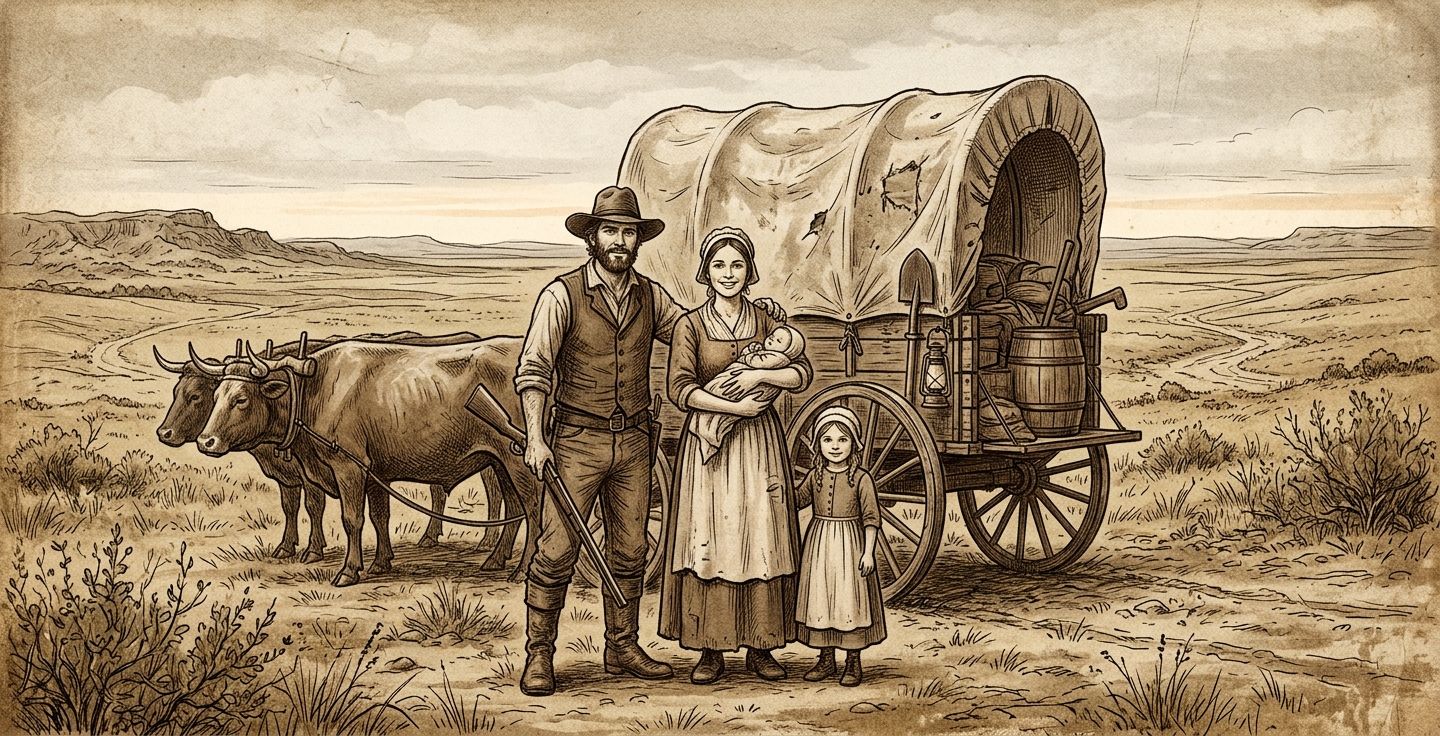
I love telling the story of a fellow named Daniel Freeman (1826-1908). He was a Union soldier on a brief furlough. The new law was set to take effect on the very first day of 1863. Daniel found himself at a New Years Eve party with a worker from the local land office. Daniel was determined. He talked the worker into opening the office just past midnight. He wanted to be the very first person to file a claim. He paid his small eighteen-dollar filing fee. He secured his 160 acres of earth near Beatrice, Nebraska.
Daniel did not have a fortune to his name. But he had grit. He went to work. He built a small cabin out of the very dirt beneath his feet. He plowed the incredibly tough prairie sod. He planted trees to block the howling winds. He married and raised children on that quiet patch of earth. His small, quiet life tells a massive national story. By securing his own little piece of the map, Daniel Freeman helped build the foundation of the rural Midwest.
The Reality of the Endless Prairie
The law offered a simple promise. Any adult citizen, or intended citizen, who had never taken up arms against the U.S. government could claim a parcel. The rules were straightforward but the work was agonizingly tough. You had to live on the land for five continuous years. You had to improve it. You had to build a dwelling of at least twelve by fourteen feet. You had to grow crops.
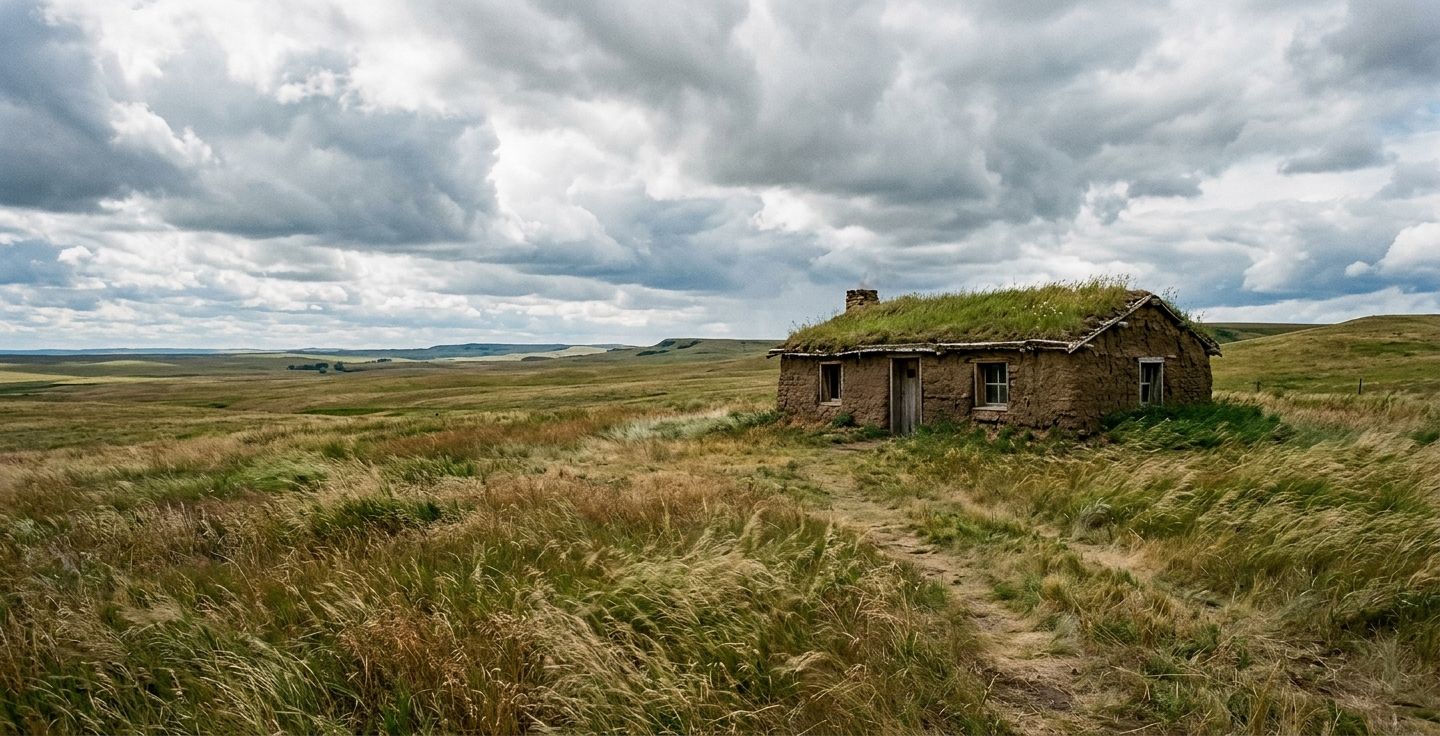
These brave souls ventured out into the vast, treeless Great Plains. When they arrived, there was no lumber to build a traditional house. So, they improvised. They built soddies. These were homes constructed entirely of thick, prairie dirt and grass roots. Imagine living in a house made of soil. When it rained hard outside, it rained mud inside. The bugs and snakes were constant roommates. The winters brought blizzards so blinding that farmers tied ropes from their front doors to their barns just to avoid getting lost and freezing to death. The summers brought scorching heat, drought, and massive swarms of locusts that could eat a whole crop in an afternoon.
It was not an easy life. Many folks simply gave up. They packed their wagons and went back east. But so many more stayed. They stayed because of the deep, burning desire for true independence.
A Door Opened for Everyone
One of the most remarkable parts of this history is who was allowed to participate. The law did not just apply to white men. It opened doors that had been firmly shut. Women, for instance, were eligible. Single women, widows, and deserted wives packed up and filed their own claims. They broke the sod. They survived the winters. They proved that they were just as capable of taming a wild frontier.
After the Civil War, thousands of formerly enslaved African Americans traveled west. They were often called Exodusters. They fled the oppression of the post-war South to seek out true independence in places like Kansas. Owning their own farm was the ultimate expression of freedom. They looked out at the horizon and saw a future that nobody could take away from them. They saw a place where their children could stand tall and proud.
Carrying the Pioneer Spirit Forward
Looking back at these tough, brave men and women gives me an immense amount of hope for all of you. You know, every generation has its own frontier. The world looks a lot different today than it did in the 1860s. We have glowing screens instead of oil lanterns. We have highways instead of wagon ruts. But the human heart has not changed one bit.
You might not be busting sod in the middle of nowhere. But you are building your own futures. You are finding new ways to create a secure, loving home for your families. You face economic challenges, shifting landscapes, and uncertain times. Yet, the exact same spirit that built those little dirt cabins is still beating inside your chest. It is the spirit of hard work. It is quiet courage. It is the belief that tomorrow can be better than today if you are willing to put your back into it.
I want to encourage you to keep going. Plant your own seeds, whatever they may be. Nurture your own dreams. Build your own homestead in whatever way makes sense for your life right now. The pioneers proved that ordinary people can do extraordinary things when given a chance. I believe in you just as much as I believe in the history of this great country. Keep your chin up. Keep moving forward.
Frequently Asked Questions from Curious Minds
Over the years, folks have asked me all sorts of questions about this fascinating time. I thought I would gather up a few of the most common ones. Maybe you have been wondering the same things.