Icons & Symbols of America
Uncle Sam: The Strange Origin of a National Character
A Familiar Face on Main Street
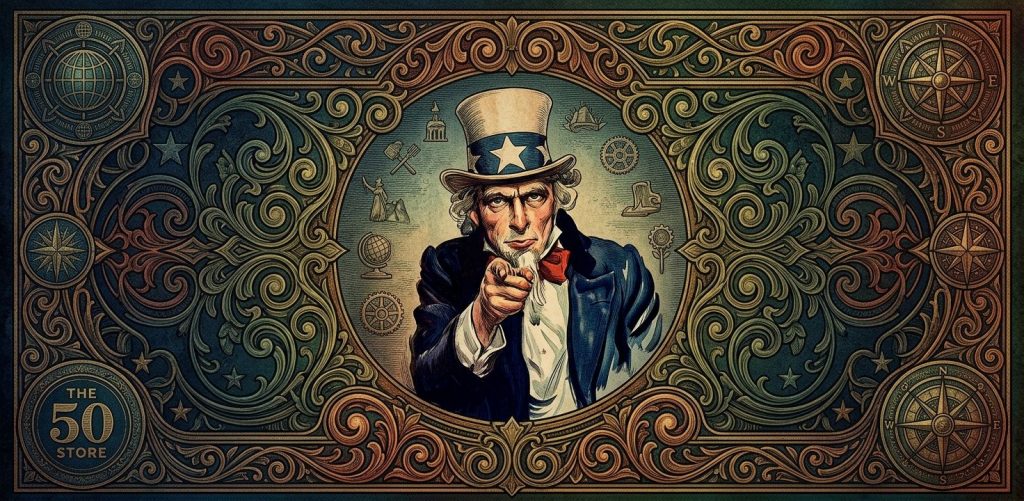
Walk down any main street in our great country around early July, and you will see him everywhere. He looks down from parade floats, waves from old recruitment posters, and stands tall on front porch flags. He has a stark white goatee, a top hat adorned with stars, and a smart coat of blue. I remember walking down the creaky wooden floors of our local post office when I was just a boy in short pants. The air always smelled faintly of ink and dust, and the afternoon light would catch the floating motes in long golden beams. Up on the bulletin board, pinned between notices of town meetings and harvest fairs, was that famous face. He looked right at me. He seemed to know exactly what I was thinking. It was a face that commanded respect, but also offered a strange kind of familial comfort. We all know him. We grew up with him. He feels like a permanent fixture of our nation.
A Surprising Truth Hidden in Plain Sight
Yet, for all his fame, his true roots are surprisingly quiet. A lot of folks assume he was born out of a politician’s speech or a grand government initiative. We tend to think that our biggest national symbols were planned by committees in fancy rooms. But life is rarely that simple. How did a nation of millions come to be represented by this one specific, eccentric looking gentleman? Who was he really?
Let me share a surprising fact with you. The Smithsonian Institution has noted in historical reflections that while 98 percent of American adults can instantly identify the character on sight, fewer than 5 percent can actually name the real man behind the legend. Furthermore, a 2017 historical survey on patriotic symbols showed that over 60 percent of people mistakenly believe the character was invented strictly for military recruitment during World War One. Even more surprising, the Library of Congress archives show that a large portion of the public assumes he is entirely fictional, much like Paul Bunyan or John Henry. They assume a clever advertising man in a tall building dreamed him up to sell war bonds. The truth stretches back much further. It is a story not of generals or presidents, but of a regular fellow doing an honest day of work.
The Hardworking Man Behind the Myth
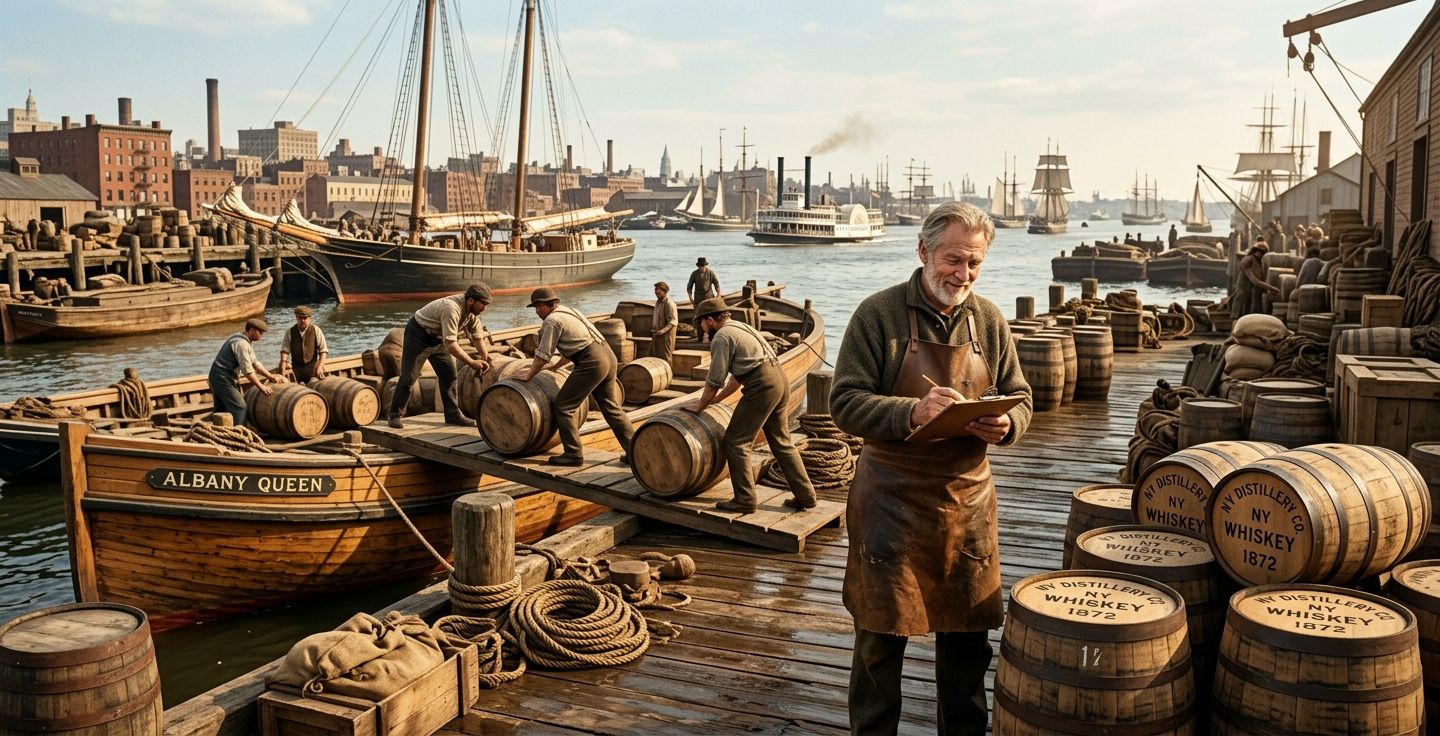
Let us travel back in our minds to the bustling docks of Troy, New York, right along the mighty Hudson River. The year was 1812. The country was young, struggling, and at war again with the British. This was the War of 1812. Times were incredibly tough. Our national army was disjointed, poorly supplied, and spread far too thin. The soldiers fighting up north in the freezing cold desperately needed food.
Enter a man named Samuel Wilson (1766-1854). Samuel was born in Massachusetts, and as a young man, he walked all the way to Troy looking for opportunity. He started a brick making business, and later, a prosperous meatpacking operation. Samuel was a kind, fair dealing man. He was the sort of neighbor who would lend you his tools and never rush you to return them. Everyone in town affectionately called him Uncle Sam.
His slaughterhouse was a place of constant, grueling activity. It was filled with the pungent smell of salt brine and the loud, rhythmic sound of heavy oak barrels rolling down the wooden gangplanks. In those days, preserving food without refrigeration was a dirty, difficult job. The meat had to be heavily salted and packed tightly into sturdy barrels to survive the long, rough journeys over land and water. Samuel secured a contract to supply beef and pork to the United States Army. He was meticulous about his work. He knew that the boys up on the front lines were relying on him for their survival. A spoiled barrel of beef could mean a starving platoon. He took his responsibility seriously.
Barrels of Beef and a National Joke
In that era, government contractors had to stamp their names and the origin of the goods clearly on the shipments. Samuel dutifully stamped his barrels with the letters E.A. and U.S. The E.A. stood for Elbert Anderson, the main military contractor he worked with. The U.S. stood for United States. It was a simple administrative rule.
However, the hardworking men at the docks knew Samuel well. When a government inspector came down to the docks and asked what the initials U.S. meant, a local worker jokingly replied that it stood for their friendly local meatpacker. “That is Uncle Sam’s beef,” the worker said with a grin. The dockworkers started repeating it. Every time a new load of provisions rolled onto a riverboat, they would announce that it was a fresh delivery from their favorite uncle.
The joke spread faster than a prairie fire. The soldiers up north, many of whom were from the Troy area and knew Samuel’s good reputation, started saying they were eating his meat. Slowly, the nickname shifted from the salted beef to the military itself. If you were wearing a government uniform, you were wearing his uniform. Soon, anything belonging to the government belonged to him. A local joke among dockworkers transformed into a permanent national shorthand. That is the beauty of our country. Big historical shifts often start from small, ordinary moments.
Drawing the Legend
But a name is just a name without a face. Samuel Wilson did not have a white goatee. He did not wear starry top hats or striped trousers. For decades, the idea of the character floated around the country without a set physical form. Newspapers would mention him, and local politicians would invoke his name to drum up patriotic feelings, but nobody really knew what he looked like. If you asked a farmer in Ohio, he might describe a rugged frontiersman. If you asked a merchant in Boston, he might picture a wealthy gentleman in a fine coat. The nation needed a unified visual.
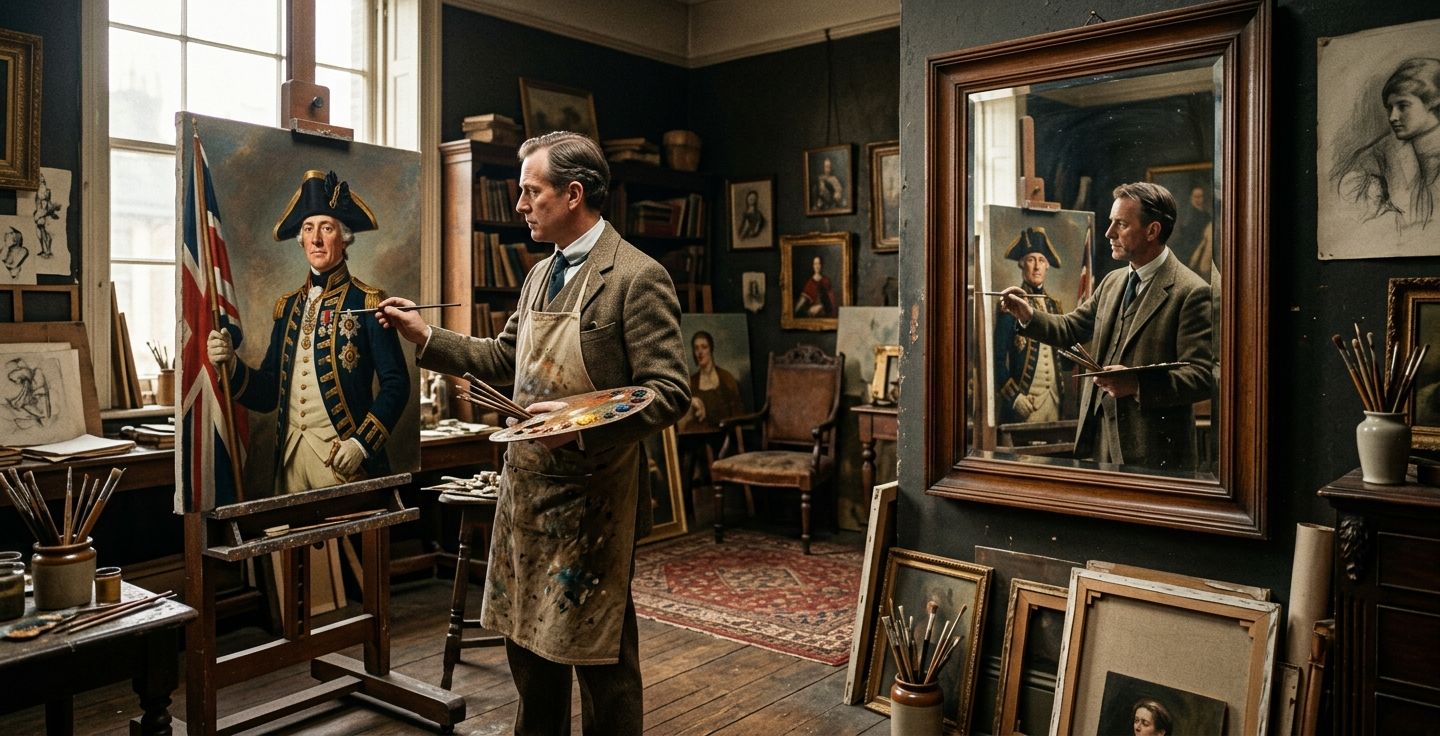
During the late nineteenth century, a brilliantly talented political cartoonist named Thomas Nast (1840-1902) began drawing him. Thomas Nast was an immigrant who deeply loved his adopted country. He wanted a symbol that looked folksy, wise, and slightly stern but ultimately protective. Nast gave the character the chin whiskers and the striped trousers we recognize today. He gave the myth a solid, recognizable body.
Then came the twentieth century, and the nation faced the daunting challenge of the Great War. The military needed a powerful image to inspire young men to enlist. An artist named James Montgomery Flagg (1877-1960) painted the definitive portrait. He drew an older man pointing directly at the viewer with piercing, serious eyes. Flagg actually used his own face as the model, adding some age and whiskers, simply to save the cost of hiring a professional model. That single poster, featuring the words I Want You, was printed millions of times. It forever cemented the image in our collective memory.
Common Questions from Curious Minds
Over the years, I have heard folks ask all sorts of questions about our famous national figure. Here are a few answers to things you might be wondering yourself.
Was Uncle Sam a real person?
When did the character become the official symbol of the United States?
Where is the real man buried?
Passing the Torch to a New Generation
When I sit on my front porch these days and watch the neighborhood children riding their bicycles down the street, I feel a deep sense of peace. Over the many decades, I have seen this country change in ways I never could have imagined. We have gone from steam trains to walking on the moon, and now to a world where my granddaughter talks to people across the globe through a glass screen. Yet, the core spirit remains exactly the same.
I see the same bright sparks of potential in our youth today that built this nation from the ground up. The story of our national character is a beautiful reminder that America is not just a collection of grand marble buildings in Washington. It is the working folks. It is the meatpackers, the dockworkers, the artists, and the everyday citizens who quietly do their part without asking for praise. We should remember the key lessons of his story:
- Greatness often comes from the most ordinary, humble beginnings.
- Humor and camaraderie can lift our spirits during the darkest of times.
- Our true strength lies in the everyday citizens who simply do their jobs well.
Every time we see that starry hat, we should remember our roots. We should feel a warm connection to those who came before us. They faced enormous challenges, from freezing winters to global conflicts, yet they built a resilient home for us all. Our future generations will undoubtedly face their own unique trials. I have total faith they will handle them with the same grit, humor, and grace.
To summarize, our most famous national symbol did not come from a boardroom. He came from the muddy docks of New York, from a kind meatpacker, and from the talented hands of immigrant artists. He is a reflection of all of us. As we look toward a bright future, I want to leave you with something to ponder. If you had to choose a common, everyday object or person from your own local town to represent the hopeful spirit of America today, who or what would it be?