
Immigration, Diversity & Identity
How Immigration Changed American Culture Over Time
The Streets I Knew
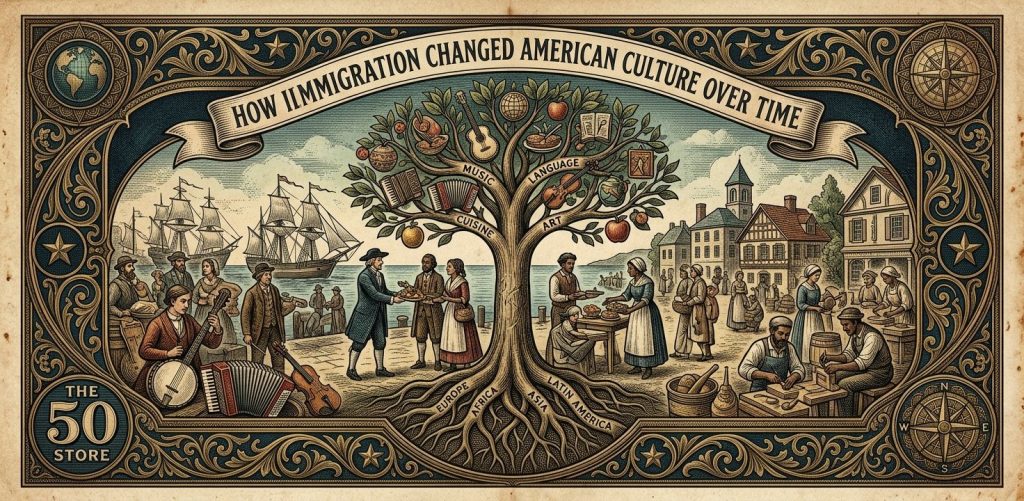
I remember walking down the avenues in my hometown when the mornings still smelled like fresh bread, roasting chestnuts, and wet cobblestones. The old brick buildings stood shoulder to shoulder. They leaned against each other like tired but happy friends. Our country has always been a bustling harbor. We are a nation built by folks who packed their entire lives into worn leather trunks. They sailed across vast oceans with nothing but a fierce hope and a few foreign coins in their pockets. It was a beautiful, noisy collision of worlds. Every street corner had a different accent. Every Sunday smelled like a different feast. Those memories are etched deeply into my mind. I can still close my eyes and hear the lively chatter from the stoops. It was a time of hard work. It was a time of shared struggles. It was home.
Looking at the Numbers
As the years pass, neighborhoods naturally change. Sometimes, people look at unfamiliar store signs and hear new languages, and they worry. This is a common situation we all face as we grow older. We wonder if the spirit of our towns will fade into something unrecognizable. I have felt that worry myself in my younger days when the old local bakery became a foreign market I did not recognize. How did these waves of newcomers actually shape the towns and streets we love today? To answer that question, we must step back and look at the whole picture. The numbers tell a powerful story.
The statistics are quite surprising. The Pew Research Center tells us that immigrants and their children accounted for over seventy percent of our population growth between the years 1965 and 2015. Without them, our towns would be shrinking and aging. Here is another fact from the New American Economy that always makes me smile. Forty four percent of the Fortune 500 companies were founded by immigrants or their children. Furthermore, nearly half of us can trace at least one brave ancestor back to Ellis Island. Ellis Island was that famous, crowded gateway in the harbor. We are all quite literally a family of hopeful travelers. Our roots are deeply intertwined.
The Fabric of Our Daily Lives
Let us look past the numbers. Let us look at the people who walked these streets. Think about the very clothes you wear when you work in the yard or fix the car.
The Story of the Blue Jean
In the mid 1800s, a young man from Bavaria arrived in the busy port of San Francisco, California. His name was Levi Strauss (1829-1902). He noticed that gold miners needed sturdy pants that would not tear in the rough dirt. He took some tough cotton canvas, added small metal rivets to the pockets, and created the blue jean. Those simple blue pants became a lasting symbol of hard work and freedom. One practical idea from a young immigrant changed how the whole world dresses.
Flavors from Afar
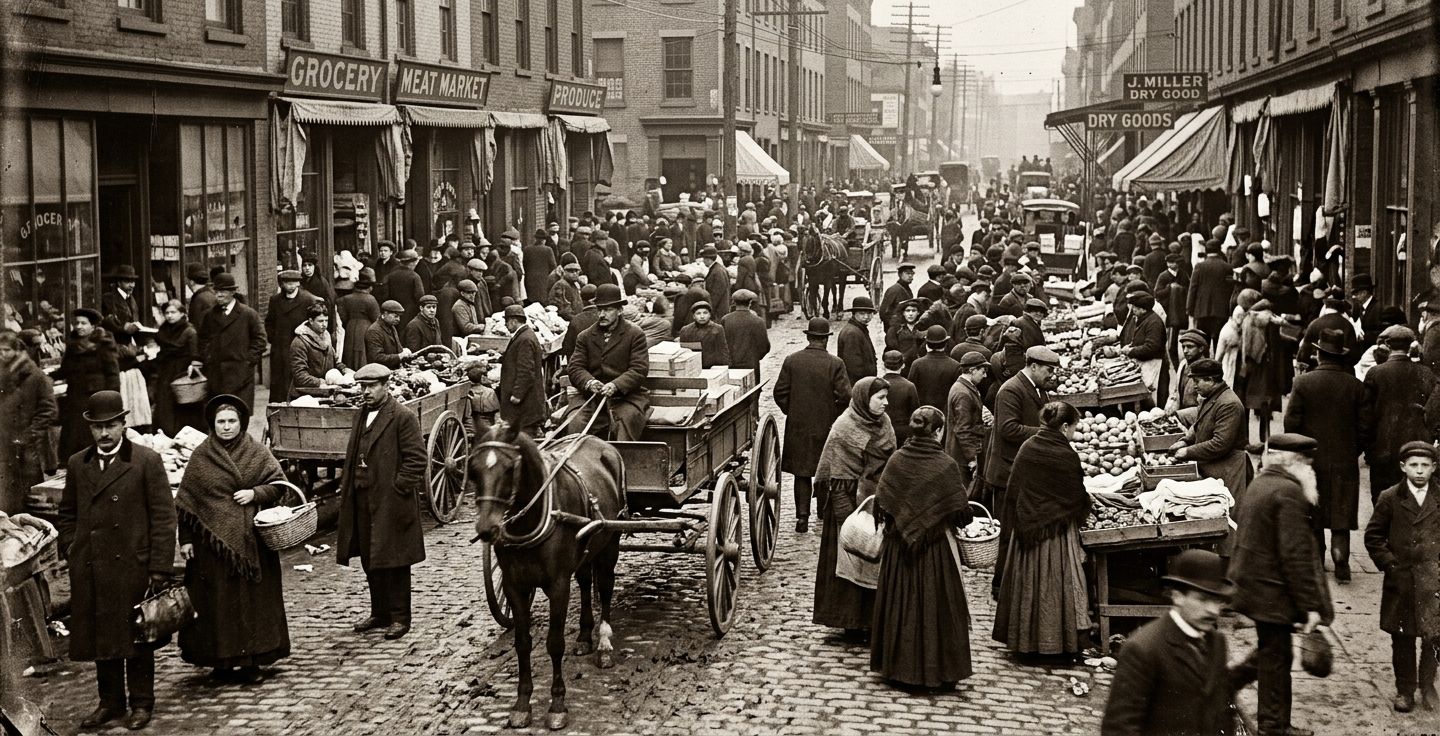
Let us talk about our food. Decades ago, my dear grandfather took me to a tiny corner store in the Lower East Side, New York. The air inside was thick and wonderful. It smelled of rich garlic, hanging sausages, and aged cheese. Our culinary traditions were forever shaped by these small, warm neighborhood spots. People across the country learned to love hot pizza, boiled bagels, and spicy tacos simply because a newcomer decided to share their grandmother recipe. They opened small kitchens just to survive. In doing so, they fed the very soul of our nation. A meal shared is a friendship begun.
The Rhythm of the Nation
Our music shares a remarkably similar story. When millions of Irish families fled the terrible potato famine, they brought wooden fiddles and a deep love for lively storytelling. They settled in the green Appalachian mountains. Their energetic jigs eventually met the banjo. The banjo is a beautiful instrument rooted entirely in African origins. These diverse melodies mingled in the mountain air and gave birth to country music. Our cultural melting pot is not just a phrase in a history book. It is the actual, foot tapping rhythm we dance to on a Saturday night.
Building the Mind and the Skyline
We must also remember the great builders and thinkers who shaped our modern society.
The Steel of Pittsburgh
Consider a poor Scottish boy who arrived with nothing and eventually built the modern steel industry. His name was Andrew Carnegie (1835-1919). He could have just kept his immense wealth. Instead, he remembered how much he valued reading as a boy. He funded over two thousand public libraries. If you ever visit a grand, old brick library in Pittsburgh, Pennsylvania, you are standing in a monument to an immigrant profound gratitude.
A Safe Haven for Science
Then there is the story of science. I remember the immense pride we all felt when a brilliant scientist fleeing persecution in Europe found a safe haven in Princeton, New Jersey. His name was Albert Einstein (1879-1955). His boundless curiosity changed our understanding of the universe forever. Our country gave him a quiet place to think. He gave our country, and the world, the keys to modern physics.
Heroes on the Field and in Uniform
The contributions of our newcomers extend far beyond the libraries and laboratories. They have brought joy to our stadiums and honor to our military.
Pride of the Diamond
I remember listening to the radio with my father, cheering loudly for our local sports heroes. Baseball was shaped immensely by players from the Caribbean and Latin America. We learned to appreciate the pure joy they brought to the diamond. Roberto Clemente (1934-1972) is a shining example. He came from Puerto Rico and played his heart out in Pittsburgh, Pennsylvania. He was not just a phenomenal athlete. He was a deeply caring man who tragically lost his life while flying relief supplies to earthquake victims. His incredible character showed us all what true greatness looks like.
Defending the Nation
We must never forget those who put on the military uniform to defend this country. Immigrants have always stood shoulder to shoulder with native born Americans. They guarded our cherished freedoms and often paid the ultimate price. I recall older men in my neighborhood who served in the legendary 442nd Regimental Combat Team during the Second World War. Most of them were sons of Japanese immigrants, fighting bravely in Europe while their own families faced hardships back home. Their loyalty and courage were absolute. Stories like theirs prove that being an American is about what is in your heart.
A Future Full of Promise
I see so much of the bold American dream in the young folks arriving today. They remind me so much of the tired but smiling faces from my own childhood. They open local hardware stores, they fix our aging cars, and they care for our sick with gentle hands. Their constant immigrant contributions keep our towns alive, moving, and thriving. We are incredibly lucky to have them. I feel a great warmth in my chest when I see a new family moving in down the block.
Embrace the Changing Tides
The next time you walk down your own street, take a really good look around. Here are a few simple things you can do today:
- Notice the proud family running the new bakery on the corner.
- Smile at the energetic children playing tag in two different languages.
- Go inside that new shop and buy a pastry you have never tried before.
Talk to your neighbors and ask them about their day. Our collective history is still being written right on your block, day by day. The future is very bright, and I firmly believe the next generation will build something truly magnificent. We must welcome them with open arms and an open heart.
Common Questions We All Ponder
As we think about how our towns have changed, a few questions often come up in conversation. Here are some thoughts on the things we all wonder about.
Why did so many immigrants come to America in the past?
People arrived for many distinct reasons. Some fled terrible famines or violent conflicts in their home countries. Others were searching for the freedom to practice their own religion. But almost all of them shared a common desire to find steady work and build a safer life for their children. It is a very human hope.
Did newcomers always speak English when they arrived?
No, they certainly did not. When I was a boy, you could hear Italian, Polish, and German spoken on almost every street corner. Learning a new language takes time. Usually, the children learned English in the local schoolhouse and helped their parents translate the new world around them.
How do new cultures blend into our existing American culture?
It is a slow, beautiful process. It often starts with something simple, like sharing food or playing music. A neighbor shares a sweet dessert, or a local radio station plays a new rhythm. Over time, these small everyday things become familiar and comforting. Eventually, they become a permanent piece of our shared national identity.
What is the most important thing immigrants bring with them?
While they bring wonderful new recipes and unique traditions, I believe the absolute most important thing they bring is pure resilience. It takes an incredible amount of courage to leave everything you know behind. That hard working spirit and strong drive to succeed is what constantly renews our country energy year after year.
Is it normal to worry about how fast a neighborhood is changing?
Yes, it is perfectly normal. Change can feel very unsettling, especially as we get older and deeply miss the familiar sights of our youth. But it helps to remember that our own grandparents probably caused the very same worries when they first arrived. Change brings new life, new ideas, and wonderful new friends if we keep our hearts open to it.
How can I be more welcoming to new families in my town?
It does not take much effort at all. A simple smile and a warm wave go a very long way. Introduce yourself when you see them outside tending their garden. If they open a small local business, go inside and buy something. Showing a little bit of neighborly kindness proves that the welcoming spirit of our country is still alive and well.