
Culture & Traditions
The Miracle of the Gold Star Mothers: From Unspeakable Grief to Service
The Mother Who Refused to Let Grief Win
Hello, friend. Pull up a chair and let me share a story that gets right to the very heart of what makes our country so special. We as Americans have a long history of looking out for one another. From the heartland farms to the bustling city streets, neighbor helping neighbor is simply how we survive. But every so often, a story comes along that shows us a level of courage that is almost hard to comprehend. It is the story of how an unbearable loss turned into a profound movement of healing. It is the story of a mother who refused to let sorrow have the final word.
When Grace Darling Seibold (1869-1947) lost her son George, a brave pilot flying in the dangerous skies of World War I, she did not retreat into quiet isolation. Most folks would have locked the doors and pulled the shades. No one would have blamed her for stepping away from the world. Instead, she took her immense, unspeakable grief and walked directly into military hospitals to heal others.
This is a story about the truest kind of patriotism. It is about how the very worst moments in life can sometimes give birth to the most beautiful acts of service.
Turning Mourning into National Service
To understand the miracle of this movement, we have to look back at the world as it was in 1917. The Great War was raging in Europe. Families across America were watching their young boys pack their bags and board trains. The situation was tense, and the entire nation was holding its collective breath.
George Vaughn Seibold was one of those young men. He was eager to fly, so eager that he joined the British Royal Flying Corps before the United States formally had its own robust aviation program. He eventually transferred to the American forces. He was brave, capable, and deeply loved by his family waiting back home in Washington, D.C. For a while, the letters flowed regularly. Grace relied on those letters. They were her lifeline to her boy fighting high above France.
But then, the complication arrived. The letters stopped coming.
How does a mother survive the unsurvivable? How do you wake up every morning when your entire world is clouded by terrible uncertainty? Grace found the answer not by looking inward, but by looking outward.
Part I: The Silent Silence
We often talk about the noise of war, but the hardest part for the families back home is the silence. For Grace, the silence was agonizing. It was not a quick confirmation. She waited months for news of her son. Every time the mail carrier walked down the street, her heart leaped with hope, only to sink again when there was no envelope bearing George’s handwriting.
Eventually, the tragic confirmation arrived. Her boy had been shot down. He was gone. The profound darkness that falls over a home when that silence is broken by such terrible news is something no family should ever have to experience. The grief was absolute. Grace was plunged into a sorrow so deep it threatened to swallow her whole.
Part II: Walking the Wards
But here is where the miracle begins. Grace looked around her city and saw that she was not the only one hurting. The hospitals were filling up.
Let us look at some numbers to understand the scale of this reality. According to credible historical archives from the Department of Defense, over 116,000 Americans gave their lives in World War I. But an even more surprising statistic is that over 204,000 service members came home carrying severe, life altering wounds.
The wards of Walter Reed General Hospital were overflowing with young men. Many of these boys were far from their own mothers. They were from small towns in Iowa, ranches in Texas, and coastal villages in Maine. They were scared, hurting, and lonely.
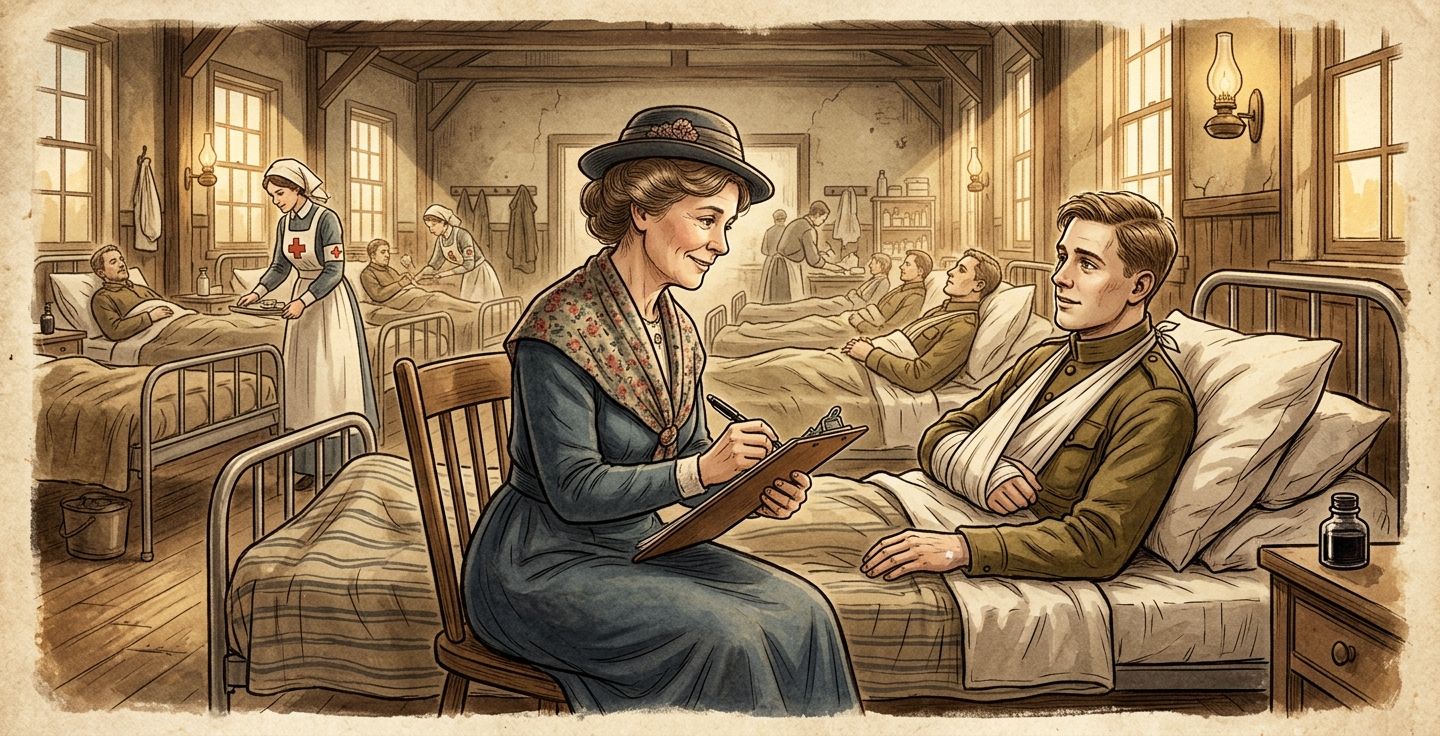
Grace started visiting them. She walked the wards. She sat by their bedsides. She wrote letters home for boys whose hands were too bandaged to hold a pen. She brought flowers, arranged quiet activities, and offered a gentle smile. She took all the love she could no longer give to George and poured it directly into the hearts of these returning veterans. She became a mother to the motherless.
Part III: A Sisterhood of Grace
As Grace spent her days in the hospital wards, she realized something powerful. She was not the only grieving mother out there. Other women were carrying the same crushing weight. She began to reach out to them, organizing small groups to join her in her hospital visits.
This simple act of gathering was the birth of the Gold Star Mothers. The name itself is deeply rooted in American history. Back in 1917, Army Captain Robert L. Queisser (1882-1959) designed the simple Service Flag. Families proudly hung these flags in their front windows. A blue star meant a son or daughter was actively serving in the military. But if that service member made the ultimate sacrifice, the blue star was replaced by a gold one.
Grace brought these women together, uniting them under the banner of that gold star. She organized these grieving mothers into a national, volunteer driven comfort network. They leaned on each other for support, and together, they supported the boys who had made it home.

Part IV: The Congressional Charter
What started as a single mother looking for a way to honor her son quickly grew into a massive force for good. The sisterhood expanded rapidly. It is historically true that the group formally incorporated in 1928, officially becoming American Gold Star Mothers, Inc.
They became a vital cornerstone of American military support. Through the Second World War, the Korean War, the Vietnam War, and into the modern era, these women have stood together. They channel their private pain into public service. Recognizing their incredible value to our nation, the United States Congress officially chartered the organization in 1984.
Today, we honor this incredible legacy every single year. Gold Star Mother’s Day is observed nationally on the last Sunday of September. It is a dedicated time for every citizen to pause, reflect, and say a heartfelt thank you to the families who have given so much for the freedoms we enjoy every day.
The Legacy of Love and A Way to Remember
When you hear a story like Grace Darling Seibold’s, it changes you. It makes you want to be a little kinder, a little more patient, and a lot more grateful. We all have a part to play in keeping the memory of these brave men and women alive. We have a duty to remember the mothers who chose love over despair.
If you are looking for a meaningful way to honor this incredible history, we are proud to share our Gold Star Heritage Comfort Tee. We designed this specific piece of clothing with deep respect for the families who have served. It is printed on premium, buttery-soft ring-spun cotton that feels like home. It is comfortable, durable, and carries a message that matters.
Wearing this shirt is more than just putting on a piece of clothing. It is a quiet, powerful tribute to the mothers who turned their darkest hours into a light for others. It sparks conversations. It allows you to share Grace’s story with your neighbors, friends, and anyone who asks about the design. Get yours today, wear it with pride, and help us keep the legacy of these incredible American heroes alive for the next generation.
Frequently Asked Questions
What exactly is a Gold Star Mother?
A Gold Star Mother is a woman who has lost a son or daughter while they were serving in the United States Armed Forces. The title comes from the practice of families hanging a service flag in their window, replacing a blue star representing active service with a gold star if their child was killed in the line of duty.
When is Gold Star Mother’s Day observed?
This important day of remembrance is observed nationally on the last Sunday of September every year. It is a time for all Americans to honor the mothers and families who have lost loved ones in military service.
Who was Grace Darling Seibold?
Grace Darling Seibold was the visionary founder of the American Gold Star Mothers. After her son George was killed in combat during World War I, she dedicated her life to visiting wounded veterans in hospitals and eventually organized other grieving mothers to form a nationwide support network.
Why does the organization use a gold star?
The gold star tradition began during World War I. A blue star on a family’s window banner meant a child was serving. The gold star was stitched over the blue star to signify that the service member had passed away, reflecting the honor and glory of their supreme sacrifice.
When was the group officially formed and recognized?
The organization formally incorporated in 1928 as a way to gather grieving mothers together for mutual support and volunteer work. Decades later, their incredible impact was fully recognized when they were officially chartered by the United States Congress in 1984.
How can everyday citizens show their support for these families?
Citizens can show support by attending local memorial events, observing the national day of recognition in September, supporting veterans charities, or simply wearing commemorative items like the Gold Star Heritage Comfort Tee to help spark conversations and keep the history alive.