
Icons & Symbols of America
The Golden Gate Bridge: America’s Most Photographed Landmark
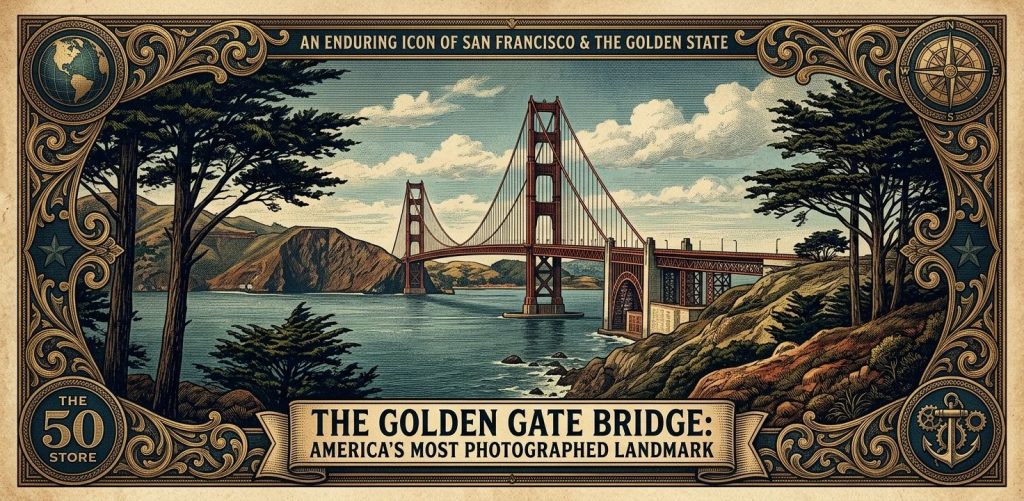
The Magic of the Golden Gate
Welcome, neighbor. Pull up a chair and make yourself comfortable. We live in a truly magnificent country. From the rolling hills of the Appalachians to the vast open plains of the Midwest, America is filled with wonders that can make your heart skip a beat. But today, I want to share a story about a very specific place. It is a place that has captured the American imagination for nearly a century. I am talking about the magnificent Golden Gate Bridge.
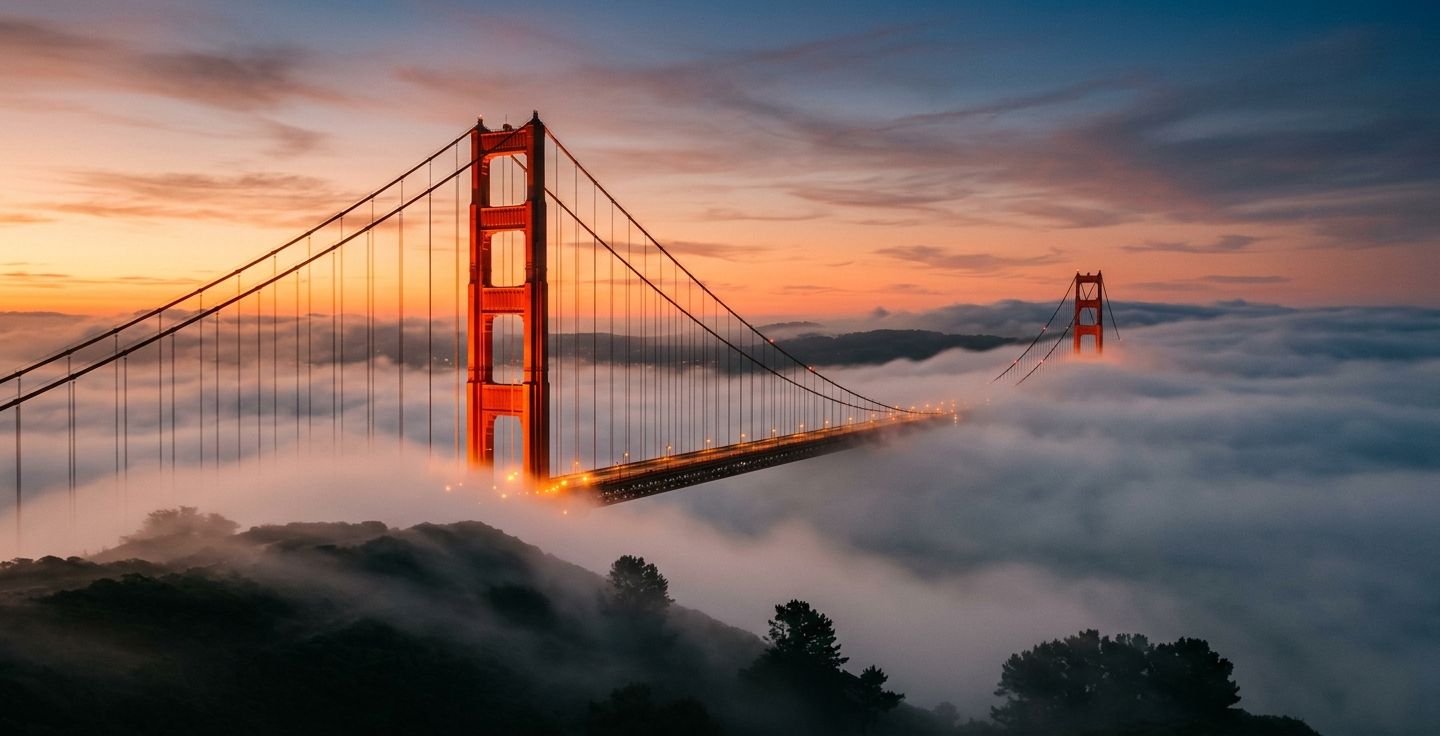
When you travel all the way to the western edge of our great nation, you are greeted by a sight that simply defies description. The cold waters of the Pacific Ocean rush to meet the sheltered harbor. Above this dramatic meeting point hangs a ribbon of steel, glowing bright against the gray mist. It is widely considered the most photographed landmark in the United States, and for good reason. It is not just a bridge. It is a monument to what we can achieve when we dream big.
The Bottleneck and the Dream
A Growing City Trapped by Water
To truly appreciate this marvel, we have to look back at the world as it was. Let us travel back in time to the early 1920s. San Francisco was a booming, vibrant city. However, it had a massive problem. It was practically an island. If you wanted to travel north to the beautiful communities of Marin County, your only option was a slow, crowded ferry. The lines of automobiles waiting for the boats could stretch for miles. The city was choking on its own growth.
Facing the Impossible
The solution seemed obvious to some. Build a bridge across the strait. But a loud chorus of naysayers quickly shouted down the idea. They looked at that roaring, swirling channel of water and declared that a bridge could not be built. The conditions were just too brutal. The water in the strait reaches depths of over three hundred feet. The ocean currents are incredibly violent. The winds whipping through the channel are fierce. Furthermore, blinding fog rolls in without warning.
On top of the natural hurdles, the timing could not have been worse. Just as the project gained momentum, the Great Depression crippled the nation. Millions of Americans were out of work. Families were struggling to put food on the table. The country was hurting in a way it never had before. The very idea of spending millions of dollars on an unproven, dangerous construction project seemed foolish to many. Banks refused to finance the bonds. The future looked incredibly bleak.
An American Triumph
How Did We Overcome the Odds?
So, how did a nation on its knees manage to build a bridge that touches the sky? How did we turn an impossible dream into the most photographed landmark on the face of the earth, smack in the middle of our darkest economic hour?
Engineering the Future
We did it with pure, unyielding grit. We did it with brilliant American engineering and a stubborn refusal to back down from a challenge. The charge was led by the fiercely determined Joseph Strauss (1870-1938). He was a man of small stature but gigantic ambition. He simply would not take no for an answer. Strauss partnered with brilliant minds. One of the most important was Charles Alton Ellis (1876-1949), the unsung hero who did the painstaking mathematical calculations to design a suspension bridge capable of spanning the treacherous waters of the San Francisco Bay.
The statistics from this project still leave me astounded today. According to the Golden Gate Bridge Highway and Transportation District, the two main cables contain an astonishing eighty thousand miles of galvanized steel wire. If you laid that wire end to end, it would circle the equator of our planet three entire times. The massive towers rise seven hundred and forty-six feet above the water. When it finally opened in 1937, it stood proudly as the longest and tallest suspension bridge in the entire world.
The Value of a Human Life
The Half-Way-to-Hell Club
Beyond the math and the steel, there is a much deeper story here. It is a story about how America started to change. Let me tell you a little micro-history about a man named Al Zampa and a very expensive piece of rope.
Zampa was an ironworker. He was a tough, hardworking man looking to earn a living during the Depression. Back in those days, the grim industry standard was quite simple. For every million dollars spent on a major construction project, one worker would die. Human life was treated as an expendable resource. Strauss found that completely unacceptable.
The chief engineer demanded the installation of a massive, custom-made safety net suspended beneath the entire length of the bridge deck. It cost one hundred and thirty thousand dollars. Some folks at the time called it an extravagant, unnecessary expense. But that net caught nineteen men who slipped and fell into the open air. Instead of plunging to a tragic death in the swirling ocean below, they bounced into the netting. Those men, including young Al Zampa, formed an exclusive, joyous fraternity. They called themselves the Half-Way-to-Hell Club.
This might seem like a small detail in a massive construction log. Yet, it represents a profound shift in the American consciousness. Even in the depths of the Great Depression, when a single dollar was incredibly hard to come by, our nation decided something important. We decided that the life of the everyday working man was worth protecting. We started building not just spectacular structures, but a compassionate society that cared for its builders.
A Symbol of Hope and Freedom
The Color of the West
Think about standing on the rugged cliffs of the Marin Headlands at dawn. The morning air is crisp and salty. The sun begins to peek over the eastern horizon. Suddenly, the bridge emerges from the thick ocean mist, glowing in its signature International Orange paint.
Interestingly, this vibrant color was never meant to be permanent. It was originally intended just as a protective primer coat. The military actually wanted the bridge painted with ugly black and yellow stripes to ensure ships could see it. But consulting architect Irving Morrow (1884-1952) noticed how the bright orange hue perfectly complemented the natural surroundings. It popped against the blue water and green hills. He fought to keep the color, and he won.
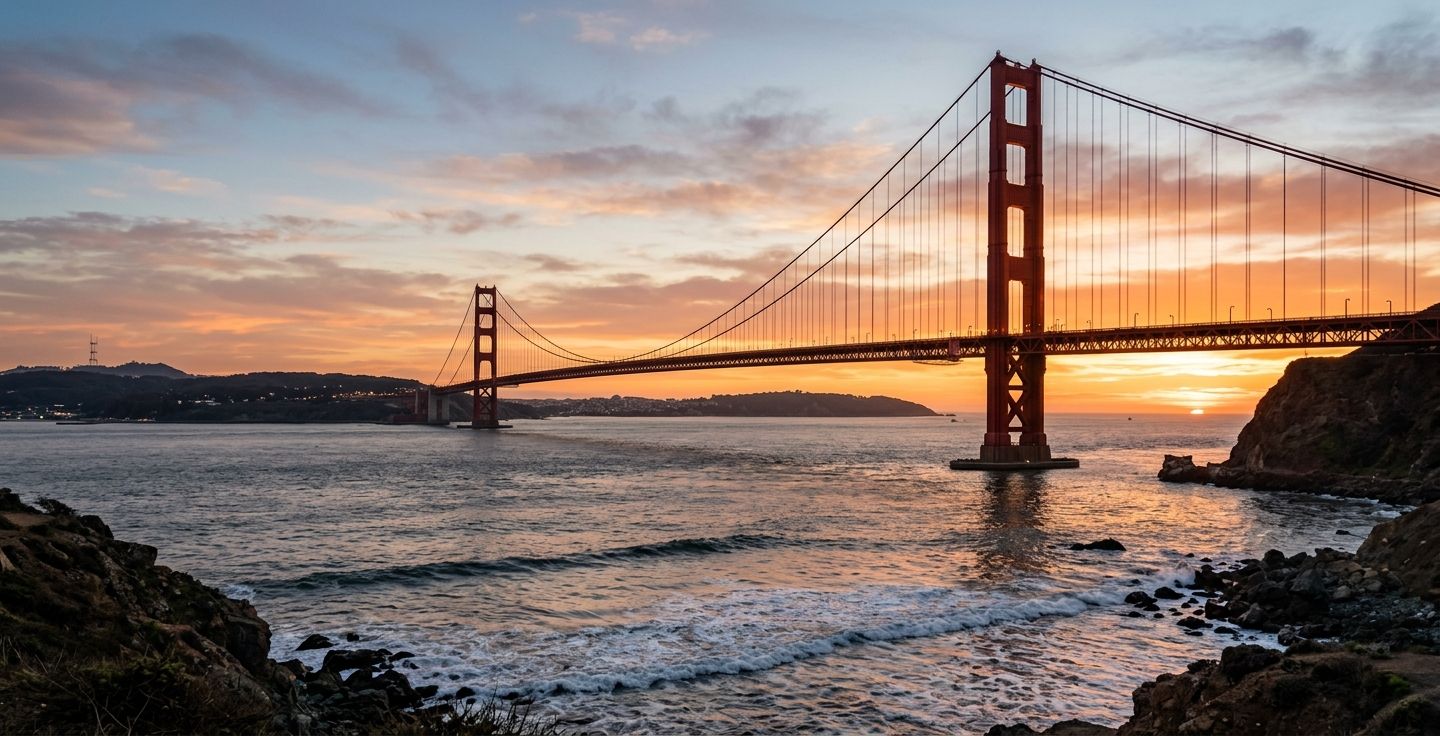
That color turned a piece of infrastructure into a work of art. During World War II, millions of young American soldiers sailed out beneath that orange span on their way to the Pacific theater. It was the last piece of home they saw. When they finally returned, victorious and weary, those towering orange pillars were the first things to welcome them back. The bridge became a shining beacon of freedom. It is a massive, beautiful welcome sign at the western edge of our country.
Your Journey Awaits
Come See It for Yourself
If you have never been out to California to see this masterpiece, I urge you to make the trip. Pack your bags. Take your family. When you get there, do not just drive across it in a car. Park near Baker Beach and walk up to the pedestrian path.
Walk across that incredible deck. Feel the gentle rumble of the tires beneath your feet. Let the cool Pacific wind mess up your hair. While you are there, take a moment to look closely at the massive rivets holding the steel plates together. Think about the brave hands that drove them into place while dangling hundreds of feet in the air. Visit the welcome center and learn about the local history.
Take a picture, just like millions of other travelers have done over the decades. When you snap that photo, remember the brave men who built it. Remember the brilliant minds who designed it. Remember the hopeful spirit of a nation that refused to quit. Grab a warm cup of clam chowder afterward to shake off the coastal chill. It is an experience you will cherish for the rest of your life. You will be capturing a piece of true American magic.
Safe travels, friend, and God bless.
Why is the Golden Gate Bridge painted orange?
The bridge is painted a specific color called International Orange. Originally, this vibrant hue was only used as a primer coat to protect the steel during shipping. However, architect Irving Morrow noticed that the bright color beautifully complemented the surrounding natural landscape. It also provided excellent visibility for ships navigating through the heavy San Francisco fog, so they decided to keep it.
How long did it take to build the bridge?
It took just over four years to complete this monumental project. Construction officially began on January 5, 1933, and the bridge was opened to pedestrian traffic on May 27, 1937. The very next day, it was opened to vehicular traffic.
How much did it cost to construct?
The total cost of construction was approximately thirty five million dollars. Remarkably, the project was completed ahead of schedule and actually came in one point three million dollars under budget. This was an incredible financial achievement, especially considering it was built during the Great Depression.
Can pedestrians walk across the bridge?
Yes, absolutely. The eastern walkway is open to pedestrians and bicycles during daylight hours. Walking across the span offers breathtaking views of the city skyline, Alcatraz Island, and the vast Pacific Ocean. It is highly recommended for any visitor.
How many individual wires are inside the main cables?
Each of the two massive main cables is made up of twenty seven thousand five hundred and seventy two individual strands of galvanized steel wire. These wires are bundled tightly together to support the enormous weight of the suspended roadway.
What exact body of water does it cross?
The bridge spans the Golden Gate Strait. This is the three mile long channel of water that connects the open Pacific Ocean to the enclosed bay, serving as the primary entrance to the region.
How long is the entire structure?
The total length of the bridge, including the approach structures, is one point seven miles, or eight thousand nine hundred and eighty one feet. The main suspended span between the two towering pillars is exactly four thousand two hundred feet long.