
American Mythos & National Character
Why Freedom Is the Core of American Identity
A Quiet Morning Reflection
I sit on my front porch in Gettysburg, Pennsylvania on a quiet Tuesday morning. The autumn air carries a familiar crispness. I hear the familiar hum of the yellow school bus picking up the neighborhood children. They are carrying heavy backpacks full of math books and history assignments. It is the kind of morning that makes a person reflect on a long life well lived. I have watched seasons change, faces come and go, and entire chapters of history unfold right before my eyes. We have been through wars, peace, quiet times, and loud times. Yet, one golden thread binds every decade together. That thread is the American belief in being free.
Our current situation in this country often feels a bit chaotic. We live in a noisy era. People on television shout over one another. Neighbors sometimes argue over fences about politics or the local school board. The world feels like it is spinning faster than a wooden top on a slick hardwood floor. This makes folks nervous. We look around and wonder what holds us together when everything feels so fragmented. Is there still a common heart beating underneath all the noise?
The Numbers That Tell Our Story
I recently read something in the morning paper that made me smile and brought me a great deal of comfort. According to a comprehensive survey by the Pew Research Center, roughly 75 percent of Americans still say that having the freedom to live their lives as they choose is essential to their personal happiness. A separate study by the Cato Institute showed a surprising statistic. When asked to define the American dream, nearly 80 percent of people prioritized the freedom to make personal life choices over becoming wealthy. We value our choices over our wallets.
This complicates the gloomy picture painted by the evening news. The complication is that while we appear deeply divided on the surface, we are fundamentally united in our core values. We all want the same basic thing. We just occasionally disagree on how to protect it.
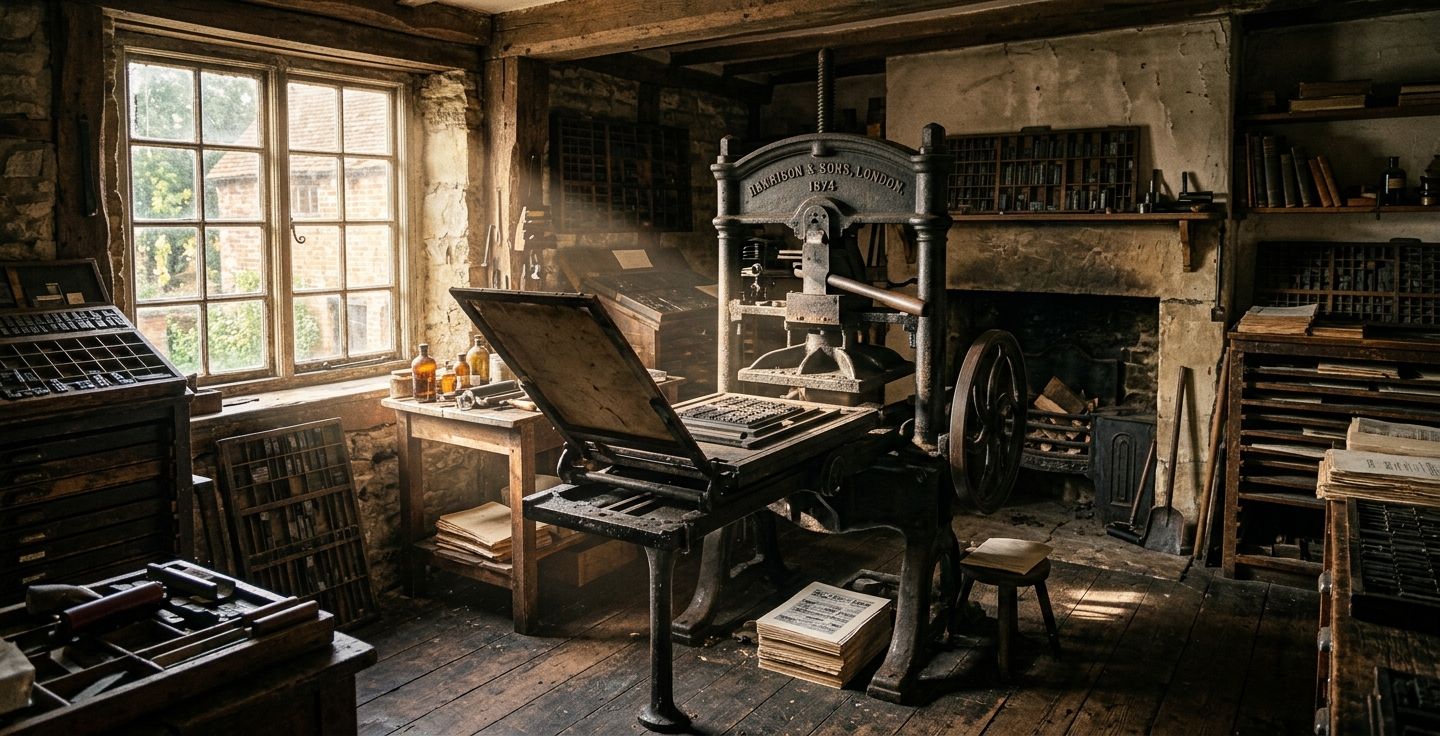
A Muddy Riverbank in Illinois
How do we anchor ourselves when the winds of change blow so fiercely? This is the question that keeps many of us awake at night. What keeps us uniquely American? The answer lies in our history and the small stories of bravery that built this nation.
Let me share a story about a man named Elijah Parish Lovejoy (1802-1837). He was a minister and a journalist who moved out to Alton, Illinois a very long time ago. Lovejoy believed deeply in the freedom of the press. He wrote passionate articles speaking out against the terrible institution of slavery. The local mobs absolutely hated him for it. They wanted to silence him permanently. They destroyed his printing presses and threw the heavy iron pieces into the river. They did this three separate times. Every single time, Lovejoy simply ordered another press. He kept right on writing.
In 1837, the angry mob came a fourth time. They set fire to the building where he worked. Lovejoy died defending his right to speak his mind. He was a true hero. His small story on a muddy riverbank helped ignite a massive national movement for human liberty. He showed that our highest values are paid for with remarkable courage.
Voices in Rochester
Take another brilliant soul, Frederick Douglass (1818-1895). After escaping the horrors of slavery, he settled down in Rochester, New York. He could have just lived out his life in quiet safety. Instead, he used his newfound freedom to start a newspaper called The North Star. He wrote fiercely and beautifully about equality. He traveled the country speaking to anyone who would listen. He understood that freedom is not a solitary experience. If your neighbor is in chains, your own freedom is incomplete. Douglass lived a life that elevated the conscience of our entire republic.
Teenagers and the Long Arc of Justice
The answer to our modern anxieties is simple but requires hard work. We hold onto our values by practicing them every single day. Freedom is not a passive inheritance. It is an active muscle.
Have you ever heard of Claudette Colvin (1939-present)? She was a fifteen year old girl living in Montgomery, Alabama. Nine months before Rosa Parks made her famous stand, young Claudette refused to give up her seat on a crowded city bus. She was just a teenager studying black history in her high school classes. She felt that it was her constitutional right to sit in that seat. The police arrested her. She was terrified, crying as they took her away, but she firmly stood her ground.
That tiny moment of defiance on a hot municipal bus changed the trajectory of a whole nation. It reminds us that ordinary people are the true guardians of our rights. Our constitution is not just a piece of paper resting under glass in a museum. It is a living promise made real by teenagers, teachers, and everyday workers.
Wheat Fields and Laboratories
We see this same spirit in our scientific and agricultural achievements. True freedom gives individuals the space to solve massive problems. Consider the story of Norman Borlaug (1914-2009). He was a humble man born on a farm in Cresco, Iowa. He used his education and his freedom to study agriculture. Borlaug developed special disease resistant wheat varieties. His dedication ended up saving over a billion lives worldwide from starvation.
Or think about Jonas Salk (1914-1995). Working tirelessly in Pittsburgh, Pennsylvania, he developed the very first successful polio vaccine. When he finally perfected it, he chose not to patent his discovery. He essentially gave it to the world for free. His independence from greed showed us that true liberty includes the magnificent freedom to be generous.

A Brighter Horizon
I look at young people today and my heart fills with genuine hope. Some folks my age like to complain about the younger generation. They say the youth are constantly glued to their phones. They claim the youth do not understand the value of hard work or the importance of community. I strongly disagree.
I see young people starting brilliant new businesses in their garages. I see them organizing local community gardens to feed their hungry neighbors. I see them speaking out against injustices in their hometowns. They are the new pioneers of our age. They are finding new, creative ways to express their individuality. The tools have changed over the decades, but the brilliant American spirit remains exactly the same. They possess a profound resilience that will carry this country forward into a beautiful new century.
We must desire this freedom above all else. We must want it for our neighbors just as passionately as we want it for ourselves. True freedom means you want the person living next door to thrive. You want them to have the exact same opportunities to speak, pray, work, and love. The enduring beauty of our society is that we do not have to agree on religion or politics to agree on the right to exist freely. This mutual respect is the secret recipe of our continued survival.
Passing the Torch
So what do we do right now? We teach our children. We sit them down on our porches and we tell them the stories of Elijah Parish Lovejoy and Claudette Colvin. We tell them about the brave farmers who froze at Valley Forge under the careful command of George Washington (1732-1799). We remind them that every single generation has to earn its freedom all over again.
We vote in our local elections. We participate in town hall meetings. We volunteer at the local library. We stay fiercely hopeful. Despair is the greatest enemy of a free people. Hope is its ultimate fuel. I have lived a very long time, and I can promise you this. The American story is far from over. Our best and brightest days are still waiting for us just over the horizon.