
Icons & Symbols of America
The Liberty Bell and the Power of Imperfection
The Weight of Time on Cobblestone Streets
There is a certain quality to the light in the late afternoon. It catches the dust motes spinning in the air. It warms the rough edges of the old brick buildings. When you walk down Chestnut Street near Independence Hall in Philadelphia, you feel the physical weight of time pressing against the street. I have walked these specific roads in the crisp autumn air. I have seen the heavy snow dust the cobblestones in the deep winter. Every single time I pass by those historic structures, I am reminded of the ordinary people who built this country. They were not perfect figures carved from pristine marble. They were regular folks wearing heavy wool and coarse linen. They had calluses on their hands. They worried about the autumn harvest. They argued loudly over taxes. They lived messy, complicated lives.
We tend to look back at history through a deeply romantic lens. We like to imagine that the founding of our nation was a smooth, glorious, and uninterrupted process. We picture grand speeches and flawlessly written documents. However, the reality of our shared story is much more comparable to the physical objects those founders left behind. Things get dropped. Things break. Good people make terrible mistakes. Over the years, we learn to love the dents in our old wooden kitchen tables because those marks tell a long story of family dinners and late night conversations. The exact same principle is true for our most treasured national monuments.
A Quiet Letter and a Loud Mistake
Consider the story of the man who first ordered our most famous historical bell. Isaac Norris (born 1701, died 1766) was a prominent and highly respected leader in the Pennsylvania Assembly. He was an educated man with very high expectations for his community. In 1751, he wanted to commemorate the fiftieth anniversary of the Charter of Privileges. This was a groundbreaking and essential document written by William Penn (born 1644, died 1718) that explicitly guaranteed religious tolerance to the citizens of the colony. Norris wanted a magnificent, enduring symbol. He envisioned a booming voice that could be heard clearly across the entire city, calling lawmakers to action.
Norris selected a specific, powerful verse from the Book of Leviticus to be cast onto the metal. The instruction was clear. It was a firm command to proclaim liberty throughout all the land. He confidently sent a purchase order across the vast Atlantic Ocean to the Whitechapel Bell Foundry in London. You have to imagine the agonizing wait. Crossing the ocean took many weeks of dangerous travel. The anticipation in the city slowly built up over the months. Finally, in the late summer of 1752, the heavy cargo safely arrived at the docks.
They brought it up to the State House yard. They carefully hoisted it onto a temporary wooden stand. A large crowd likely gathered around, eager to hear the majestic sound of their brand new provincial bell. A workman pulled the thick rope. The heavy metal clapper swung forward and violently struck the bronze lip. Instead of a glorious, resonant chime, a terrifying noise rang out. A massive fracture completely split the rim. The brand new, incredibly expensive bell was ruined on the very first strike.
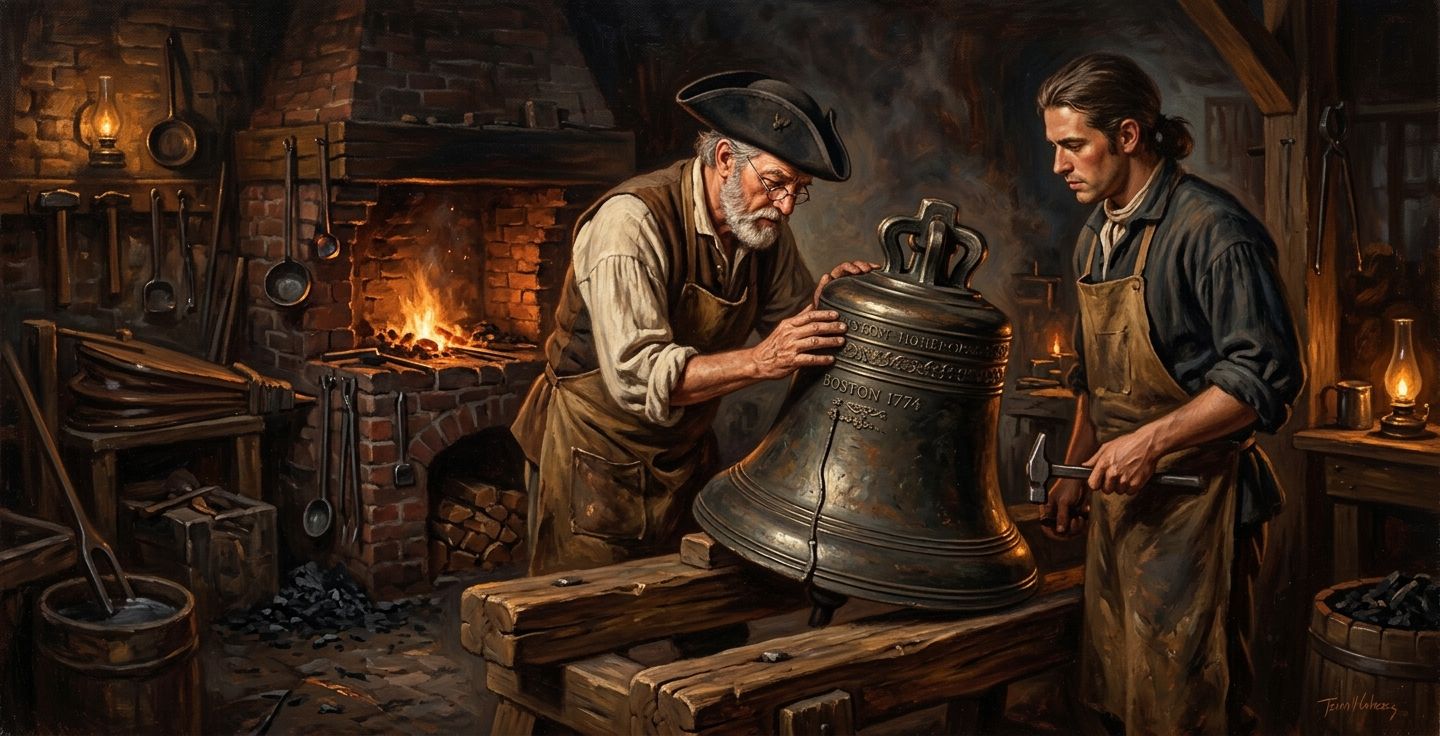
Instead of returning it to England in defeat, two local workmen stepped forward. John Pass and John Stow were not master bell founders by trade. They were simply ordinary local men willing to try and fix a massive, embarrassing problem. They hauled the broken object to a small foundry, taking sledgehammers to smash the expensive English bronze into smaller, manageable pieces.
In the intense heat of an 18th century furnace, they shoveled coal and pumped heavy bellows. They melted the fractured shards down to liquid metal. They knew the original material was far too brittle, so they added extra copper to soften the alloy. They poured the glowing, molten metal into a new mold. They waited patiently for it to cool. They hoisted their new creation up and struck it with hope.
It sounded terrible. The sound was so poor that people in the crowd actually mocked them. Pass and Stow had to haul it back, smash it again, melt it again, and pour it a third time. This little corner of history shows us something incredibly profound. The pursuit of a good society is rarely a clean or simple process. It takes multiple tries. It involves humiliating failures. It requires regular people sweating in a hot room to melt down the broken pieces and try again.
Asking the Hard Questions About Our Symbols
This brings up an important question. Why do we care so much about this particular object today? We have hundreds of beautiful, absolutely flawless monuments across the country. We have towering obelisks and perfectly sculpted statues. Yet, people stand in long lines for hours, waiting in the hot summer sun or the biting winter wind, just to look at a damaged hunk of metal. Why does this specific imperfection resonate so deeply with the American spirit? Does the flaw ruin the symbol, or does the flaw make the symbol entirely what it is?
By the Numbers: The Reality of our Favorite Symbol
To fully grasp this, we need to look at the objective facts. You might be completely surprised by the actual numbers and physical realities behind the Liberty Bell. When you stand right next to it, the sheer size of the object is striking. Historical records show it weighs exactly 2,080 pounds. It is three feet tall and measures twelve feet in circumference around the lip. That is over a ton of heavy expectation hanging from a single yoke of slippery elm wood.
The metallic composition itself tells a fascinating story of compromise and chemistry. It is roughly 70 percent copper and 25 percent tin, with the remaining five percent containing trace amounts of lead, zinc, arsenic, and silver. Furthermore, if you look very closely at the raised lettering on the surface, you will find a glaring spelling error. The word Pennsylvania is engraved as Pensylvania, missing a letter by modern standards. At the time it was forged, spelling rules were loose, but today it stands as a permanent, visible mistake baked right into the hard bronze.
But here is the most surprising statistic and historical truth of all. The famous wide fissure you see in every photograph is not the original damage. That wide gap is actually a calculated repair job. In the 1840s, skilled metalworkers actively drilled out the bronze. They created a wide, vertical channel to stop a smaller hairline fracture from vibrating and spreading. They intentionally removed material to save the whole.
The final expansion of the actual crack, the one that silenced it forever, happened in 1846. The city decided to ring it to celebrate the birthday of George Washington (born 1732, died 1799). The repair could not hold under the heavy vibration. A fresh, tiny fissure spidered all the way up to the crown. The voice of the bell was gone. Despite this absolute silence, well over one million visitors travel to Philadelphia every single year to see it. They do not come to hear a perfect chime. They come to witness the exact place where it broke.
Finding Comfort in the Flaws of Life
If you are over thirty years old, you have lived enough life to understand this completely. You have reached a point where you know that nothing goes exactly according to your original plan. You have built careers from the ground up. You have raised families through difficult seasons. You have paid off mortgages and navigated unexpected health challenges. You have seen strong relationships fracture.
You have experienced moments where your own personal plans sounded terrible upon the first strike. When we are young, we expect complete perfection from ourselves and from others. We want the shiny new bell shipped straight from London. We believe that if we just work hard enough, we can avoid all the dents and scratches of life.
When you have lived through a few decades, your perspective shifts. You start to deeply appreciate the messy process of the recast. You understand the profound value of workmen like John Pass and John Stow. You realize that the beauty of a long marriage or a lifelong friendship is not that it never experienced stress. The beauty is that you did the hard work of repair. You drilled out the damage to keep the whole thing from shattering apart. You apologized, you compromised, and you tried again the next morning.
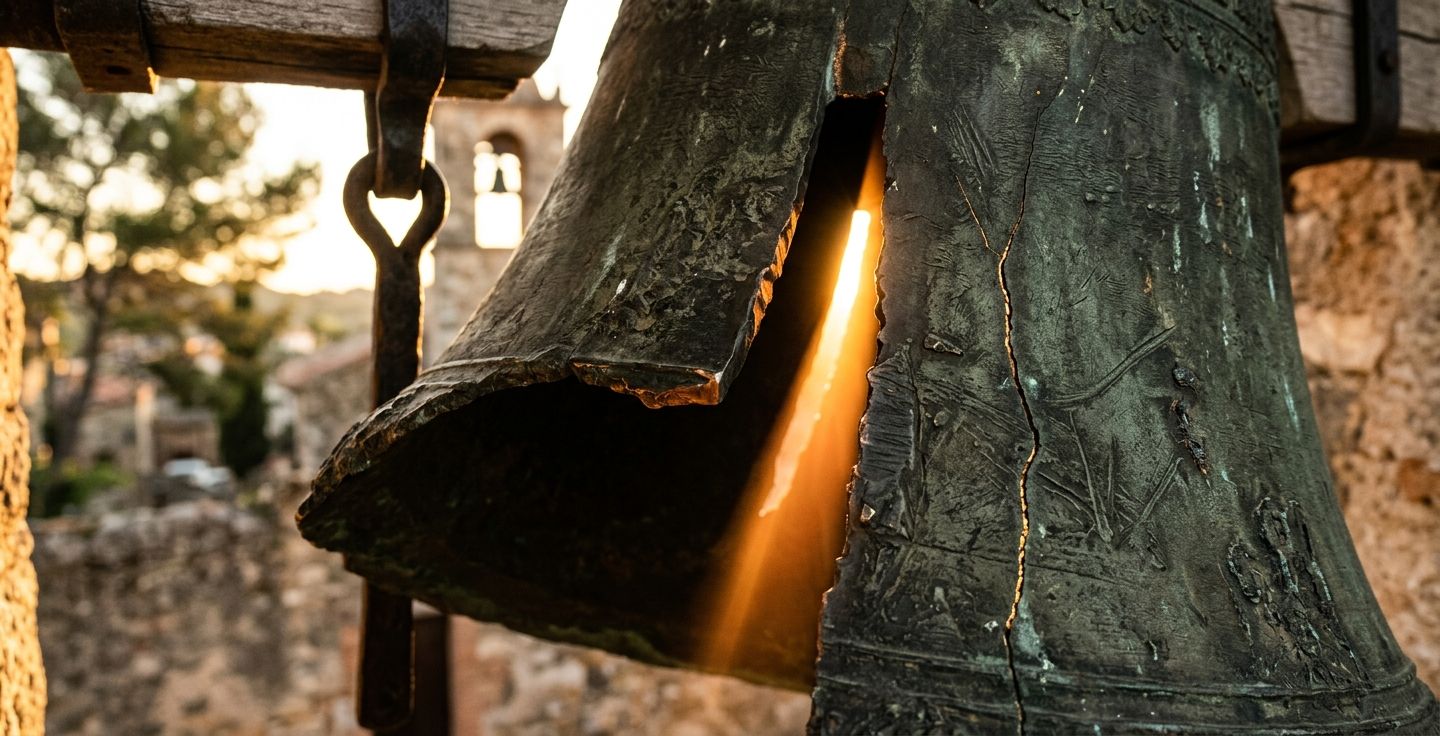
The crack in your life is not a sign of failure. It is proof of actual use. It shows that you rang loudly. It shows that you participated in the real, difficult, and messy business of living. Our national symbol is broken, and because it is broken, it looks exactly like us.
Passing the Torch with Wiser Hands
There is a lot of noise and confusion in the world right now. Young people look around and see a highly flawed society. They study the mistakes of the past. They see the broken promises and the lingering injustices. Sometimes, they feel overwhelmed and discouraged by the sheer weight of it all.
We have a great responsibility to these younger generations. We must show them that an imperfect system can still inspire the entire world to seek freedom. We must teach them not to abandon the bell just because it did not sound right on the very first try. Our long history is simply a continuous series of ordinary people trying to fix what broke the day before.
We identify the bad ideas, we melt them down, we add a little more grace and wisdom, and we cast the mold again. This is the great, sustaining hope for the future. The next generation has the vibrant energy to keep striking the metal. They have the courage to ring out for equality, justice, and liberty. They will inevitably make their own mistakes. They will cause new fractures. And that is perfectly acceptable.
The story of our country is not written in flawless, untouched marble. It is cast in heavy bronze, endlessly repaired, and proudly displayed with all its glorious faults. Let us encourage our children and grandchildren to keep swinging the hammer. The echoes of their honest efforts will outlast us all, ringing out in the quiet spaces of our history.