
Icons & Symbols of America
What Tourists Love Most About American Landmarks
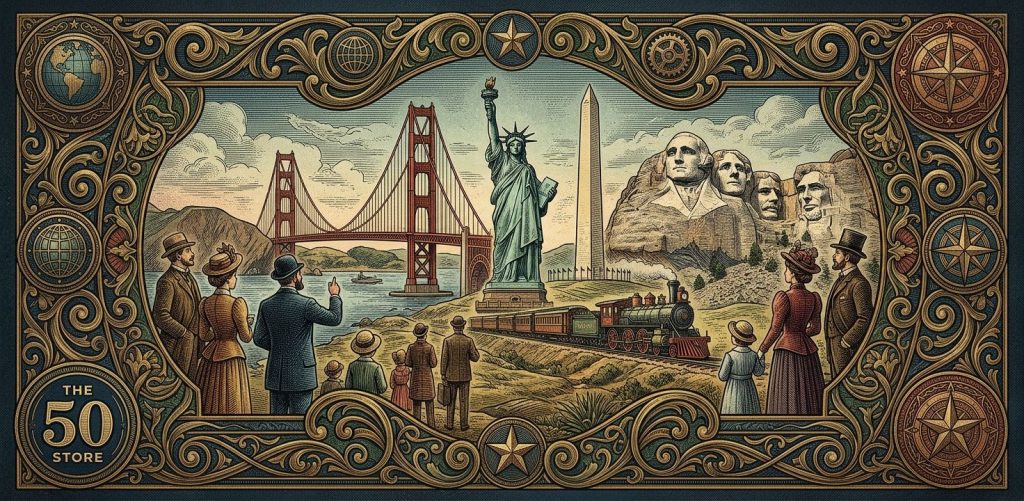
The Enduring Magic of Our Home
Let us sit together for a moment on this quiet afternoon. You can pull up that chair right there. I have spent my eighty odd years watching this country stretch its legs, grow, and change with the passing seasons. Every summer, I see families pack their bags. I see the tour buses roll down the long highways. I see people arriving from all corners of the globe. They come with wide eyes and cameras ready. They come to stand in the shadow of our greatest treasures.
There is a certain quiet beauty in watching someone see our home for the very first time. The Situation we find ourselves in today is quite fascinating. We live surrounded by towering monuments, sprawling canyons, and bridges that touch the very clouds. Yet, so many of us simply drive right past them on our way to work. We barely give them a second glance as we rush through our busy days.
The Forgotten Wonder in Our Backyard
Let me share something that might surprise you. When we look at the numbers from the United States Travel Association and the National Park Service, the dedication of our visitors is truly astounding. In a typical year, international travelers inject over 150 billion dollars into our local economies just to experience these sights. More than 300 million visits are recorded at our protected sites annually. Think about the little towns surrounding Yellowstone or the roadside diners near the Badlands. They thrive because people travel thousands of miles across wide oceans just to stand where we can drive on a simple Tuesday afternoon.
Here is the Complication that often troubles my mind. We Americans frequently forget the magic resting in our own backyard. We let the dust settle on our history. We treat our grandest achievements as mere backdrops to our daily commute. We take the majestic sights for granted. It breaks my heart just a little bit to see it.
Seeing Through Fresh Eyes
This brings us to a simple Question. What is it that these visitors see that we have forgotten? Why do foreign tourists shed tears when they look upon a copper statue or a carved mountain? The Answer lies in the human stories behind the stone and steel. They do not just see building materials. They see the sweat, the wild dreams, and the sheer audacity of the people who built them.
We desire that same connection. We want our children to feel that same spark of wonder. We want them to know the soil they stand on is rich with courage and hope. So let us look at what tourists love most about our American landmarks. Let us look at them as if we are seeing them for the very first time.
The Copper Lady in the Harbor
If you ever take a ferry out to the Statue of Liberty, watch the faces of the people standing on the boat. They crowd the rails. They point. Their faces light up with pure joy. They are looking at a promise cast in copper.
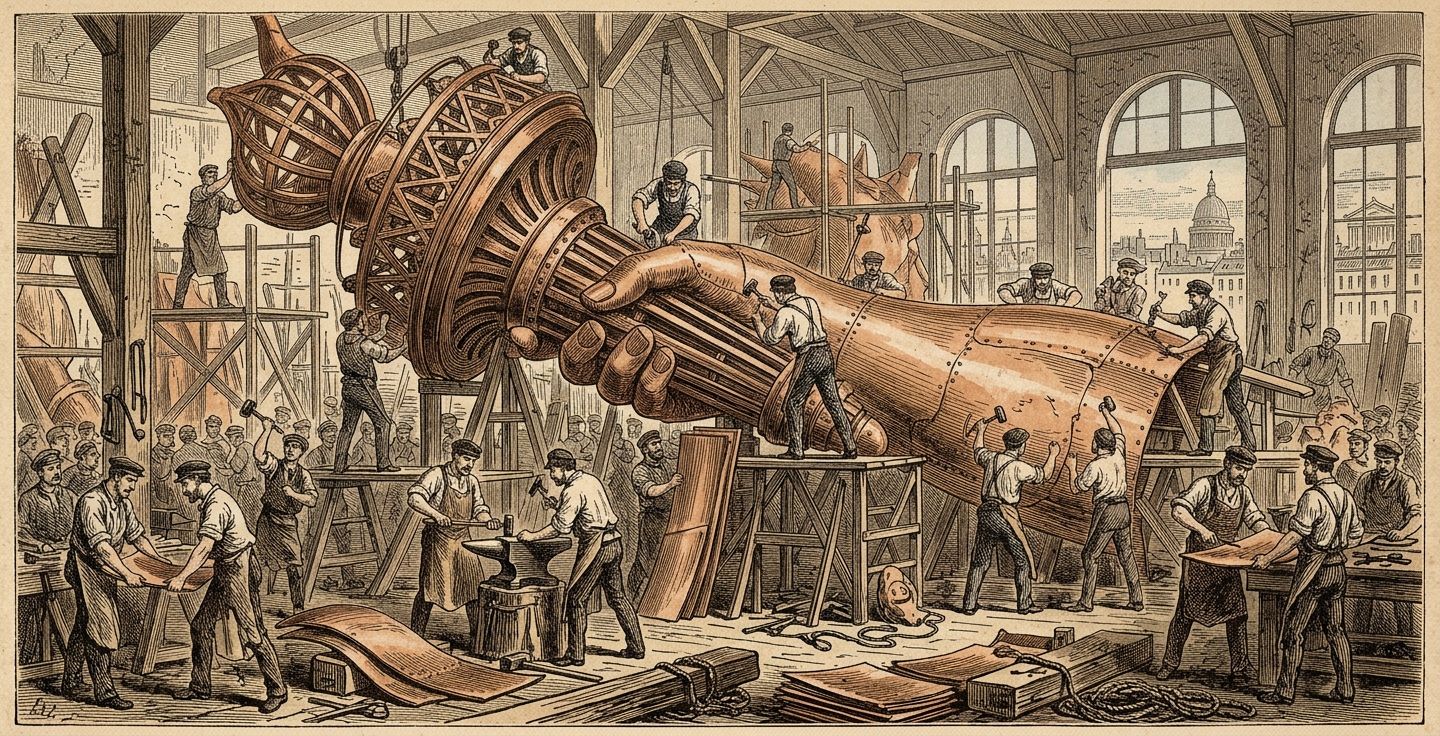
When we talk about this great lady, we have to talk about Frédéric Auguste Bartholdi (1834-1904). He was a man with a vision so massive that folks thought he was dreaming entirely too big. He wanted to build a colossal lighthouse shaped like a woman holding a torch. But the true story is not just in his grand design. It is found in the tired hands of the working men in Paris.
Imagine a dusty workshop in France. Men with thick aprons and soot on their faces hammering thin sheets of copper. They hammered over giant wooden molds. They worked through blistering hot summers and freezing winters. A single copper toe of the statue was larger than a grown man. The statue was eventually packed into over two hundred wooden crates and shipped across the rough sea. The tourists know this. They look at the statue and see the thousands of hammer strikes. They see the pennies donated by American schoolchildren to build the stone pedestal. They see the golden gateway that welcomed weary travelers to a new life.
Faces Carved in Stone
Let us travel out west to the Black Hills. Mount Rushmore is a sight that makes you feel very small in the best possible way. I remember my own father telling me about the men who carved that giant mountain. Tourists flock here because they cannot quite believe human beings managed to accomplish such a task.
The project was led by Gutzon Borglum (1867-1941). He was a stubborn fellow. He had to be. You do not look at a solid granite mountain and decide to carve giant faces into it without a healthy dose of stubbornness. But the real magic lies with the humble miners.
Picture a freezing cold morning in South Dakota. Men who spent their lives digging in dark underground mines were suddenly suspended hundreds of feet in the open air. They sat in small leather harnesses called bosun chairs. They dangled over the edge with heavy drills in their hands. They placed dynamite with absolute precision. One wrong move meant disaster. Yet they swung there in the breeze day after day. They carved history into the rock. Visitors from afar love this site because it represents a wild and impossible dream made real by rough, working hands.
The Orange Bridge in the Fog
Now let us head out to the beautiful coast. The Golden Gate Bridge is pure poetry written in steel. When the thick fog rolls in from the Pacific, the bright orange towers peek through like glowing beacons. It remains one of the most photographed historical monuments in the world.
People love it for its graceful beauty. But they also deeply respect its story. Joseph Strauss (1870-1938) was the chief engineer. He fought for over a decade just to get permission to build it. He faced fierce opposition from ferry companies and the military. The bay waters were treacherous. The winds were howling. The task seemed impossible.
Strauss did something remarkable for his time. He demanded safety above all else. He ordered a massive rope net to be hung under the bridge while the men worked. In those days, bridge building was a deadly business. Experts expected one life lost for every million dollars spent. That special net saved nineteen men who tumbled from the dizzying heights. They proudly called themselves the Halfway to Hell Club. Also, that beautiful color we call International Orange was originally just meant to be a simple protective primer. The locals loved it so much they demanded it stay. When tourists walk across that span feeling the cold wind sting their cheeks, they are walking on a true triumph of care and engineering.
The Great Divide
Nature gave us our most breathtaking sights. The Grand Canyon National Park is a place that defies all normal description. I have stood on its rim more times than I can count. Every single time, it steals the breath right out of my lungs.
Visitors from countries with gentle rolling hills or crowded ancient cities come here to understand the physical scale of America. They stand at the edge of a drop that goes down for a mile into the earth. The ancient rocks are painted in brilliant reds, bright golds, and deep purples. It is a profoundly quiet place. Even with thousands of people standing around you, the vastness simply swallows the noise. It forces you to be still. It reminds us that the earth is incredibly old and we are just brief guests upon it.
Our national parks are the great equalizer. They belong to everyone. They belong to you. They belong to your children. And they belong to the children yet to be born. They are open spaces of freedom.
A Marble Temple for a Humble Man
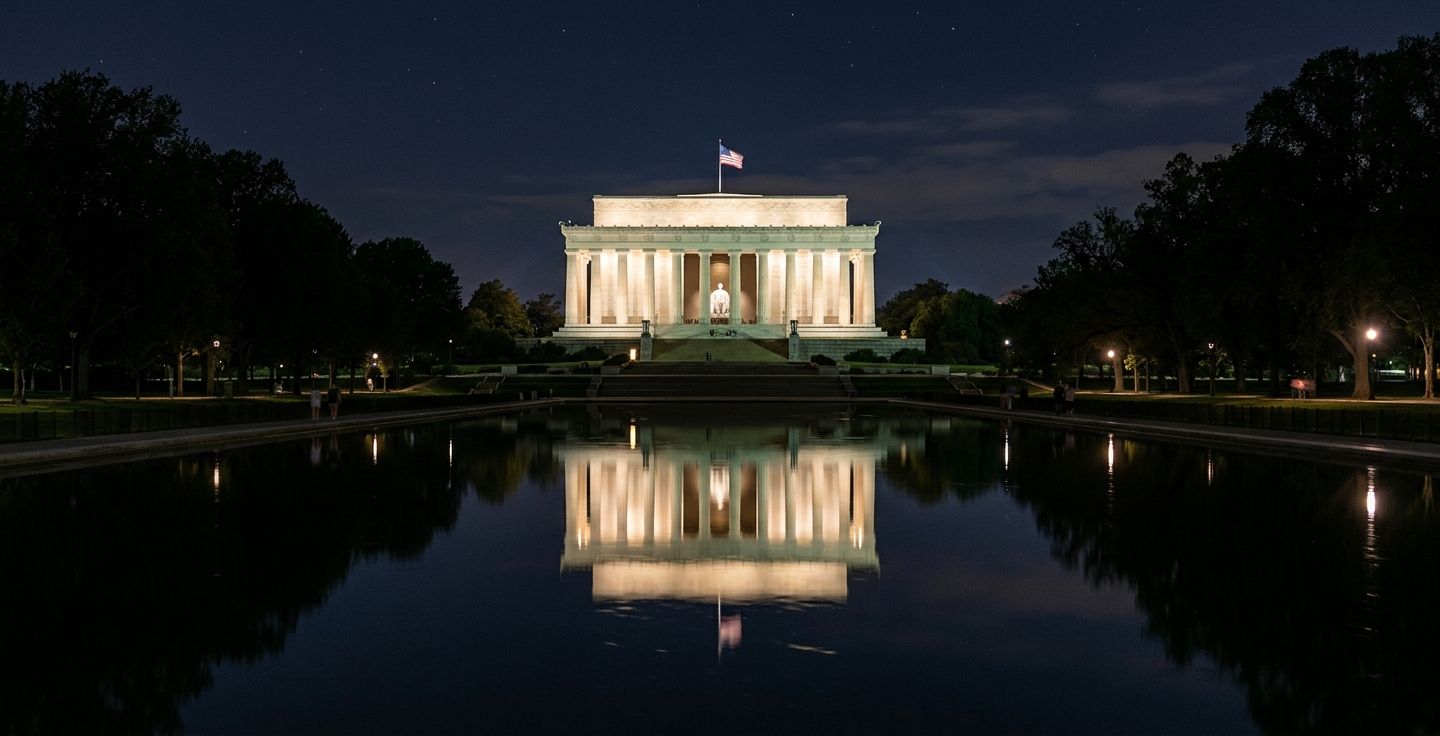
We must never forget our capital city. The Lincoln Memorial draws millions every single year. People climb those white marble steps very slowly. They naturally speak in hushed tones when they reach the top. Why do they come in such numbers? They come because the man sitting in that chair represents the best parts of what we continuously try to be.
It is not just about the grand thirty six columns representing the states of the Union at the time of his passing. It is about standing there on a quiet night in Washington. The city is sleeping. The glowing white marble reflects perfectly in the dark water of the reflecting pool. You walk up those steps and read the powerful words etched into the heavy stone wall. You feel the immense weight of a nation that was torn apart and stitched back together with agonizing effort. Visitors from nations with their own deep scars find true comfort here. They look at Lincoln and see that survival and healing are possible.
Keeping the Flame Alive
So we reach the Action we must take together. The Action is quite simple. Pack a bag this weekend. Fill up the gas tank. Take your family on a long road trip. Show them these magnificent places.
Do not let the stories fade into the background. When you stand at a monument, tell your grandchildren about the people who built it. Tell them about the tired hands and the big dreams. Teach them to deeply appreciate the rich tapestry of American history that surrounds them every single day.
These places will endure. The stone will weather the storms, the copper will hold its green patina, and the steel will be painted again and again. But their true strength relies entirely on us remembering why they matter. It relies on us sharing that wonder with the young ones. I have immense hope for the generations coming up behind us. They are curious. They are smart. They care deeply about the world around them. I know in my heart they will carry these stories forward with gentle and loving hands.
Let us now look at some common questions folks have when they start planning their trips to these remarkable sites.