Icons & Symbols of America
Why Symbols Matter in American Culture
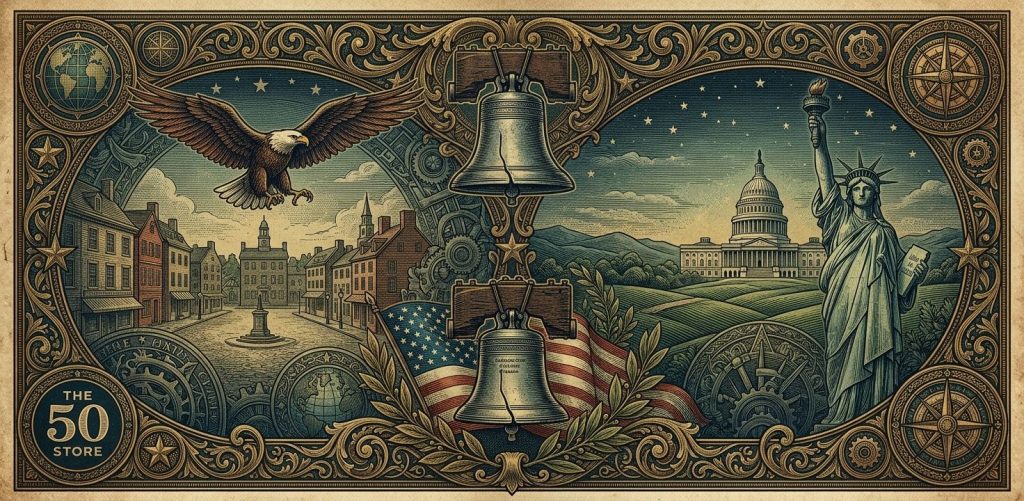
Walk down any Main Street in this beautiful country early on a warm July morning. The air is still heavy with the sweet humidity of summer, and the dew clings stubbornly to the carefully manicured lawns of your neighbors. Look up at the porches, where the paint might be peeling just a little bit from years of changing seasons. You will see flags snapping in a gentle, warm breeze. You will see wooden eagles, carved by local artisans long ago, perched above heavy oak doorways. You might even spot a neighbor, sipping his black coffee, proudly wearing a faded cap bearing the insignia of his old military unit from decades past. These are not just decorative choices meant to fill empty spaces. They are the quiet, profound language we speak to one another across fences and across generations. They remind us who we are when the world outside gets too loud. They ground our American culture in something solid and enduring.
I often think about a small street corner in Lexington, Massachusetts. The cobblestones there have felt the march of boots for centuries. A simple bronze Minuteman statue stands watch over the green. People walk by it every single day on their way to grab their morning coffee or drop their children off at school. Most hardly give it a second glance. It has just become part of the background scenery. But that quiet bronze figure holds a heavy truth about who we used to be, and who we still strive to become.
The Fading Memory of Our Emblems
We are slowly losing touch with the incredible stories behind these silent watchers. The numbers tell a rather surprising story about our current era. A recent survey conducted by the American Council of Trustees and Alumni found some startling facts. Nearly one in five college graduates cannot identify the profound historical effect of the Emancipation Proclamation. Another poll conducted by YouGov revealed that barely half of all adults can accurately explain the specific symbolism of the stars and stripes on our flag. Think about that for a moment. We wear the graphic t-shirts on holidays. We wave the bright banners at parades. We sing the anthems before baseball games. Yet we are forgetting the soul behind the fabric and the song. Our national identity is slowly turning into a series of forgotten riddles.
This brings us to a very important crossroads in our journey. Why do these emblems matter so much in our fast-paced modern times? What happens to a loving family when it forgets the stories of its grandparents? What happens to an entire nation when it loses the thread of its own complex history? Are these statues and flags just relics of a bygone era, or do they hold the vital key to our shared future?

Patriotic Bald Eagle Vintage USA Flag T-Shirt
Wear your story with pride! Celebrate classic American values, history, and heritage with our premium crafted apparel, designed for comfort and durability.
Shop the Look →Stories Stitched in Fabric and Cast in Bronze
The answer requires us to look closer. We must peer past the cold bronze and the factory-made cloth. We must look at the human hands that originally made them. The truth is quite simple. Symbols matter because they are the physical bridges between our past struggles and our future hopes. They are not perfect. The people who made them were certainly not perfect. But they carry a magic that endures through the ages.
When I look at our flag, I think of Mary Pickersgill (born 1776, died 1857). She was a hardworking flag maker in Baltimore. She spent weeks sewing the massive banner that eventually flew over Fort McHenry during the War of 1812. Her hands were pricked and bleeding by the end of the monumental task. The flag was so large she had to lay it out on the floor of a local brewery just to piece it together. That specific piece of hand-sewn fabric became the heart of our national anthem. It was born from human sweat and deep dedication.
Let us look at another magnificent example. When you take a ferry out into New York Harbor, you cannot help but marvel at the Statue of Liberty. She stands immense and beautiful against the modern skyline.
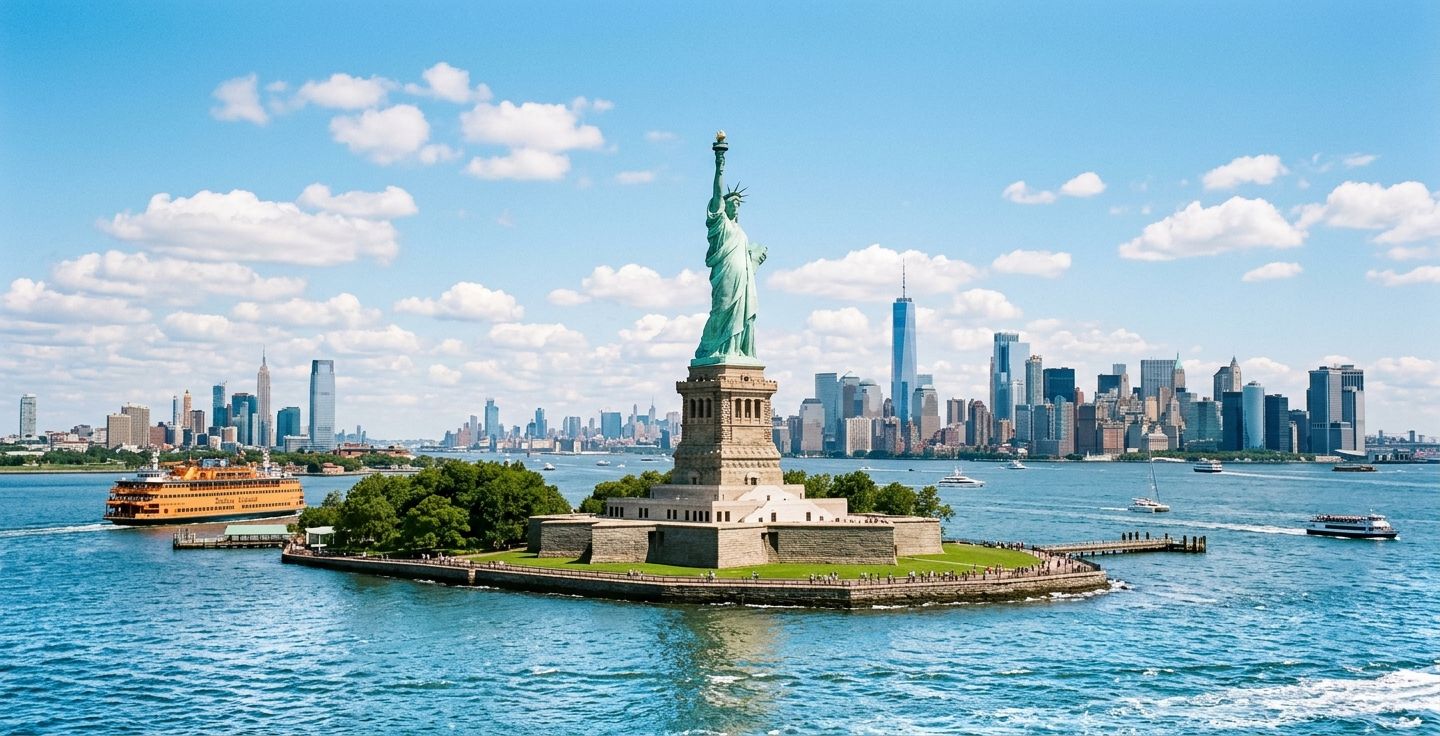
When the French first designed her, she was meant to be a simple lighthouse. She was intended as a rigid monument to republican ideals. But she became something entirely different because of a young woman named Emma Lazarus (born 1849, died 1887). Emma was a poet living in New York. She worked tirelessly with refugees fleeing hardship in Eastern Europe. She saw the profound pain in their eyes. She knew the utter desperation in their hearts.
When asked to write a poem to help raise funds for the statue pedestal, Emma did not write about military triumph or political might. She wrote about a Mother of Exiles. She gave the cold copper statue a beating, compassionate heart. Because of her short poem, the lady in the harbor was no longer just a lighthouse. She became a welcoming embrace for the tired and the poor. Emma gave our nation a gentle voice. This is the true power of our historic symbols. They are shaped over time by the best angels of our nature.
The Beauty of Imperfection
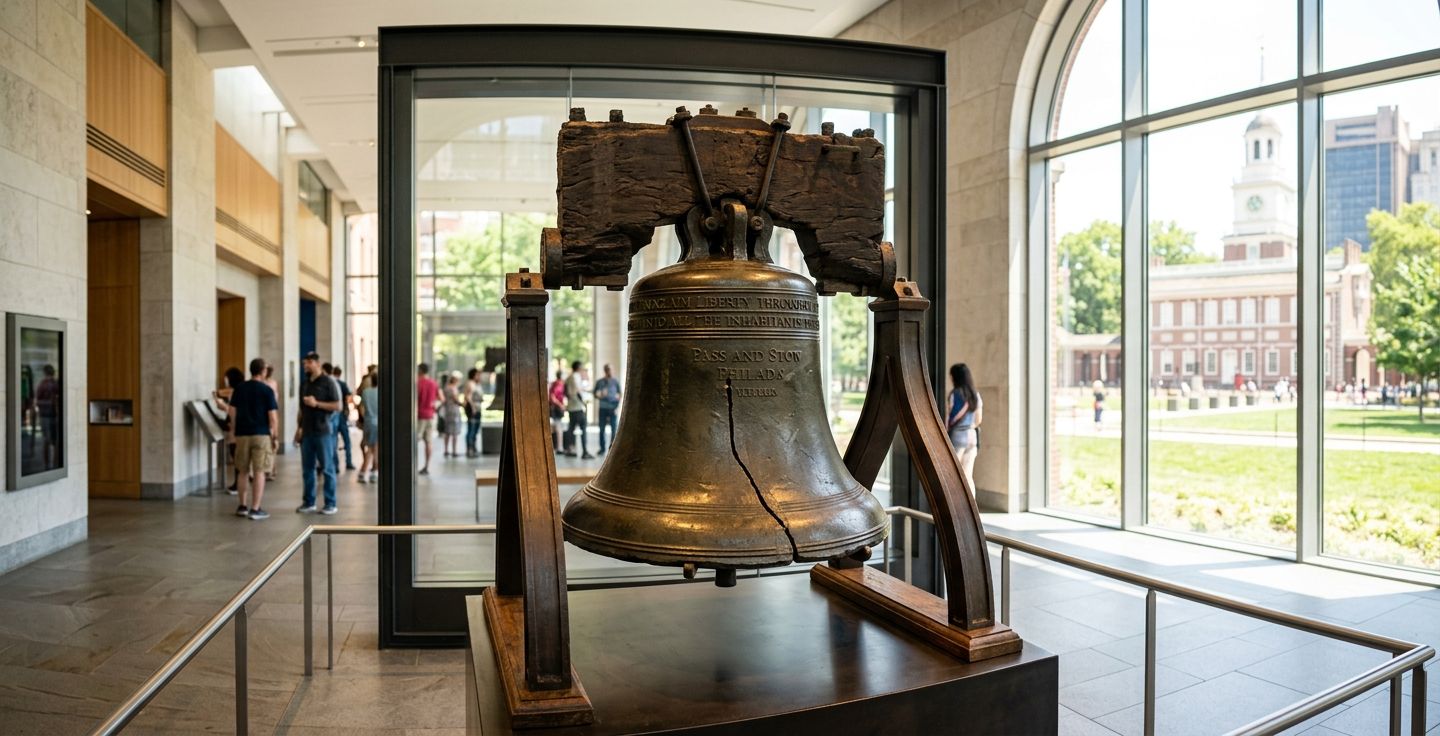
Consider another humble object located in Philadelphia, Pennsylvania. The Liberty Bell draws millions of visitors every single year. You walk into the long glass building, and you see the famous crack running right up its side. We did not hide that broken bell away in a dark closet or melt it down for scrap metal. We put it on display for the entire world to witness.
That very crack is exactly what makes it beautiful and completely unique. It tells an honest story about our shared values. True freedom is not a flawless, smooth casting. It is fragile, it fractures under the intense pressure of human nature, and it requires constant care and attention from all of us. If that bell were perfect, it would just be another piece of old metal ringing out a hollow tune. The flaw is the lesson. It teaches us that a nation can be broken and still sing a beautiful song of liberty.
The Living Language of Freedom
These small stories are stitched into the fabric of our daily lives. They are not meant to be worshipped without question. They are meant to be debated and discussed. Look at the Great Seal of the United States. We have the bald eagle. It looks fierce and incredibly proud. We all know the famous story of how Benjamin Franklin (born 1706, died 1790) supposedly favored the turkey over the eagle. He thought the eagle was a bird of bad moral character. He felt the turkey was a much more respectable bird, a true native of the Americas.
Whether entirely true or slightly embellished by history, the debate itself is what matters. Our founders argued over every single detail. They argued over the stars. They debated the colors. They knew that the things we choose to represent us will eventually shape us. They wanted us to keep talking, keep arguing, and keep refining our vision.
A Legacy of Hope
When I watch younger folks today, I feel an incredible sense of warmth. Some people worry that the younger generations do not respect the old ways. I see it quite differently. I see young people proudly holding up the flag at rallies. I see them wearing pins of the eagle on their denim jackets. I see them demanding that our country live up to the vast promises forged in those ancient symbols. They are asking hard questions. They are pushing necessary boundaries. This means the symbols are still fully alive. They are still working their magic.
We have a deep, sacred responsibility to share the rich stories of our cultural heritage. We must sit down and tell our grandchildren about Emma Lazarus and her brilliant poetry. We must tell them about the imperfect metal of the Liberty Bell and the hands that tried to fix it. We must help them understand that these emblems belong entirely to them. They are the rightful inheritors of this grand, noisy, beautifully chaotic experiment in democracy. The torch has been passed to their capable hands.
Let the flags wave proudly from the porches and the storefronts. Let the bronze statues stand tall in the center of our bustling town squares. They are our shared memory in physical form. They are our common ground when we occasionally forget how much we share. As long as we take the precious time to remember the very real, very human hands that built them, our foundation will remain solid for centuries to come. I truly believe, from the bottom of my heart, that we are going to be just fine.