
American History & Origins
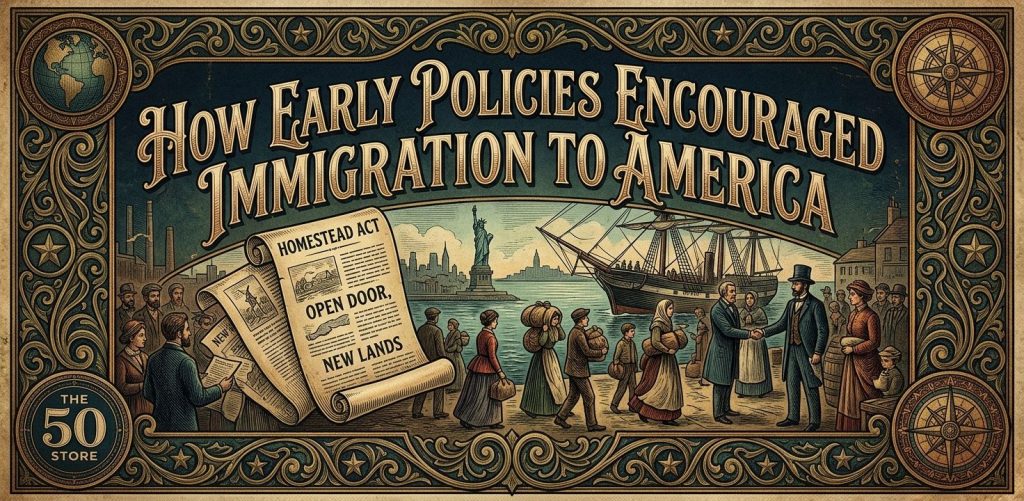
How Early Policies Encouraged Immigration to America
It is early morning here, and the sun is just starting to paint the sky a soft, pale pink over the neighborhood. I like to sit on the porch with my coffee, letting the steam warm my face, and watch the world wake up. There is a gentle breeze rustling the old oak trees. Kids are gathering at the corner, kicking pebbles while waiting for the school bus. Neighbors wave from their driveways on their way to work. It is a beautiful, simple rhythm that I have known my whole life. And every time I sit out here and watch this street come alive, I think about how we all got here. This country is a giant, beautiful patchwork quilt. Every block, every town, every family has a thread stretching back across an ocean or a border.
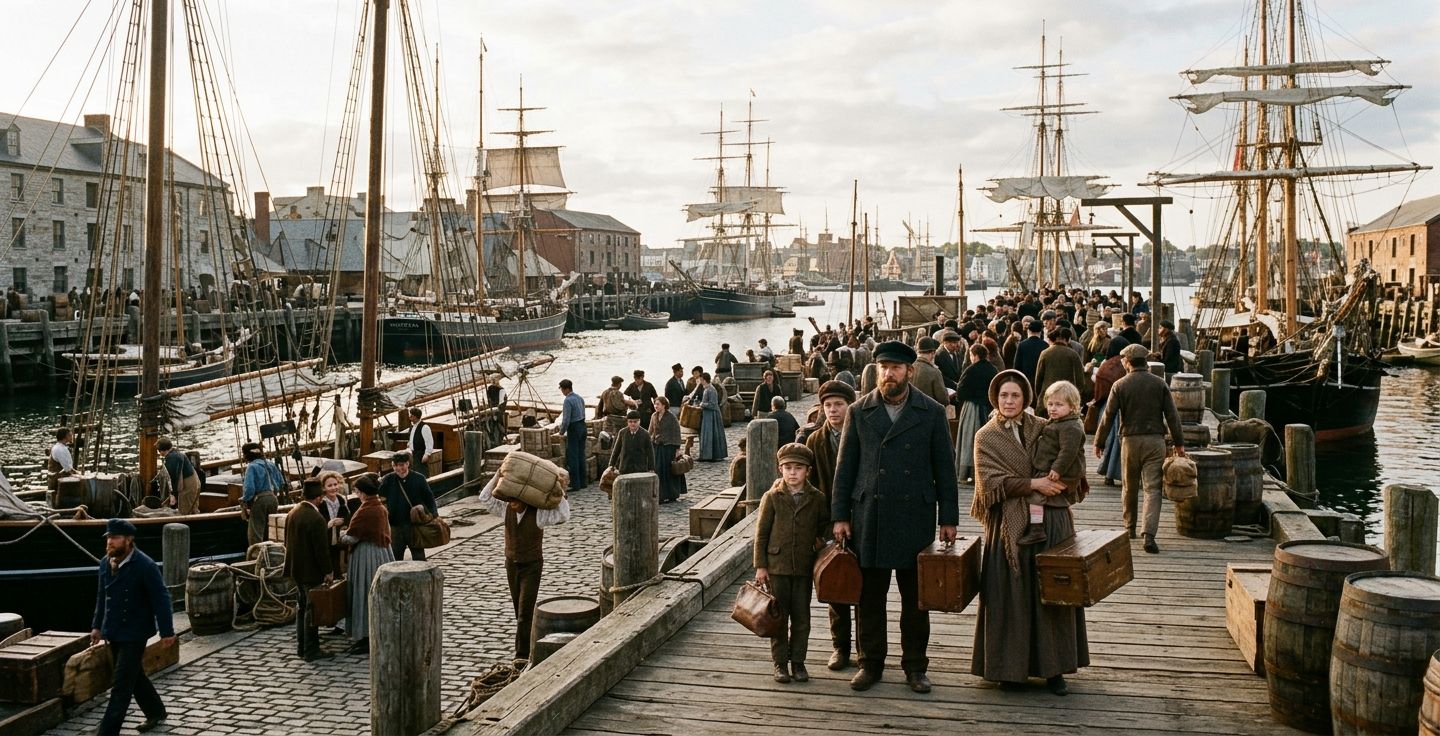
We live in a time when things move so fast. You can fly across the world in a day. You can call a friend in a different hemisphere. But let us sit back and think about the days when a journey meant weeks in the dark hull of a wooden ship. It was a terrifying gamble.
The Situation on the Ground
In the early days of our republic, America was a massive expanse of untamed wilderness. It was rich in timber, fertile soil, and endless rivers. But a country is just dirt and trees without people to work it, love it, and build upon it. The young United States desperately needed hands. We needed farmers to plow the plains. We needed strong backs to lay the railroad tracks that would eventually stitch the coasts together.
A Dangerous Gamble
Here is the complication. The journey to get here was not a luxury cruise. Crossing the Atlantic Ocean in the nineteenth century was an incredibly dangerous and punishing ordeal. Families crammed into the dark, damp steerage compartments of wooden sailing ships. The journey could take anywhere from a month to three months depending on the winds. It was cramped, filled with disease, and completely exhausting. Food rations were meager, often just salted meat and hard biscuits.
Families sold absolutely everything they owned just to buy a single ticket. They left behind the graves of their parents and grandparents. They said tearful goodbyes at the docks, knowing in their hearts that they would never see their loved ones again. So, you have to ask yourself, why would anyone willingly walk away from their home, their language, and their community to face such a frightening unknown?
The Surprising Magnet
This brings us to a fascinating question. What was the great magnet that pulled so many millions away from the familiar and into the wild unknown?
If you want a surprising statistic to ponder over your breakfast, consider this historical fact. According to the census bureau, between the years eighteen twenty and nineteen twenty, roughly thirty three million people arrived on these shores. To put that into perspective, that is like moving the entire modern population of Texas across an ocean with nothing but wind and steam power. The numbers grew so quickly that by the year eighteen ninety, nearly fifteen percent of the entire United States population had been born in another country. That is a staggering reality. In places like New York and Chicago, immigrants and their children made up the vast majority of the residents. Entire cities seemed to spring up overnight, speaking a dozen different languages, smelling of new spices, and bursting with raw energy.
The secret behind these numbers was not just a vague hope. It was written into the law. The early immigration policies of our nation were essentially open invitations.
A Single Letter Home
Let us look at a small story to understand a massive national change. Have you ever heard of a man named Gottfried Duden (1785-1855)? He was a German physician and writer. In the eighteen twenties, he traveled to Missouri. He found a place with rolling hills and deep forests. It reminded him of his home in Europe, but with one massive difference. Land was practically free.
Under the federal land acts of that era, the government was selling off public domain land at extremely low prices. Duden wrote a little book about his time near the Missouri River. He described an easy life where the soil was incredibly rich, the weather was agreeable, and the government did not breathe down your neck demanding heavy taxes. He wrote about the sweet corn and the wild game that roamed the woods. He mailed this book back to Europe.
That single piece of writing set off a chain reaction. Thousands of German families read his words. They packed their belongings and headed straight for places like Hermann, Missouri. One man wrote a hopeful letter, and a quiet river valley grew into a bustling hub of German culture. It was not just the beauty of the land that brought them. It was the policy that allowed them to own a piece of it.
The Great Promise
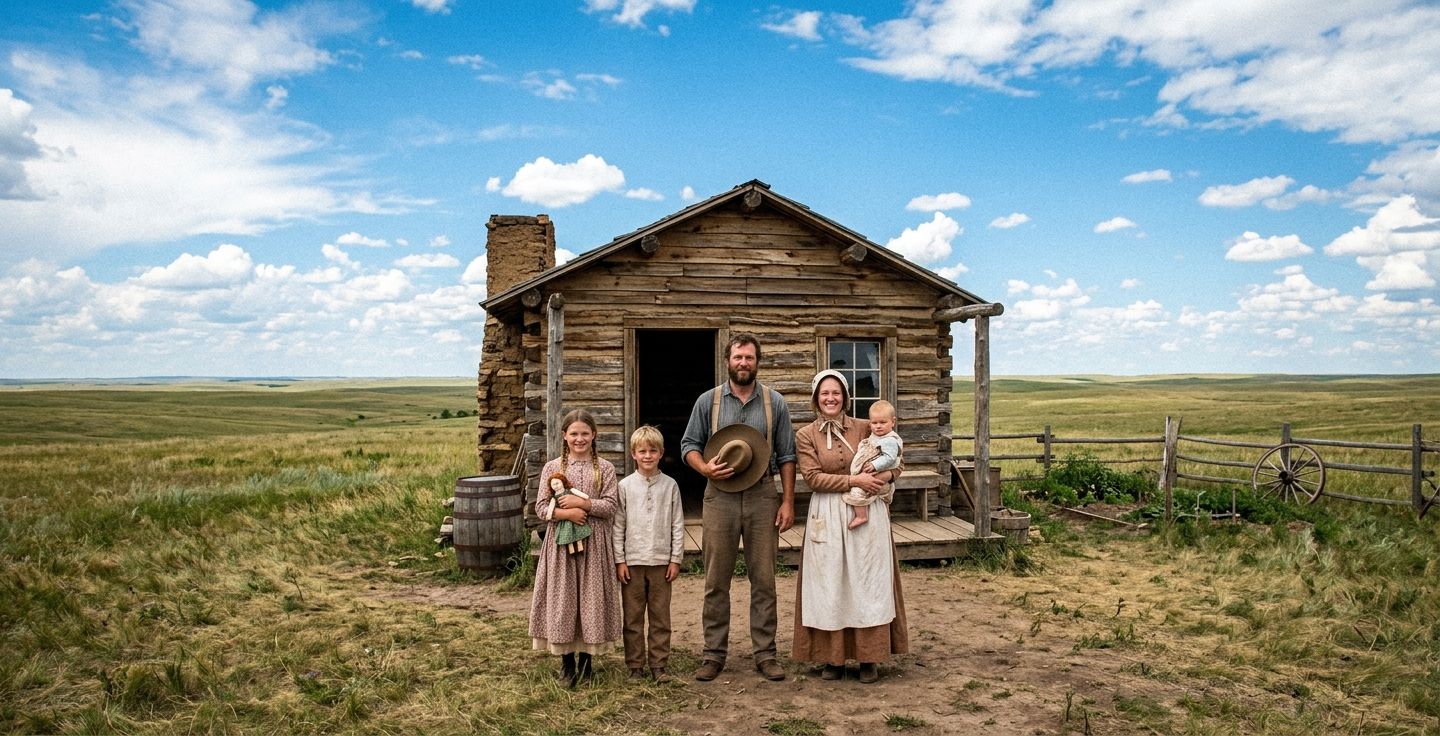
Perhaps the most powerful invitation ever extended by a government was the Homestead Act of 1862. It was signed into law by Abraham Lincoln (1809-1865) right in the middle of a terrible Civil War. The law was beautifully simple. It promised one hundred and sixty acres of public land to anyone who was willing to improve it. You had to build a dwelling and farm the soil for five years. If you did that, the land was yours. Free and clear.
Here is the most remarkable part. You did not even have to be a citizen to claim a homestead. You only had to declare your intention to become one. Can you imagine the power of that promise?
Think about the people who took that deal. They traveled west on wooden wagons, facing harsh winters, locusts, and isolation. But they did it because of the promise. A poor tenant farmer in Europe, who could never dream of owning a single acre back home because the wealthy lords owned everything, could step off a boat and be handed a sprawling farm. It was an astonishing act of faith by a young nation. This law became the very foundation of the American Dream. It was a declaration that your future was not determined by your bloodline or your wealth, but by your willingness to work hard.
The Wide Open Gates
For the better part of a century, there were very few restrictions on who could come. The nation did not have a sprawling bureaucracy for border control. If you were healthy and willing to work, you were welcome.
Before the famous brick buildings of Ellis Island were built to process arrivals, the state of New York operated a welcoming station at Castle Garden. Millions of weary travelers took their first steps on American soil at that old circular fort. The authorities there mostly just wanted to make sure you did not have a contagious disease and that you could support yourself.
The government actively needed these newcomers. They were the muscle that dug the canals. They were the brave souls who went down into the coal mines. They were the mothers who raised the next generation of proud citizens. Our early policies reflected a deep understanding that our greatest natural resource was not gold or timber. It was people.
A Heritage of Hope
As I sit here watching the young folks walk down my street, I feel a profound sense of hope. The faces have changed over the decades. The countries of origin have shifted. But the spirit remains exactly the same. The drive to build a better life for your children is a universal human trait.
Our early policies were not perfect. History is complicated, and there were definitely times when we failed to live up to our highest ideals. But the overarching story of our early years is one of incredible openness. We threw open the doors and invited the world to help us build a nation.
That legacy is alive today. You can see it in the resilience of the young people starting new businesses in my town. You can hear it in the music that blends different cultures together on the radio. The foundation laid by those early laws created a society that thrives on fresh ideas and new energy. We are a people born of travelers, risk takers, and dreamers.
Looking Back to Look Forward
So, as we reflect on how we all ended up sharing this vast and beautiful country, let us remember the policies that made it possible. The government said yes to the tired and the poor. It offered land to the landless. It provided a blank canvas for millions of personal masterpieces.
To sum it all up, the rapid growth of our country was not an accident. It was the direct result of deliberate choices. We had massive amounts of land, a desperate need for honest labor, and the visionary laws that made land ownership a reality for anyone willing to sweat for it. Those early laws built the middle class. They built the towns, the cities, and the very spirit of our nation.
I want to leave you with a thought to chew on today. Look into your own family history. Dig around in those old photo boxes or ask your relatives. When you look at your own family tree, what was the specific promise that brought your ancestors across the water or over the border to start anew?
Questions You Might Have
Did immigrants have to pay for the land under the Homestead Act?
No, the land itself was free. However, folks did have to pay a small filing fee, which was around eighteen dollars at the time. They also had to invest their own sweat and money into building a home and farming the land for five years before they officially received the title.
Was there any background check for immigrants arriving in the nineteenth century?
By modern standards, the checks were incredibly minimal. Doctors would do a quick visual inspection to check for infectious diseases like trachoma. Officials would ask a few basic questions to ensure the person could work and would not become a public burden. But there were no passports or visas required in those early days.
Did all early policies encourage everyone equally?
Sadly, no. While the doors were wide open for European immigrants, there were dark chapters where certain groups were excluded. For example, the Chinese Exclusion Act of eighteen eighty two was a harsh law that specifically barred Chinese laborers from entering the country. Our history is a mix of wide open arms and difficult lessons learned over time.