
American Mythos & National Character
The American Dream: Its Highs, Lows, and Modern Meaning
Sweet American Summer Bomb Pop T Shirt
Wear your story with pride! Celebrate classic American values, history, and heritage with our premium crafted apparel, designed for comfort and durability.
A Walk Down Memory Lane: The Dream on Main Street
I remember the summer of 1952 when the corner store on Elm Street opened its doors for the first time. Mr. Larson, a Norwegian immigrant who had arrived with nothing but a suitcase and a dream, stacked cans of peas and bottles of milk on wooden shelves. He worked from dawn until dusk, his hands rough from labor, but his eyes shone with a quiet pride. He told me once that America was not a place guaranteed to give you riches, but a place where hard work could turn a thin thread of hope into a sturdy rope. That small store, later expanded into a modest grocery, fed three generations of families and sent his children to college. His story is a micro‑history of the American Dream in action: a humble beginning, steady effort, and a future that felt reachable.

Sweet American Summer Bomb Pop T Shirt
Wear your story with pride! Celebrate classic American values, history, and heritage with our premium crafted apparel, designed for comfort and durability.
Sweet American Summer Bomb Pop T Shirt
Wear your story with pride! Celebrate classic American values, history, and heritage with our premium crafted apparel, designed for comfort and durability.
The Situation: What the American Dream Meant Yesterday
Looking back, the dream was simple yet powerful. It was the belief that anyone, regardless of birth, could improve their station through effort and perseverance. This idea echoed in the pages of Horatio Alger’s novels, where poor boys rose to respectability through grit and luck. defining the american dream was not a static slogan but a living promise that each generation could reach a little higher than the one before.
From Horatio Alger to Suburban Levittown
Horatio Alger (1832-1899) wrote tales that captured the nation’s imagination. His protagonists started as bootblacks or newsboys and, through honesty and hard work, secured a place in the middle class. You can read more about his life here. After World War II, the dream took a concrete shape in the Levittown developments on Long Island. These cookie‑cutter homes offered veterans a chance to own a house, a yard, and a stake in the community. A quick look at Levittown on Google Maps shows the streets that once symbolized upward mobility for millions.
The Complication: Cracks in the Facade
Yet the dream has faced hard tests. Let me share some surprising statistics that might make you pause.
- According to the Federal Reserve, total student loan debt in the United States exceeded student debt crisis levels of $1.7 trillion in 2023, a burden that delays home ownership and family formation for many young adults.
- Pew Research Center found that the share of adults living in middle‑class households fell from 61% in 1971 to just 50% in 2021, highlighting a growing middle class shrinking trend.
- The Federal Reserve’s Survey of Consumer Finances shows that the median wealth of White families is roughly eight times that of Black families and five times that of Hispanic families, a stark generational wealth gap that challenges the notion of equal opportunity.
- Despite rising productivity, real wages for the typical worker have grown less than 0.5% per year since the 1970s, making the cost of living challenges feel relentless.
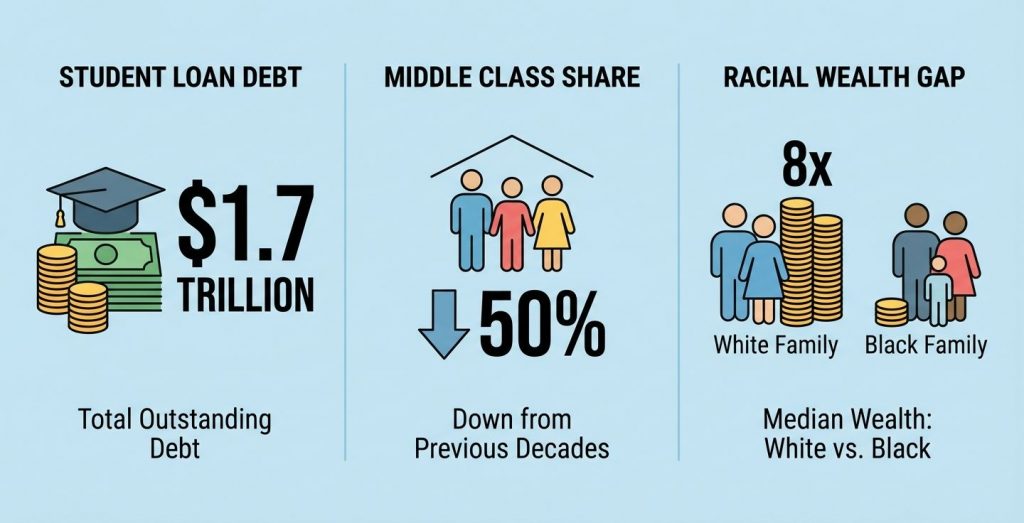
These numbers complicate the old narrative. When the dream promises upward mobility, yet many find themselves stuck despite hard work, the question arises naturally.
Question: Is the American Dream Dead?
People often ask, is the american dream dead? Critics point to rising inequality, the struggle to afford college, and the feeling that the game is rigged. Yet others argue that the dream is merely evolving. american dream quotes from leaders like Martin Luther King Jr. remind us that the dream is rooted in justice and equality, not just material gain. He said, ‘I have a dream that my four little children will one day live in a nation where they will not be judged by the color of their skin but by the content of their character.’ You can explore his words further here.
The dream also faces scrutiny regarding race. Studies show that american dream and race intertwine, with minorities facing higher barriers to home ownership and business capital. Still, countless immigrants arrive each year with hopes of building a better life, illustrating the enduring pull of american dream for immigrants.
Answer: Redefining the Dream for Today
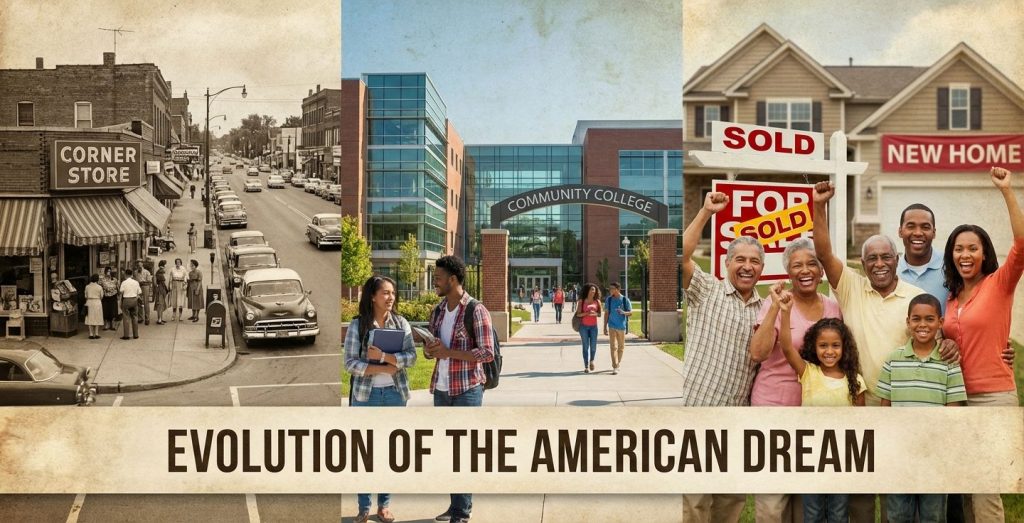
Perhaps the dream is not dead but asking us to broaden its definition. It now includes access to quality education, affordable healthcare, and the ability to pursue happiness without being crushed by debt. The phrase pursuit of happiness appears in the Declaration of Independence, reminding us that the dream is as much about well‑being as about wealth.
Consider the rise of community colleges and vocational programs that offer pathways to skilled trades without the crushing weight of four‑year loans. Think of the gig economy, which, despite its flaws, lets people monetize talents on their own terms. Even the horatio alger myth finds new expression in tech start‑ups founded in garages, where a good idea and perseverance can attract venture capital.
Art and literature continue to reflect these shifts. Novels like The American Dream by Edward Albee dissect the promise and its perils, while murals in cities from Detroit to Los Angeles depict hopeful visions of work, family, and community. Searching for american dream art online reveals a vibrant dialogue between criticism and celebration.
Desire: What We Can Still Achieve
Let me share a few stories that stir hope.
- A young woman from El Paso, the daughter of farm workers, earned a scholarship to study nursing. She now works in a urban hospital, sends money home, and plans to open a clinic in her hometown. Her journey echoes the classic rags to riches success stories but with a modern twist of service.
- A veteran returning from service used the GI Bill to learn coding. After a few freelance gigs, he landed a junior developer role at a growing startup. He now mentors others, showing that upward mobility is still possible when society provides the right tools.
- A family in Cleveland pooled resources to buy a duplex, renting one unit to cover the mortgage. Over ten years, they built equity, helped their children attend college, and created a small nest egg that will benefit the next generation—a quiet victory against the generational wealth gap.
These examples prove that the dream is not a guarantee but a possibility that flourishes when communities invest in education, fair wages, and affordable housing.
Action: Keeping the Dream Alive
So what can we do? Here are some questions readers often wonder, with straightforward answers.
Q: Should I give up on buying a house because prices are high?
A: While median home prices have risen, exploring first‑time buyer programs, considering suburbs with better affordability, or co‑owning with trusted friends can make ownership attainable. It may take longer, but the goal remains within reach.
Q: Is college still worth the debt?
A: The answer depends on the field and the cost. Community colleges, trade schools, and employer‑tuition assistance programs can reduce the debt load. Evaluate the expected return on investment before enrolling.
Q: How can I help close the wealth gap in my community?
A: Support local businesses owned by under‑represented groups, volunteer for financial literacy workshops, and advocate for policies that promote fair lending and equitable school funding.
Finally, consider sharing your own story. Whether you succeeded, stumbled, or are still trying, your experience adds to the collective narrative of the dream.
Summary: Key Takeaways
- The American Dream began as a belief in upward mobility through hard work, illustrated by figures like Horatio Alger and postwar suburbs such as Levittown.
- Modern challenges—student debt crisis, middle class shrinking, and a pronounced generational wealth gap—have tested the dream’s promise.
- Yet the dream persists, evolving to encompass pursuit of happiness, access to education, and community resilience.
- Stories of immigrants, veterans, and everyday families show that achievement is still possible when society provides fair opportunities.
- Each of us can keep the dream alive by making informed choices, supporting equitable policies, and sharing our journeys.
What does the American Dream mean to you, and how will you help shape it for the next generation?