
American History & Origins
The Birth of the American Middle Class: Postwar Dreams and Realities
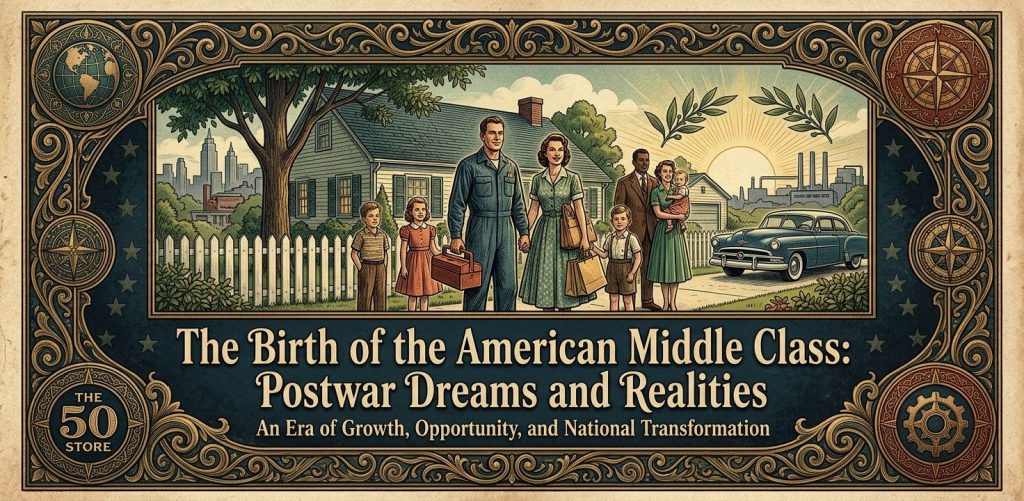
I remember the summer of 1946 when the trains brought home young men in uniforms, their eyes bright with hope and a little weary from war. The nation was shifting from a wartime footing to a peacetime rhythm, and the air buzzed with talk of new beginnings. As an older man who has watched this country grow, I feel compelled to share how the dreams of that era shaped the middle class we know today.
Sweet American Summer Bomb Pop T Shirt
Wear your story with pride! Celebrate classic American values, history, and heritage with our premium crafted apparel, designed for comfort and durability.
The Situation: Postwar America
The situation after World War II was both promising and daunting. Factories that had built tanks and planes were retooling for automobiles and appliances. Millions of service members returned to civilian life, eager to start families and find steady work. The government faced the challenge of absorbing this influx without slipping back into depression.
Complication: Returning Veterans Face a Changed Nation
Many veterans found that jobs were scarce in the cities they left behind. Housing was tight; apartments were overcrowded and rents were climbing. The GI Bill offered education benefits and low‑cost home loans, but the supply of affordable homes lagged far behind demand. Families worried they might never achieve the stability they had fought for.
Question: How Could Ordinary Families Build a Stable Future?
The question on everyone’s lips was simple yet profound: how could a typical worker secure a decent home, a good education for his children, and a sense of lasting prosperity? The answer would not come from a single policy but from a combination of government programs, private innovation, and community spirit.
Answer: The GI Bill, Housing Boom, and the Rise of the Suburbs
The answer unfolded in three powerful currents. First, the Servicemen’s Readjustment Act of 1944—better known as the GI Bill—provided tuition stipends and low‑interest mortgages. Over two million veterans used these benefits to attend college or vocational schools, gaining skills that lifted their earning power. Second, builders like Bill Levitt (Bill Levitt (1907-1994)) applied mass‑production techniques to housing, creating entire communities almost overnight. Third, the federal government invested in highway infrastructure, making it practical to live outside city centers and commute to work.
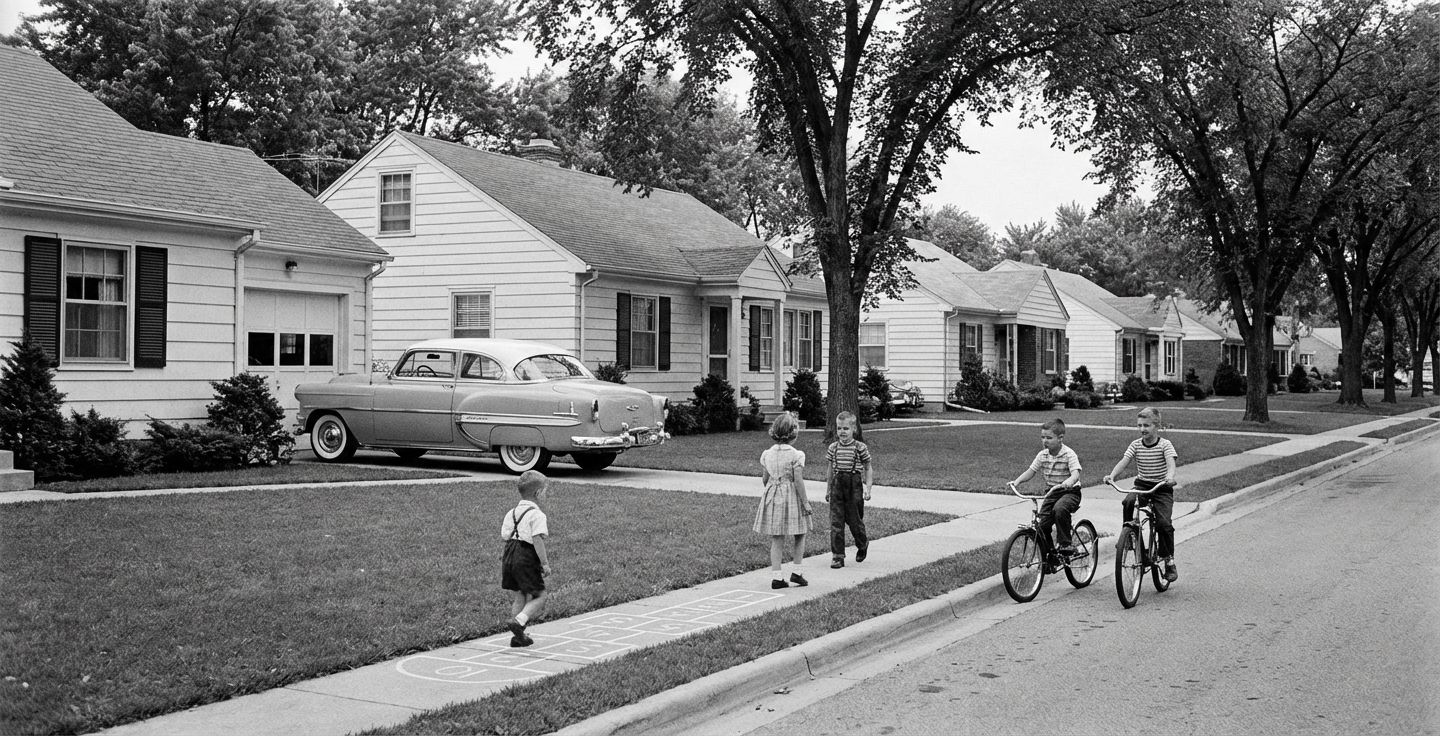
Let me tell you a micro‑history that illustrates this shift. On a quiet street in Dayton, Ohio, a veteran named Frank returned from the Pacific with a duffel bag and a determination to provide for his new bride. Using his GI Bill loan, Frank purchased a modest two‑bedroom house on Maple Street for seven thousand five hundred dollars. He planted a victory garden in the backyard, enrolled in night classes at the local technical institute, and soon found work as a supervisor at a nearby factory. Within a few years, Frank’s neighbors—many of them fellow veterans—had done the same, turning Maple Street into a tidy row of homes with lawns, driveways, and children’s bicycles leaning against garages. Their story echoed across the nation as suburbs sprouted from farmland, offering space, privacy, and a sense of ownership that many had never known.
The postwar boom was not merely economic; it reshaped the cultural imagination. The idea of the American Dream—popularized by historian James Truslow Adams (James Truslow Adams (1878-1949))—came to mean a house with a white picket fence, a car in the driveway, and the hope that each generation would do better than the last.

Sweet American Summer Bomb Pop T Shirt
Wear your story with pride! Celebrate classic American values, history, and heritage with our premium crafted apparel, designed for comfort and durability.
Sweet American Summer Bomb Pop T Shirt
Wear your story with pride! Celebrate classic American values, history, and heritage with our premium crafted apparel, designed for comfort and durability.
Interest: Surprising Numbers That Show the Shift
To grasp the scale of this transformation, consider a few statistics drawn from reputable sources such as the U.S. Census Bureau and the Department of Veterans Affairs.
- By 1960, over sixty percent of American families owned their own home, up from less than forty percent in 1940.
- The GI Bill facilitated college enrollment for approximately two point two million veterans between 1944 and 1956.
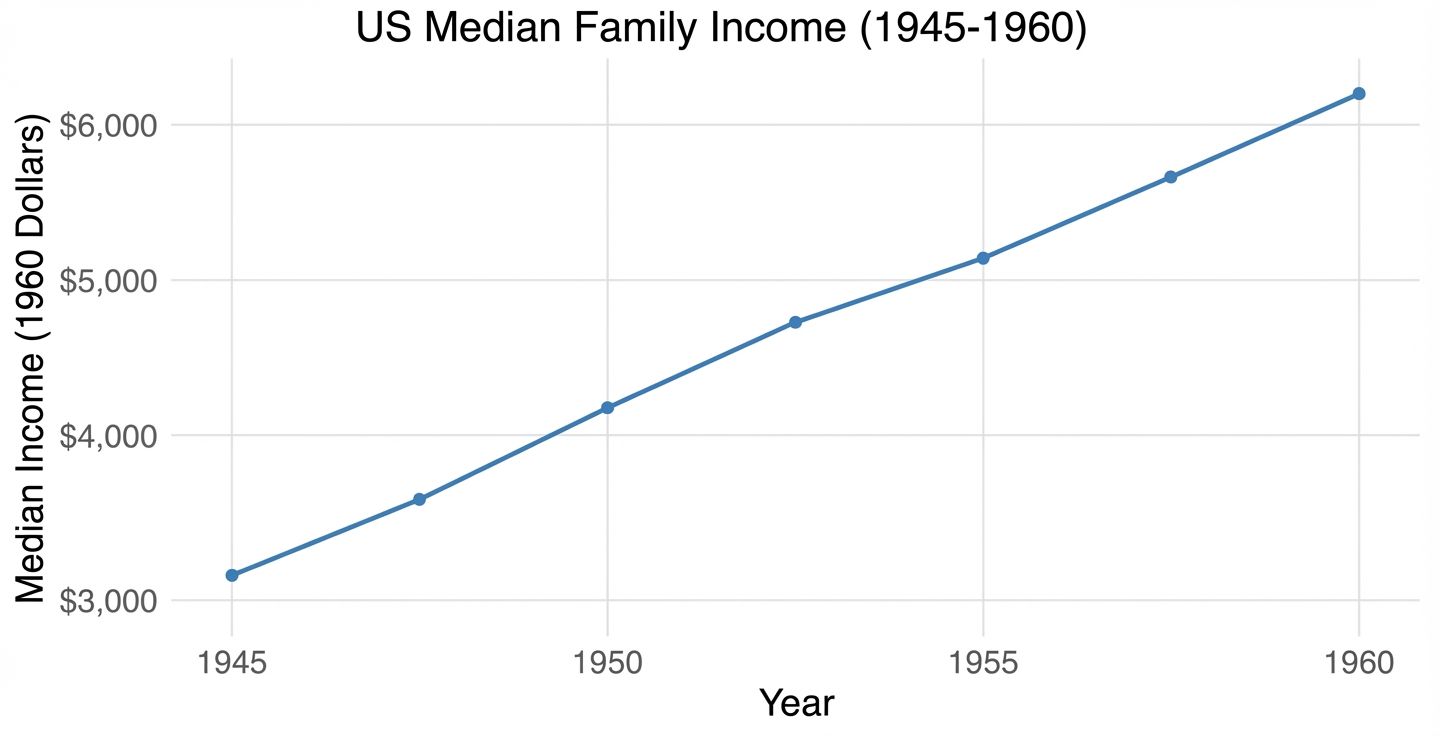
- Median family income rose from about two thousand five hundred dollars in 1945 to over five thousand dollars by 1960 (adjusted for inflation).
- Suburban populations grew forty‑five percent during the 1950s, while central city growth slowed to less than ten percent.
- In 1950, the United States produced roughly sixty‑seven percent of the world’s automobiles, a testament to the expanding consumer market.
These figures reveal a nation in motion, where policies designed to honor wartime service inadvertently laid the foundation for a broad‑based middle class.
Desire: What the Middle Class Meant for Families Like Mine
For families like mine, the middle class was more than an income bracket; it was a feeling of security and possibility. My father, a machinist, could afford to send me to the local high school and later to a state university without plunging us into debt. Our home had a refrigerator, a washing machine, and a television set—luxuries that were rare just a decade earlier. Sunday drives in our new Chevrolet became a ritual, and the nearby shopping center offered everything from groceries to hardware under one roof.
The middle class also brought a sense of civic pride. Parents volunteered at school events, coached little league teams, and participated in town hall meetings. There was a shared belief that hard work, education, and community involvement could yield a better life for the next generation. This optimism fueled further innovation, from the development of vaccines to the launch of satellites that would eventually place a man on the moon.
Action: Lessons for Today’s Generations
What can we learn from the postwar experience as we confront our own challenges—economic inequality, housing affordability, and the need for accessible education?
- Invest in human capital. The GI Bill showed that expanding access to education and training pays dividends in productivity and social mobility.
- Leverage private‑public partnerships for housing. The success of Levittown and similar developments came from combining government-backed financing with innovative building techniques.
- Invest in infrastructure that connects people to opportunity. The interstate highway system made suburban living viable; today, broadband and public transit play a similar role.
- Foster a culture of civic engagement. Strong middle‑class communities thrive when residents participate in local decisions and support shared institutions.
- Keep the dream inclusive. The postwar boom left many groups behind; a fairer future requires deliberate policies that extend benefits to all Americans, regardless of race, gender, or background.
Frequently Asked Questions
Did the postwar middle class growth benefit everyone equally?
No. While many white families experienced rapid upward mobility, African American, Latino, and other minority groups often faced discriminatory practices such as redlining and restrictive covenants that limited their access to suburban homes and quality schools. Recognizing these inequities is essential for building a more just prosperity today.
How did the GI Bill affect higher education?
The GI Bill democratized college attendance. Before the war, less than five percent of Americans held a bachelor’s degree. By 1950, that number had risen to over eight percent, and the trend continued upward, creating a more educated workforce that fueled technological advancement.
Are there modern equivalents to Levittown’s mass‑produced homes?
Today, modular and prefabricated housing techniques echo Levittown’s principles, offering faster construction and lower costs. Some cities are experimenting with accessory dwelling units and community land trusts to increase affordable housing stock while preserving neighborhood character.
Summary and a Question for You
The birth of the American middle class after World War II was a story of hope, policy, and grassroots effort. The GI Bill turned veterans into students and homeowners, visionary builders like Bill Levitt turned farmland into neighborhoods, and families across the country turned houses into homes filled with optimism. Though the era had its shortcomings, its legacy shows what is possible when a nation invests in its people and infrastructure.
As we look ahead, I wonder: what steps can our communities take today to recreate that sense of shared opportunity and stability for the generations to come?