
American History & Origins
How the Erie Canal Quietly Changed the Nation
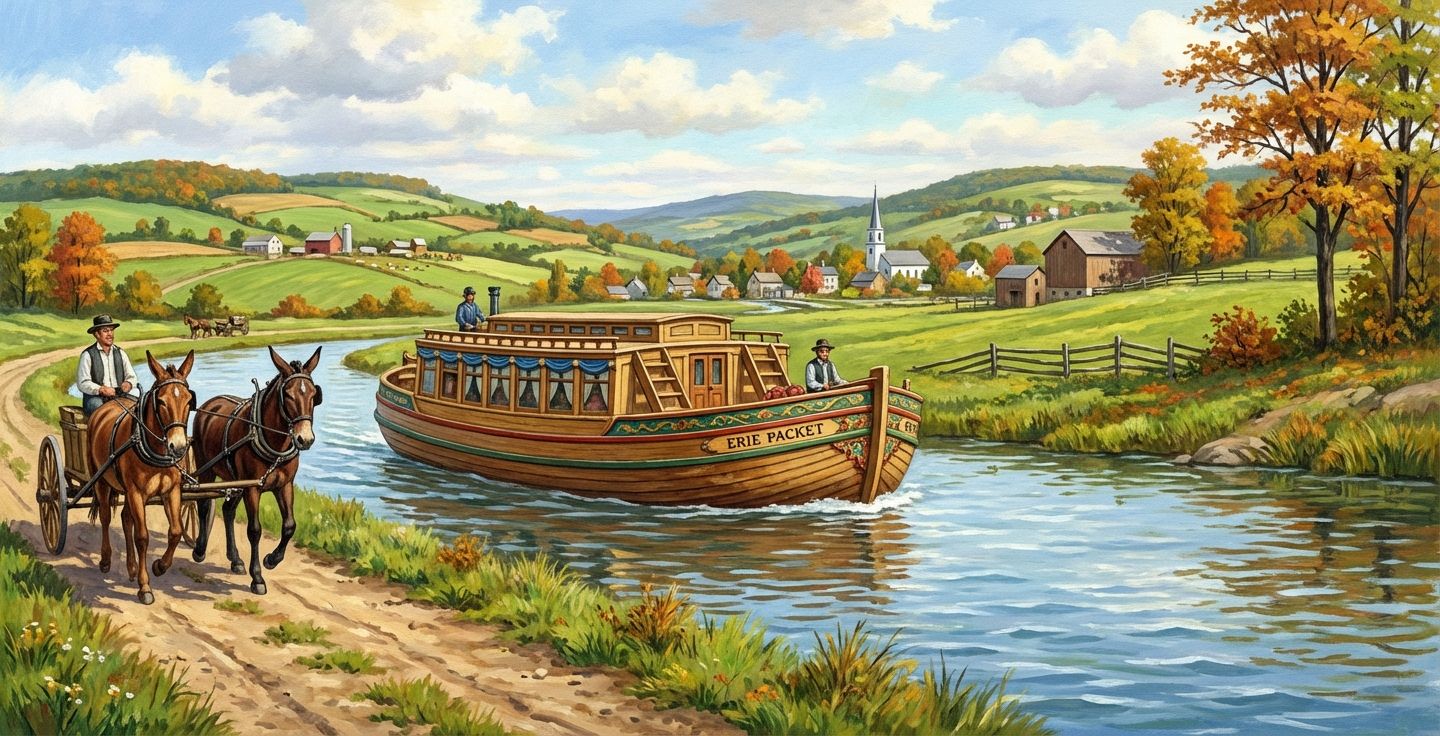
I can still hear the echo of my grandfather’s voice as he described the canal in its prime—the clatter of hooves on the towpath, the splash of locks opening, the chatter of people from all walks of life. He’d tell me about a crisp morning in 1825 when the first boat, the Seneca Chief, sailed into Buffalo, signaling the completion of a dream. That story stuck with me, not just as a tale of engineering, but as a reminder of how a single waterway could quietly reshape a nation.
The 1776 Winners History Premium Tee
Wear your story with pride! Celebrate classic American values, history, and heritage with our premium crafted apparel, designed for comfort and durability.
Situation: A Young Nation’s Transportation Dilemma
The early United States was a land of vast distances and formidable natural barriers. The Appalachian Mountains stretched like a spine down the eastern continent, making westbound trade and travel arduous. Existing routes—rutted dirt roads, seasonal rivers—were unreliable. The transportation infrastructure was barely up to the task of connecting the Atlantic seaboard with the fertile lands of the Ohio Valley and beyond. Farmers in the western territories found it cheaper to burn their grain than to haul it over the mountains to market. This isolation stymied the westward movement of families seeking new homes and choked the flow of goods that could fuel an economic boom.

The 1776 Winners History Premium Tee
Wear your story with pride! Celebrate classic American values, history, and heritage with our premium crafted apparel, designed for comfort and durability.
The 1776 Winners History Premium Tee
Wear your story with pride! Celebrate classic American values, history, and heritage with our premium crafted apparel, designed for comfort and durability.
Complication: The Cost of Getting There
The sheer distance turned everyday commerce into a gamble. A bushel of wheat from the Genesee region might cost more to transport to New York City than it was worth. The journey could take three weeks over rough roads, with wagons often mired in mud or broken by rocks. These hardships didn’t just affect farmers; they hindered the flow of manufactured goods from eastern mills to frontier families. The young republic needed a solution that could slash costs and shrink travel times, or risk leaving its western lands forever dependent on coastal trade.
Question: Could a Man-Made River Unite the Country?
Amid this challenge, a bold idea took root: a canal that would follow the Mohawk River valley, cross the continental divide, and descend to the Great Lakes. The mastermind behind the vision was DeWitt Clinton (1769–1828), a politician with an almost stubborn belief in progress. To his detractors, the plan was madness—a $7 million gamble through wilderness swamps and rocky ridges. They jeered, calling it clinton’s folly and predicted ruin. Yet Clinton and his supporters argued that such a public works undertaking could bind the nation together and unleash unprecedented prosperity. The question echoed: could such a waterway actually be built?
Answer: The Erie Canal Emerges
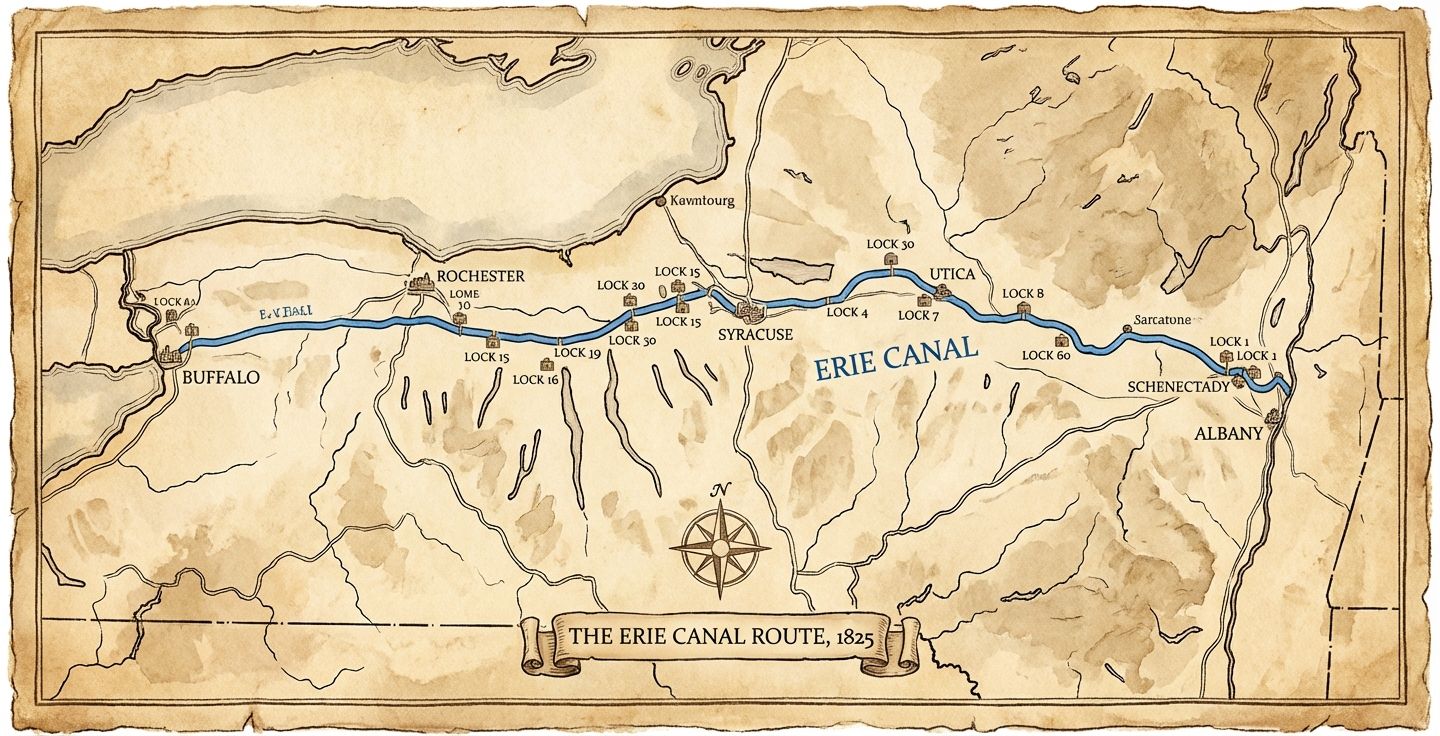
In 1817, the New York State Legislature approved the project, and construction began. The challenges were immense—the terrain rose over 500 feet from the Hudson to the Great Lakes. To solve this, engineers developed a brilliant lock technology that allowed boats to be raised or lowered in stages. The system of 83 locks became the heart of the canal, a testament to human ingenuity. The work was labor-intensive, employing thousands of Irish immigrants and local farmers. It was an engineering marvel that defied skeptics. Eight years later, on October 26, 1825, the Erie Canal was complete, stretching 363 miles from Albany to Buffalo. This monumental canal building effort marked the dawn of the canal age in America. The transformation was a gradual change as communities along the route adjusted to the new reality.
Interest: Numbers That Pique Curiosity
The scale of the Erie Canal is almost incomprehensible even today. Consider these figures: the canal was 363 miles long, 40 feet wide, and 4 feet deep, with 83 locks and a total cost of $7 million (equivalent to about $200 million today). It carried 33,000 shipments in 1850, moving over 1.5 million tons of cargo. Toll revenue paid off the entire construction cost within the first nine years of operation. By 1840, New York City handled 60% of the nation’s imports, up from 15% before the canal. The canal reduced the cost of shipping a ton of goods from Buffalo to New York from $100 to just $10. Travel time dropped from three weeks to ten days. According to the New York State Archives, by 1855 more than 5 million tons of cargo moved annually on the canal. The National Park Service notes that the canal’s success inspired other states to launch their own canal projects, creating a nationwide waterway system. These numbers underscore the historical importance of the project and hint at the erie canal impact that would ripple through generations.
Desire: The Ripple Effects of the Canal
The canal’s completion unleashed a cascade of changes. It created a vibrant trade network linking the agricultural heartland to New York City, allowing farmers to ship produce cheaply to eastern markets and Europe.
This explosion of commerce drove explosive city growth. Towns like Rochester, Syracuse, and Utica grew rapidly. Buffalo swelled from a few hundred to over 18,000 by 1840. The influx fueled a social transformation, reshaping American society.
The canal revolutionized grain handling. Midwest wheat fields reached global markets, making grain export profitable. This spurred the milling industry; Rochester’s waterfalls powered massive flour mills, earning it the nickname ‘The Flour City’.
The steamboat era amplified these effects. Steamboats carried goods from the Great Lakes to Buffalo, linking the lakes to the canal. This steamboat era created a seamless network that greatly influenced the industrial revolution america.
The canal fostered national cohesion, binding East and West economies and reducing sectionalism. It fed the spirit of expansionism, proving America could overcome geographic barriers. Though state-funded, its success sparked debate about federal funding for internal improvements.
The canal caused a geographic shift in commercial power, elevating New York City above Boston and Philadelphia. This commercial growth set the stage for America’s economic dominance.
Let me share two micro-histories. Samuel Hodgson, a wheat farmer from Cayuga County, shipped his first grain via the canal in 1830. The grain traveled to Rochester, was milled into flour, and shipped to New York City. The profits sent Samuel’s son to college. Mary O’Leary, an Irish immigrant, worked as a cook on a canal boat, saved enough to open a boarding house in Buffalo, and brought her siblings to America. The canal moved more than goods—it moved people and dreams.
The Broader Legacy: Beyond the Numbers
The Erie Canal’s influence reached far beyond economics. It had profound ecological effects. By altering the natural flow of rivers and creating a new waterway, the canal changed habitats, facilitated the spread of invasive species, and affected sediment patterns. These unintended consequences remind us that even beneficial projects carry environmental costs.
The canal also sparked a silent revolution in how Americans thought about progress. It demonstrated that with vision and collective will, the landscape itself could be reshaped. This mindset fueled further canal building and eventually railroad expansion. The era of canal dominance, known as the canal era, lasted roughly from the 1820s to the 1850s, when railroads began to eclipse them. Yet the canal’s legacy endured. It left an indelible mark on the nation and contributed to the region’s historical significance. Today, the Erie Canal is a National Heritage Corridor, celebrated for its role in shaping America.
Questions You Might Be Wondering
How long did it take to build the Erie Canal?
Construction began on July 4, 1817, and the canal was officially completed on October 26, 1825. That’s about eight years of intense labor, though planning and surveying took additional time.
Why was it called Clinton’s Folly?
Opponents of the project mocked it as ‘Clinton’s Folly’ because they believed the cost and engineering challenges were insurmountable. The nickname persisted until the canal’s spectacular success proved the doubters wrong.
What were the biggest engineering challenges?
The most daunting challenge was the 565-foot elevation difference between the Hudson River and Lake Erie. Engineers solved this with a series of 83 locks, aqueducts to cross rivers, and deep cuts through limestone ridges. The lock system was innovative and became a model for future canals.
Did the canal have any negative consequences?
Yes. The canal altered ecosystems, spreading invasive species like the sea lamprey. It also contributed to the displacement of Native American communities as settlers poured into the region. Additionally, the rapid development sometimes outpaced planning, leading to social tensions.
How did the Erie Canal affect the price of goods?
Shipping costs plummeted. For example, the cost to transport a barrel of flour from Buffalo to New York dropped from $3 to about 75 cents. This made everyday goods cheaper for consumers and allowed farmers to earn more for their crops.
Summary and A Final Invitation
The Erie Canal stands as a testament to what can be achieved when a community dares to dream big. From its controversial beginnings as Clinton’s Folly to its status as an engineering marvel, the canal reshaped the nation’s transportation infrastructure, fueled an economic boom, accelerated westward movement, and knit together a fledgling country. Its legacy lives on in the cities that grew along its banks, the industries it nourished, and the very idea that bold public works can change the course of history. As we face our own infrastructure challenges today, what lessons might the Erie Canal teach us about the power of gradual change and visionary leadership? I’d love to hear your thoughts—share your comments below.