
American Sports & Pastimes
The Story of Little League Baseball and Small-Town Pride
Sweet American Summer Bomb Pop T Shirt
Wear your story with pride! Celebrate classic American values, history, and heritage with our premium crafted apparel, designed for comfort and durability.
The Smell of Cut Grass and the Sound of Spring
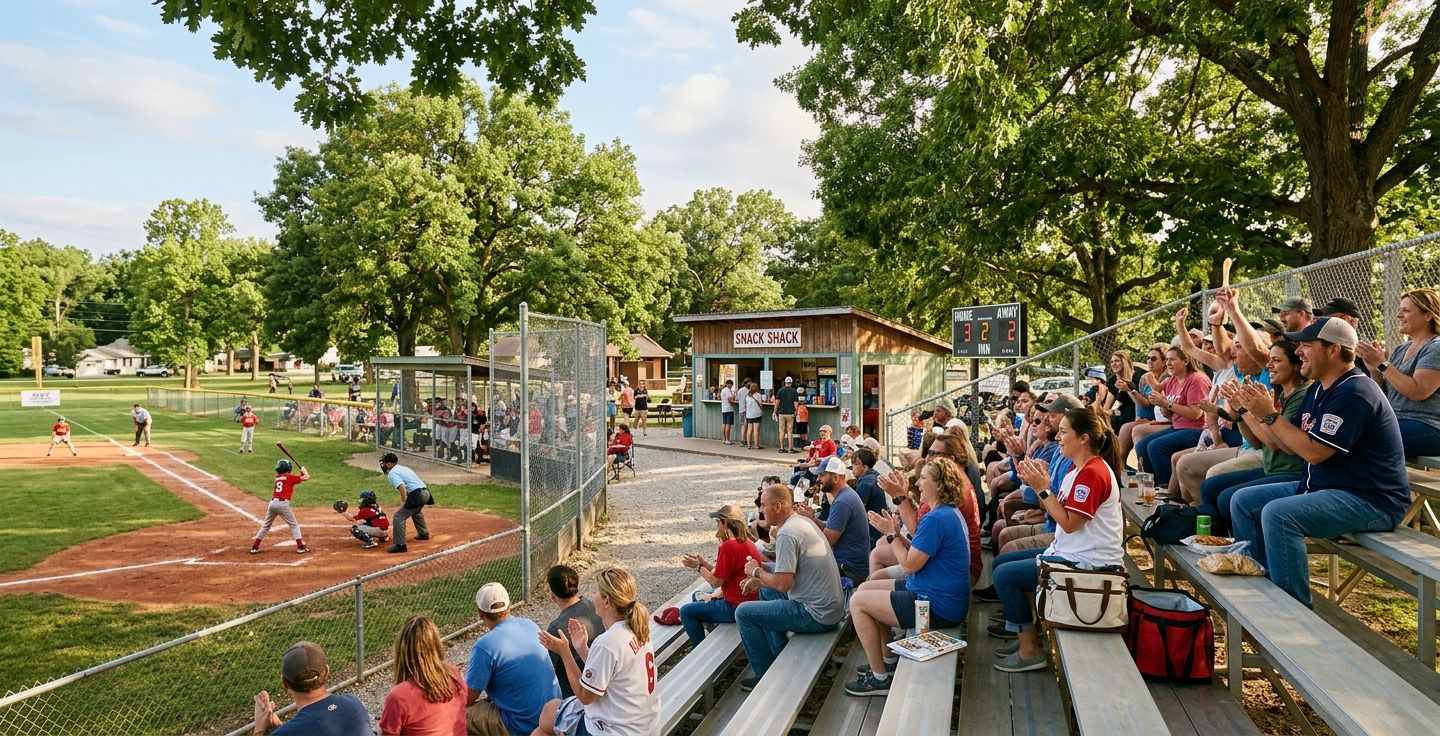
Spring arrives not with the blooming of tulips or the melting of the final winter snow, but with the distinct, hollow sound of an aluminum bat making contact with a leather ball. I have sat on these exact same metal bleachers for over sixty years. I have watched the sun dip behind the ancient oak trees in our local park season after season. The air here always smells exactly the same. It is a familiar, comforting mixture of fresh cut grass, dusty infield dirt, and the faint, mouthwatering scent of hot dogs roasting slowly at the cinderblock concession stand. The children walking onto the field wear bright uniforms that are always just a little too big for them. Their hats slip down over their eyes, and their cleats clatter noisily against the concrete pathways. Yet, when they step into the batter box, they are absolute giants in their own minds. They are playing for the pennant. They are carrying the hopes of their tiny neighborhoods on their narrow, eager shoulders.
This is the undeniable magic of our game. It is a slow, methodical pastime that somehow holds the collective heart of an entire community perfectly still for a few glorious hours every Saturday morning. I remember my old friend Tommy playing shortstop on this very dirt in 1962. Now, his young grandson stands in the exact same spot, kicking up the exact same dust, waiting for a ground ball. The game connects our generations like a sturdy bridge built across the river of time.
Sweet American Summer Bomb Pop T Shirt
Wear your story with pride! Celebrate classic American values, history, and heritage with our premium crafted apparel, designed for comfort and durability.
Sweet American Summer Bomb Pop T Shirt
Wear your story with pride! Celebrate classic American values, history, and heritage with our premium crafted apparel, designed for comfort and durability.
Shifting Times and a Surprising Resurgence
We live in a world that moves entirely too fast. Children today have bright screens blinking at them from the moment they wake up in the morning until they close their eyes at night. They have instant entertainment, virtual friendships, and a thousand loud distractions pulling them away from the great outdoors. You might look around at the quiet suburban streets and wonder if the grand old game is finally fading away into the history books. Are the dirt diamonds growing thick with weeds? Are the leather gloves gathering dust in dark garage corners? It is a perfectly fair question to ask in these fast paced modern times.
The truth of the situation might actually surprise you. The game is not fading. In fact, it is finding new life. According to recent data published by the Sports and Fitness Industry Association, baseball participation is doing more than just surviving. Between 2014 and 2023, youth baseball participation grew by nearly twenty percent across the United States. This remarkable surge added almost three million new players to the diamond. Furthermore, Little League International officially reports that over two million children participate in their affiliated leagues worldwide every single year. These numbers tell a profound story of resilience. They tell us that despite the glowing tablets and the endless noise of the digital world, modern families still deeply crave the simple, steady, and beautiful rhythm of youth baseball programs.
Why does it endure with such strength? Why do millions of tired parents still wake up early on a Saturday, pack heavy folding chairs into the trunk of their cars, and sit in the morning chill just to watch a game?
A Tripped Foot and a Grand American Idea
To truly understand the answer, we have to look back at the humble, beautiful roots of little league baseball history. It did not start in a fancy corporate office with executives in suits. It started with a stubbed toe in a backyard. The year was 1938. A kind hearted man named Carl Stotz, who was born in 1910 and passed away in 1992, was playing catch with his nephews. They were in a modest yard in Williamsport, Pennsylvania. Stotz tripped over a lilac bush while eagerly chasing a stray ball. Sitting there in the dirt, rubbing his sore ankle, he looked at his nephews and realized something incredibly important. He realized that young boys needed a proper, safe field to play on. They needed a field scaled down to their smaller size, complete with real equipment and matching uniforms.
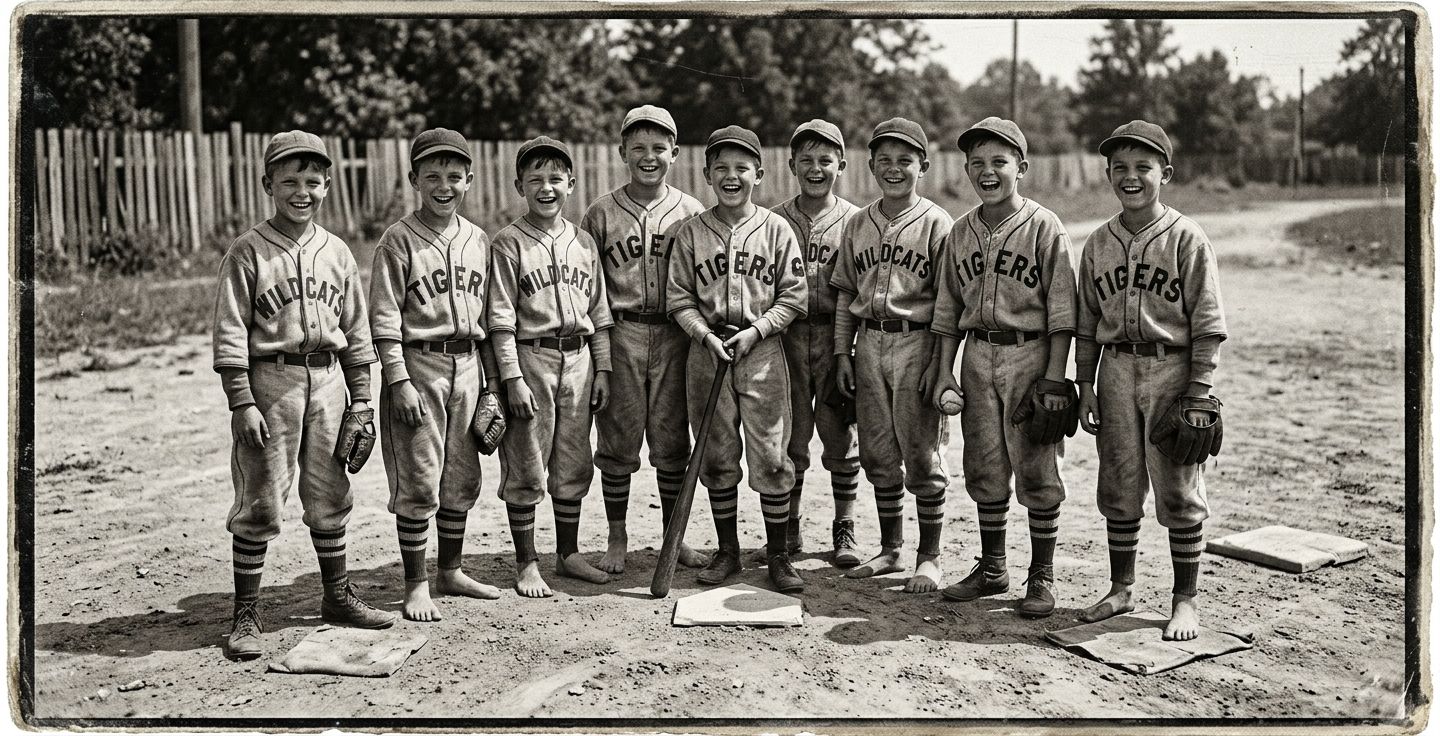
He gathered his nephews, Jimmy and Major, and promised them he would build a real league of their own. Stotz walked door to door asking local businesses for a thirty dollar donation to sponsor a team. Most of the business owners said no because times were very tight back then. But eventually, Lycoming Dairy, Lundy Lumber, and Jumbo Pretzel stepped up to the plate. They provided the funds to buy the scratchy wool uniforms. Stotz went out and bought soft rubber bases so the kids would not scrape their legs sliding into the hard burlap sacks that adults used. That tiny, local effort birthed a massive institution that changed American childhood forever. One man stubbed his toe, and millions of kids gained a safe place to play the greatest game on earth.
The Fabric of Our Neighborhoods
Fast forward to today, and you can see that very same community spirit living on in every small town across our great nation. The start of the spring season is never just another date marked on the kitchen calendar. It is a massive, highly anticipated event. The baseball opening day brings everyone in the area together in a beautiful display of unity. The town mayor usually comes down to throw out the ceremonial first pitch. The local high school marching band stands in the outfield grass and plays the national anthem with bright brass instruments. Often, these joyful days coincide with small town parades, where the proud kids ride slowly down Main Street on decorated flatbed trucks. They wave enthusiastically to their cheering neighbors. They toss pieces of candy to the crowds lining the sidewalks. The local fire trucks sound their loud sirens in celebration. It truly feels like the whole world has stopped spinning just to celebrate these youngsters.
You see, this wonderful game serves as a vital anchor for small town demographics. As populations naturally shift and younger folks sometimes move away to the big cities in search of different careers, the local ballfield remains a steadfast gathering place for those who stay behind. It beautifully bridges the generational gap between old timers like myself and the young couples who are just starting to build their families. We sit shoulder to shoulder in the stands. We share funny stories about past seasons. We share warm bags of roasted peanuts.
The Unsung Heroes in the Dugout
Absolutely none of this magic happens without the tireless dedication of the local volunteers. The little league coaches are the true, unsung stewards of the game. They are the honest local mechanics, the patient school teachers, the busy accountants, and the hardworking farmers. They rush home from a long day at work, trade their heavy work boots for dusty cleats, and spend their precious evenings teaching ten year old children how to properly lay down a bunt. They do not get paid a single dime for their time. Often, they do not even get properly thanked. But they show up every single practice. They teach resilience when a game is lost. They teach a growing child how to strike out with quiet dignity and how to hit a thrilling home run with grace and humility.
Then, of course, you have the magnificent little league parents. They are the powerful engine that keeps the whole community machine running smoothly. They tirelessly work the small concession stands, boiling hundreds of hot dogs and making exact change for a sweaty dollar bill. They scrub the stubborn red clay stains out of white baseball pants late at night under the laundry room lights. They sit cheerfully through miserable rain delays, shivering together under colorful umbrellas, just to watch their child get one more opportunity at bat. Their unwavering dedication is a quiet, beautiful kind of love. It is the exact kind of love that builds strong, enduring communities.
From T-Ball to the Big Bright Stage
As the enthusiastic kids grow older and taller, the structure of the game organically grows right along with them. They move progressively through the various little league divisions, starting from hitting a stationary ball off a plastic tee to eventually facing fast live pitching. The competitive stakes get just a little bit higher. The local baseball tournaments start to feel a bit more intense and thrilling. Neighboring towns build fierce but ultimately friendly rivalries. On a warm summer evening, you might even hear the exciting games broadcasted on a crackling AM radio station. Those local radio broadcasts are an absolute lifeline for the elderly grandparents who simply cannot make it down to the steep metal bleachers anymore. Hearing a familiar local announcer enthusiastically call a twelve year old kid name over the public airwaves is pure magic. It makes that young child feel like a genuine major league star.
For the truly exceptional and lucky teams, the incredible journey continues far beyond the familiar county line. The little league regional tournaments bring entire towns together to passionately root for their boys and girls on a much larger, sometimes national stage. Suddenly, a humble group of kids from a small town of just three thousand people is playing on television. The local diner proudly puts the big game on their main screen for everyone to watch. The corner hardware store tapes a handmade supportive sign in their front window. The whole town collectively holds its breath with every single pitch thrown.
A True Year Round Dedication
But the beloved game is not just played in the warm, sunny months anymore. The deep passion for the sport has turned it into a year round pursuit for many dedicated families. When the heavy winter snow falls and the outdoor fields freeze solid as a rock, you will easily find kids practicing in warm indoor batting cages. The rigorous baseball off season training keeps their growing skills incredibly sharp. It keeps them closely connected to their good teammates even when the sun goes down early. While I sometimes deeply miss the simpler days when kids just tossed their worn leather gloves into the hallway closet until spring arrived, I greatly admire their modern dedication. I deeply admire their strong work ethic. It gives me immense hope for the future generations of our country. These fantastic kids know exactly how to set a difficult goal and work incredibly hard toward achieving it.
Even the wonderful community sports events in the dark winter months, like crowded fundraising dinners and lively silent auctions, revolve entirely around getting the local league fully ready for the upcoming spring season. These warm winter gatherings often turn into cheerful small town festivals of their own, complete with fun raffle tickets and spicy chili cook offs. It wonderfully proves that the enduring spirit of the game absolutely does not need warm sunshine to survive. It lives permanently in the warm hearts of the people.
Questions You Might Be Asking
Over the many long years of sitting on these comfortable old bleachers, folks have asked me a lot of interesting questions about how the game has evolved. I am always very happy to share my honest thoughts and observations with anyone who asks.
Has the pressure on the young kids increased too much in recent years?
In some specific ways, yes, it has. There is certainly more emphasis placed on winning competitive games early on than there used to be in my day. However, the beautiful core of the game remains exactly the same. If a good coach correctly focuses on vital character building rather than just looking at the electronic scoreboard, the unnecessary pressure quickly melts away. The kids honestly just want to play and have fun with their friends. It is usually the grown adults who need to remember to take a deep breath and relax.
How can a small, modest community afford to keep the leagues running year after year?
It truly takes a whole village working together. Generous sponsorships from local businesses are just as critically important today as they were when Carl Stotz asked the local lumber yard for a thirty dollar donation. Creative fundraisers, dedicated volunteer labor for ongoing field maintenance, and overwhelming community support are what ultimately keep the bright field lights on and the outfield grass neatly cut.
Are young girls getting the exact same exciting opportunities on the diamond today?
Absolutely, they are, and it is a truly beautiful thing to witness. More and more talented girls are playing baseball alongside the boys, and dedicated softball leagues have grown tremendously in popularity and skill. The dusty diamond is a welcoming place for absolutely every single child who wants to learn the incredible value of teamwork and perseverance.
What is the very best way for a new family to get involved in the local league?
The best way is simply to show up. Walk down to the field, find the busy concession stand, and ask the tired but happy person handing out the hot dogs how you can help. They will always find a job for you, whether it is raking the dirt, organizing the heavy equipment, or simply cheering loudly for the kids.
The Lasting Legacy We Leave Behind
When the final exciting out is officially recorded and the swirling dust finally settles on the quiet infield, the bright lights of the scoreboard get turned off for the night. The family cars slowly pull out of the crunching gravel parking lot, their red taillights fading into the dark. The beloved park goes completely quiet. But the important life lessons learned on that sacred dirt naturally linger long after the official season completely ends. We are not just teaching young kids how to properly hit a curving fastball. We are actively teaching them how to be good, decent citizens. We are teaching them how to deeply rely on one another when times get tough.
This grand, beautiful old game perfectly connects our rich past to our bright future. From the incredible history of a simple stubbed toe in a Pennsylvania backyard to the bright, flashing television lights of massive regional tournaments, it is a strong, continuous thread of everyday American life. The youth programs, the dedicated coaches, and the tireless parents all lovingly weave this strong fabric together. They consistently prove that our wonderful small towns still possess a strong, beating heart. The local demographics may slowly change, and the fast modern world may constantly try to distract us, but the pure, simple joy of a young child proudly catching a high fly ball remains a constant, shining beacon of hope.
So, the next time you happen to drive past a local community field and see the tall stadium lights shining brightly against the evening sky, please do me a small favor. Pull your car over safely. Walk over and find an empty seat on the cool metal bleachers. Buy a warm hot dog from the busy concession stand. Cheer loudly for a kid you do not even know. You will be actively supporting a gorgeous tradition that makes our communities significantly stronger, much kinder, and beautifully united.
What cherished local traditions are you actively keeping alive in your own community today, and how will you passionately pass them on to the next excited generation?