
Geography & the American Landscape
How National Parks Became America’s Pride
The 1776 Winners History Premium Tee
Wear your story with pride! Celebrate classic American values, history, and heritage with our premium crafted apparel, designed for comfort and durability.
A Quiet Morning in the Woods
Hello, friend. Take a seat and let me tell you a story. It is a story about the best idea this country ever had. It is not about wars, or machines, or politics. It is about a quiet morning in the woods, the smell of damp earth, and the golden light of dusk falling over a canyon. We live in a fast-paced world today. Screens glow in every room, and the noise of traffic never seems to stop. But there is another world out there. A world that has remained unchanged for thousands of years.
I remember the smell of pine needles warming up in the morning sun. It is a scent that stays with you forever. When I close my eyes, I can still see the morning mist rolling off the rivers. The United States is a land of sweeping horizons. From the deep green valleys of the East to the vast deserts of the West, our home is a tapestry of natural wonders. Early in our history, the sheer size of the country made it seem infinite. People believed the forests would last forever. They thought the rivers would always run clear. The land was our provider, giving us the timber, stone, and space needed to build a new world. The raw beauty of this continent was unmatched. It filled the hearts of pioneers and poets alike. It was a rugged paradise. We found ourselves living in a situation of unmatched natural abundance.

The 1776 Winners History Premium Tee
Wear your story with pride! Celebrate classic American values, history, and heritage with our premium crafted apparel, designed for comfort and durability.
The 1776 Winners History Premium Tee
Wear your story with pride! Celebrate classic American values, history, and heritage with our premium crafted apparel, designed for comfort and durability.
The Threat to Our Great Spaces
But progress has a heavy footfall. As the years rolled by, the sound of the axe grew louder. Railroads stretched their iron arms across the plains. Towns sprouted into cities, and factories blew dark smoke into the sky. The very things that made our country strong began to threaten the places that made it beautiful. Entire forests were leveled in a matter of months. Mining companies carved deep scars into the mountainsides. The idea of pristine nature began to fade.
People started to realize that the infinite frontier was actually quite fragile. We were standing on the edge of a great mistake. The majestic sequoias, some of the oldest living things on earth, were being chopped down just to make pencils and grape stakes. It was a tragedy unfolding in slow motion. The greedy hands of industry wanted to privatize every waterfall and mine every canyon. The complication arrived swiftly with the clatter of industry. Trains, mills, and unchecked ambition threatened to consume every last acre.
How Could We Save This Beauty?
This brought our ancestors to a profound crossroads. The great question of our time emerged out of the dust of progress. How could we secure the economic future of our country without destroying its very soul? How could a growing nation protect its natural heart while still expanding its borders? How could we ensure that future generations would know the thrill of standing before a roaring waterfall or an ancient glacier? These questions troubled the minds of thoughtful citizens. They knew that if nothing was done, the wild places would be lost forever.
The Birth of an Idea
The answer was as elegant as it was bold. It was a radical idea, and it was so uniquely American that it changed the world. We decided to set aside our most magnificent landscapes. We decided they should not belong to kings or corporations. They would belong to everyone. They would become our public lands. The concept was simple but revolutionary. We would draw a line around the most beautiful places on earth and say that these belong to the people, forever. We would preserve the best of it, holding it in trust for all people and for all time.
The Numbers That Tell Our Story
You might be surprised to learn just how massive this effort has become over the decades. According to the Department of the Interior, the National Park Service now oversees more than eighty-five million acres of protected land. That is a truly staggering figure. To put it in perspective, that is an area larger than the entire country of Italy.
When the agency was first created back in 1916, the parks welcomed roughly three hundred and fifty thousand visitors a year. Today, those numbers have climbed beyond three hundred million annual visits. Furthermore, a recent study by the National Park Foundation revealed that these protected areas contribute over forty billion dollars to the national economy every single year. They support hundreds of thousands of local jobs in surrounding communities. These are not just pretty places on a map. They are a powerful economic engine and the heartbeat of our nation.
A Fire, Two Men, and a Forest
To understand how this all came to be, you have to look at the people who fought for it. There is a story I always loved about Theodore Roosevelt (1858-1919) and a passionate nature writer named John Muir (1838-1914). In the spring of 1903, the President of the United States traveled all the way to California. He asked Muir to show him the great wilderness. They met in Yosemite National Park.
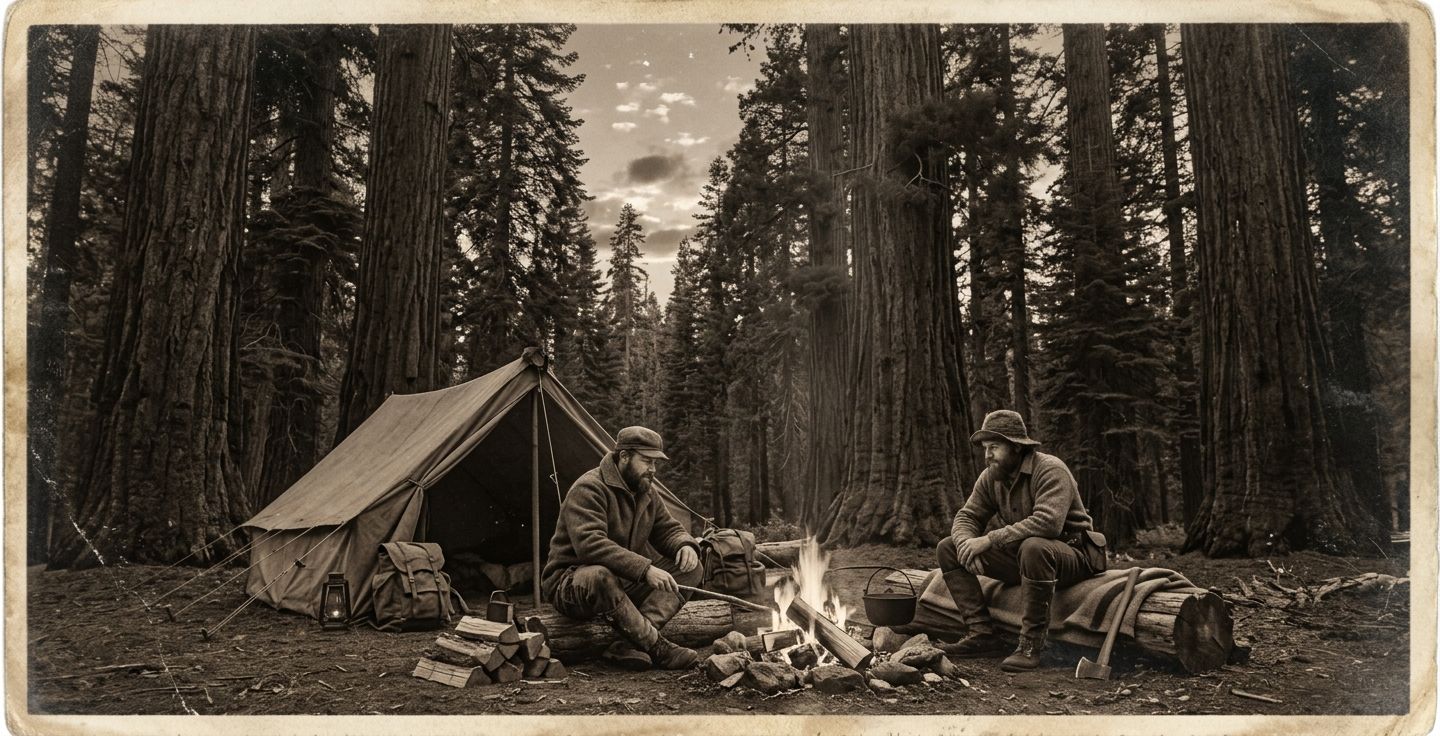
Roosevelt dismissed his secret service, the politicians, and the eager reporters. He and Muir took a few simple blankets and rode out into the woods on horseback. They slept under the giant sequoia trees. Imagine that scene for a moment. The leader of a rapidly modernizing nation, sleeping on the dirt beneath a canopy of stars. Muir showed him trees that were ancient when Rome was just a small village. He showed him valleys carved by glaciers and rivers that ran cold and pure.
Muir also explained how loggers and developers were eager to tear it all down. That single camping trip shifted the course of our history. Roosevelt returned to Washington with a fire in his heart. He became a champion of conservation, understanding that these spaces belonged to our children and our children after them.
The Fight for the Canyon
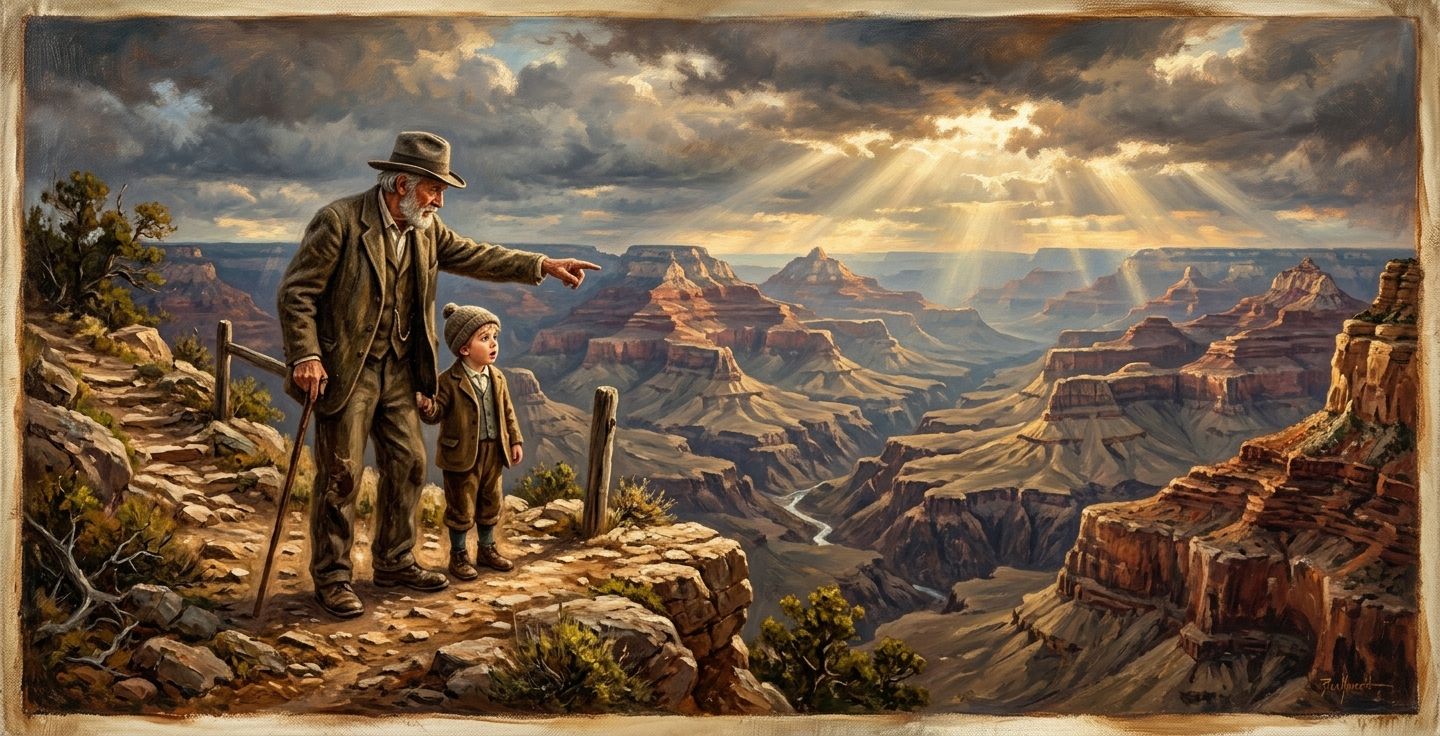
Take the Grand Canyon, for example. In the early days, miners and developers wanted to carve up the canyon walls. They built toll roads on the trails. They wanted to dam the Colorado River and mine the precious minerals hidden in the rock. But leaders stepped up. They argued that leaving the canyon exactly as it is would be worth far more to the human spirit than any ore pulled from the ground. Roosevelt himself stood at the rim and famously declared that we must leave it as it is. He knew that the ages had been at work on it, and man could only mar it. Those words echo through time.
Building the Framework for Tomorrow
But creating a park on paper is not enough. You have to care for it. You have to build trails, hire rangers, and protect the wildlife. That is where men like Stephen Mather (1867-1930) came in. He was a wealthy businessman who visited the parks and was disgusted by their poor condition. He complained to the government. The government essentially told him that if he did not like it, he should come to Washington and fix it himself.
So, he did exactly that. Mather used his own money and his relentless energy to help create the agency that manages these lands today. He believed that every citizen should have the chance to experience the awe of nature. Today, when you drive through the entrance gates of a park, a ranger in a flat hat greets you. That simple uniform represents over a century of dedication. The rangers are the stewards of our history. They rescue the lost, protect the wildlife, and share the stories of the land.
I always loved talking to them. They carry a deep respect for the natural world that is truly contagious. If you ever want to feel hopeful about our country, just sit in on a campfire program led by a park ranger. Listen to the children gasping at the stories of bears and eagles. Watch the firelight dance on their faces. You will see that the love for our wild places is alive and well.
These lands are also true sanctuaries for creatures that might have otherwise disappeared from the earth entirely. Take the great American bison, for instance. These majestic animals once roamed the open plains by the millions, their thundering hooves shaking the ground. But they were nearly hunted to extinction during the rapid expansion of the country. Because of safe havens like Yellowstone National Park, these magnificent animals still walk the earth today. The bald eagle, our proud national symbol, finds a secure refuge in the tall pines and unpolluted waters of these protected areas. We managed to save the grizzly bear, the gray wolf, and even the delicate butterflies that rely on very specific alpine flowers to survive. By saving the land itself, we effectively saved the intricate, beautiful web of life that makes our continent so incredibly vibrant.
Passing the Torch to You
When I think about these wild places, I do not just think about rocks and river water. I think about the millions of families who have stood at those scenic overlooks. I think about the small hands holding onto the wooden railings, eyes wide with wonder. I think about the quiet conversations shared between old friends as the sun sets over the painted desert. These parks are the keepers of our memories. They are places where we can escape the noise of the modern world and remember who we are. They teach us humility. When you stand at the base of a redwood tree, your daily worries seem very small indeed.
We have inherited a magnificent heritage. The battles fought by Muir, Roosevelt, and Mather were won for us. Now, the responsibility falls to you and the generations yet to come. I have seen many seasons change, and I know that the future is bright as long as we cherish these gifts. Visit these places. Breathe the crisp air. Walk the winding trails and let the silence of the forest calm your mind. Support the efforts to keep them pristine. Teach the young ones to respect the wild. Let them know that these majestic landscapes are their birthright.