
Culture & Traditions
The North Platte Canteen: A Small Town’s Six Million WWII Acts of Kindness
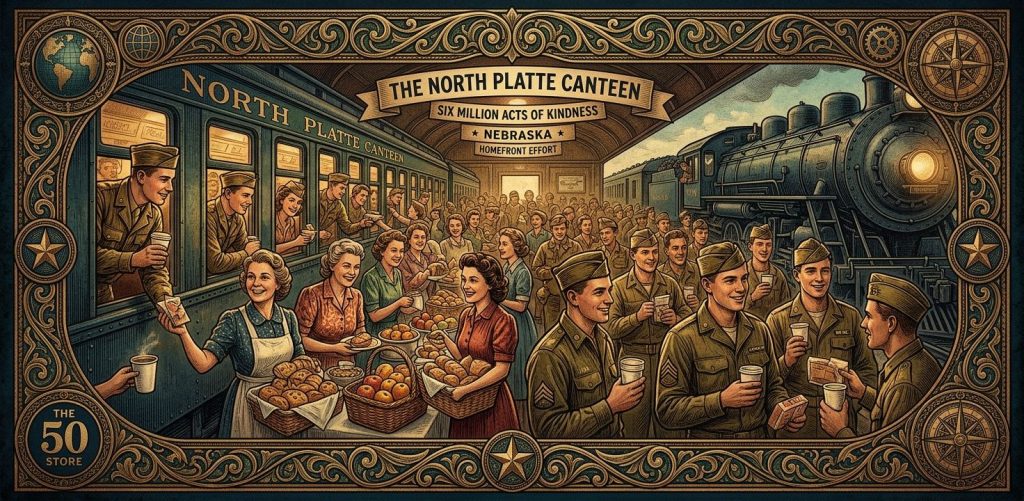
Pull up a chair, pour yourself a hot cup of coffee, and let me tell you a story. It is a story about the America I have known and loved my entire life. It is not a tale about famous generals or slick politicians in Washington. It is about everyday, hardworking people doing absolutely extraordinary things.
During the Second World War, millions of young American men and women boarded trains heading off to war. They were terrified. For many of these young farm boys and city kids, it was their very first time leaving their home states. They were completely unsure if they would ever return to the quiet fields, bustling factories, and familiar front porches they loved.
But as their troop trains steamed through a tiny, whistle stop farming town in the heart of the great plains, they were met with a miracle of hospitality. The place was North Platte, Nebraska.
To fully appreciate this story, you have to understand the situation in our country back then. By late 1941, the globe was engulfed in a terrible conflict. Following the devastating attack on Pearl Harbor, the United States was rapidly mobilizing its citizens. The major complication was the sheer logistics of moving troops. We had to transport massive armies from training camps in the middle of the country to the coastal ports. These young men rode on crowded, uncomfortable passenger cars for days on end. They survived on cold, uninspiring military rations. They were lonely. They were incredibly anxious.
How could the folks back home possibly show these boys they were appreciated when the nation was stretched to its absolute limits? The answer came from a spontaneous act of grace that blossomed into one of the greatest civilian volunteer efforts in American history.
The Daily Miracle of North Platte
A Beautiful Christmas Day Mistake
It all started with a simple rumor and a fortuitous mix up. In December of 1941, just weeks after America officially entered the war, word spread through the community that local boys from the Nebraska National Guard would be passing through the local depot on Christmas Day.
The townspeople immediately rallied. Families gathered their precious holiday treats. They packed heavy wooden baskets with roast turkey, homemade fruitcakes, and rich chocolate fudge. They stood shivering in the biting, bitter cold at the train station. The Nebraska winter wind howled, but they waited patiently to hand a little piece of home to their sons, brothers, and nephews.
When the massive Union Pacific steam engine finally hissed to a halt, the heavy iron doors opened. But the faces staring back at the eager crowd were not their local Nebraska boys. Instead, the train was carrying a regiment of soldiers from Oregon.
These boys from the Pacific Northwest were a long, long way from home. They had no family waiting for them on the platform. They expected nothing more than a brief ten minute stop to let the engine take on water and coal. The townspeople of North Platte looked at the unfamiliar, weary faces of the young men. They looked at the overflowing baskets of food in their own hands. Then, without missing a single beat, they stepped forward.
They handed over the Christmas gifts anyway. They poured steaming hot coffee into tin cups. They offered warm, reassuring smiles. They gave those Oregon boys a Christmas they would absolutely never forget. That single, beautiful mistake started a powerful movement.
The Army of 55,000 Volunteers
What happened next is a shining example of the grit, faith, and grace of the American heartland. A young local woman saw the profound emotional impact of that Christmas Day exchange. She immediately wrote a passionate letter to the local newspaper. She suggested they form a permanent canteen at the depot to meet every single troop train passing through their town.
The response from the community was staggering. Soon, over 125 surrounding farming communities joined the righteous cause. They organized complex, daily relays of fresh food, hot coffee, and beautifully home baked cakes. This was not a small, casual operation. It quickly grew into a dedicated army of 55,000 volunteers.
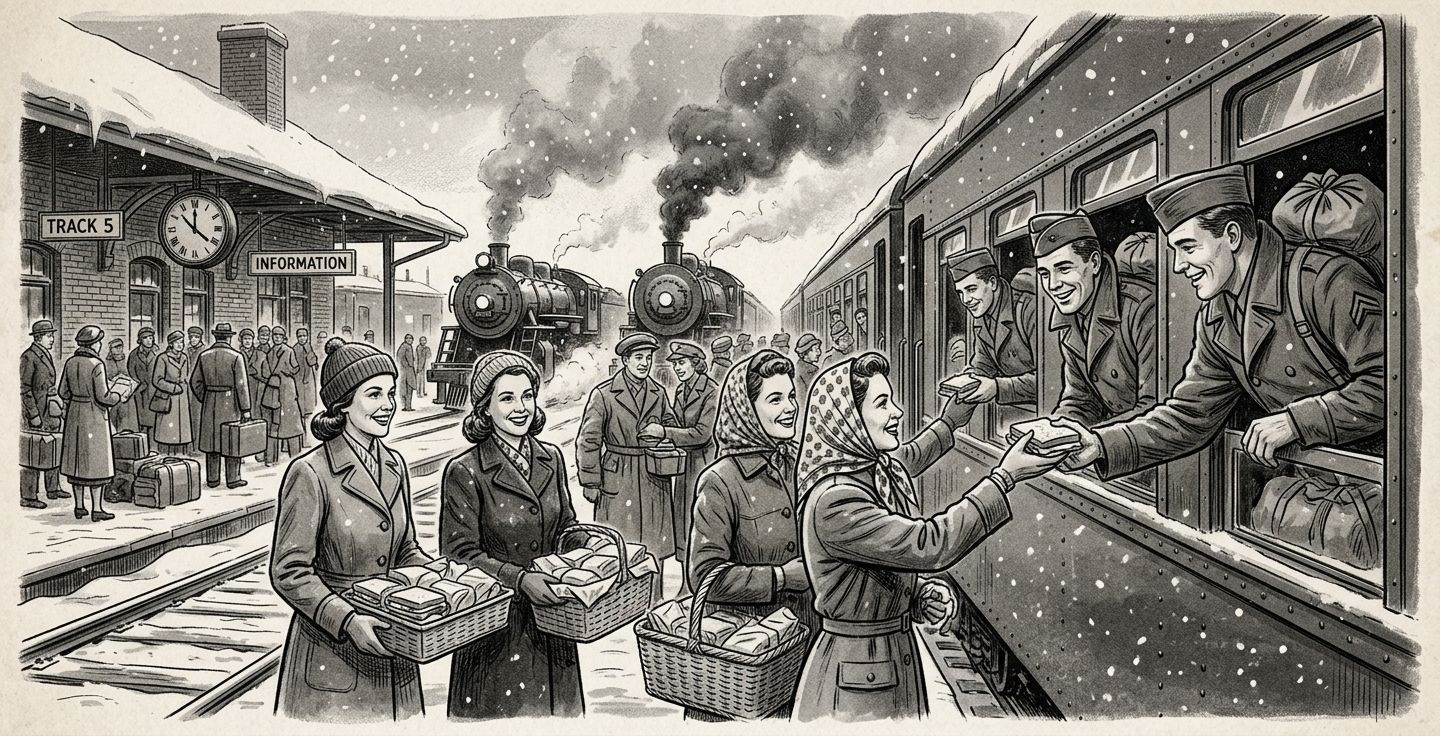
Women, young children, and elderly men who were too old to fight took up their daily posts at the train depot. They operated on a remarkably strict schedule. Different small towns took responsibility for different days of the month. The good folks from Kearney, Nebraska might take a Tuesday, while the farming families from Gothenburg would handle a Thursday. They worked together like a perfectly tuned engine.
Rationing Shared and Sacrifices Made
To truly understand the weight of this effort, you have to remember that this was a time of strict wartime rationing. Essential goods like sugar, butter, meat, and even gasoline were severely limited by the federal government. This was necessary to support the global war effort under the administration of President Franklin D. Roosevelt (1882-1945).
People had barely enough provisions to feed their own families. Yet, these local farmers and resilient townspeople gladly sacrificed their own precious rations to ensure no traveling soldier went hungry.
Consider the micro-history of a simple farmer’s wife living thirty miles outside of town. Let us call her Mary. Mary saved her family’s meager butter and sugar rations for an entire month just to bake three pristine, towering angel food cakes. She used her strictly rationed gasoline to drive those fragile cakes down to the train depot. When a young, nervous private from the streets of Brooklyn took a bite of a real home baked angel food cake, Mary felt her sacrifice was completely worth it.
Think about the sheer physical labor involved. These women were not using modern electric stand mixers or pre-packaged cake mixes. They were beating eggs by hand in drafty farmhouse kitchens long before the sun came up. They were hauling ten gallon urns of scalding hot coffee across icy railroad platforms. They did it all while their own sons and husbands were fighting overseas. It was exhausting, backbreaking work, but you would never know it by looking at their joyful faces.
Farm families enthusiastically collected scrap metal to sell, using the money to buy coffee beans. Young children gladly donated their allowance pennies to buy chewing gum and magazines for the troops. Teenagers would play the piano in the depot, pounding out lively boogie-woogie tunes so the soldiers could dance for five minutes before reboarding. It was a total community effort fueled by pure, unadulterated love.
Six Million Smiles and No Unpaid Debts
The sheer scale of this heartland operation is almost impossible to comprehend today. During its years of operation, the volunteers proudly served over six million soldiers.
They did this without ever charging a single penny. They never asked for donations from the troops. They never took a dime of federal government funds. The entire canteen was completely self sustaining. It was built firmly on the generosity of regular folks holding the line on the home front.
On their busiest day, these relentless, smiling volunteers fed, watered, and cheered over 8,000 troops in a single 24-hour period. That means packed trains were arriving at the station every few minutes. The volunteers would rush aboard the passenger cars with heavy baskets of ham sandwiches, hard boiled eggs, warm cookies, and fresh fruit.
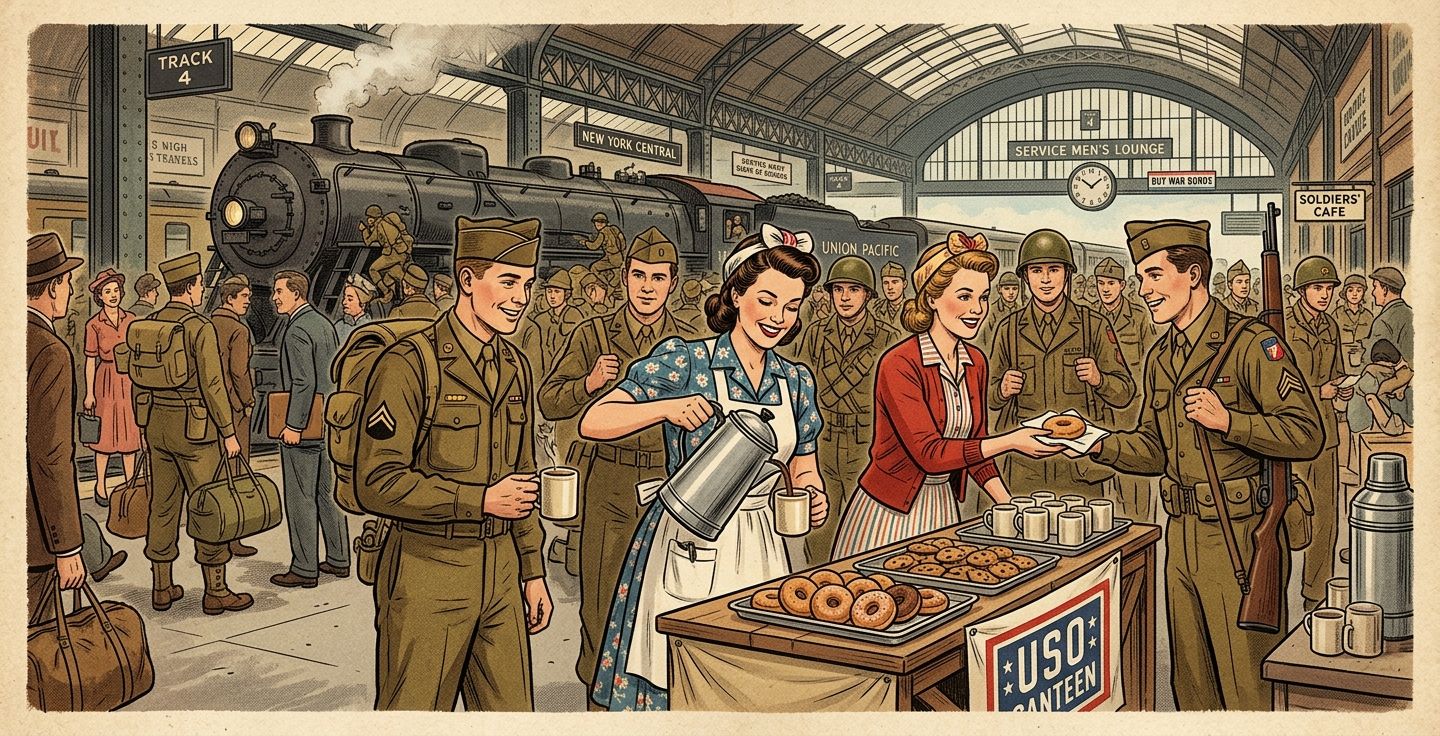
They would pour endless steaming cups of coffee. They would chat lovingly with the boys, offering a quick joke, a listening ear, or a much needed motherly hug. Not a single volunteer was ever paid for their labor. Yet, they miraculously met every single troop train from December 1941 to April 1946. They never missed a train. Not one.
The Legacy of Supreme Leadership and Ordinary Heroes
The boys who passed through North Platte eventually fought in the harsh deserts of North Africa. They bravely stormed the heavily fortified beaches of Normandy. They marched resolutely across Europe under the brilliant command of leaders like General Dwight D. Eisenhower (1890-1969).
But many of those brave men carried a quiet, comforting memory of Nebraska in their hearts. When the heavy enemy artillery fired and the foreign nights grew impossibly dark and cold, those young men remembered the warm smiles and the hot coffee. They remembered that the country they were fighting for was fundamentally good and decent. They remembered that everyday people back home cared about them deeply.
After the war finally ended and the guns fell silent, the town of North Platte received thousands of handwritten letters. Veterans from all across the nation sent notes of profound gratitude. A man from Pennsylvania wrote that he had lost his own mother right before enlisting, and the hug he received from a volunteer at the depot was the only thing that gave him the courage to cross the ocean. These heartfelt letters proved that a simple cup of coffee and a kind word could provide armor for the soul.
This is the very essence of true American patriotism. It is not just about waving flags and listening to grand speeches. It is about a community looking at a train full of scared strangers and deciding to treat them exactly like family. It is about finding a way to serve your neighbors, even when you have very little to give yourself. These WWII acts of kindness remind us of the incredible things we can achieve when we stand united.
Wrapping Yourself in That Same Small Town Warmth
Sometimes, we need a physical reminder of that enduring American spirit in our daily lives. We need something tangible to connect us to the timeless values of community, personal sacrifice, and unconditional support. That is the true inspiration behind our North Platte Canteen Heritage Hoodie.
Made with premium, heavy fleece, this garment is meticulously designed to wrap you in the same small town warmth that greeted millions of brave soldiers heading to the front lines. When you pull it on over your shoulders, you can immediately feel the quality of honest, traditional craftsmanship.
It features a classic, highly durable design meant to easily last through freezing winter snowstorms and crisp, chilly autumn mornings. It is truly more than just a comfortable piece of clothing. It is a wearable tribute to the 55,000 selfless volunteers who stood proudly in the freezing snow just to hand a hot cup of coffee to a frightened young soldier.
Wear it with immense pride. Wear it to honor and remember the folks who cheerfully gave everything they had without ever asking for anything in return. Let it be a daily reminder to bring a little bit of that legendary North Platte hospitality into your own community today. May God bless those volunteers, and may God bless the country they loved so much.
What was the North Platte Canteen?
The North Platte Canteen was a massive civilian volunteer effort during World War II. Local citizens met every troop train passing through their town to provide free food, hot coffee, and warm hospitality to soldiers heading off to war.
Where was the North Platte Canteen located?
The canteen was located at the Union Pacific Railroad depot in North Platte, Nebraska. This was a critical whistle stop for trains moving troops across the United States during the war.
How many soldiers did the North Platte Canteen serve?
Between December 1941 and April 1946, the dedicated volunteers at the North Platte Canteen served over six million American soldiers, sailors, and airmen.
How was the North Platte Canteen funded during the war?
The canteen received absolutely zero federal funding. It was entirely self sustaining, funded by the generous donations, strict rationing sacrifices, and hard work of local citizens from over 125 surrounding farming communities.
How many volunteers worked at the North Platte Canteen?
An estimated 55,000 volunteers contributed their time, food, and energy to the canteen. None of these individuals were ever paid for their exhaustive efforts.
What happened on the busiest day at the canteen?
On their absolute busiest day, the volunteers successfully fed, hydrated, and cheered over 8,000 military troops in a single 24-hour period, rushing to meet trains that arrived every few minutes.