
Geography & the American Landscape
Why Americans Love Exploring Nature
A Conversation on the Porch
Hello there, friend. Pull up a chair and make yourself comfortable. Pour a cup of coffee and let us talk about something very dear to my heart. It is something that sits deep in the bones of every person lucky enough to call this country home. We have a vast and beautiful backyard. From the rocky shores of the East Coast to the towering giants of the West, this land is a marvel. I have lived in this country my entire life, and I still get a thrill every time I smell pine needles in the crisp morning air. We love the woods. It is just that simple. But have you ever stopped to wonder why?
The Map on the Kitchen Table
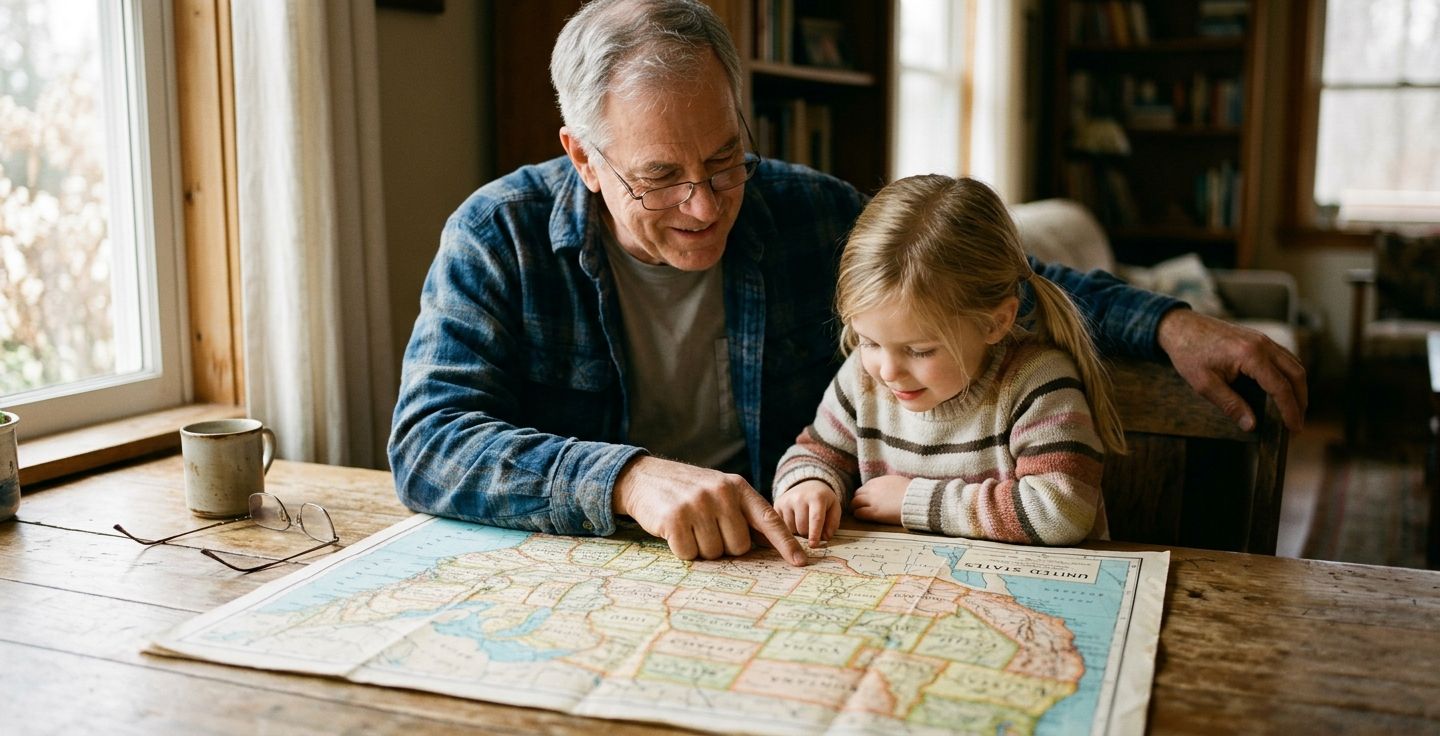
Let us set the scene. America is not just a place on a globe. It is a massive, sprawling continent of wonders. When I was a young boy, I remember sitting at the old wooden kitchen table with my grandfather. He had this enormous, worn out map of the United States. The edges were frayed and soft from years of use. He would trace his thick, calloused finger down the blue line of the Mississippi River. He told me stories of the flatboats, the early pioneers, and the vast open plains.
That map was not just a piece of paper to him. It was a family album. When you stand out in the middle of the Great Plains, or when you look up at the snowy peaks of the Rocky Mountains, you feel a connection to something much larger than yourself. We are a nation born in the wild. Our ancestors crossed oceans and walked across prairies to find a place to call their own. The land shaped our character. It taught us resilience. It taught us hope. That wide open space is baked right into our national identity.
The Great Indoor Migration
But life changes, does it not? Over the last century, we built grand cities. We paved long, sweeping highways. We moved off the farms and into the suburbs. Today, we have air conditioning, soft beds, and countless screens to keep us entertained. We have built very comfortable boxes for ourselves.
Let us look at some numbers for a moment. Now, I am not a mathematician, but these figures tell a compelling story. The Environmental Protection Agency put out a report recently that made me shake my head. They estimate that the average American spends roughly ninety percent of their time indoors. Ninety percent! We are sitting in cars, working in quiet offices, and relaxing in our living rooms. We have become an indoor species.
Here is the complication. Even with all those modern comforts, we are itching to get out. We are restless. The Outdoor Industry Association released a study showing a massive shift in our habits. They recorded a record breaking 168 million Americans taking part in outdoor exploration in a single year. That is more than half the country! We are buying tents, heavy wool socks, and sturdy boots by the millions. We are loading up our cars on Friday afternoons and driving far away from the city lights. This proves a simple truth. You can take the American out of the wild, but you cannot take the wild out of the American.
Take my neighbor, Tom. Tom works with computers for a living. For years, he lived his life bathed in the blue glow of a monitor. He was stressed out, tired, and carrying the weight of the world on his shoulders. Then, one spring morning, he bought a cheap pair of walking boots. He started walking a little dirt path behind our neighborhood. That little path led to a state park. Soon enough, Tom was spending his weekends hiking sections of the Appalachian Trail. You should see him now. He lost some weight, sure. But more importantly, he found his smile. He traded the virtual world for the real one, and it saved his spirit.
What Keeps Pulling Us Back?
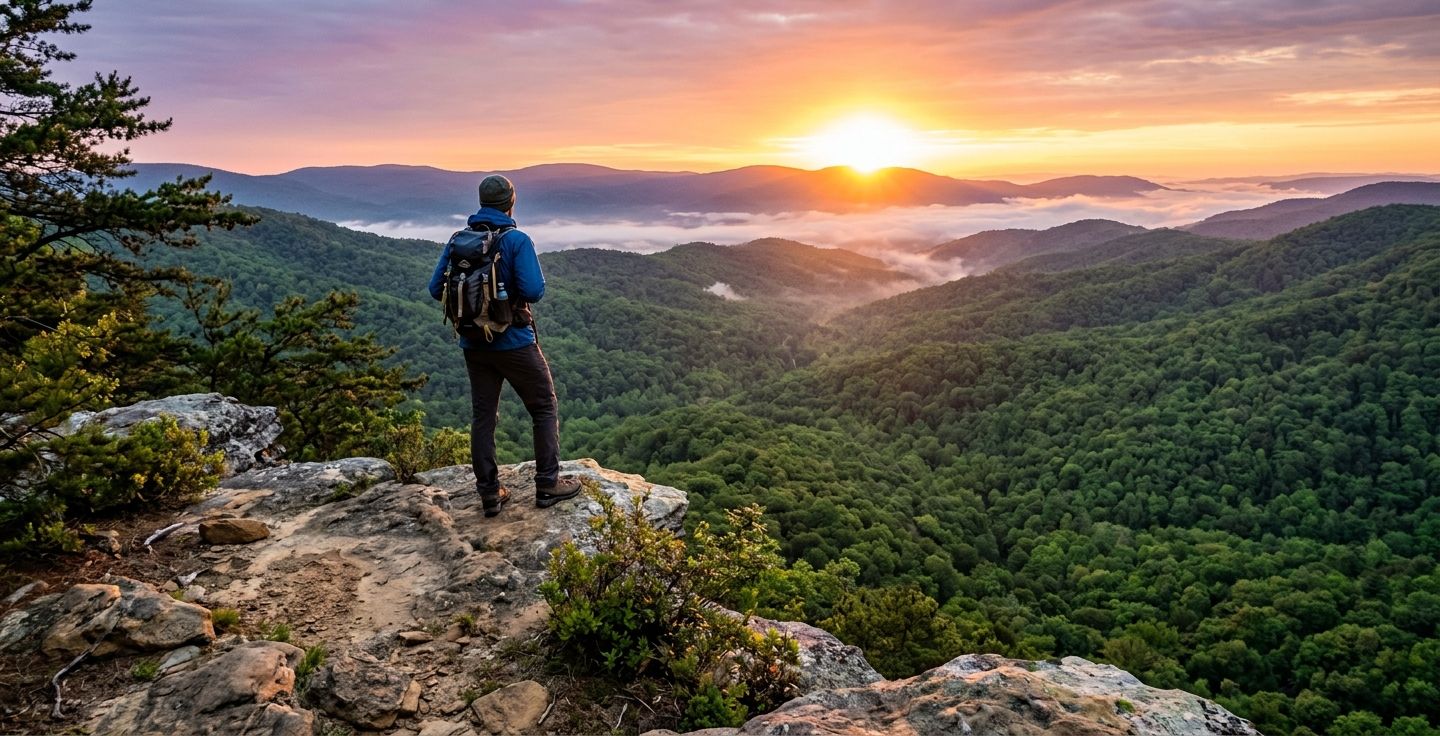
This brings us to a very important question. With all our modern conveniences, why do we keep going back to the dirt and the trees? What is it about the wild that draws over a hundred and sixty million of us out of our comfortable homes every year? Why do we willingly sleep on the hard ground and endure mosquito bites just to catch a glimpse of a mountain sunrise?
The Pioneers of Conservation
The answer is that the wilderness is our ultimate heritage. It is freedom in its purest form. In the early days of the twentieth century, our country was growing fast. We were building factories and laying down railroad tracks at a breakneck pace. But a few wise folks saw that we needed to save the best parts of our country before they were swallowed up by progress.
You cannot talk about the American wilderness without bringing up John Muir (1838-1914). He was a humble man who simply loved to walk. Muir understood that wild places were good for the human soul. He believed that nature was a place of healing. He famously teamed up with one of our most energetic leaders, Theodore Roosevelt (1858-1919). In 1903, President Roosevelt traveled all the way out to California. He asked Muir to take him camping in Yosemite National Park. They left the reporters and politicians behind. They slept out under the giant trees. They woke up covered in a light dusting of snow.
That single camping trip changed the course of our history. Roosevelt went back to Washington with a fire in his heart. He used his presidential power to protect millions of acres of land. He knew that the creation of our national parks was one of the best ideas this country ever had. Later on, folks like Aldo Leopold (1887-1948) taught us that we belong to the land, not the other way around. They handed us a legacy. We love exploring nature because we are visiting the grandest monuments our country has to offer.
Preserving Our Own Backyard
But it is not just about the huge, famous parks out West. It is about what we do in our own communities. When I was a boy, there was a little creek behind our old county high school. We called it Miller Creek. Back then, it was a mess. Folks used it as a dumping ground for years. Old tires and rusted tin cans choked the muddy water. It was a sad sight.
Then, about twenty years ago, something incredible happened. A group of local folks decided they had enough. They organized a town hall meeting. They spent every single Saturday morning for a whole summer pulling trash out of that mud. They planted native wild oats and scrub oak along the banks. They worked until their hands blistered.
Today, that creek is a beautiful public greenway. We have a duty to protect our natural heritage for our grandchildren, and my town did just that. You can go down there on a Tuesday evening and see families pushing strollers. You can see teenagers fishing for bluegill. You can see older couples walking hand in hand under the shade trees. That is the true spirit of this country in a nutshell. We see something broken, and we roll up our sleeves to fix it. We reclaimed our little slice of nature.
Lace Up Your Boots
So, where does this leave you and me? It leaves us with an open invitation. The outdoors belongs to you. It belongs to all of us. You do not need expensive gear to enjoy it. You do not need to be a professional athlete. All you need is the willingness to open your front door and step outside.
We are fixing up old hiking trails and building new ones all across the country right now. There has never been a better time to get involved. Pack a small bag. Fill up a water bottle. Find a local park or a state forest and just go for a walk. Listen to the wind moving through the leaves. Watch how the sunlight filters down through the branches. Take a deep breath of fresh air. I promise you, it will make your heart feel lighter. The wild is calling your name, friend. All you have to do is answer it.
Frequently Asked Questions
What makes the American landscape so unique compared to other places?
The sheer variety is astonishing. In a single country, we have the frozen glaciers of the far north, the steamy swamps of the southern coasts, the vast barren deserts of the Southwest, and the thick green forests of the Northeast. This incredible geographic diversity means that no matter what kind of scenery you love, you can find it here at home. It is a massive playground for anyone willing to step outside.
How did the idea of protecting public lands begin in America?
It started in the late nineteenth century. As the country expanded westward, a few visionary thinkers realized that our natural wonders could be destroyed by unchecked development. Writers and advocates pushed the government to set aside land for the public. This led to the creation of the world’s first system of protected national lands, ensuring these beautiful places belong to all citizens forever.
Can someone with no outdoor experience start exploring nature safely?
Absolutely. You do not need to be a rugged pioneer to enjoy the outdoors. The best way to start is by visiting a local city or county park. Walk on paved paths first. As you get more comfortable, you can try short, well marked trails. Always bring plenty of water, wear comfortable shoes, and let someone know where you are going. The outdoor community is very welcoming to beginners.
Why is spending time outside considered so good for our health?
Science backs up what our grandmothers always told us. Fresh air and sunshine are very good for you. Walking on uneven ground improves your balance and strengthens your heart. Being surrounded by trees lowers your blood pressure and reduces stress hormones. Nature provides a quiet space away from the noise and notifications of modern life, giving our brains a much needed chance to rest and recover.
What are the most effective ways to teach children to appreciate the outdoors?
The best method is to lead by example. Take them outside regularly, even if it is just to the backyard to look at bugs. Make it fun rather than a chore. Let them get their hands dirty in the soil. Teach them the simple names of local birds and trees. When kids build a personal connection with nature through play and discovery, they grow up to be adults who want to protect the environment.
How can ordinary citizens help protect our natural spaces for the future?
It starts with simple daily habits. Practice the rule of leaving no trace when you visit a park, which means packing out all your trash and leaving things as you found them. Stay on the marked paths to avoid damaging fragile plants. Beyond that, you can volunteer with local conservation groups to clean up rivers or build trails. Supporting public parks through entrance fees and donations also goes a long way in preserving these treasures.