
Culture & Traditions
Why Pie Is America’s Most Symbolic Comfort Food
The Simple Magic of a Warm Crust
I have lived in this beautiful, sweeping country for my entire life. Over the decades, I have seen our nation grow and change in countless, wonderful ways. We have built towering cities of glass and steel and laid down endless ribbons of highway that connect our coasts. Yet, for all our incredible progress and boundless innovation, life today moves faster than a speeding freight train. We are constantly plugged into our glowing screens, rushing frantically from one task to the next trying to keep up with the demands of the modern clock. In the midst of all this rushing, we often feel a little disconnected from our own neighbors and our shared history. We find ourselves asking a very simple, honest question. How do we hold onto our rich heritage, find a quiet sense of peace, and reconnect with one another in such a busy, uncertain world?
The answer is not found in a new application or a complicated piece of modern machinery. The answer sits quietly on a windowsill, cooling gently in the crisp afternoon breeze. It is pie. Pie is the ultimate comfort food. It is a humble, unpretentious circle of flaky crust and sweet filling that reminds us of exactly who we are and represents the enduring spirit of our great nation.
By the Numbers: Our National Love Affair
You might think pie is just a simple dessert to end a heavy meal. Let me share a few surprising facts from the American Pie Council that prove just how deep our national love affair truly goes. According to their extensive research, Americans buy an astonishing 186 million pies at grocery stores each and every year. That staggering number does not even begin to count the millions of pies we lovingly bake in our own home kitchens. Furthermore, nearly one in five Americans claims they have eaten an entire pie by themselves in a single sitting. I must confess, looking at a warm, freshly baked cherry pie, I can certainly relate to that temptation.
When it comes to flavors, we have a clear, undeniable favorite. A full 36 percent of our citizens declare apple pie as their absolute top choice. Interestingly, the survey also reveals that 9 percent of folks prefer to eat their pie crust first, saving the sweet filling for the very end. These numbers are not just dry statistics. They tell a vibrant story about our culture. They tell us that pie is not merely a passing culinary fad. It is a shared, joyful experience that spans seamlessly across state lines and generations. 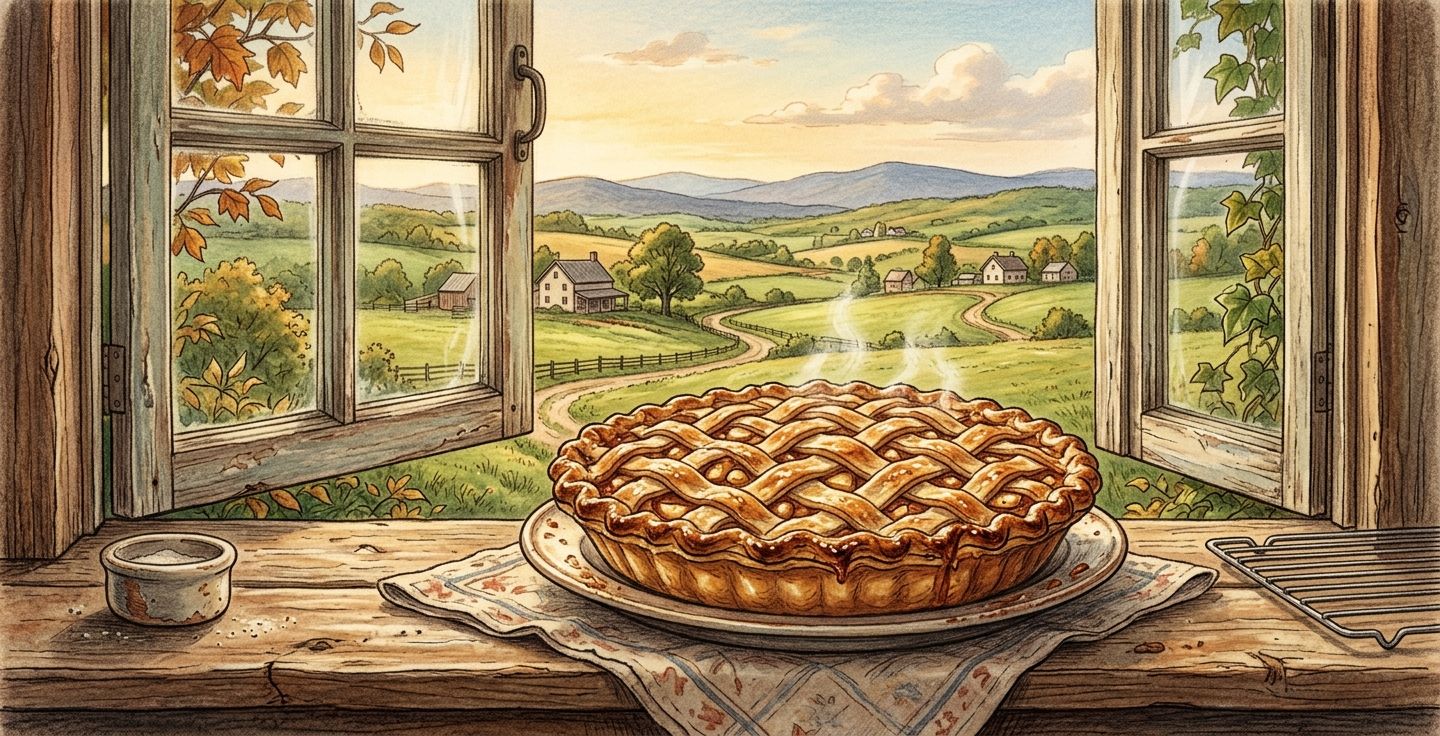
Roots in the Soil: A Story of Apples and Pioneers
Let us take a slow walk back in time. The story of American pie is truly the story of brave pioneers, hardworking farmers, and everyday folks making the absolute most of what they had. Think about the legendary figure of John Chapman (1774-1845). Most of us grew up knowing him simply as Johnny Appleseed. He was a real, deeply religious man who walked barefoot across the wild frontiers of Ohio, Indiana, and Illinois. He planted massive apple orchards ahead of the incoming wave of new settlers.
My own grandfather used to tell me vivid stories about his ancestors who traveled west in heavy, wooden covered wagons. They traveled light, but they always carried precious apple seeds securely tucked away in small leather pouches. When they finally found a plot of fertile land to call home, those seeds were planted in the soil right away. You can still visit the gentle, quiet hills of Fort Wayne, IN where Chapman is respectfully laid to rest today.
The apples he brought to the rugged frontier were not sweet, eating apples like the ones we buy today. They were incredibly tart and tough. However, the pioneer women were incredibly resourceful. When they sliced those tart apples thin, added a tiny pinch of scarce sugar, and baked them in a rough, handmade dough, they turned those harsh fruits into a magical treat. The pie was a powerful symbol of survival. It was sweet proof that even in the deepest, harshest wilderness, Americans could create something beautiful, nourishing, and enduring.
Baking Through the Hard Times
Our national resilience was severely tested again during the dark days of the Great Depression. Times were hard, and millions were out of work. Families had to stretch every single penny just to keep the lights on and the fireplace burning. Yet, the deep desire to provide a warm, sweet treat for loved ones did not simply fade away in the face of adversity. Instead of giving up in despair, American home cooks got highly creative.
They invented what we now affectionately call desperation pies. These were clever, resourceful pies made completely without expensive ingredients like fresh seasonal fruit or large blocks of butter. Cooks used buttermilk, vinegar, green tomatoes, or even just hot water, sugar, and a little flour to create a thick, rich filling. It was a miracle of pure willpower.
During this incredibly challenging era, prominent leaders like Eleanor Roosevelt (1884-1962) proudly championed the value of home economics. She encouraged citizens to find joy and nutrition in simple, frugal meals. You can still feel the strong echoes of her practical, deeply hopeful spirit if you ever visit her beautiful historic home located in Hyde Park, NY. The brave women of that era kept our collective spirits lifted. By fiercely maintaining our baking traditions through the absolute darkest economic times, they proved that a warm, active kitchen could chase away the cold shadows of poverty. Every baked pie was a quiet, sturdy promise that much better days were coming.
The Scent of Home and Hearth
Think about the last time you walked into a home where a fresh pie was baking. The experience is magical, touching all your senses. The warm air wraps around your shoulders like a comforting blanket. The scent of roasted cinnamon, spicy nutmeg, melting butter, and baked fruit creates a rich fragrance you cannot buy in a store. It instantly transports you back to childhood, perhaps to your own mother standing patiently by a hot stove.
Baking from scratch is a true labor of love requiring genuine patience. You carefully cut cold butter into white flour until it resembles coarse meal. You sprinkle in ice water, gently bringing the dough together with bare hands. It is a deeply grounding process. In a fast-paced world of glowing screens, feeling the soft dough beneath your rolling pin is incredibly soothing to the anxious soul. 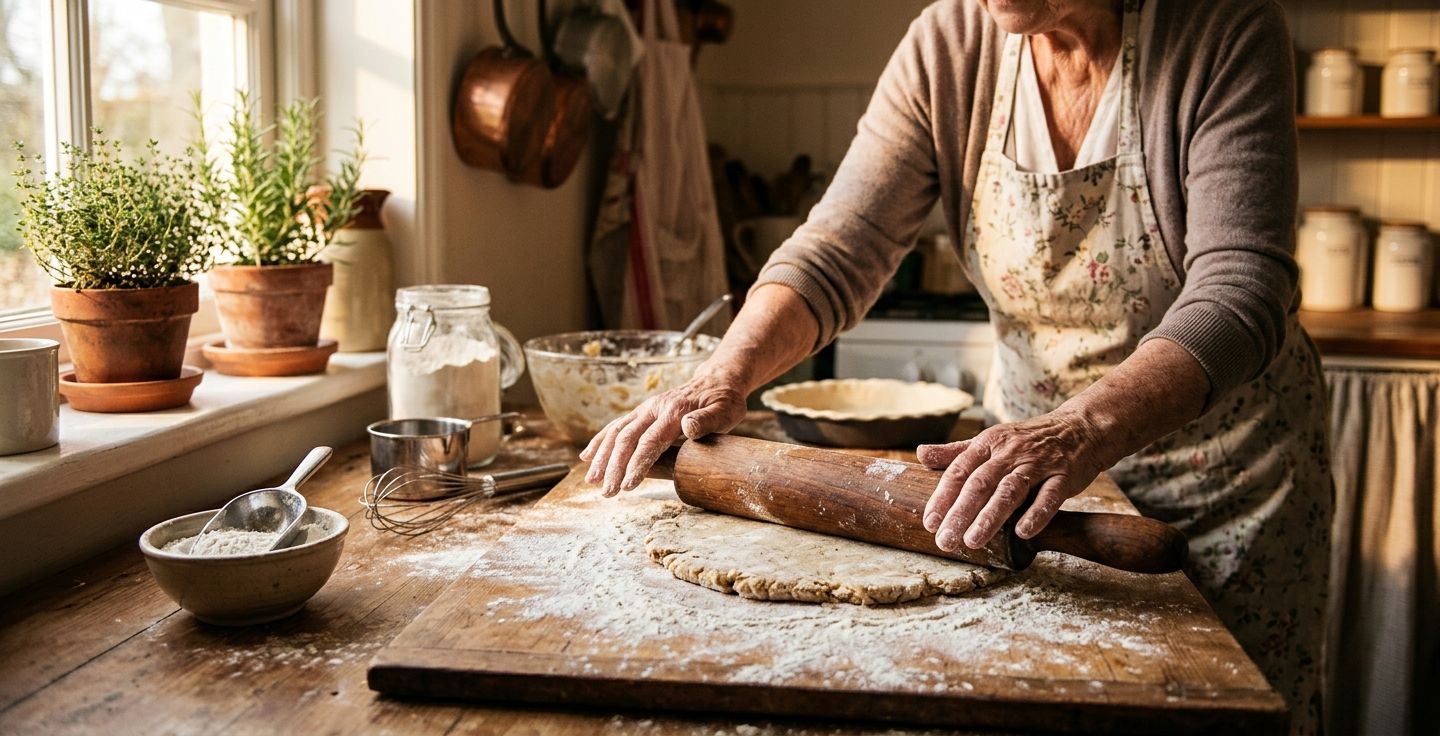
When the pie comes out of the oven, bubbling and perfectly golden, it naturally becomes the glowing centerpiece of all family gatherings. A pie is not meant to be eaten alone in a parked car. It is meant to be carefully sliced and happily handed out on mismatched plates. It invites meandering conversation. It encourages us to sit down, pour a hot cup of coffee, and look each other squarely in the eye. Every single slice tells a beautiful story of local pride and neighborly love.
Roll Out the Dough
My good friends, I have a very simple, heartfelt request for you today. This coming weekend, I want you to bake a pie. You do not need to be a professional pastry chef with years of fancy culinary training. Your crust does not need to look like it belongs in a glossy cooking magazine. In fact, a rustic, slightly uneven crust is wonderful proof that it was made by real human hands with genuine, loving care.
Go to the local grocery store or weekend farmers market, buy some fresh seasonal fruit, and give it a wholehearted try. If the idea of baking truly feels overwhelming to you, that is perfectly fine. Stop by a local, family-owned bakery and proudly purchase a pie made by hardworking folks right in your own town.
Then, do the most important part of all. Share it. Invite a neighbor over to sit quietly on your front porch. Take a large slice to an older relative or a friend who might be feeling a bit lonely. Pass down a cherished family recipe to your own children or grandchildren. By doing this simple, generous act, you are actively participating in a grand, hopeful, and enduring American tradition. You are slowing down the rushing clock. You are spreading warmth, showing love, and making the world just a little bit sweeter, one delicious slice at a time.
A Few Questions We Often Share
Why is pie considered a traditional American food?
Pie is considered a traditional American food because it was highly adaptable for early pioneers and frontier settlers. They used hearty crusts to preserve fillings and baked with local, accessible ingredients like tart apples and native pumpkins. Over generations, it became a beloved symbol of resourcefulness and honest home cooking in the United States.
What exactly is a desperation pie?
A desperation pie is a special type of pie created during times of severe economic hardship, such as the Great Depression. Because ingredients like fresh fruit and refined sugar were expensive or completely unavailable, creative home cooks used common pantry staples like vinegar, buttermilk, or green tomatoes to create flavorful, affordable fillings for their families.
Which pie flavor is the most popular in the United States?
According to research from the American Pie Council, apple pie remains the most popular flavor in the United States. A significant portion of Americans regularly choose it as their absolute favorite dessert, especially during national holidays, summer picnics, and large family gatherings.
Can baking a pie help me feel more connected to my community?
Absolutely. Baking and sharing a warm pie is a wonderful, proven way to foster real connections. Bringing a homemade pie to a neighbor, a local charity event, or a family gathering naturally encourages conversation, slows down our fast-paced daily lives, and shows genuine care for the people living right around us.
Does my pie crust need to look perfectly even and flawless?
Not at all. A rustic, imperfect pie crust simply shows that the dessert was made by human hands with genuine love and steady effort. The true charm of a homemade pie lies in its comforting taste and the wonderful warmth it brings to the dining table, rather than its visual perfection.